Quick setup: use one A–F page or draw four broad numbered cells. No purchase, device, instrument, body action or voice is required. Choose a familiar locally reviewed quiet source if sound is wanted. A broad fixed-card, drawing or child-directed adult route completes the planning goal; it is not sound performance.
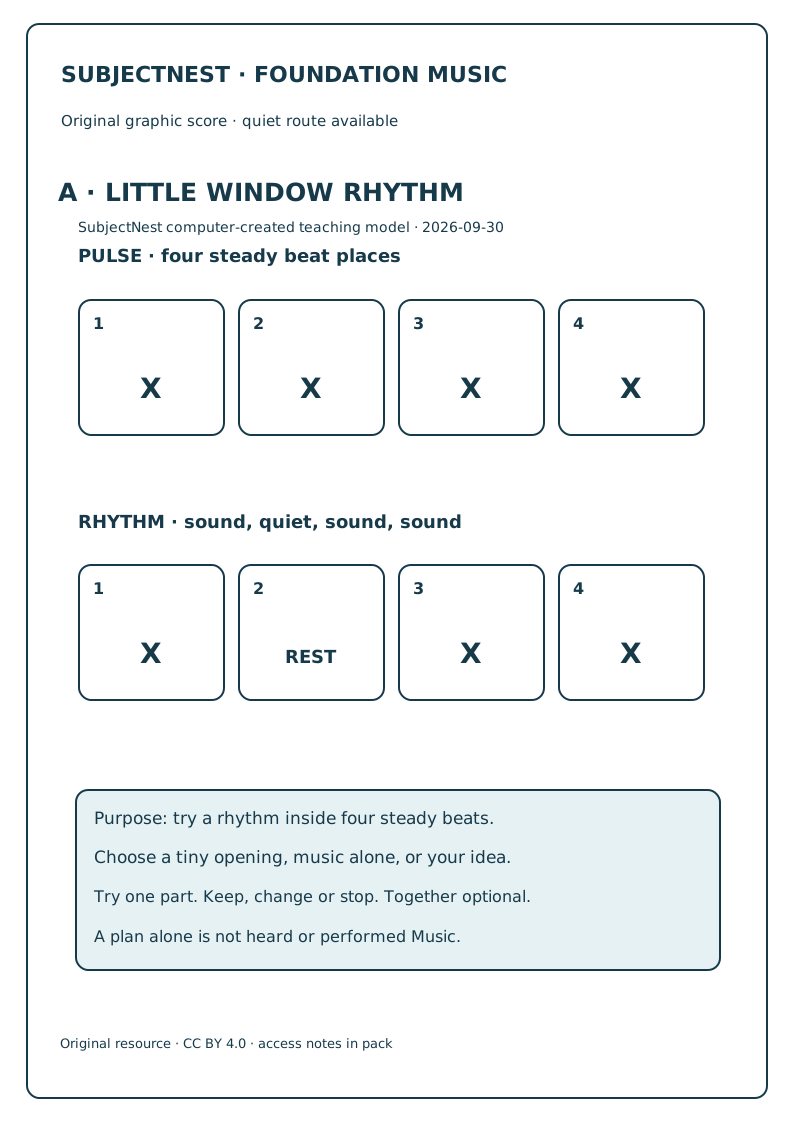
PULSE X X X X means four equal beat places. RHYTHM chooses sound or rest in those places. X means one short event; REST means that part does not sound in that place; LONG is one uninterrupted event spanning two places, not two short events. These are original graphic symbols, not formal staff notation or a cultural rhythm.
Immediately usable quiet live route
- Offer and review. Offer a source already familiar to the child and locally checked for handling, reach and comfort: for example a gentle touch on a table/pad, or an already available accessible quiet sound control. These are choices, never requirements. Adult previews only with permission. Agree an accessible stop signal and a comfortable steady pace; no target rate, speed, body stillness or forced movement.
- One part first. Adult can cue all four beats with a visible or accessible pointer. The willing child tries a four-beat pulse alone (one gentle short sound at every beat), or a rhythm alone (sounds at 1, 3, 4; no rhythm sound at 2). A pointing cue is not an audible backing. Start with one short actual phrase before score discussion, then stop. An adult can instead sound only what the child directs; say who actually sounded. A silent plan is also complete for planning.
- A real hold only when suitable. A touch/tap that ends immediately cannot make LONG. Offer a locally reviewed familiar source with a comfortable sustained sound only if available and wanted: for example a willing maker's very gentle comfortable hum, or an already available familiar accessible sustain control. These are optional examples, not requirements. No forced voice, held breath or particular motor action. If unavailable, make a short/rest phrase the child chooses and plan LONG silently. Record the short/rest actual trial and the LONG plan separately; do not claim the held target was sounded.
- Rehearse by choice. Ask “Keep it, change it, or stop?” If wanted, try one more short phrase, keeping the pulse pace comfortable while moving a rest or trying a different ending. Child can choose music alone, a tiny picture-show opening, a puppet scene ending or their own purpose. These are possible intentions, not actual effects. One phrase is enough; no repeat-until-correct demand.
- Together is optional. Only two willing makers with reviewed distinguishable sources may try pulse and rhythm together. They may take turns or stay with one part. Never require simultaneous roles or object passing. The child may choose private making, a willing listener, a paper share or no share.
- After making, note what occurred. Privately record date, observer, actual maker (child/adult/neither), source/route, phrase and help. Record heard rest/hold, pulse steadiness, rhythm entry/ending, own response and willing audience/medium only when actually observed. Not yet observed is appropriate. Count marks later if useful; do not score speed or turn every trial into a checklist for the child.
Source selection and stop agreement are local decisions, not universal safety clearance. Rest in a part does not require a person's body to be still or prohibit other communication. No-sound planning, direct-adult making and child sound-making remain distinct evidence. No recording is needed.
Practice A–F · reserve fresh K/L until check days
A · A rhythm inside four pulse places
Little Window Rhythm: PULSE X X X X; RHYTHM X REST X X. Four continuing beat places; three rhythm events at 1, 3, 4; rhythm rest at 2. Try one part first with the route above, then compare the rows on A. Child chooses a tiny opening, music alone or another purpose. The saved named model has an honest author-purpose source card; actual encounter and child response are conditional.
B · Move the rest while three events stay
PULSE stays X X X X. Compare X REST X X with X X X REST: rest moves from 2 to 4, three short rhythm events remain. Make either short phrase first if chosen; rehearse the other only if wanted. A child may prefer a quiet last beat for a tiny ending, or choose music alone; no required listener feeling.
C · Four beats can hold two short sounds
PULSE X X X X; RHYTHM X REST REST X. Rhythm sounds at 1 and 4, with two quiet middle places. Make that short phrase or direct it before counting. Child chooses an opening-and-ending pair, space between sounds, or their own musical idea. Fewer events do not mean a slower pulse.
D · One long event covers two places
PULSE X X X X; RHYTHM LONG(1–2), X(3), REST(4). One held opening plus one short event: four beat places, three occupied places, two events, rest 4. A real held trial needs a suitable wanted reviewed source; otherwise try a separate child-chosen short/rest phrase and plan the single band. No required voice or breath effort.
E · Shift the long event into the middle
PULSE X X X X; RHYTHM REST(1), LONG(2–3), X(4). Four beats, three occupied places, two events. One broad band spans 2–3. Compare source choices only if they can actually sustain this hold; two differently labelled paper plans do not demonstrate heard timbre. The old J cue is a held candidate, not automatically usable.
F · Make a four-place rhythm idea
PULSE X X X X and blank rhythm cells. Offer one broad two-place LONG, one short X and one REST, fitting every beat place once. Example 1 LONG(1–2), REST(3), X(4); example 2 X(1), REST(2), LONG(3–4). Each plans three occupied places, two events and one rest. Child can test a short phrase first, then keep/change/stop and choose the intended use. An open alternative can be valid music while differing from this particular LONG/SHORT/REST planning brief; label the difference accurately.
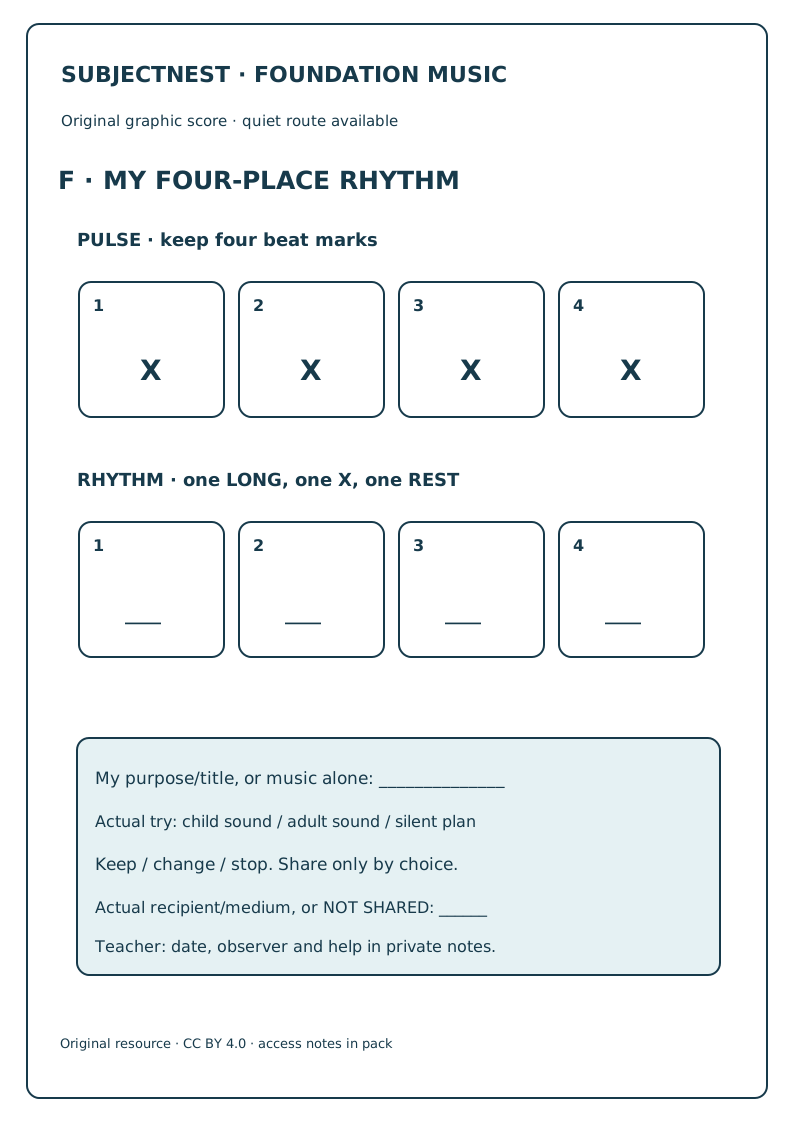
The eight SVG/PDF pages and exact alternatives include six practice pages and two held checks. Fresh K/L appear only in student checks; the unchanged solutions stay in the separate teacher key. Check-day practice swaps are After Check. All six audio candidates require human/device/volume clearance; no playback is approved here. Unfinished fresh work is not yet observed; offer another short sitting without a completion-speed score.