These are new low-stakes paper music puzzles to guide what an educator teaches next. Broad fixed cards, raised-cell strips, drawing, pointing, AAC, a neutral adult scribe and a pass are available. Optional sound comes after the first independent plan and only after local approval. No child must sing, hear a device, move, produce a long sound, perform publicly or tell a personal story. The teacher key stays separate until first responses are saved.
Time and access: If unfinished at the time limit, record not yet observed and offer another short sitting. Completion speed receives no score; a pass is not an incorrect answer.
Check K · four postcard windows
Day 25. K A4 SVG · K A4 PDF · exact text/tactile route. A fictional paper postcard has four numbered beat places. PULSE is X X X X. Starting RHYTHM is – X – X: there is a short sound at count 2, a short sound at count 4, and quiet at 1 and 3. Keep sounds at 2 and 4. Keep count 3 quiet. Add one short sound so the rhythm now has three sound events while the pulse still has four places. Show both rows and explain which rhythm count changed. This is not a real postcard sound or a real message.
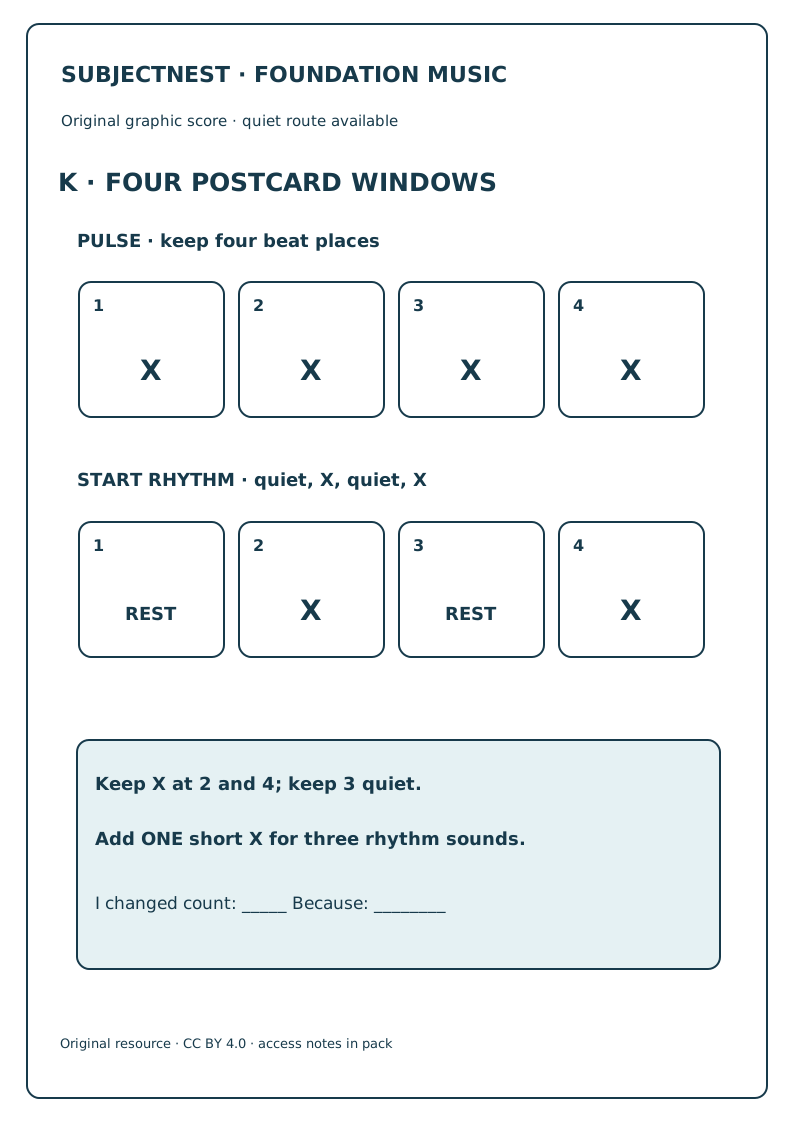
Record without coaching: first two-row score, changed count, four pulse places, three rhythm events, child's explanation and chosen route. An optional later sound is separate evidence. A correct card row cannot prove timed rhythmic playing or auditory discrimination.
Check L · the paper ribbon display
Day 30. L A4 SVG · L A4 PDF · exact text/tactile route. A new fictional paper ribbon has PULSE X X X X and RHYTHM one short X at count 1, one single LONG band stretching across counts 2–3, and REST at count 4. Without sounding it, answer four questions: (1) how many numbered beat places are there; (2) how many beat places are occupied by RHYTHM sound; (3) how many separate RHYTHM sound events are there; and (4) which numbered beat place is quiet? Point, draw, use cards/AAC, or direct a neutral adult to record. A wide band is one held event, not two separate X events.
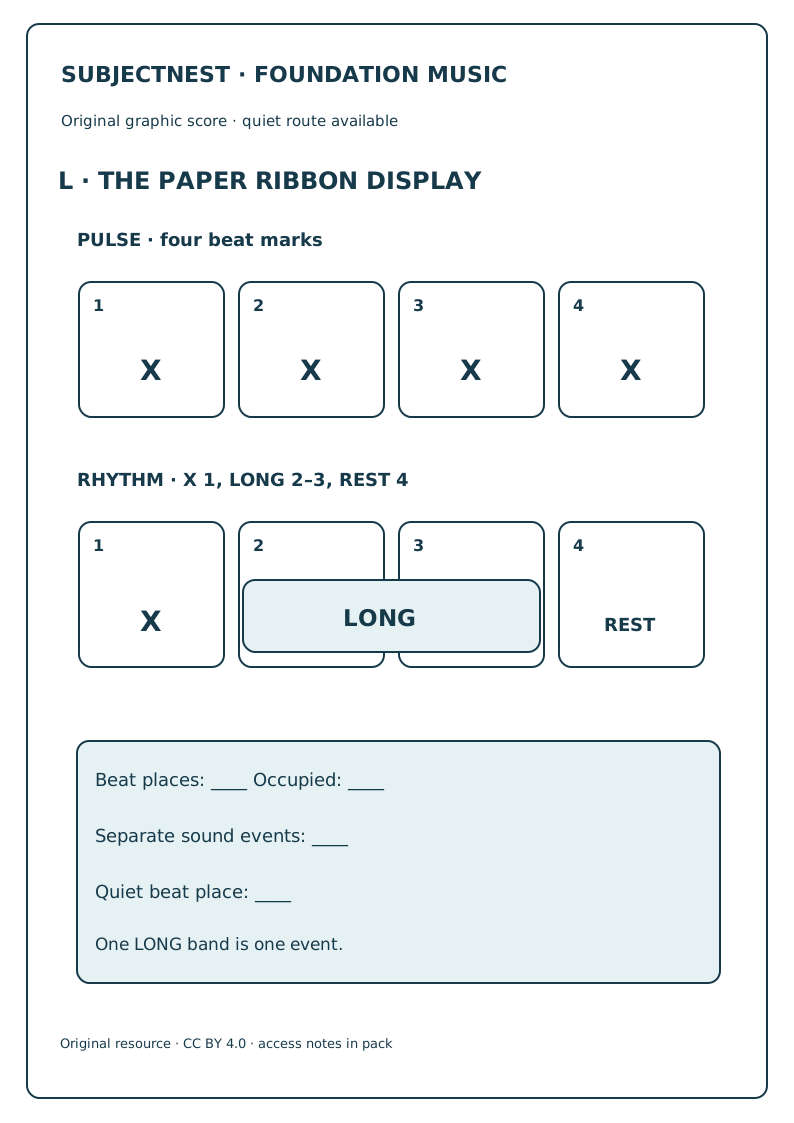
Record without coaching: the four first answers, child's explanation of the band, route and any later observed sounding. A paper response cannot prove sustained sound production, listening, physical coordination or real-audience sharing.