Target/codes: create a four-beat rhythm combining ONE and PAIR; partial AC9AMUFD01/FC01. Prepare: mixed example, blank four-card strip, ONE/PAIR cards; invitation D.
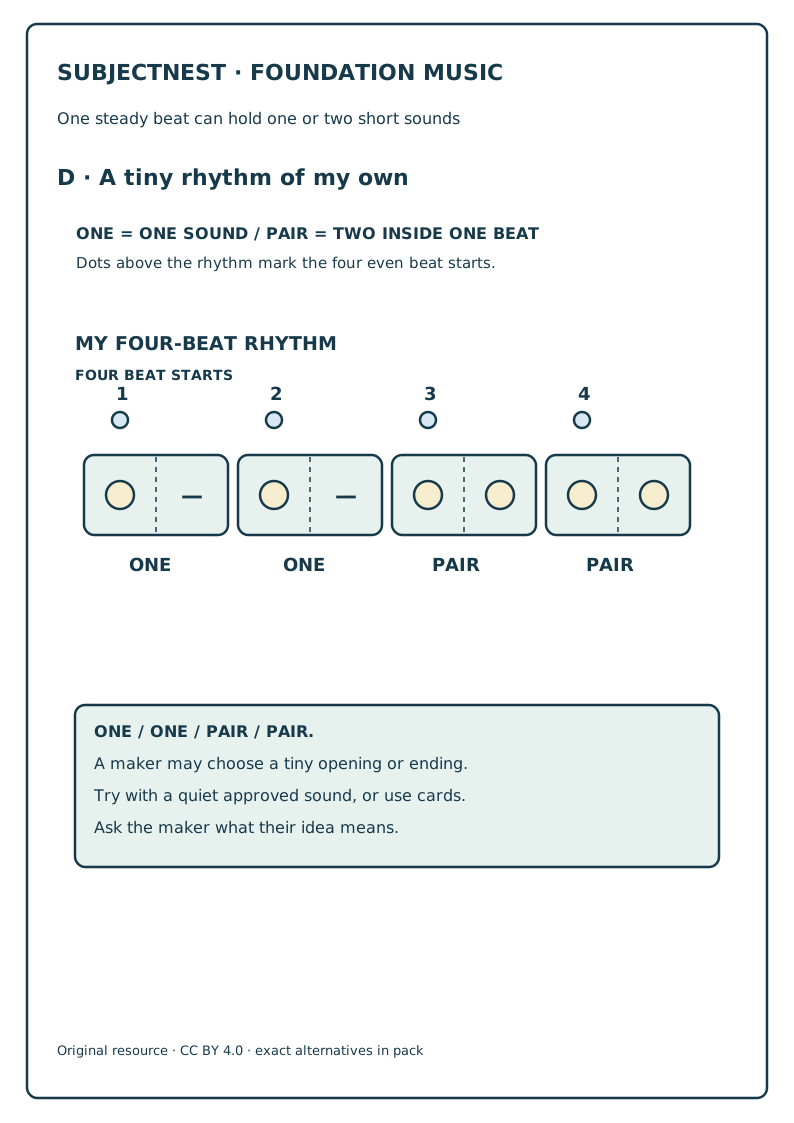
- Welcome · 3 min. Offer a fictional paper star, toy stage, book-cart picture or an own neutral context. “Make a tiny rhythm that has one and two quick.”
- Model · 4 min. Read ONE ONE PAIR PAIR. Four upper beat starts hold; lower discs total six. Optional reviewed adult realization follows a visible steady pointer; no accent/loudness or faster tempo is added.
- Try together · 5 min. Child directs a different practice ONE PAIR ONE ONE. Identify beat 2's two sequential events and the four enclosing beat cards. Remove the adult examples before making.
- Child choice · 7 min. Child chooses four ONE/PAIR cards with at least one of each, gives an own title or leaves untitled, and reads the event sequence. They may make it live with a reviewed quiet source or direct an adult. Offer a second try if wanted; no demand for perfect playing.
- Notice · 4 min. Ask which beat holds two quick sounds and which holds one. Save first plan and count beats/events separately. If PAIR extends into the next beat, rehearse one card at a more comfortable steady pace.
- Close · 2 min. Child keeps their piece for tomorrow's purpose. Their chosen rhythm does not reveal an actual feeling or learner type.