Keep this page and separate key away from learner routes until the first independent response is recorded. Each check has an ACTUAL LOCAL SOURCE path and a fully specified original PAPER MODEL ONLY fallback. Choose the actual route only after school/local safety, material/source and access preflight; log date, object identity, who handled it, action, source label and child's mode. If no approved object is available, use the fallback and record REAL OBSERVATION NOT AVAILABLE. A paper model can show questioning and representation reasoning but cannot demonstrate the child observed a local material property or safely investigated an actual object. Save exact first words/point/AAC/sign/drawing and adult report/prompt/reread before feedback. A pass is permitted; these are small formative samples, not a whole-standard judgment.
Day 5 · new object, noticed feature and question
ACTUAL LOCAL SOURCE, teacher-selected fresh case: Before the check, choose one broad, clean, intact plain paper envelope not used in Days 1–4, or a different school-approved new broad object. Check that it has no real name/address, small loose pieces, sharp edge or known local access/allergy problem. Verify the material label from preparation/product information; do not assume the child can infer material from colour. Write local date, exact object/source and verified material or UNKNOWN on a teacher-held card. Place it on a clear mat. Offer direct visual/agreed tactile access, safe adult manipulation, attributed exact adult description, or pass. Do not prefill what feature the child will find: flap shape, surface, bend and edge condition vary by actual object. No surprise touch, opening, tasting or smelling.
PAPER MODEL ONLY fallback, fresh original diagram to draw or read: A wide rectangle outline. One broad triangular flap outline meets its top edge. One small circle mark is drawn near the lower right. The drawing is labelled INVENTED ENVELOPE MODEL. It is not a photo or observation of the teacher's envelope; the circle might be printed, a cutout or a symbol. The diagram cannot establish actual material, glue, texture, flap movement or local safety. Exact nonvisual/tactile route: adult says the three marks in that order, or places a broad rectangle outline, broad triangle outline and one large round token on a page as a model; no small dot object is required.
Ask in order using a blank observation log:
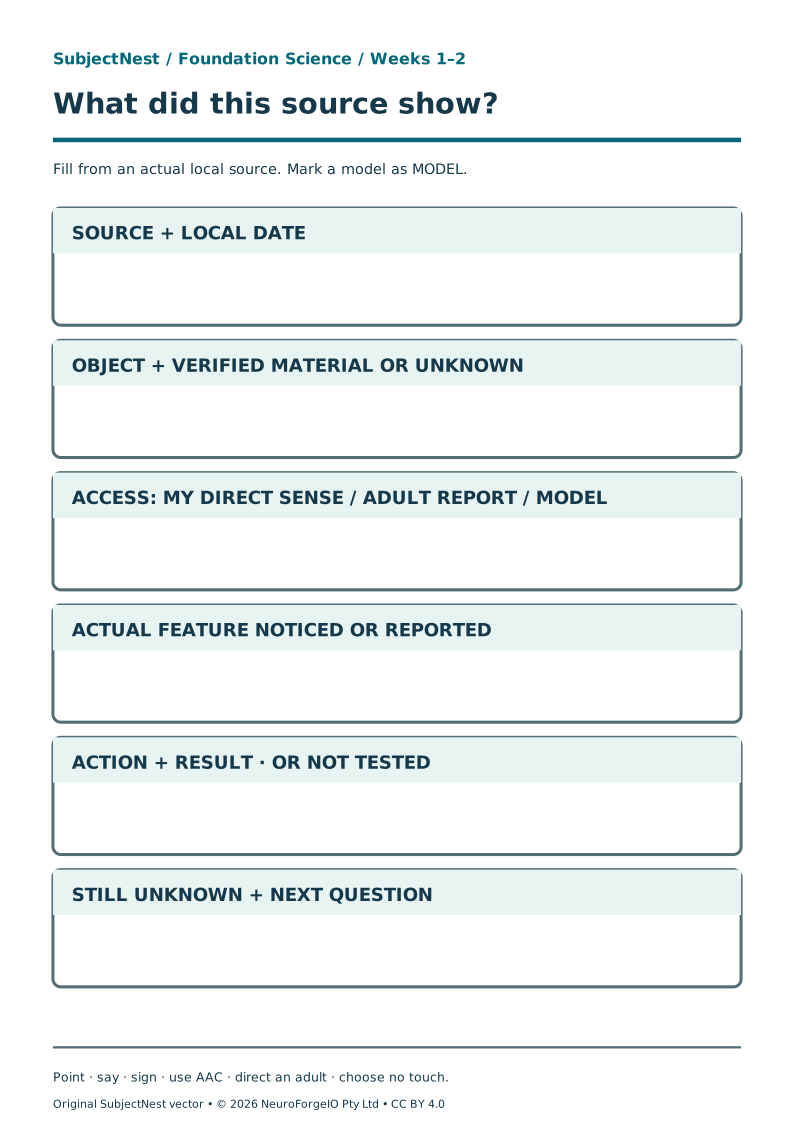
- “What is your source: an actual object here, an adult description of it, or an invented drawing? What date/source can we write?” For fallback, write today's check date as model-use date, not observation date.
- “Tell or show one feature you can actually notice, or one mark the drawing shows. Which sense or source gave it?” If adult described it, attribute adult report; do not call it child's direct sense.
- “Ask one question we could check safely about a real object. What would we need before answering?” A child may ask about a visible edge, shape or a gentle adult-led movement; no handling is required.
- “Which of these would be too strong from your source: ‘this drawn circle is a real hole’, ‘all envelopes feel smooth’, or ‘this actual edge is straight in our view’?” Accept source-sensitive reasoning; the last is valid only if actually observed.
After the first response: Use the key for a next move, then release Day 5 learner practice. Do not assign AC9SFU03/AC9SFI02 actual-object evidence from the fallback.
Day 10 · new diagram and separate actual-object source
PAPER MODEL, fresh original diagram: A broad rectangle outline labelled INVENTED LABEL MODEL. Inside, a single wide zigzag line runs across the upper half. Below it are two separate short horizontal bars, side by side. There is no material name, scale, location, physical object, texture, motion result or safety message. It does not represent a particular local object. Exact nonvisual/tactile route: adult reads rectangle, one zigzag, two short horizontal bars in that order; broad raised-line cards or child-directed adult drawing are options. Do not prompt the child with “tear”, “mountain”, “rain”, “rough” or a material name.
Optional ACTUAL LOCAL SOURCE: Separately choose a new preflighted, clean, broad, intact school-approved object not used in Days 1–9. Verify any material label or write UNKNOWN, log object identity/source, local date, access and actual visible/tactile feature. This real object is not asserted to be the object in the invented diagram; do not ask the child to match them by colour or outline. If none is safe/available, record REAL OBSERVATION NOT AVAILABLE and complete the diagram path only.
Ask in order using a blank representation record:
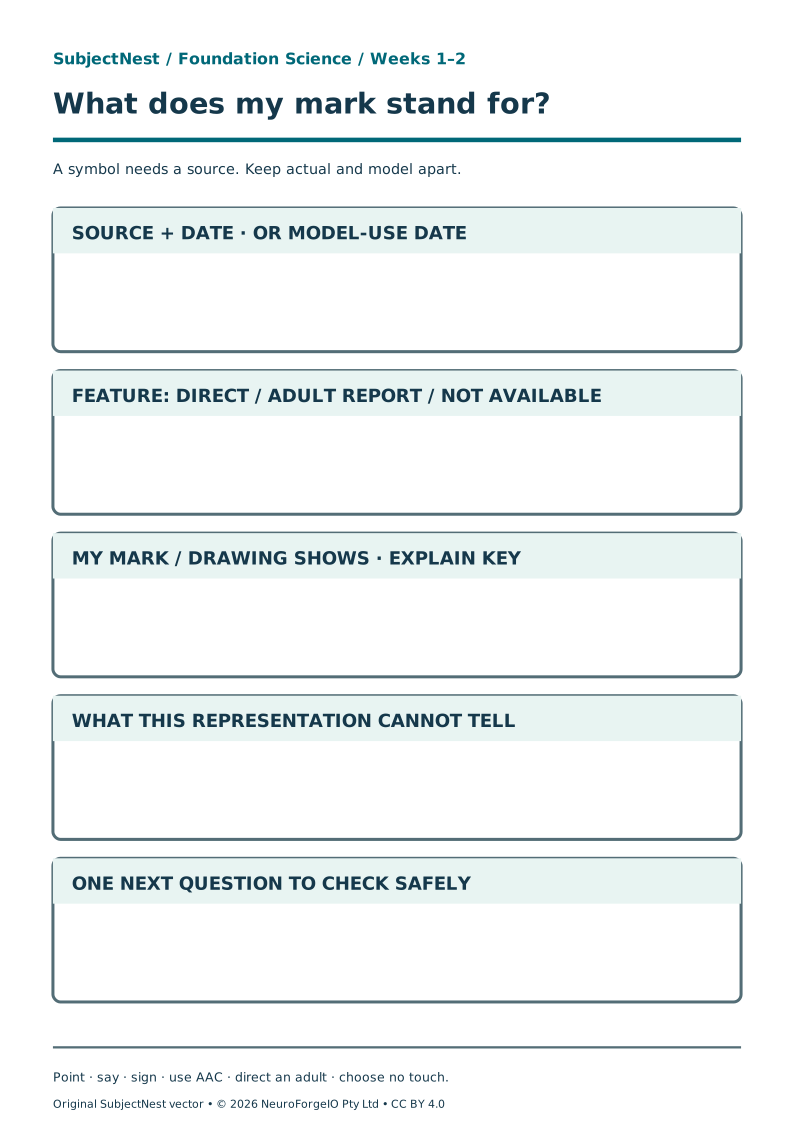
- “What three kinds of marks are actually in the invented drawing? Tell them in order.” Rectangle outline, zigzag, two separate short bars.
- “Could the drawing alone tell us a real object's material or how its surface feels? Why?” It cannot; no actual object/source is supplied by the drawing.
- “If we also have this separate approved real object, what is one feature you directly notice (or what did an adult report), and what are its own source and date?” If unavailable, child selects ACTUAL OBSERVATION NOT AVAILABLE; do not invent a feature.
- “Choose a mark, word or tactile card for the source feature you really know. What does it stand for, and what still needs checking?” A mark derived from model goes under DRAWING SHOWS; a mark for a real source is labelled DIRECT only if directly sensed, or ADULT REPORT if described by the adult.
After the first response: Use the key to plan a real observation or representation follow-up. The two checks do not establish a whole-year Science standard. Original SubjectNest checks © 2026 NeuroForgeIO Pty Ltd, CC BY 4.0.