Before each lesson, follow the local safe-source preflight. Each script has 3 + 4 + 5 + 7 + 4 + 2 minutes, with one same-target learner route chosen flexibly. Save date, actual object/source, method, child's first response and support. When no approved actual object is present, run the original paper model to practise questioning/representation but write REAL OBSERVATION NOT AVAILABLE; do not credit local material or safe-investigation evidence from a drawing. The child may watch, point, sign, use AAC, speak privately, draw or direct an adult; direct sensory observation and an adult-reported description are recorded differently. Days 5/10 checks and key stay unseen until first independent response.
Week 1 · Day 1 — What can we actually notice here?
Goal: ask one question about a safe local object and separate an actual noticed feature from a guess. Proposed codes: AC9SFH01, AC9SFI01, AC9SFI02. Prepare: one preflighted broad local object, date/source card, safe-notice poster, Card 1.
- Welcome/safety · 3 min. Read LOOK/ASK/TRY SAFELY. Identify the approved table boundary and no-touch option; do not require tasting, smelling or handling.
- Source · 4 min. Name the actual object and local date, then let the child access it directly if possible or hear an exact adult report, with access route logged. If none available, use C as MODEL ONLY.
- Model · 5 min. Teacher says, “I see this edge is straight” only if actually observed; then “I wonder whether it will bend” as a question, not a result. Point to two record fields.
- Child try · 7 min. Child chooses desk-tray, book area or making-table route on Card 1; gives one actual feature and one question, with source/date and mode recorded. An adult description is attributed as reported information.
- Check · 4 min. Offer “It must be soft because it looks pale.” Child identifies that colour alone has not tested softness; choose a safe way or leave UNKNOWN.
- Exit · 2 min. Ask what would be needed before saying a different real object has the same feature. Keep one observation for later, not a class-wide claim.
Week 1 · Day 2 — How can we investigate safely with different senses?
Goal: describe an actually observed property of two approved broad objects and name the access/safety route. Proposed codes: AC9SFU03, AC9SFI02, AC9SFI05. Prepare: preflighted paper sheet and fabric square or local equivalents, source/date log, Card 2.
- Safety choice · 3 min. Offer look, agreed touch of a clean broad object, adult movement demonstration or pass; no unknown smell/taste.
- Source · 4 min. Record actual item identity and teacher-verified material label or UNKNOWN. Show both objects separately, without assuming surface feel from a picture.
- Model · 5 min. Teacher describes one feature they actually access (“this sheet has a straight edge”) and records whether that was sight/touch/report. Avoid “all fabric feels…” generalisation.
- Child try · 7 min. Child chooses art-table, book-cover or quiet-table route on Card 2 and compares one feature of two real objects under safe conditions. Adult scribes exact observation and child access route.
- Check · 4 min. Present “The fabric square must always bend more than paper.” Child says the claim requires a specific gentle try; if a try happened, name its conditions and result only for these items.
- Exit · 2 min. Share one question/observation with a consenting adult or privately record it; public peer sharing is optional.
Week 1 · Day 3 — Predict, then look at what this object does
Goal: make a prediction and compare it with one actual gentle object test. Proposed codes: AC9SFI01, AC9SFI02, AC9SFI04. Prepare: approved broad sheet/card, marked mat, prediction/check mat, Card 3.
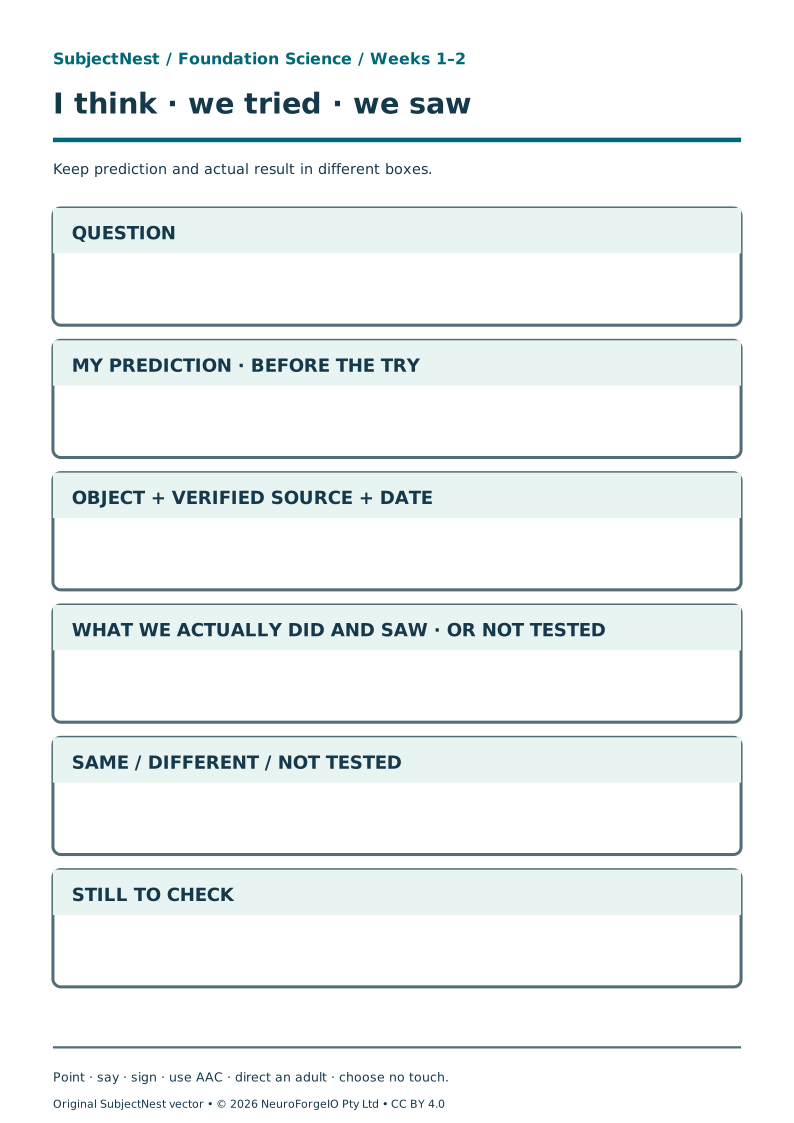
- Preflight · 3 min. Adult shows the broad clean object and explains that only an adult or consenting child will lift one short edge gently; no forced crease or small part.
- Question · 4 min. Ask “What might happen when one short edge is lifted and released?” Record child's prediction before moving it and the object/date/source.
- Model · 5 min. With a different already seen object or a paper-only teacher simulation clearly labelled MODEL, demonstrate how to leave ACTUAL RESULT blank until an actual try occurs.
- Child try · 7 min. Child selects toy-workshop, drawing desk or library-folder context on Card 3; observe an approved actual gentle try, or direct an adult. Record exactly what moved/bent/stayed and who did it. If not possible, stay with prediction/model and mark no actual result.
- Compare · 4 min. Child marks prediction SAME / DIFFERENT / NOT TESTED against what actually happened, with guidance; no “wrong prediction” penalty.
- Exit · 2 min. Ask what changed between tries, if any, and why one result does not prove a rule for every object of that material.
Week 1 · Day 4 — Can one object show more than one material?
Goal: describe verified parts and observed properties of a safe actual composite object, or identify evidence still needed. Proposed codes: AC9SFU03, AC9SFI02, AC9SFI03. Prepare: approved broad cardboard backing with broad fabric panel attached by adult or another verified composite object, source log, Card 4.
- Safety/source · 3 min. Name actual date, source, verified material parts and no-touch option. If the composite is not verified/safe, use C's diagram for question practice only.
- Observe · 4 min. Child views/feels if agreed or hears attributed adult description of two large visible parts. Avoid guessing hidden composition.
- Model · 5 min. Point to PART 1 / PART 2 on the blank log; teacher demonstrates “the backing is labelled cardboard by our preparation record; the panel is labelled fabric; this edge I can see is straight.” Keep material label source apart from sensory feature.
- Child try · 7 min. Child chooses book-cover, puppet prop or classroom sign-base route on Card 4 to describe each part and one actually observed feature; may direct adult to point. Mark UNKNOWN for unverified material.
- Check · 4 min. Offer “The picture proves the back is plastic.” Child replies a drawing does not verify hidden material; identify what source or real observation is needed.
- Exit · 2 min. Record one shared/specific feature without claiming all composite objects behave alike.
Week 1 · Day 5 — Fresh safe observation check
Goal: use a new approved real object to ask, notice and record a feature, or distinguish a fresh paper representation from actual observation. Proposed codes: AC9SFU03, AC9SFI01, AC9SFI02, AC9SFI03. Prepare: teacher-held Day 5 check, blank log; after-check Card 5 only.
- Welcome · 3 min. State that the check will choose next teaching, not rank children. Offer direct accessible observation, adult report with attribution, or paper model when local object is unavailable.
- Warm retrieval · 4 min. Revisit Day 1's known object only; do not preview the fresh object/model or question.
- Fresh source · 5 min. Adult introduces the new preflighted object with date/verified material label or the explicitly fictional fallback; child gets time to inspect/request description without a cue to answer.
- First independent response · 7 min. Child asks one source-bounded question, identifies one actually noticed feature (or only drawn feature in fallback), and places source/date/unknown in the log. Save exact response and prompt before teaching.
- Reason/source · 4 min. Child says whether their evidence came from direct sense, adult report or paper model and what cannot yet be claimed; no surprise contact.
- Close · 2 min. Key selects next move. After the first record, release Card 5 practice with a different case.
Week 2 · Day 6 — A picture is a representation, not the object
Goal: describe exactly what invented model C shows and name a real-object property it cannot settle. Proposed codes: AC9SFI03, AC9SFI05. Prepare: C model diagram, exact linear/tactile description, actual approved local object if comparing, Card 6.
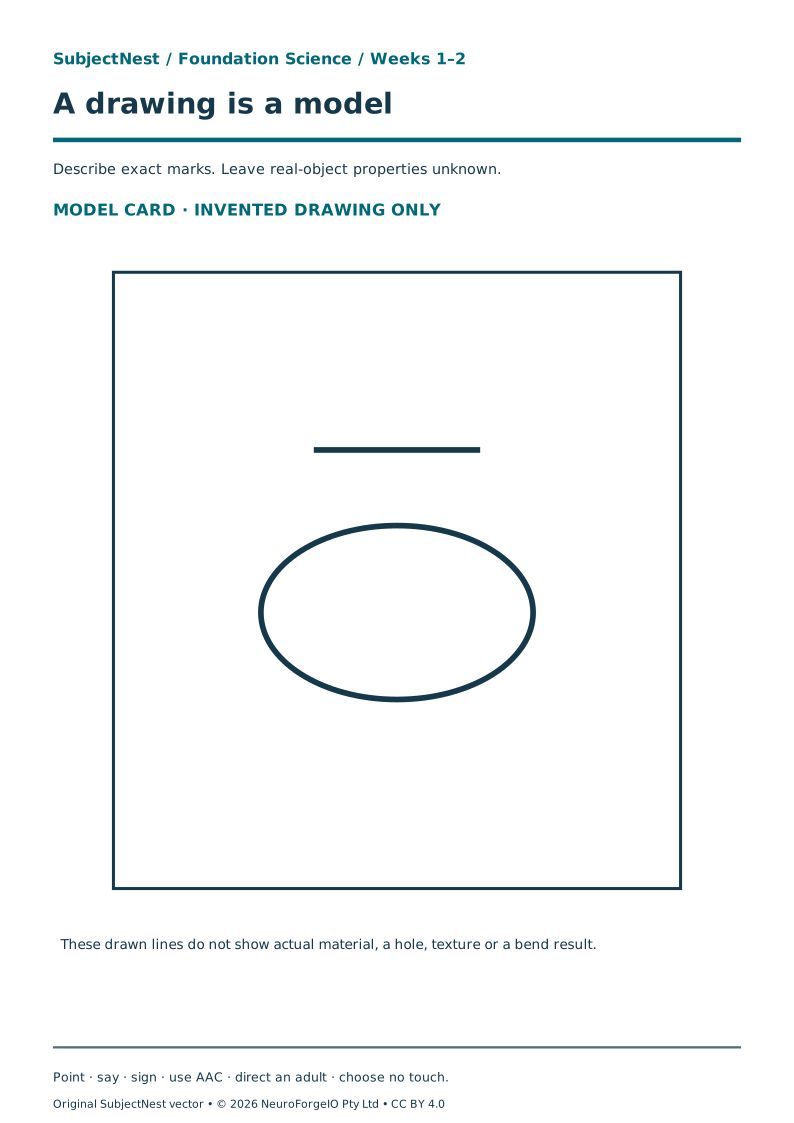
- Model label · 3 min. Say MODEL CARD aloud and show its label. Explain that it was drawn by the author, not photographed/observed in this room.
- See/hear · 4 min. Present C's rectangle, oval and short line in exact order. Adult describes without adding “hole” or material.
- Model · 5 min. Teacher states “The drawing shows an oval outline.” Put “cardboard”, “smooth” and “bends” under NOT SHOWN until a real source is checked.
- Child try · 7 min. Child chooses library label, paper museum or toy-workshop route on Card 6; names two marks and one unknown using point/AAC/tactile/spoken route. If a real object is offered, log its source/date separately.
- Check · 4 min. Offer “The oval is a hole.” Child notes the line could be a printed oval, a cutout or a symbol; C alone cannot tell.
- Exit · 2 min. Child asks one question they would check on an approved real object; no need to obtain it today.
Week 2 · Day 7 — Make a key for what was actually seen
Goal: link a mark/word to a dated visible feature on an approved local object, distinguishing DIRECT, ADULT REPORT and DRAWING SHOWS. Proposed codes: AC9SFI02, AC9SFI03, AC9SFI05. Prepare: approved real broad object, D key, representation record, Card 7.
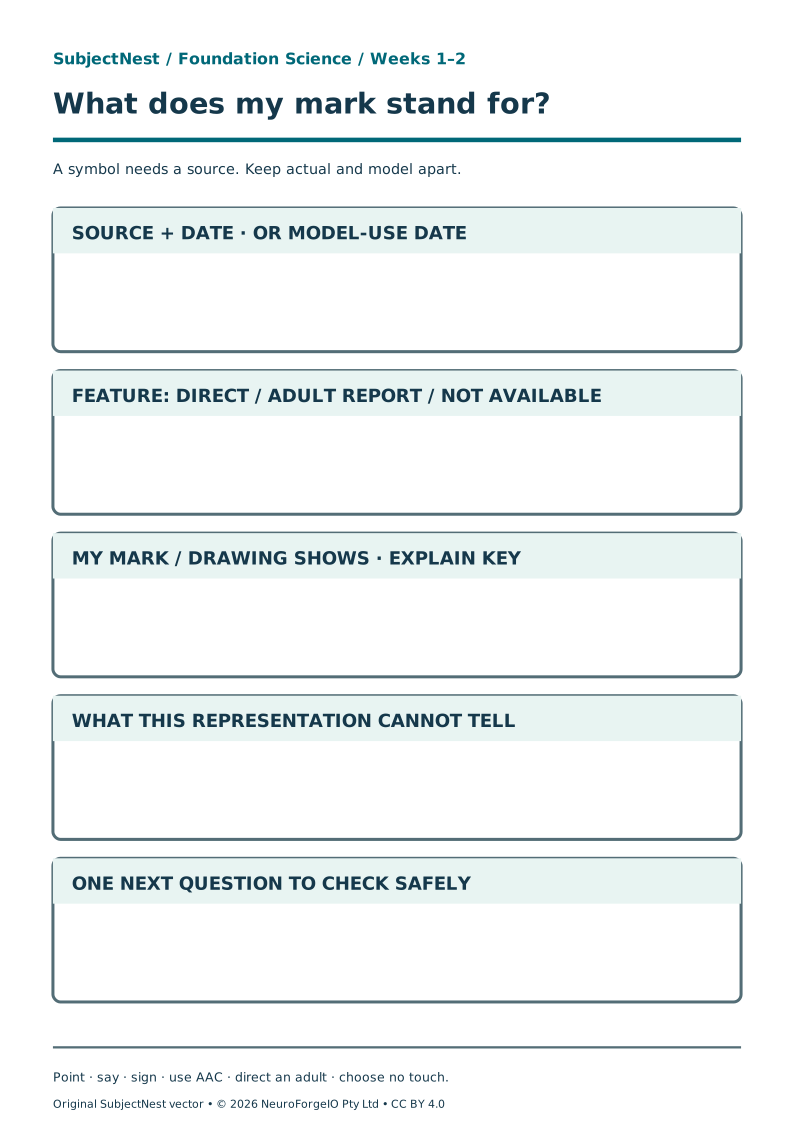
- Source · 3 min. Record date/object/source and access. If no safe real source, use C and mark DRAWING SHOWS only.
- Inspect · 4 min. Child notices a straight or curved edge in real source using direct accessible route, or hears a report labelled adult description.
- Model · 5 min. Put the chosen straight/curve mark with DIRECT only after the child actually accesses that real feature; attribute adult description as ADULT REPORT. Explain
?means not checked, not false. This key is not an official safety symbol. - Child try · 7 min. Child chooses book display, art tray or paper travel sign route on Card 7; draws/selects one mark and gives exact real feature/source/date or “drawing shows” for C.
- Check · 4 min. Offer a curved mark beside an actual straight-only edge. Child compares source and fixes the mark or says which feature was not yet checked.
- Exit · 2 min. Child tells a consenting adult or private record what their chosen symbol means and what it does not tell.
Week 2 · Day 8 — Can our record show a small pattern?
Goal: use a provided template to compare at least two actual observed results and identify a local pattern with guidance, or mark insufficient evidence. Proposed codes: AC9SFI03, AC9SFI04. Prepare: dated logs from actual approved objects, blank representation record, Card 8.
- Source check · 3 min. Count actual dated records, not fictional pictures. If fewer than two comparable actual results, write INSUFFICIENT REAL OBSERVATIONS and use model reasoning only.
- Read records · 4 min. Adult reads each source/date/try condition exactly. Note if object size or adult action differed.
- Model · 5 min. Show how two actual results can be same/different in these tries without generalising to all paper or all fabric. A prediction is separate from the result.
- Child try · 7 min. Child chooses pretend parcel desk, paper art wall or library book cart route on Card 8; groups two or three actual records by one observed feature, cites each, and writes a cautious sentence or marks insufficient evidence.
- Check · 4 min. Offer “All cardboard bends because our one card did.” Child repairs to the exact local item and condition, or says one record is not a pattern.
- Exit · 2 min. Child names one new observation needed to test whether the apparent local pattern holds.
Week 2 · Day 9 — Share an observation and its limits
Goal: communicate one actual dated question/prediction/observation and what the picture or symbol omits. Proposed codes: AC9SFH01, AC9SFI03, AC9SFI05. Prepare: actual Week 1/2 log if available, C/D, blank representation record, Card 9.
- Source gate · 3 min. Choose one actual school-approved dated log; if none, use C and label the task MODEL EXPLANATION ONLY.
- Review · 4 min. Read source, actual observation and child question; distinguish any adult-reported detail from child's own sense route.
- Model · 5 min. Teacher shares a paper model statement “This drawing has an oval; I do not know the real card material” and labels MODEL. Show a real observation needs object/date/method.
- Child try · 7 min. Child chooses classroom sign, library display or paper science notebook route on Card 9; gives question, actual observation (if present), chosen mark/diagram and one unknown to a consenting listener or private record.
- Listener/check · 4 min. If an actual listener asks a question, record exact words and child answer; otherwise say NO ACTUAL LISTENER RESPONSE. A hypothetical question is MODEL, not feedback evidence.
- Exit · 2 min. Keep one next investigable question for a teacher-approved later lesson, not an invented result.
Week 2 · Day 10 — Fresh representation and evidence check
Goal: interpret a new diagram, compare with a separate real safe observation only if available, and state a next check. Proposed codes: AC9SFI01, AC9SFI02, AC9SFI03, AC9SFI05. Prepare: teacher-held Day 10 check, unseen approved object if possible, blank representation record; after-check Card 10 only.
- Welcome · 3 min. Explain the check informs what to teach next; offer private direct/description/model routes and record the source type.
- Warm retrieval · 4 min. Revisit C's known rectangle/oval diagram only, without revealing the held new mark arrangement.
- Fresh source · 5 min. Present the teacher-held new diagram and, if available, a distinct preflighted broad real object with its own date/source. Do not suggest that the diagram depicts that object.
- First independent response · 7 min. Child describes what the diagram shows, one thing it cannot prove, one actual real-object feature if directly observed, and a question for next check. Save exact first response/mode/help.
- Record · 4 min. Child or adult scribe puts DRAWING SHOWS on the model line and real feature as DIRECT/ADULT REPORT/NOT AVAILABLE in its separate field; a fictional mark never becomes local data.
- Close · 2 min. Use key for next teaching. Add only genuinely dated observations to Science work samples; Day 10 does not certify a whole standard.
Boundary: A room sign or picture can help explain a record but cannot establish material, movement or a local event without an actual source. This pack does not claim plants/animals, rolling or First Nations knowledge from a theme. Original SubjectNest scripts © 2026 NeuroForgeIO Pty Ltd, CC BY 4.0.