Before any real inquiry · teacher preflight and provenance
Choose school-approved clean, broad, intact objects such as a plain paper sheet, a wide corrugated-cardboard rectangle and a large washable fabric square. Verify each actual object's material from a reliable local source or known preparation, rather than guessing from colour/appearance. Prepare on a clear table at a comfortable height, with no small/loose, sharp, hot, electrical, food or unknown substances. Check allergies, site policy, handling and access. A child may watch an adult move an object instead of touching it, use AAC/sign/point or direct a placement. Do not taste or smell an unknown object, require touch, photograph a child, collect a personal story or visit an outdoor site. If a local item fails preflight, replace it or use the fictional model and mark REAL OBSERVATION NOT AVAILABLE.
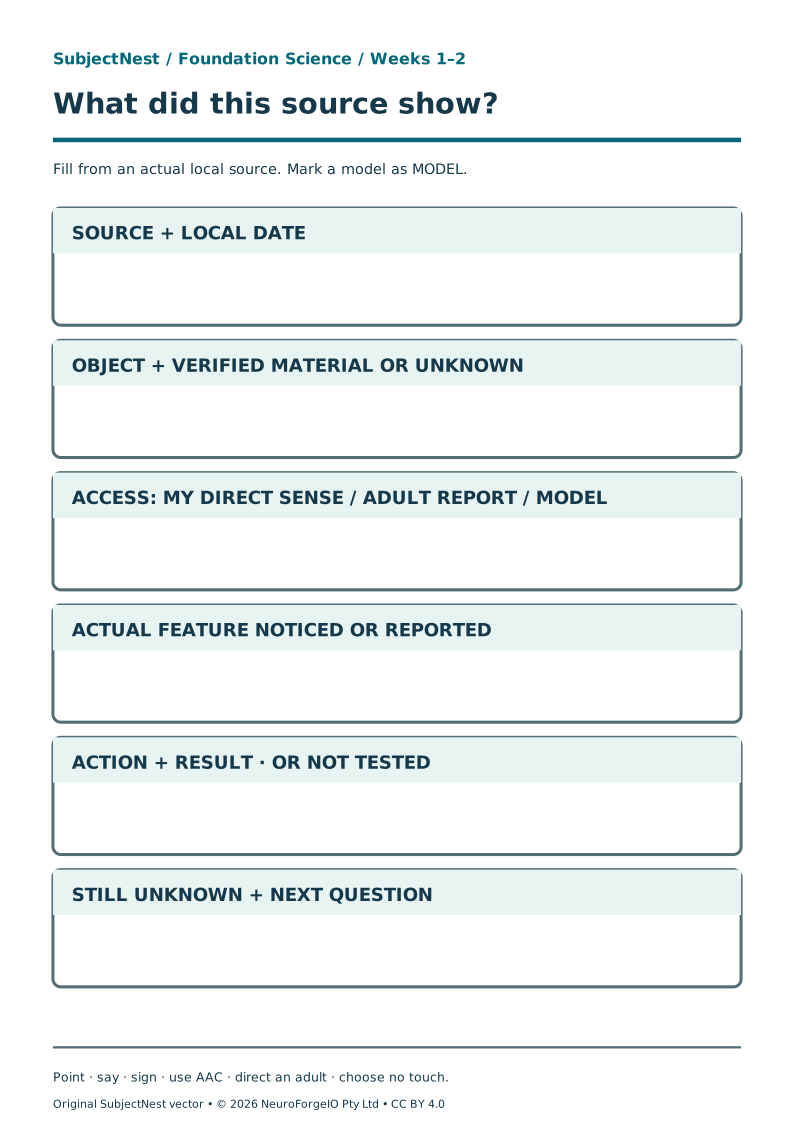
For every actual observation, write local date; object identity and source; verified material label or UNKNOWN; who moved it and how; visible/tactile feature actually noticed; access route; child question/prediction if any; result; adult prompt; still unknown on the blank observation log. Use the same exact conditions when comparing one gentle try to another as far as practical and note differences. “Bent in this try” is evidence about this object/action, not all paper, fabric or cardboard. Nothing in this public pack says what any local object did.
A · Safe-notice routine · original process poster
A4 SVG · PDF. Six adult-read steps: 1 LOOK / 2 ASK / 3 PREDICT / 4 TRY SAFELY / 5 RECORD SOURCE + DATE + RESULT / 6 SHARE OR KEEP PRIVATE. A child can choose a route at every step; a pass or adult demonstration is allowed. “Look” means use the individual's accessible route, including agreed tactile access or an exact adult description. Log an adult description as a reported source, not as the child's independent sensory observation; direct observation requires the child's own accessible sensory evidence. The poster is a routine, not a record of an investigation that happened.
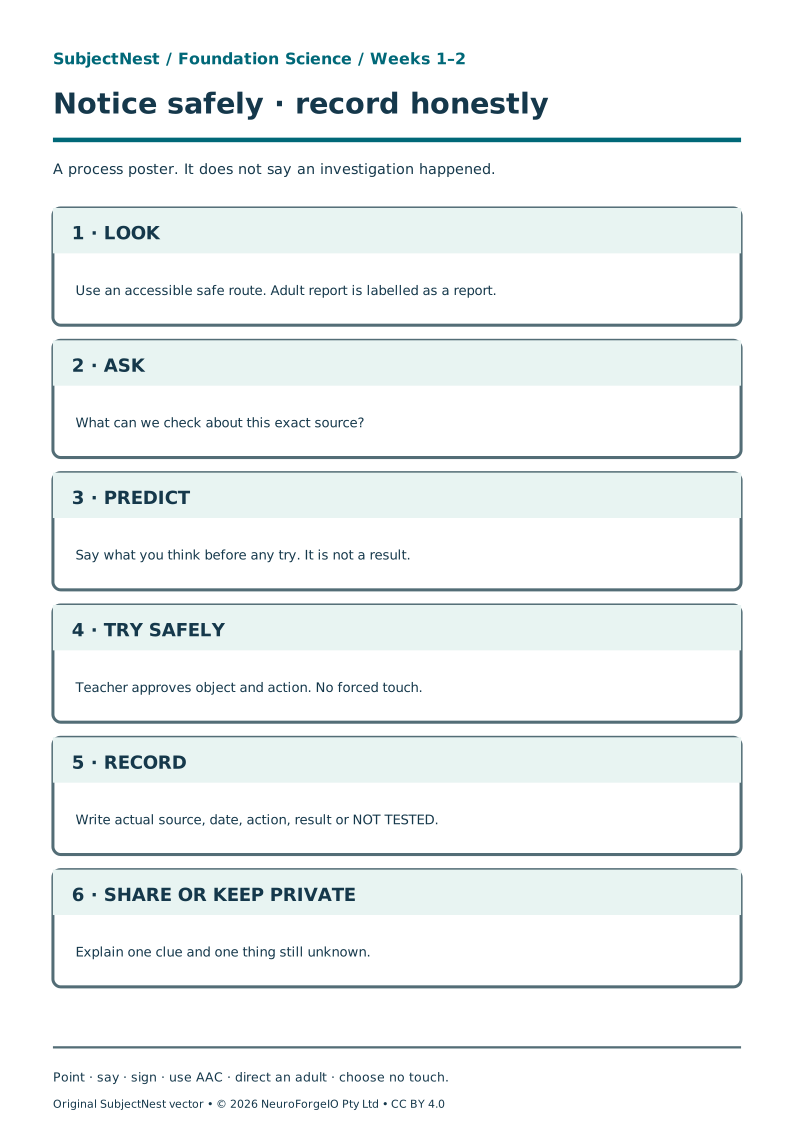
Exact nonvisual/tactile route: adult reads steps in that order. Place six large numbered cards or raised-number tabs left to right; child points, AAC-selects, signs, says or directs an adult to advance. No colour or sound cue carries the order. Explain where the table/source is and ask before any object contact.
B · Real-object set and gentle test · local, not prefilled
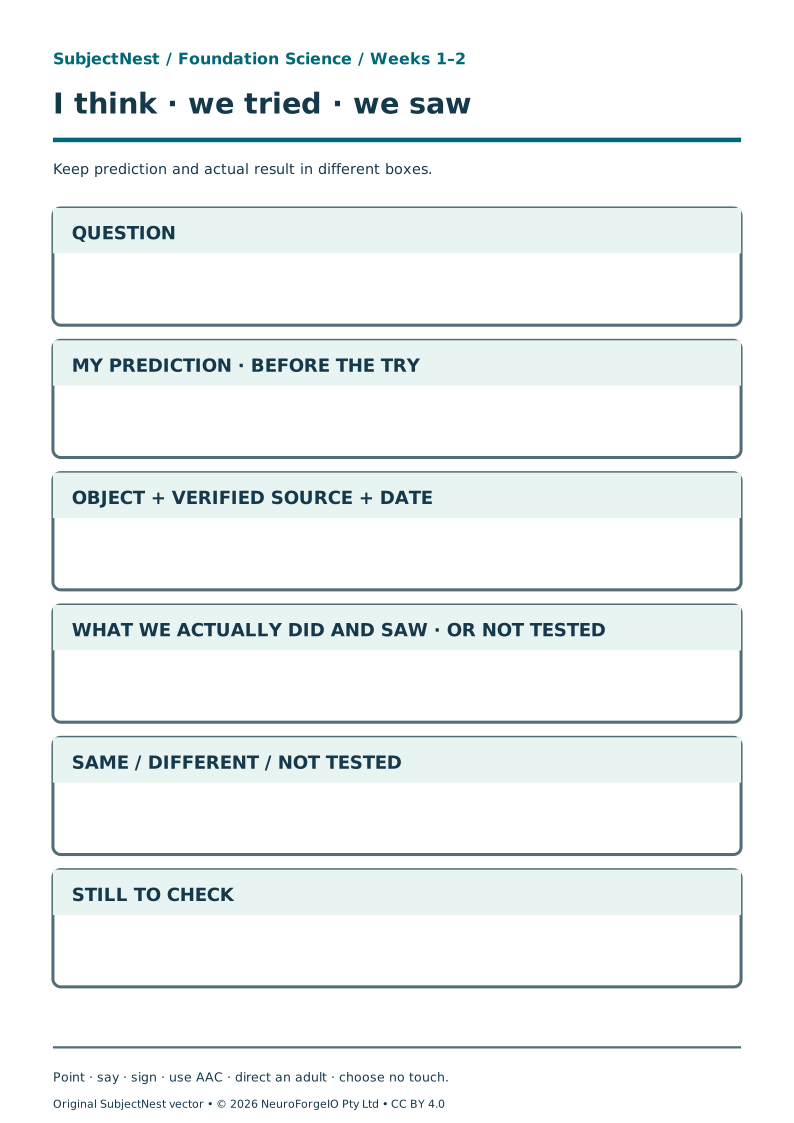
Suggested set: broad plain paper sheet, broad corrugated cardboard rectangle, broad fabric square. A teacher can use other approved objects with material labels verified locally. They may be laid side by side and described without a fixed result. Optional one-action try: with a child watching or consenting, an adult gently lifts one short edge of each broad item over the same marked mat and releases it, without forcing a crease, and records what each actually did; if handling conditions differ or the object must not move, record that. A prediction such as “I think this one may bend” is not a result. A child may make an equally valid visible-feature observation such as edge shape or surface pattern without a bend test. To explore a multi-material object, use a locally verified broad cardboard backing with a broad fabric panel secured by the teacher; identify the two source-verified parts and record each actually observed feature. If the construction/material cannot be verified or safely offered, leave that component out and do not claim a composite-object observation.
Prediction/check mat SVG · PDF has separate QUESTION / MY PREDICTION / OBJECT + SOURCE + DATE / WHAT WE ACTUALLY DID AND SAW / SAME OR DIFFERENT / STILL TO CHECK. An adult may scribe verbatim. A child can compare predicted and observed after an actual local try; a paper-only example remains model practice.
C · Invented model-card diagram · representation only
A4 diagram SVG · PDF. This MODEL CARD is an original invented rectangle outline containing one large oval outline and one short straight horizontal line above the oval. It does not depict a supplied real object. The diagram contains no material label, scale, thickness, texture, bend result, smell, safety conclusion or location. A child can truthfully say what lines are drawn; they cannot infer whether an actual object is cardboard, has a hole rather than a printed oval, or bends. If a teacher later prepares a real card for comparison, record its date/source/feature separately and do not say the printed model itself was observed.
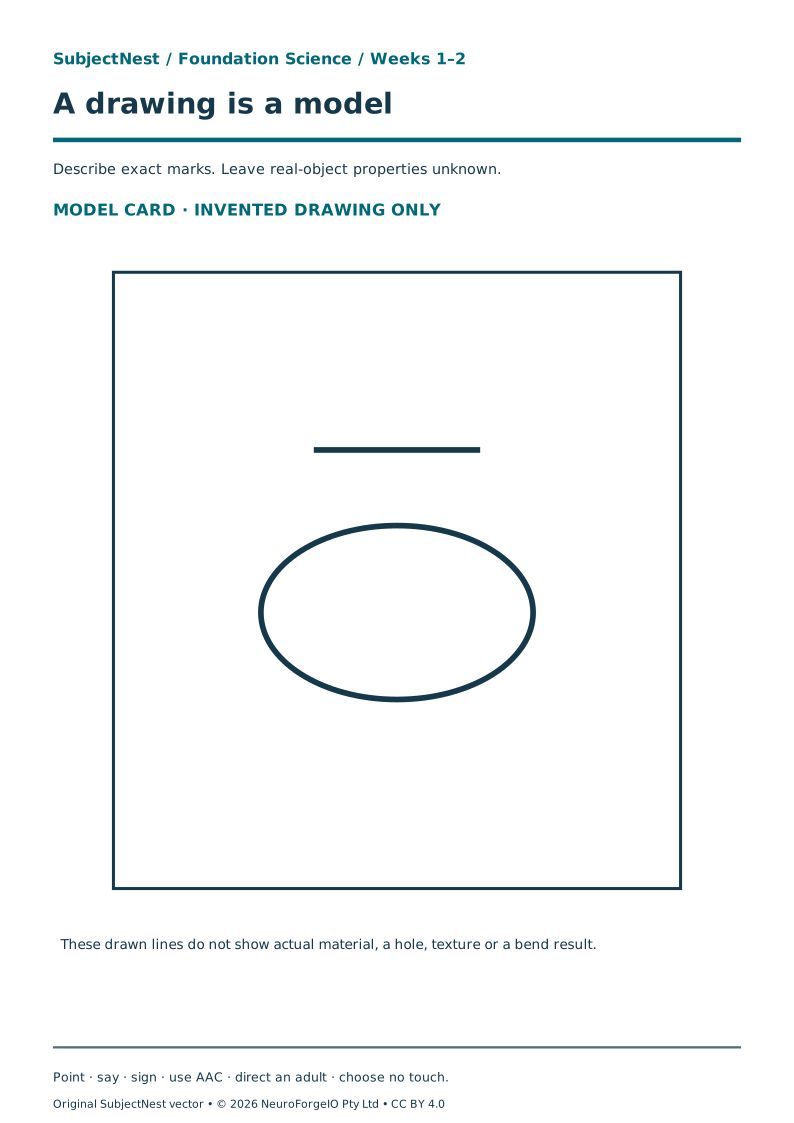
Exact linear/tactile route: “A single broad rectangle outline. Inside is one large oval outline. A short straight horizontal line sits above the oval. Nothing on the page tells material, thickness or whether the oval is a hole.” Build with three broad raised-line strips or describe; the child may direct adult placement and may decline touch. The raised model is still a model, not a real-object observation.
D · Symbol key and representation record · original, non-official
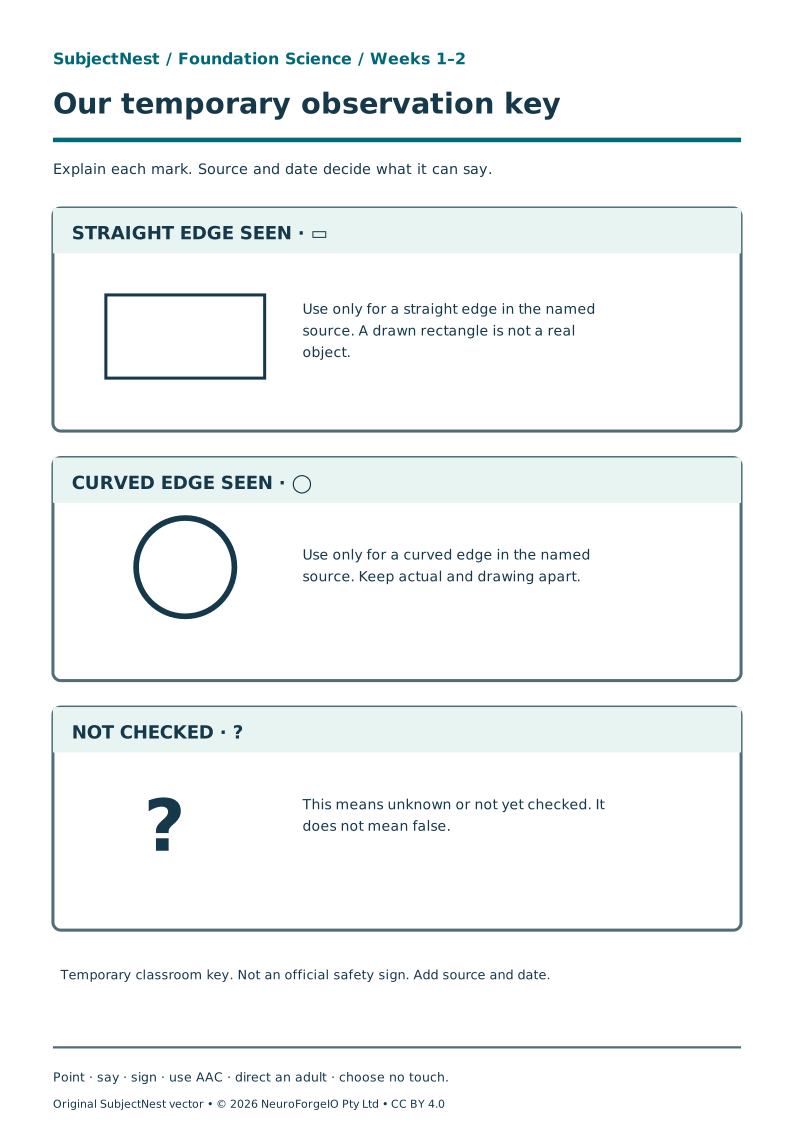
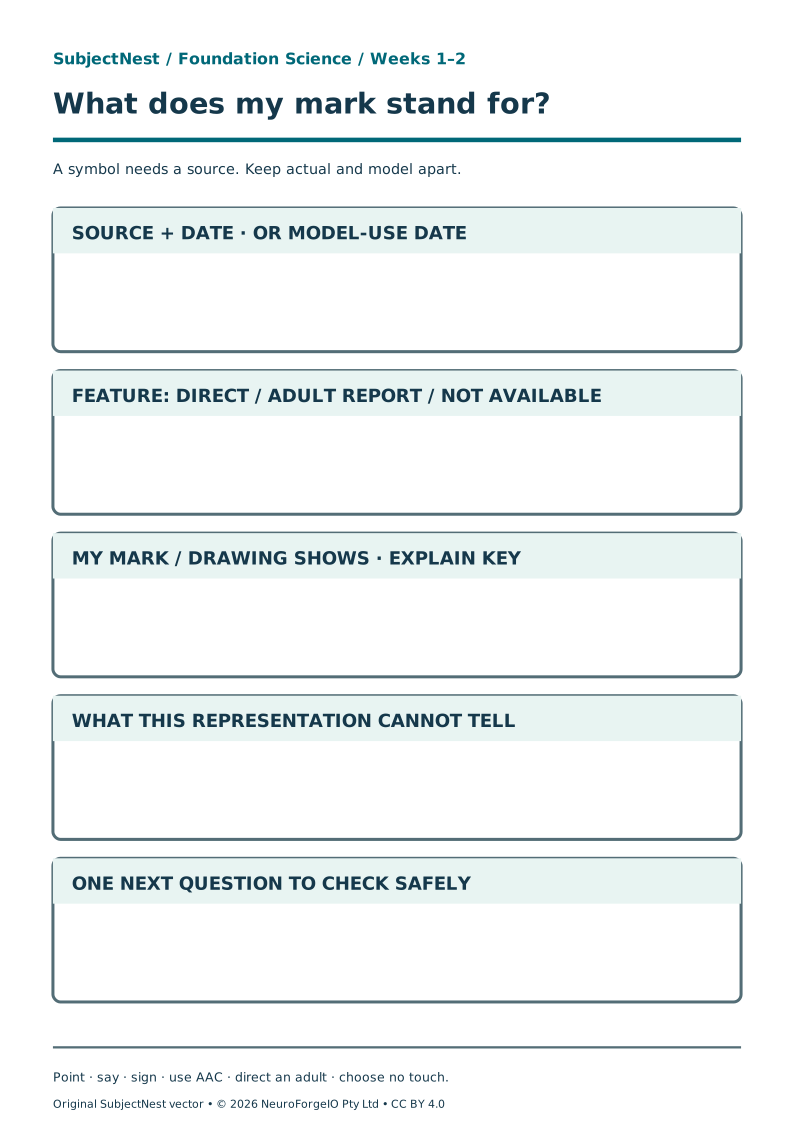
The printable local symbol key SVG / PDF uses only three explicitly explained marks: ▭ = a straight edge recorded as seen; ◯ = a curved edge recorded as seen; ? = not checked. These are temporary record marks, not official safety symbols or universal scientific notation. Children may choose words, tactile line/curve cards, AAC or their own consistent marks. A mark goes into the DIRECT record only after the child accessed the actual feature under recorded conditions; an adult description goes into ADULT REPORT. On a picture-only model, write DRAWING SHOWS, not a real-object feature. Exact nonvisual/tactile key: read in order “outlined rectangle means straight edge in named source; outlined circle means curved edge in named source; question mark means not checked”; use one broad raised straight line, one broad raised curved line and a large NOT CHECKED word card. The key does not identify material or safety. Use the representation record SVG / PDF: SOURCE + DATE / FEATURE: DIRECT OR ADULT REPORT OR NOT AVAILABLE / MARK OR DRAWING SHOWS / WHAT IT DOES NOT TELL US / ONE NEXT QUESTION. Adult reads labels in order and makes a broad tactile/linear equivalent.
E · Fresh-case boundaries for the teacher
The Day 5 and Day 10 checks are held separately and use new teacher-approved source objects if actual observation is possible. Their paper fallback assesses representation reasoning only; it does not create local data. The key describes how to interpret both paths without substituting one for the other. Actual room signs from the integrated Week 2 guide have communication/design purposes; they are Science evidence only if the child links a new sign/mark to an actual dated observation and can state what remains unknown.
All original poster, diagram and template outputs © 2026 NeuroForgeIO Pty Ltd, CC BY 4.0. Ordinary real objects are teacher-provided, not licensed assets in this pack.