Adult gate for a genuine arrow-property observation
Prepare two large same-outline arrows with blunt corners, preferably at least A4 long so nothing is a loose small part. Arrow P is a single clean paper piece. Arrow C has an identical paper front securely joined to a broad clean card backing by an adult, with no loose/exposed tape, staples, sharp corners or unknown coatings. Materials must be locally permitted, safe for the group and free of known allergens/unknown residues. The adult holds each at the same marked GRIP line, over a low tabletop and catch area, gently lifts to the same pretested hand height and observes where the tip sits relative to a fixed broad LEVEL LINE. No child cuts, holds a raised object, climbs, launches, handles adhesive or must touch/hear/look at the arrows. Avoid over-bending or forcing a result. The setup is invalid if grip, outline, hand height, backing attachment, angle, support or observer reference differs. Record interruptions, including a bump or a slipping grip, and repeat only if safe. Neither a real difference nor a real lack of difference is assumed.
Before any run, an adult records school approval, local date, actual materials and method; the child may pose a question and make a prediction before seeing results. Record each actually observed tip as ABOVE / AT / BELOW LEVEL LINE, or UNCLEAR / INTERRUPTED, with source and access. These are ordered positions, not measured millimetres, stiffness ratings or proof of all paper/card. For a child who receives neutral description, record ADULT REPORT and exactly what was described. Optional child-chosen safe direct feel of an adult-stabilised broad arrow may be documented as tactile access only if locally allowed and contact does not change its position; otherwise mark that attempt INTERRUPTED and use an attributed report or paper model. A raised paper diagram is a model, not direct observation of the real lift. If no approved actual run, write REAL OBSERVATION NOT AVAILABLE. Any subsequent classroom route-marker check is a separate school-approved event with date, bounded safe area, actual users/access and consent; material lift evidence alone cannot prove a sign guides people.
Complete original fictional teaching source L · two arrow constructions
FICTIONAL MODEL L. On an invented table, an adult has two imagined large blunt-corner arrows with the same outline and paper front. P is paper only. C is the same paper front with a broad card backing securely attached. A broad printed GRIP line is at the same end of each arrow. A fixed LEVEL LINE is behind the far tip. The imagined adult raises each arrow gently at the GRIP line to the same low hand height, with no push or twist. Before the imaginary lifts, an imaginary learner writes: “I think the backed arrow's tip may be higher.” This is a pretend prior prediction, not a real child's words.
The invented raw record, in order, reads: P try 1: BELOW LEVEL LINE; C try 1: AT LEVEL LINE; P try 2: BELOW LEVEL LINE; C try 2: ABOVE LEVEL LINE. A fifth invented entry reads C try 3: grip slipped; INTERRUPTED; no valid tip position. The two valid P entries are both BELOW; the valid C entries differ (AT and ABOVE). This model lets a child compare the four valid paper entries and name a possible material-composition effect within this invented record. It does not show what actual paper/card does, prove that every backing works, quantify stiffness, or show route-marker usefulness. If an actual local result is different, keep the actual raw result; never replace it with L.
Complete original fictional teaching source M · a route-marker proposal
FICTIONAL MODEL M. An invented reading room has a paper diagram with START, WIDE TURN and READING CORNER in that order. An arrow is proposed at WIDE TURN, but the diagram does not show an actual room, a real sign, a person walking or what any viewer can see. The proposal says: “The backed arrow in model L had a tip at or above the LEVEL LINE in two paper tries, so I might try a backed arrow. I would still need an approved real material check and a separate safe route/access check.” A second pretend caption says, “The arrow will guide everyone.” That last caption has no user/source evidence and must be challenged. No child or family location is supplied. The integrated maths map is another paper representation, not an actual Science material test.
Six A4 aids: exact text and broad tactile/linear equivalents
Use the ordered labels below in large print, braille, plain text, AAC or fixed broad raised borders. Read all labels aloud without pointing-dependent words. Each SVG/PDF is a blank recording mat; leave it blank for a genuine source or write FICTIONAL MODEL across a practice copy. No loose counters or forced contact.
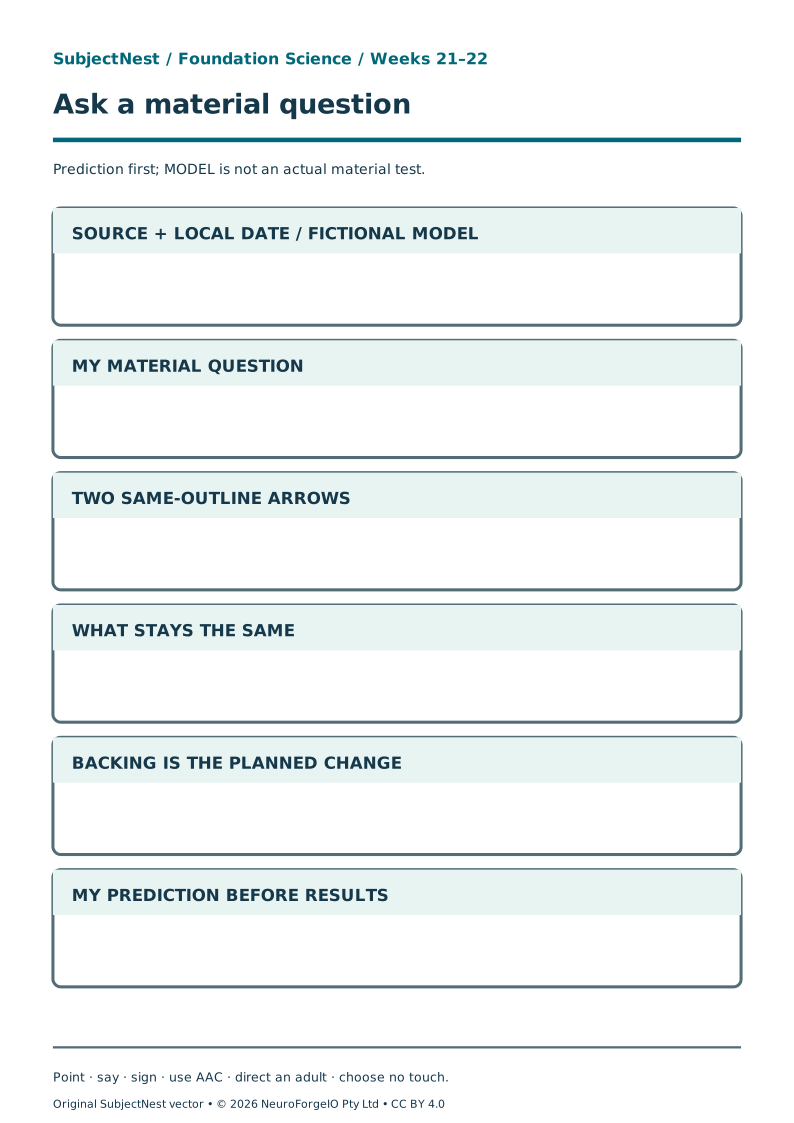
- Material question: SOURCE + LOCAL DATE / FICTIONAL MODEL; MY MATERIAL QUESTION; TWO SAME-OUTLINE ARROWS; WHAT STAYS THE SAME; BACKING IS THE PLANNED CHANGE; MY PREDICTION BEFORE RESULTS. Six top-to-bottom boxes.
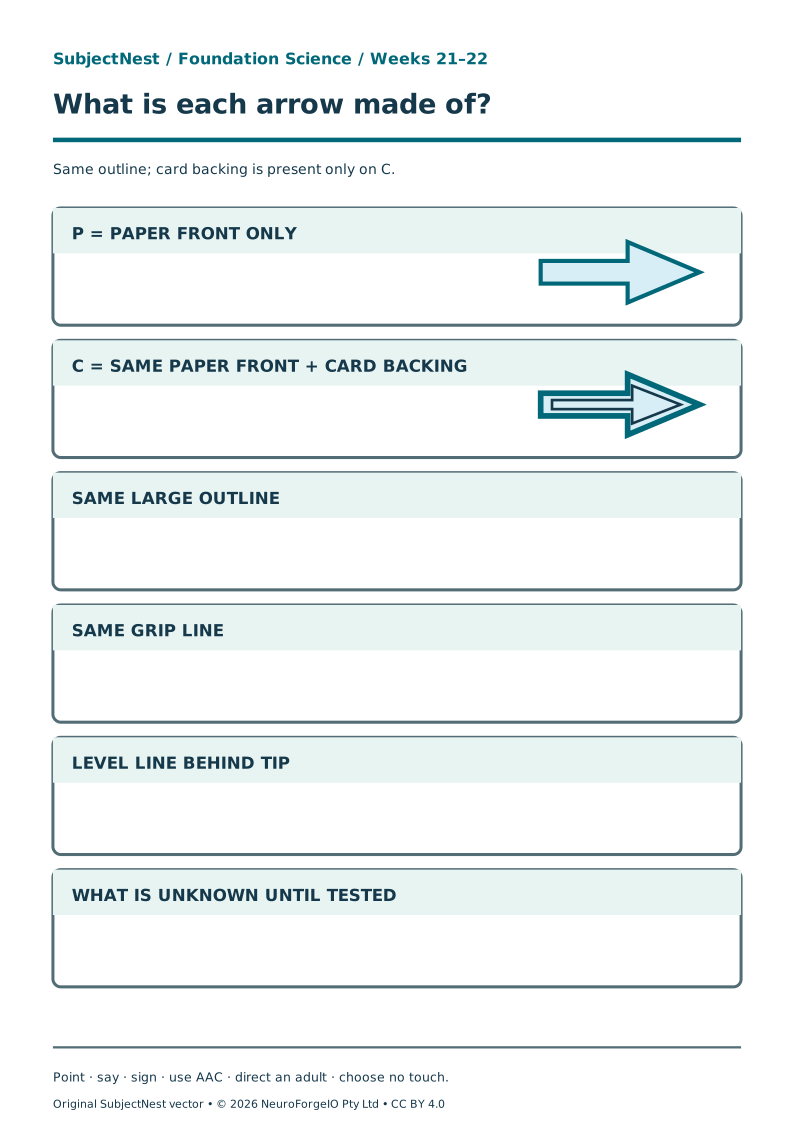
- Arrow parts: P = PAPER FRONT ONLY; C = SAME PAPER FRONT + CARD BACKING; SAME LARGE OUTLINE; SAME GRIP LINE; LEVEL LINE BEHIND TIP; WHAT IS UNKNOWN UNTIL TESTED. Six boxes. Boxes 1–2 include two same-outline horizontal model arrows: P has one border; C has an inner second border for its backing. Neither diagram shows a bend or lift result. For tactile access use two secured large matching arrow outlines and a fixed broad inner backing border on C; say both are models if they are not the actual objects.
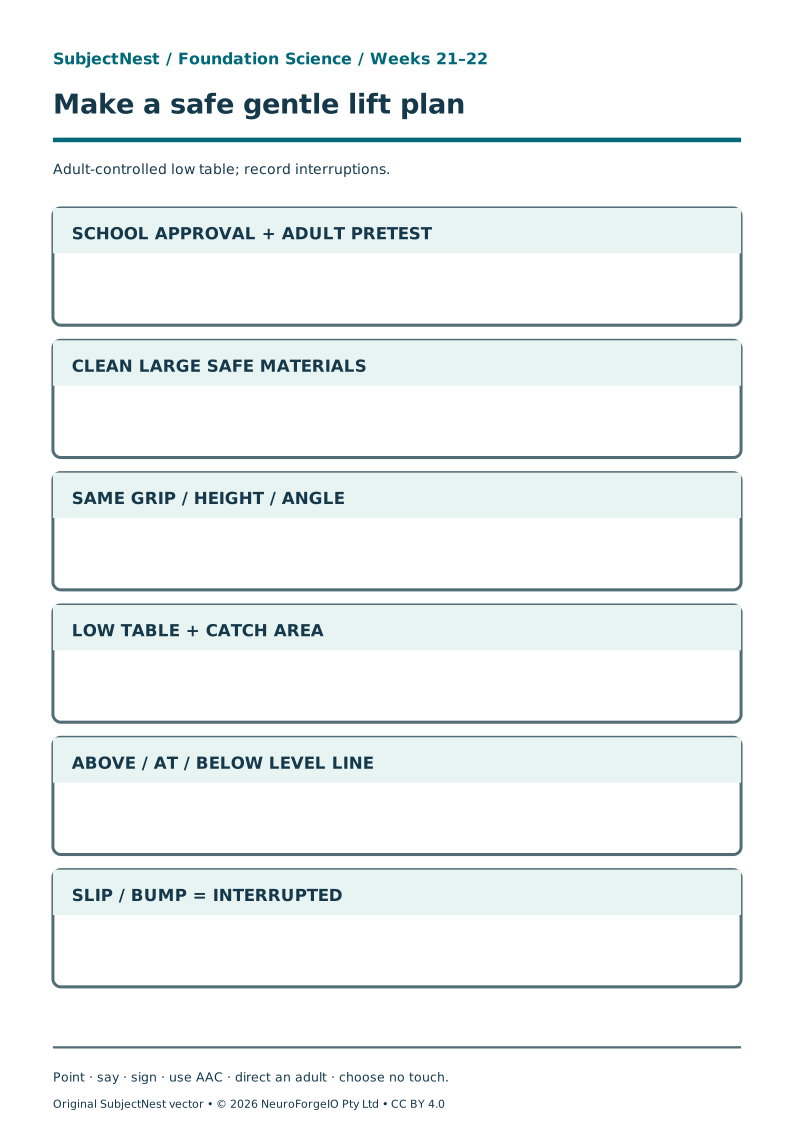
- Lift plan: SCHOOL APPROVAL + ADULT PRETEST; CLEAN LARGE SAFE MATERIALS; SAME GRIP / HEIGHT / ANGLE; LOW TABLE + CATCH AREA; ABOVE / AT / BELOW LEVEL LINE; SLIP / BUMP = INTERRUPTED. Six boxes; place large fixed ABOVE/AT/BELOW labels vertically, no object launch.
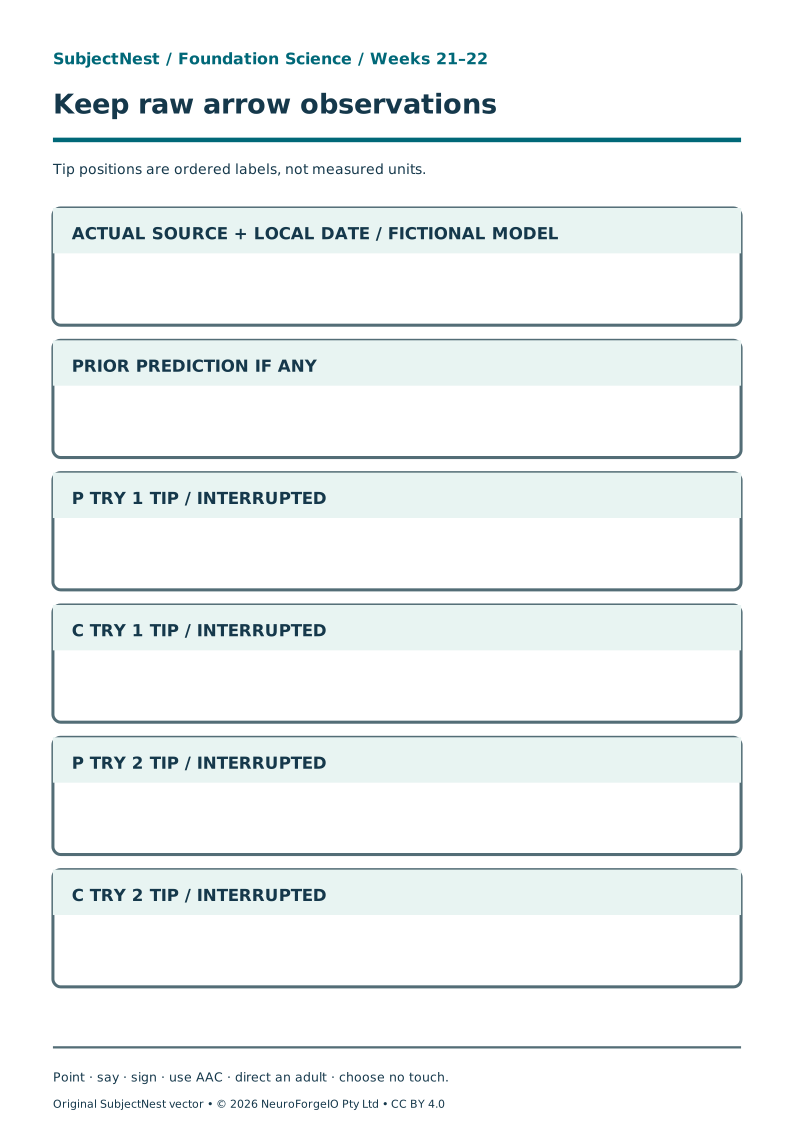
- Arrow record: ACTUAL SOURCE + LOCAL DATE / FICTIONAL MODEL; PRIOR PREDICTION IF ANY; P TRY 1 TIP / INTERRUPTED; C TRY 1 TIP / INTERRUPTED; P TRY 2 TIP / INTERRUPTED; C TRY 2 TIP / INTERRUPTED. Six boxes; retain chronological P/C/P/C order.
- Property claim: SOURCE TYPE + ACCESS; VALID AND INTERRUPTED ENTRIES; EXACT TIP POSITIONS; SAME CONDITIONS / CHANGES; CLAIM ABOUT THESE TRIES ONLY; UNKNOWN + NEXT SAFE CHECK. Six boxes, fixed broad category labels.
- Route proposal: MATERIAL SOURCE + DATE OR MODEL; ARROW PROPERTY EVIDENCE; PROPOSED PAPER POSITION; ACTUAL ROUTE CHECK SEPARATE; ACCESS / VIEW / CONSENT UNKNOWN; SAFE NEXT QUESTION. Six boxes. A paper map is not an evacuation plan or proof of wayfinding.
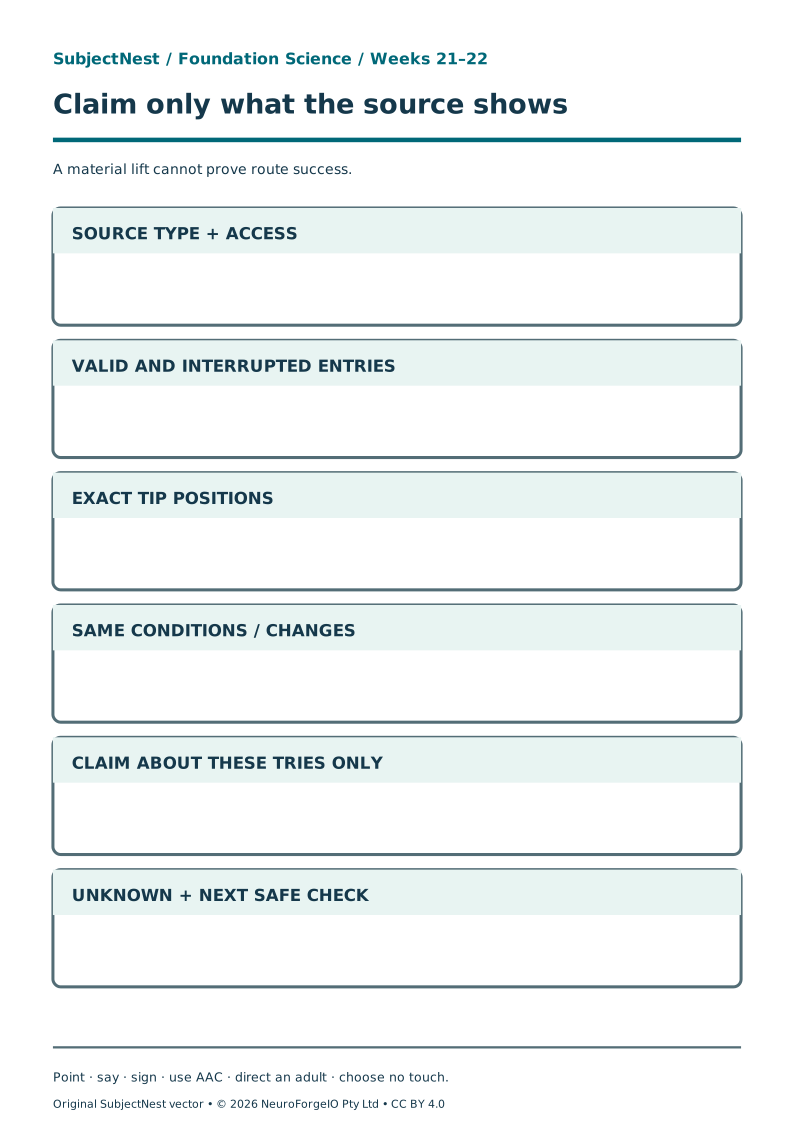
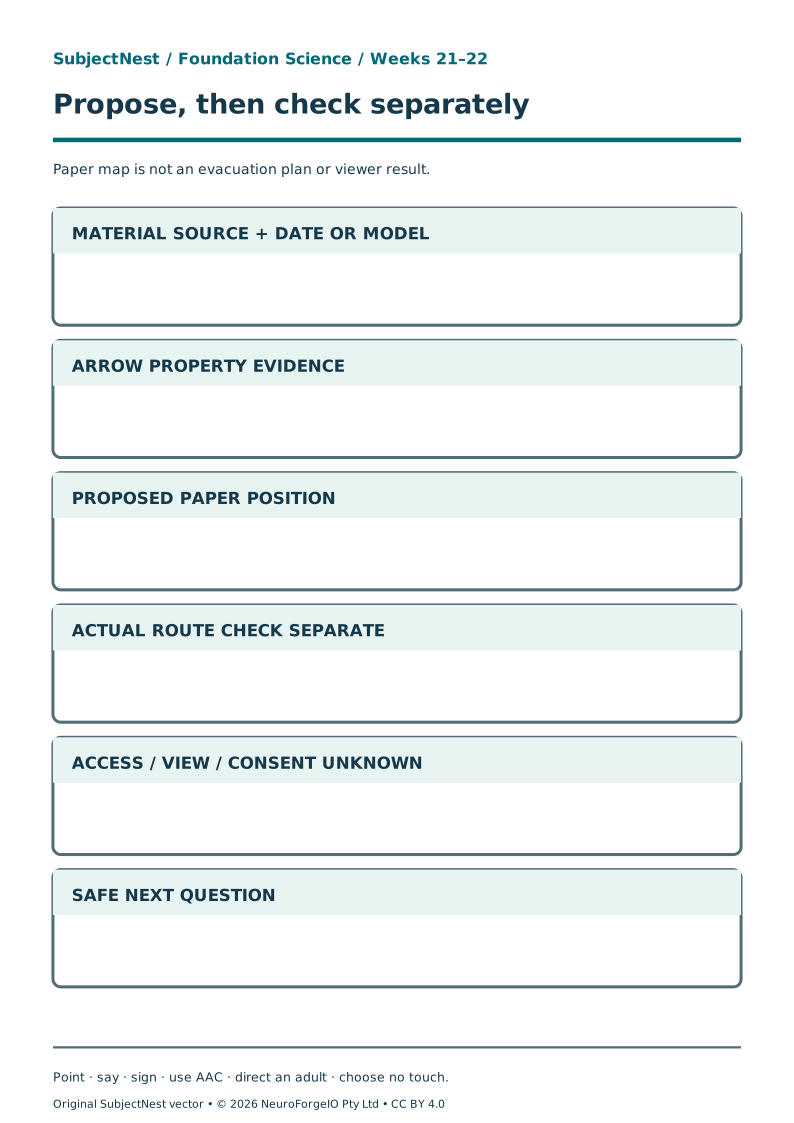
The six PDFs are selectable text and do not rely on colour. A child may decline touch and use verbal/accessible text equivalents. An ADULT REPORT about a genuine event remains attributed; neither the report nor a tactile paper model is relabelled as the child's own direct sight or touch of the real event.