Teacher draft · ten distinct 25-minute lessons, Days 101–110. Week 21 investigates a material-composition question: does adding a broad card backing change how a large paper arrow holds its outline during the same gentle adult-controlled lift? Week 22 uses only source-bounded material observations to plan an accessible route marker. The Science inquiry complements the integrated shape-making Week 21 and paper-route Week 22. A paper route or picture of an arrow cannot prove a material bent or that a person found their way.
Use full source texts and safety gate, ten daily scripts, thirty flexible same-target routes, twenty worked swaps, and ten optional family bridges. Keep the public Day 105 and 110 fresh checks out of teaching until each child's first independent response; their keys are separate. See the exact national/Queensland crosswalk, source and rights ledger, and desk QA.
Evidence and access rule
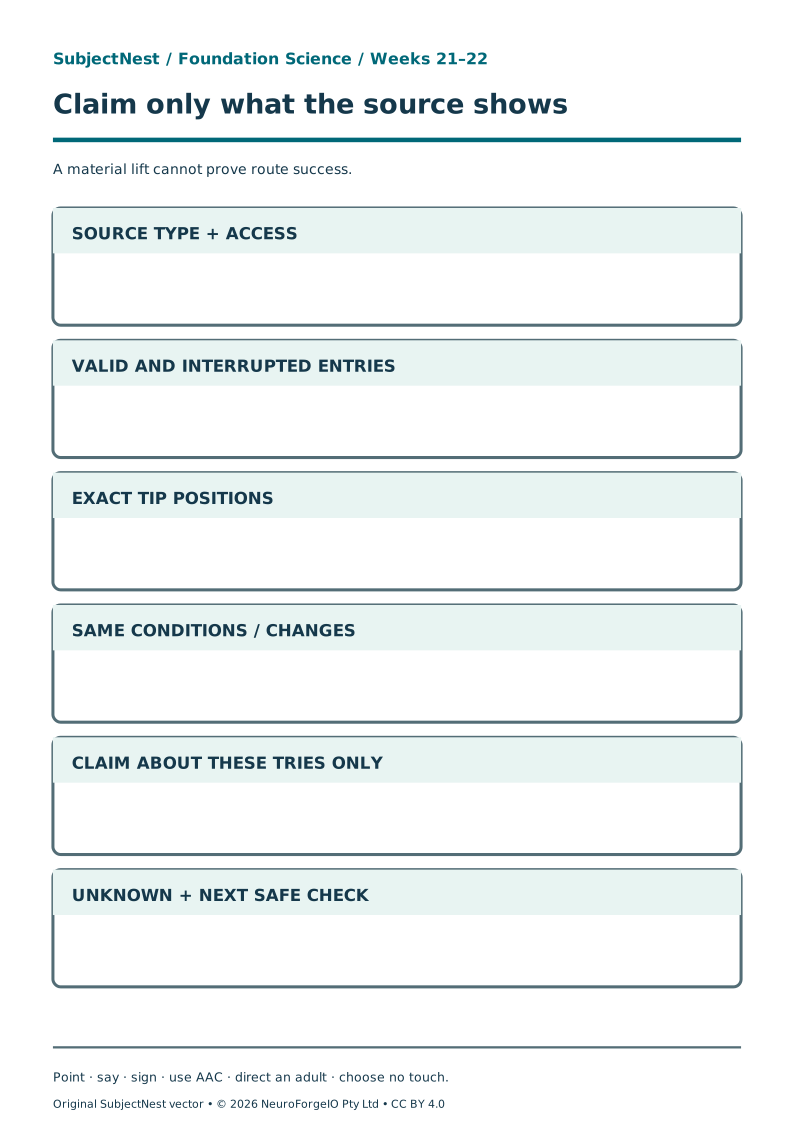
An actual property observation requires a school-approved, adult-prepared and actually performed lift, with local date, both arrow constructions, same grip/support/action, raw observations and interruptions. If that cannot occur, write REAL OBSERVATION NOT AVAILABLE and use the complete FICTIONAL MODEL only for method/source reasoning. A neutral ADULT REPORT stays attributed and is not the child's own direct sensory observation. Shape-art products and maths maps remain their own evidence streams. Do not claim that a backed arrow always stays flatter, that a particular child used a route successfully, or that anyone improved from paper data.
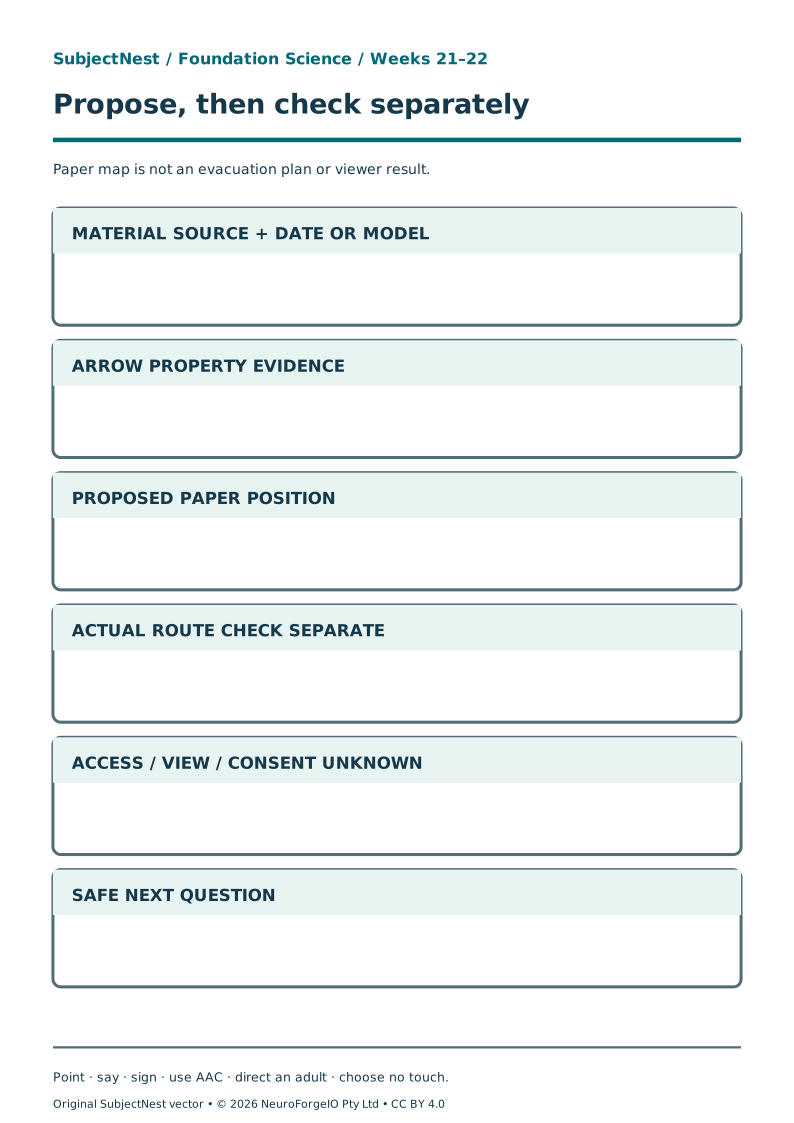
Adults pre-cut large blunt-corner arrows; paper and card are clean, familiar, locally approved, and securely joined on the backed version. No small pieces, exposed staples, loose adhesive, unknown/allergenic material, strong bending, launch, climbing, sharp tool or forced touch/hearing/vision. The trial can be omitted. A child may speak, sign, point, use AAC, direct an adult, hear an attributed report, inspect a secured broad tactile diagram or use the labelled model. These are flexible routes, not fixed learning styles. Any actual classroom route-marker trial needs separate approval, bounded supervision and privacy; no public map of a child's location.
Six original A4 aids
Each vector has a selectable-text one-page PDF. Ordered exact text, oral and secured broad tactile equivalents are in MATERIALS.md; no local result is prefilled.
| Aid | |
|---|---|
| Material question and prior prediction | SVG · PDF |
| Same outline and changed backing | SVG · PDF |
| Safe lift plan and interruption rule | SVG · PDF |
| Raw arrow observations | SVG · PDF |
| Property claim and source limit | SVG · PDF |
| Route-marker proposal and access check | SVG · PDF |
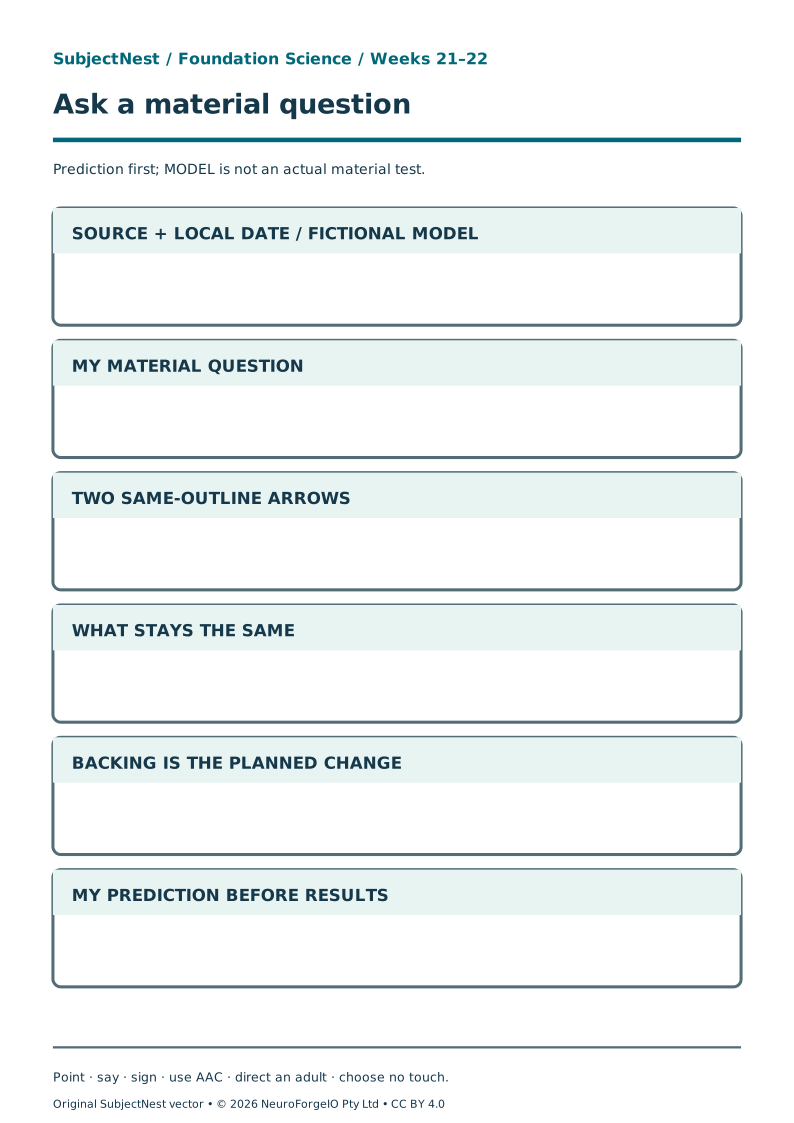
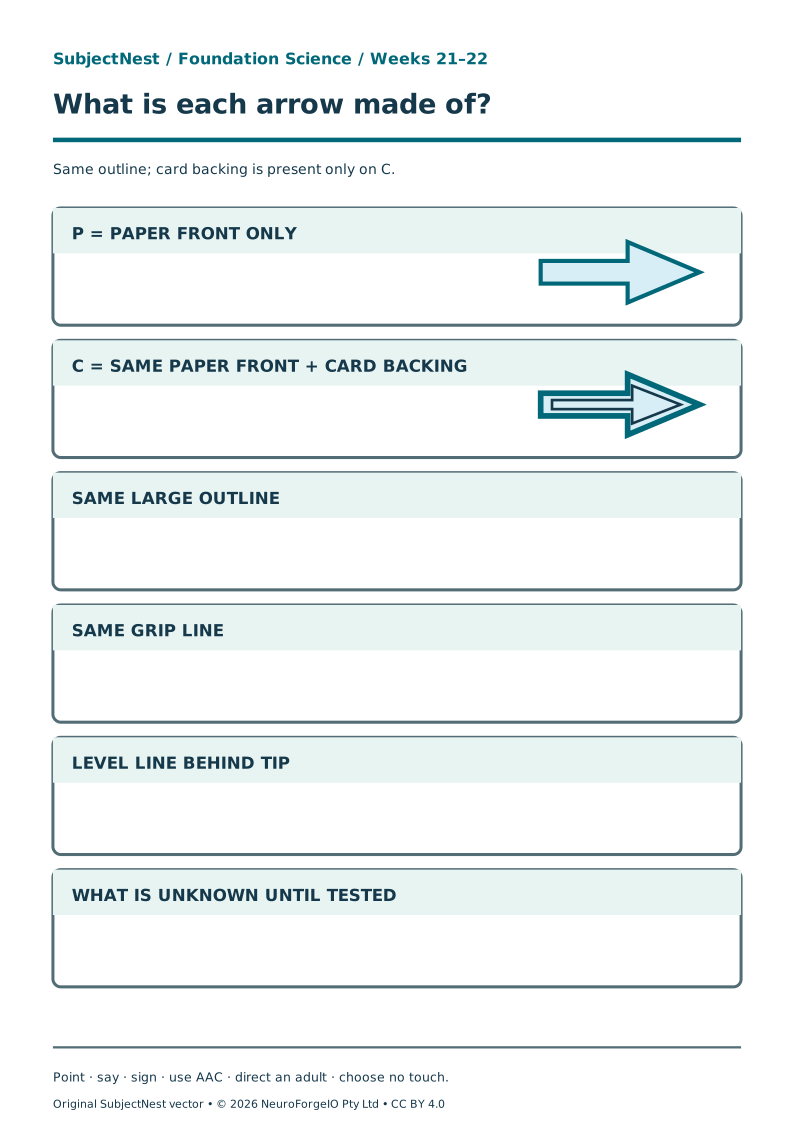
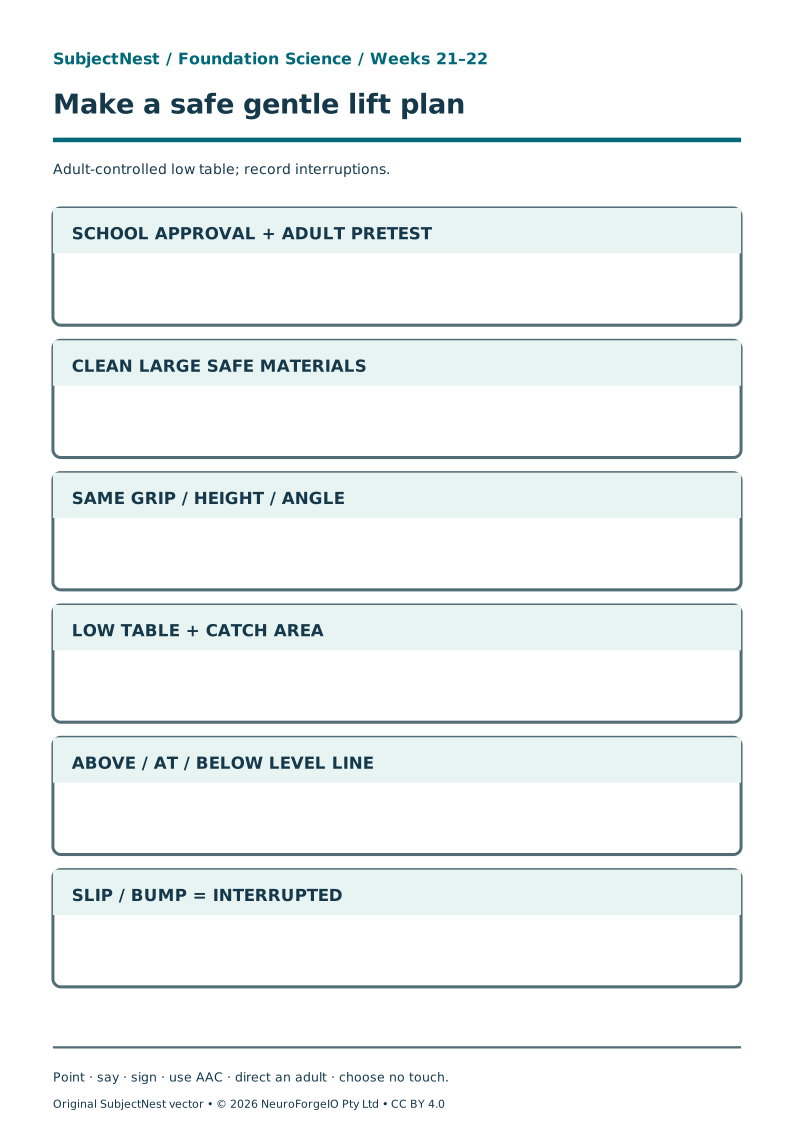
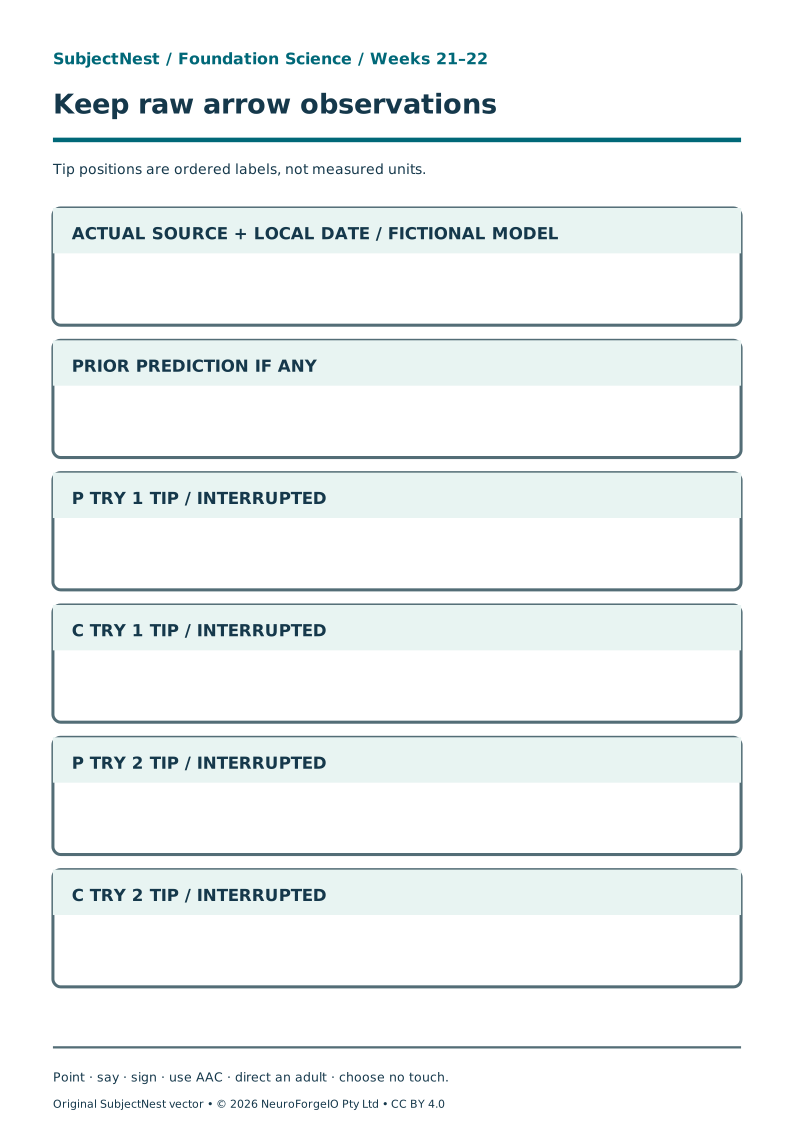
Status: original SubjectNest draft, pending human educator, accessibility, local syllabus, material/safety, privacy and classroom review. Verifier checks structure, official rows, links, assets and SHA manifest; it does not prove classroom efficacy. No pilot, measured gain or ACARA/QCAA endorsement is claimed.
Original scripts, model sources and vectors © 2026 NeuroForgeIO Pty Ltd, CC BY 4.0. Attribute SubjectNest by NeuroForgeIO Pty Ltd, link licence/source and note changes. ACARA retains its own terms for curriculum wording.