Read safe adult gate and complete fictional L/M. Every day totals 3 + 4 + 5 + 7 + 4 + 2 = 25 minutes. Use three flexible same-target routes and optional worked swaps without assigning fixed learning styles. The arrow lift is adult-only and possible only after local approval and pretest. If no genuine dated source exists, state REAL OBSERVATION NOT AVAILABLE and label all paper work FICTIONAL MODEL. An ADULT REPORT is attributed, not the child's own direct sensory observation. Route planning is a context; a paper arrow or material test never establishes that someone actually found a path. Keep fresh Days 105/110 checks unseen until the first independent response; keys are separate. Family prompts are optional.
Week 21 · Day 101 — What is the material question?
Goal: pose a question about one changed material composition and make a genuine advance prediction if a test is planned. Proposed codes: AC9SFU03, AC9SFH01, AC9SFI01. Prepare: L setup paragraph only, question mat, Card 101.
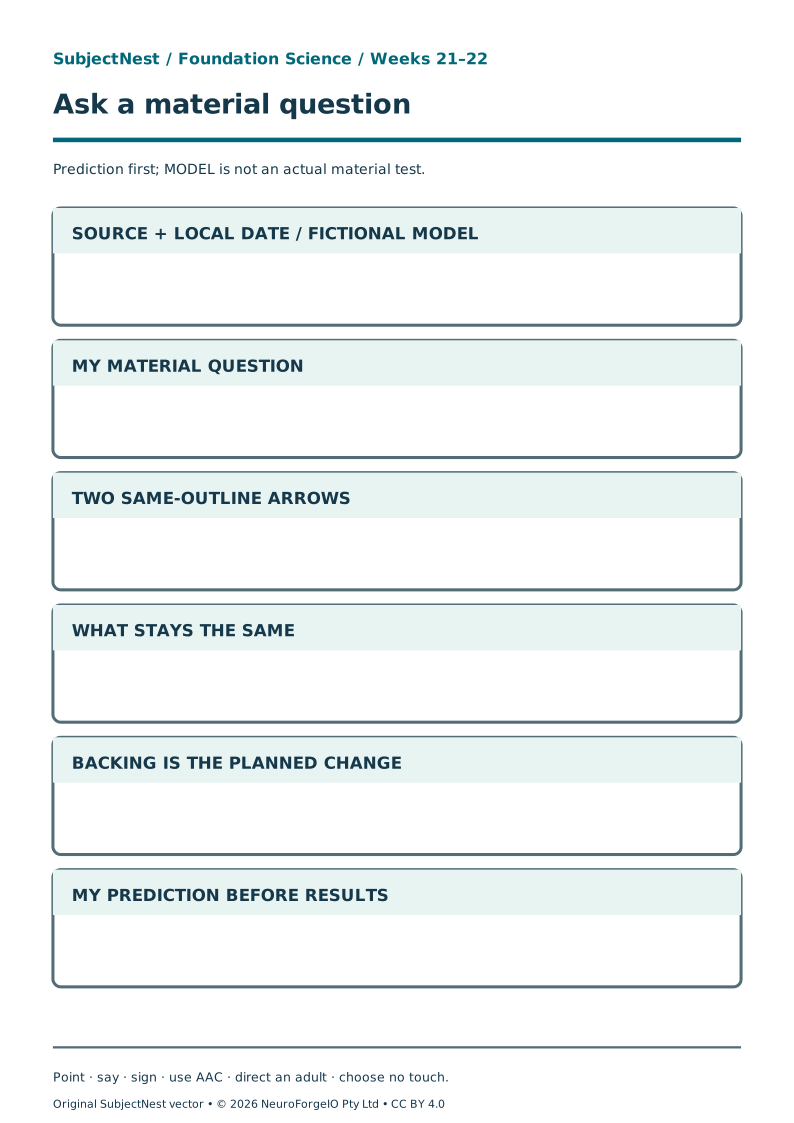
- Source · 3 min. Name L FICTIONAL MODEL; confirm separately whether an adult-approved real pair exists. If not, REAL OBSERVATION NOT AVAILABLE.
- Read setup · 4 min. Read both same-outline arrow constructions before L's results. Children identify paper front on both and card backing on C.
- Model question · 5 min. Adult asks, “Will adding the card backing change the tip position in this gentle lift?” and records a possible prior prediction without claiming an outcome.
- Child try · 7 min. Card 101 routes ask/select one question and prediction before results; adult saves exact response/time/order if a real test will happen.
- Check · 4 min. Ask whether “C is stronger” is already known from its drawing. Child says material presence can be seen in a drawing but bending needs a genuine observation.
- Exit · 2 min. Keep question and prior-prediction status separate from result.
Week 21 · Day 102 — What is each arrow made of?
Goal: describe one-material and two-material constructions without assuming a property. Proposed codes: AC9SFU03, AC9SFI03, AC9SFI05. Prepare: arrow parts, large clean actual samples only if approved, L text, Card 102.
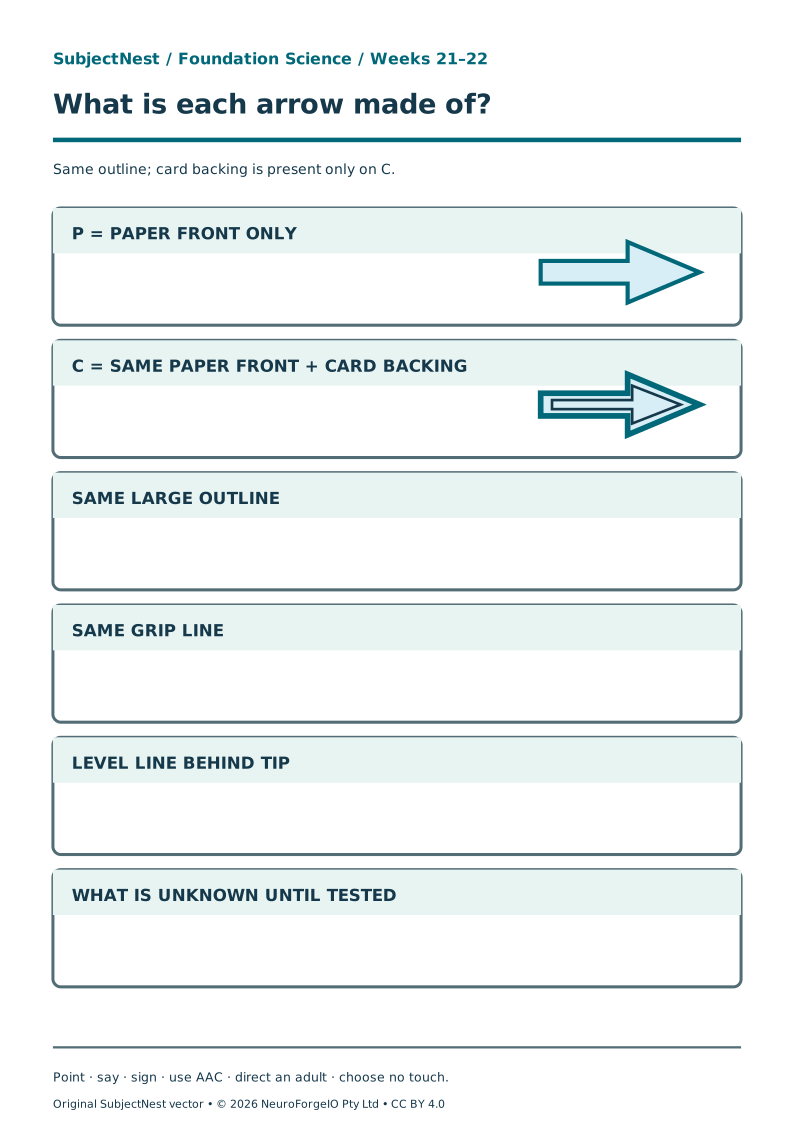
- Label · 3 min. Show actual approved arrows with source/date or paper L cards; do not mix their source labels.
- Compare · 4 min. Read P paper front only and C same paper front plus broad card backing; same outline is a planned control.
- Model · 5 min. Adult distinguishes “two named materials in C” from “C definitely bends less.” Material composition can be described before a lift; a bending outcome cannot.
- Child try · 7 min. Card 102 routes identify P/C parts and one property question. Adult records what was actually inspected or described.
- Check · 4 min. Show a paper picture of the card hidden behind C. Child says not seeing backing from the front does not prove absent; source description matters.
- Exit · 2 min. Save material-part claim with source; no property result added.
Week 21 · Day 103 — What would make a fair gentle lift?
Goal: plan steady grip, height, angle and reference so only backing differs. Proposed codes: AC9SFH01, AC9SFI01. Prepare: lift plan, fixed broad paper GRIP/LEVEL labels, adult local safety decision, Card 103.
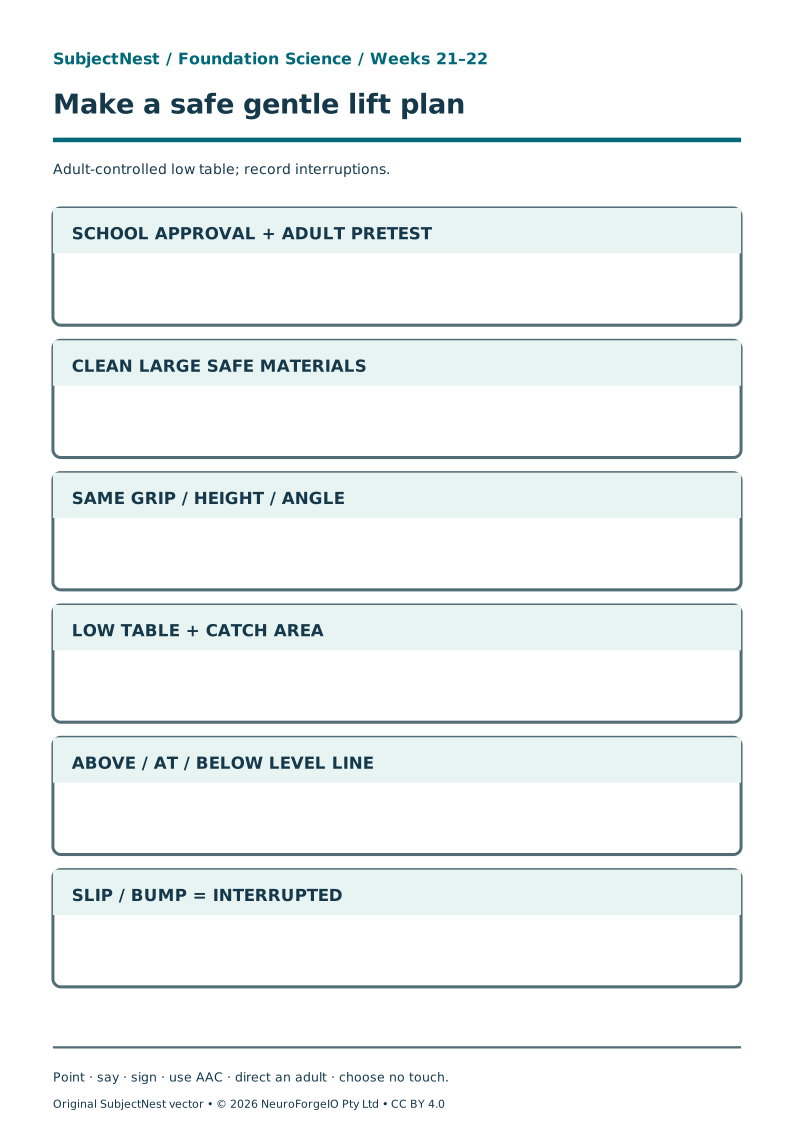
- Safety gate · 3 min. Adult confirms or declines clean large materials, joined backing, low table/catch and local permission; no child cuts or lifts.
- Read · 4 min. Read L's planned same GRIP line, low hand height and LEVEL LINE. Explain ABOVE/AT/BELOW are positions, not millimetres.
- Model error · 5 min. Move a paper GRIP marker for the second pretend arrow; say a changed grip makes cause unclear.
- Child try · 7 min. Card 103 routes set a same/different plan and an INTERRUPTION rule for slipping grip or bump, without conducting a paper “test.”
- Check · 4 min. Ask whether pulling one arrow upward and merely holding the other level is a fair comparison. Child names the extra action.
- Exit · 2 min. Keep plan and safety decision; paper labels remain representation only.
Week 21 · Day 104 — What did the tips show in these tries?
Goal: record raw positions and interruptions from a genuine safe lift if available, or interpret L as model only. Proposed codes: AC9SFU03, AC9SFI02, AC9SFI03, AC9SFI04. Prepare: arrow record, actual approved apparatus only if pretested, complete L, Card 104.
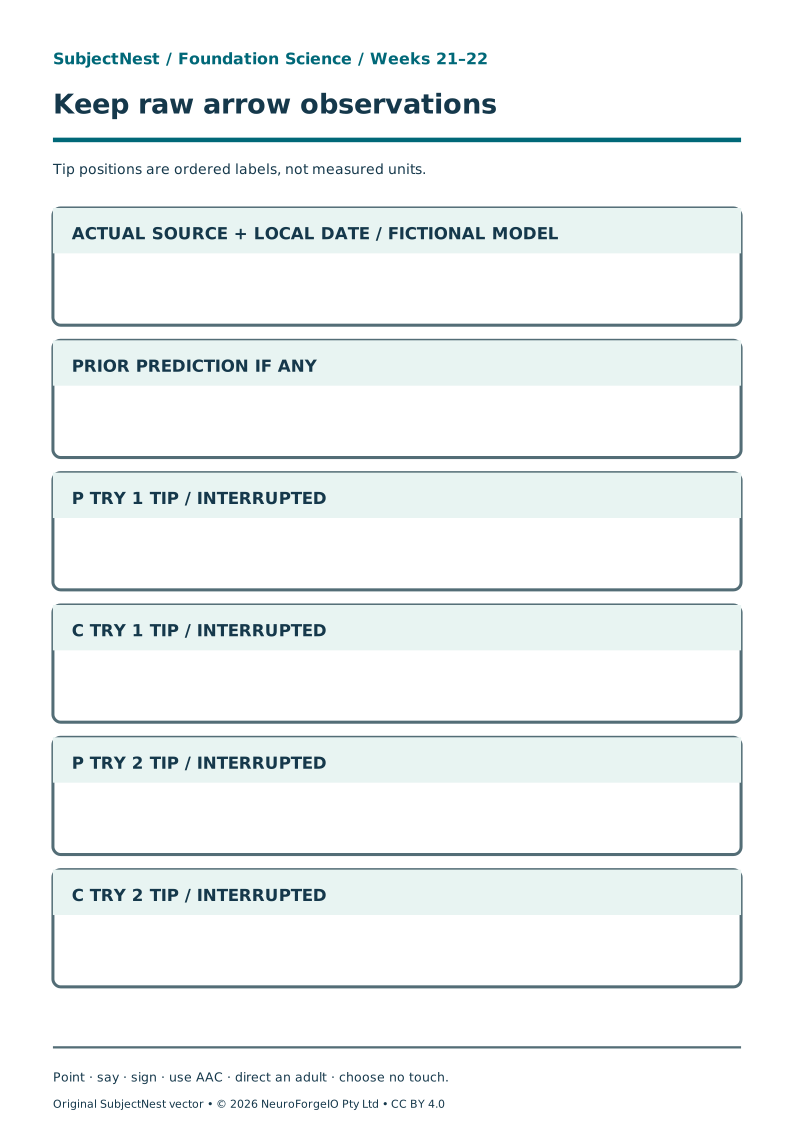
- Source gate · 3 min. Mark ACTUAL with local date/approval/materials if adult truly performs the lift; otherwise L MODEL and REAL OBSERVATION NOT AVAILABLE.
- Prior status · 4 min. Retrieve a prediction only if recorded before results; otherwise NO PRIOR PREDICTION.
- Adult model · 5 min. Adult performs/records one safe genuine lift or reads the first L entry. If actual conditions differ, record them rather than adjusting to L.
- Child record · 7 min. Adult completes safe brief P/C/P/C attempts when feasible or reads all L entries in order; Card 104 routes record each tip/interrupt exactly. Fewer valid actual tries mean less evidence.
- Check · 4 min. Compare valid entries and any prior prediction with guidance; mixed/unclear is legitimate. Do not call a paper-model position real.
- Exit · 2 min. Keep raw source/date, exact child claim/access and any interruption.
Week 21 · Day 105 — Fresh composition-and-method check
Goal: independently identify a changed condition in a new paper material comparison and bound its conclusion. Proposed codes: AC9SFU03, AC9SFI01, AC9SFI03. Prepare: teacher-held Case V, blank lift plan, Card 105 only after response.
- Preflight · 3 min. Confirm unseen case, complete oral/secured broad tactile equivalent and private first-response record.
- Present · 4 min. Give complete FICTIONAL case once without a hint.
- Think · 5 min. Independent quiet time; log neutral reread without answer cue.
- First independent response · 7 min. Child names material change, extra changed condition, supported paper description and fairer actual check; save exact response/access first.
- Bound · 4 min. Ask what source/date and actual safe observations would be needed for a real property claim. Paper-only is REAL OBSERVATION NOT AVAILABLE.
- Close · 2 min. Use separate key for next move; Card 105 comes later.
Week 22 · Day 106 — What does a material test tell a route planner?
Goal: distinguish arrow-property evidence from route/access success in the integrated map context. Proposed codes: AC9SFU03, AC9SFH01, AC9SFI05. Prepare: complete M, route proposal, integrated paper map context, Card 106.
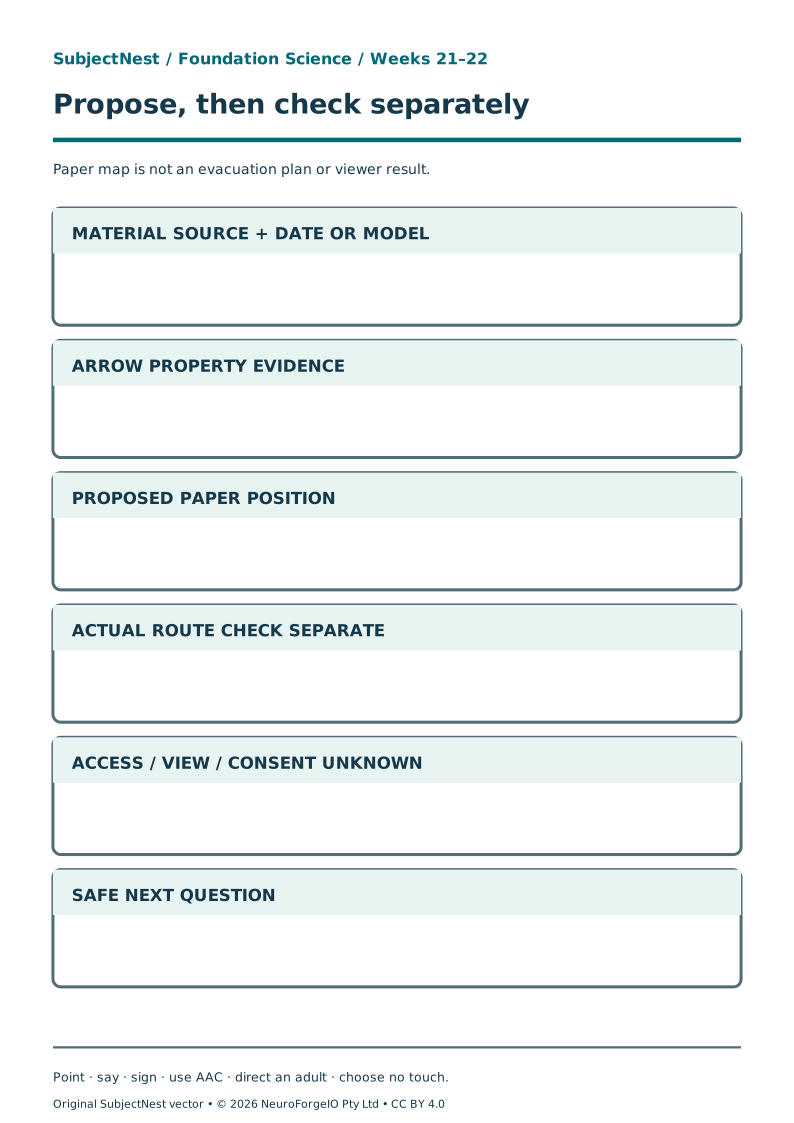
- Separate sources · 3 min. Label M FICTIONAL MODEL, any real lift ACTUAL/date, and the integrated map PAPER ROUTE only.
- Read · 4 min. Read M fully: START, WIDE TURN, READING CORNER are invented; no person has used the sign.
- Model · 5 min. Adult says the L record might motivate trying a backing, but neither L nor a real lift alone proves visibility, comprehension or safe navigation.
- Child try · 7 min. Card 106 routes sort PROPERTY EVIDENCE versus ROUTE EVIDENCE and ask one separate safe route-check question.
- Check · 4 min. Offer M's “will guide everyone” caption. Child asks for actual viewer/access evidence and avoids everyone claims.
- Exit · 2 min. Save one bounded material idea and one still-unknown user question.
Week 22 · Day 107 — Can a claim point to raw material evidence?
Goal: support a narrow claim with valid entries, keep a slipped grip visible, and compare a genuine prior prediction only when it exists. Proposed codes: AC9SFU03, AC9SFI03, AC9SFI04 (conditional). Prepare: actual dated record if any or L, property claim, Card 107.
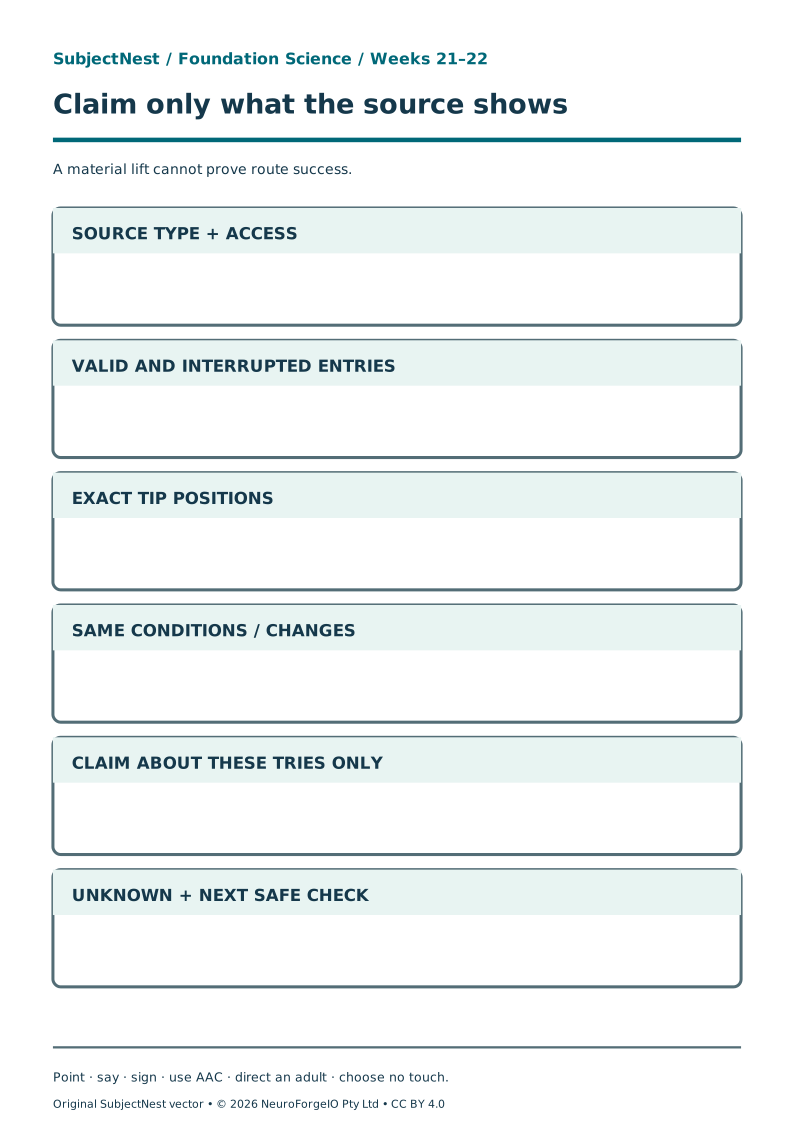
- Source · 3 min. Mark ACTUAL/date or L MODEL on every displayed copy; never substitute tidy L for a real mixed record.
- Read raw · 4 min. Read P/C/P/C valid entries and any interrupted entry from chosen source in order.
- Model · 5 min. Of L only: “P tips are BELOW twice; C tips are AT and ABOVE in this pretend set; slipped C is not a valid tip.”
- Child try · 7 min. Card 107 routes cite exact two or more raw entries, state a source-bounded material observation and one unknown; compare with an actual earlier prediction only if documented, otherwise NO PRIOR PREDICTION.
- Check · 4 min. Ask whether L proves card backing always works in every room or for everyone. Child limits to these model entries and separates route use.
- Exit · 2 min. Save exact child claim, source, support and prompt.
Week 22 · Day 108 — How would we check a proposed sign safely?
Goal: design a separate access-aware route-marker observation without assuming anyone used it. Proposed codes: AC9SFH01, AC9SFI01, AC9SFI05 (question/share only; route performance is not a Science property result). Prepare: route proposal, M, optional locally approved bounded room view, Card 108.
- Site/consent gate · 3 min. Adult checks school permission, supervision, privacy, existing safety signage and accessibility. A paper plan is the default; do not replace evacuation or wayfinding instructions.
- Question · 4 min. Ask whether an arrow at a chosen safe place is noticed/understood from a specified viewpoint; this differs from whether it droops.
- Model · 5 min. Adult fills a paper plan for source/date/view/access and what could be recorded, without inventing a user response.
- Child try · 7 min. Card 108 routes propose one accessible check. Only if separately approved and genuinely observed may an adult record actual placement and a willing viewer's exact report; otherwise mark ROUTE OBSERVATION NOT AVAILABLE.
- Check · 4 min. Ask whether a child following a paper arrow proves a real route is safe. Child names supervised local route and actual viewer evidence as separate.
- Exit · 2 min. Keep plan or dated actual observation, privacy protected.
Week 22 · Day 109 — What recommendation can we responsibly make?
Goal: propose a marker material with one evidence-bound reason and explicit limits. Proposed codes: AC9SFU03, AC9SFI03, AC9SFI05. Prepare: property claim, route proposal, actual source if available or L/M, Card 109.
- Source/privacy · 3 min. Choose a genuine dated material record or L MODEL; private teacher audience suffices. No child/place image shared.
- Re-read · 4 min. Locate exact tip entries and any separate route evidence; do not make an unsupported accessibility claim.
- Rehearse · 5 min. Adult models “In this source, the tip … ; I might try … ; I do not yet know whether a viewer … .”
- Child share · 7 min. Card 109 routes communicate one proposal and evidence/limit to a chosen private listener; adult preserves actual child-controlled words.
- Feedback · 4 min. Record listener feedback only if actually given; otherwise NO ACTUAL LISTENER RESPONSE. Revise from source review if warranted.
- Exit · 2 min. Keep next safe question rather than a success claim.
Week 22 · Day 110 — Fresh property-versus-route check
Goal: independently interpret a new paper composition record and reject a wayfinding claim unsupported by it. Proposed codes: AC9SFU03, AC9SFH01, AC9SFI01, AC9SFI03, AC9SFI05. Prepare: teacher-held Case W, blank route proposal, Card 110 after first response.
- Preflight · 3 min. Ensure novel case unseen; provide exact full oral/large print/broad secured tactile equivalent.
- Present · 4 min. Give complete FICTIONAL paper case and source status once.
- Think · 5 min. Independent response time; log neutral reread, no answer cue.
- First independent response · 7 min. Child names materials, mixed paper observations, interruption and unsupported route claim, then proposes distinct actual checks; record first words/access.
- Bound · 4 min. Ask what approved dated real material and viewer evidence is missing. If absent, REAL OBSERVATION NOT AVAILABLE.
- Close · 2 min. Use separate key. One paper check cannot certify a term or year.