Teacher copy: This page may include teaching prompts or answer keys. Answer keys in this public library can be viewed by anyone. Give learners a clean prompt, use checks as formative evidence, and change a case locally when prior access matters.
Goal: distinguish arrow-property evidence from route/access success in the integrated map context. Proposed codes: AC9SFU03, AC9SFH01, AC9SFI05. Prepare: complete M, route proposal, integrated paper map context, Card 106.
Separate sources · 3 min. Label M FICTIONAL MODEL, any real lift ACTUAL/date, and the integrated map PAPER ROUTE only.
Read · 4 min. Read M fully: START, WIDE TURN, READING CORNER are invented; no person has used the sign.
Model · 5 min. Adult says the L record might motivate trying a backing, but neither L nor a real lift alone proves visibility, comprehension or safe navigation.
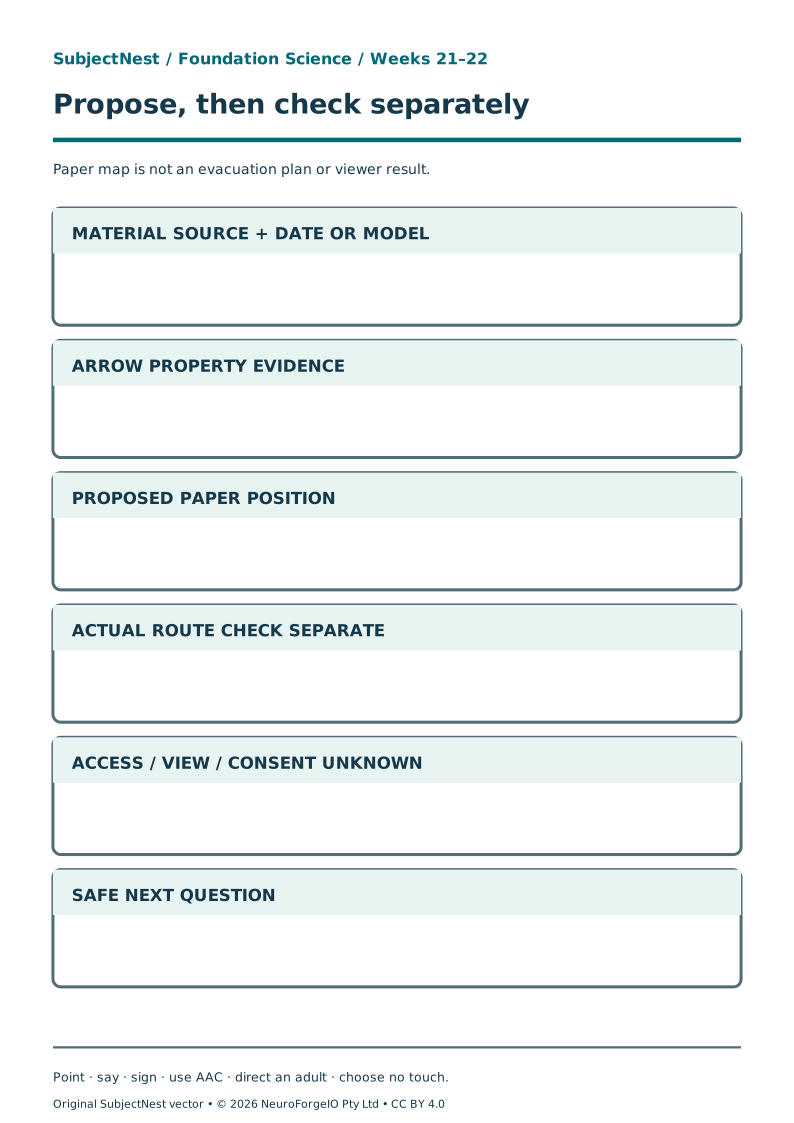
Child try · 7 min. Card 106 routes sort PROPERTY EVIDENCE versus ROUTE EVIDENCE and ask one separate safe route-check question.
Check · 4 min. Offer M's “will guide everyone” caption. Child asks for actual viewer/access evidence and avoids everyone claims.
Exit · 2 min. Save one bounded material idea and one still-unknown user question.