Five 35-minute integrated blocks, Foundation / Queensland Prep · teacher draft. Use alongside English Days 111–115 and mathematics Days 111–115. Adult-read fictional Book Day and other event stories, the before/during/after mat, and the week/day-parts mat give every child a full route without family disclosure. If using an actual shared event, first check its source and permission; the child controls whether any personal connection is shared.
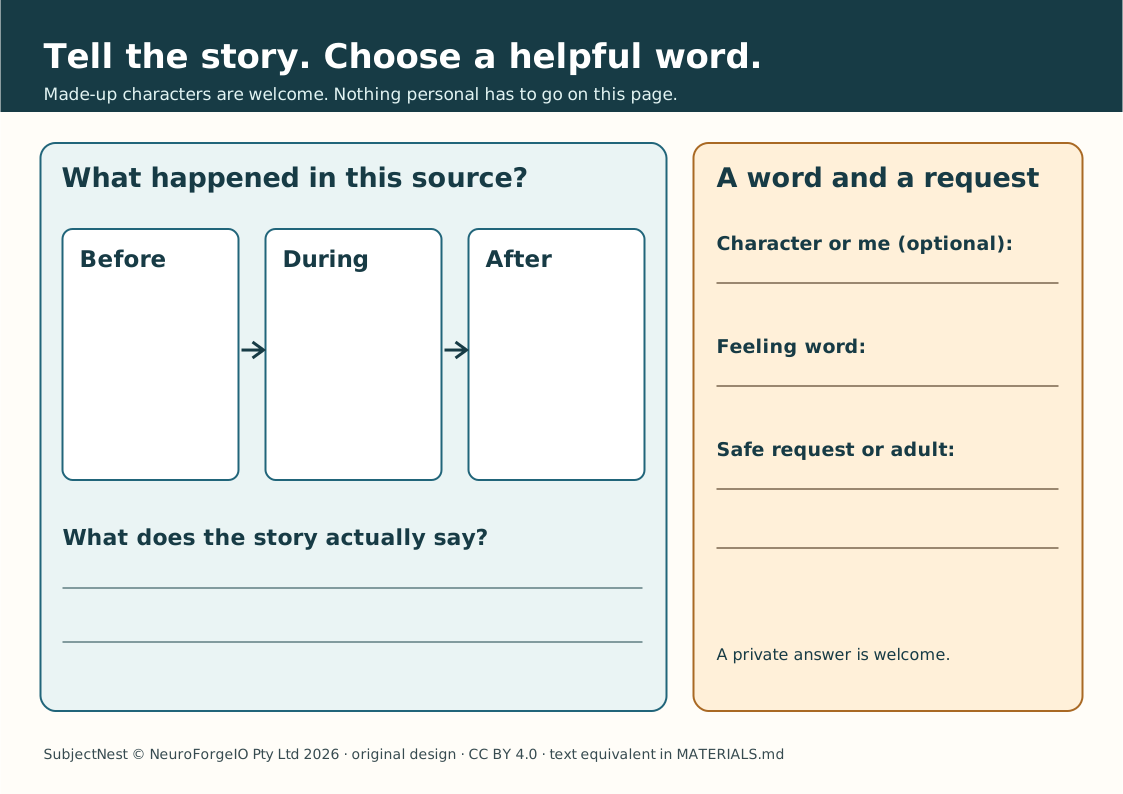
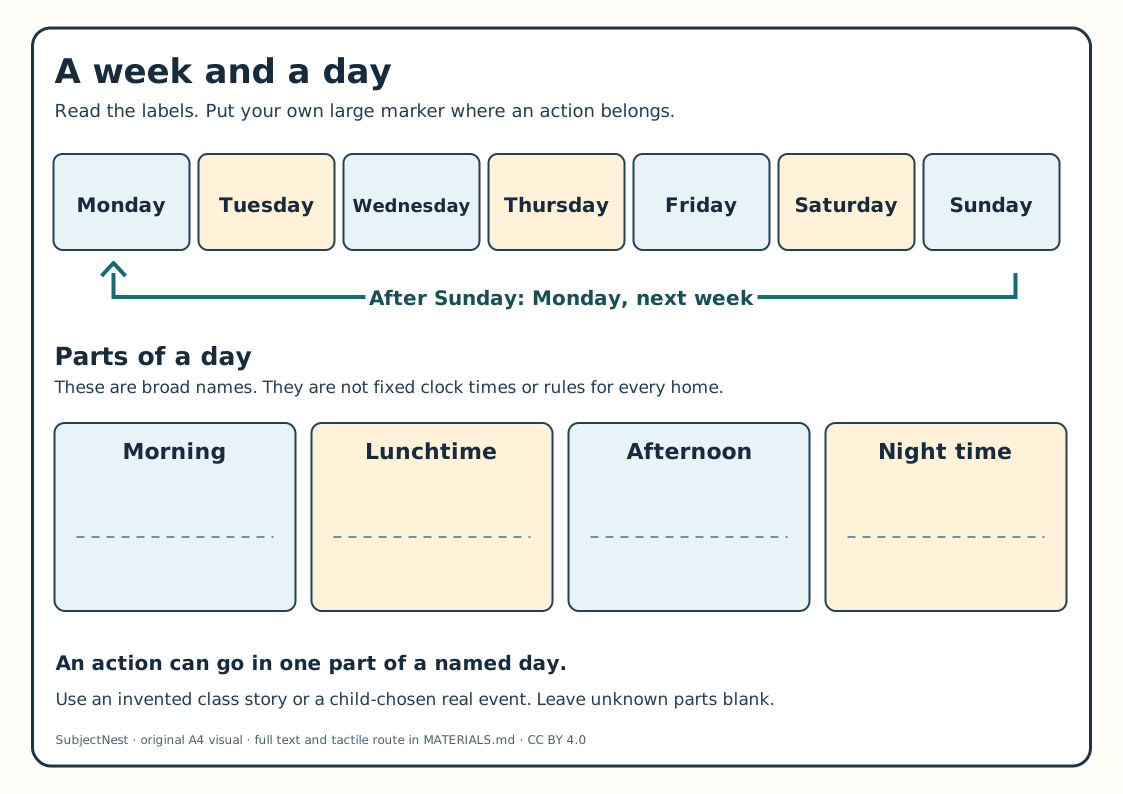
Prepare: large movable before/during/after cards; seven day names and four day-part names; copies of invented stories A/B; adult scribe or AAC/gesture route; private response place; any locally approved optional source about an actual school/community event, such as an approved class invitation/photo without identifying children, or a child-chosen family account provided willingly. Do not solicit images, names, addresses, faith or family histories for a public display. A source may support what happened, not every person's view of it.
| Day | Thirty-five-minute integrated route | Evidence and next move |
|---|---|---|
| 111 · Before, during, after | 5 min ask what a story source can tell us; 7 min adult reads invented Book Day story A aloud/visually; 8 min model three source-backed event cards on the mat; 10 min child chooses voice, pointing, sign, AAC or scribing to put cards in order; 5 min ask which sentence supports the first card. | Keep first child order and exact source detail. If order is copied, change to a new fictional event; if a detail is invented, reread the clause. This is English event-order practice, not HASS evidence about a real shared event. |
| 112 · Place the story in the week | 5 min touch/read Monday → Sunday on the mathematics strip; 7 min reread Book Day's Monday plan and Thursday share; 8 min put Thursday morning/lunchtime/afternoon actions into broad parts of the day; 10 min child retells with both day and before/during/after cards; 5 min ask what the story does not say about any visitor or night time. | Save day-order and story-order responses separately. A child may use the fictional route. If day names are inaccessible in print, adult reads them; if an action is misplaced, cite the exact source phrase and use a new card tomorrow. |
| 113 · Different shared events | 5 min recall one Book Day detail; 7 min adult reads the garden-paper display, puzzle-project finish and quiet book-sign options; 8 min compare two invented events for one similarity and one difference; 10 min child chooses an event to map in three parts, or privately and voluntarily describes a real source-backed shared event; 5 min ask whether the examples prove all families celebrate alike. | Record the child's choice without scoring private disclosure. Fictional comparison demonstrates source reading and respect for difference. For AC9HSFK02, consider only an authentic, willingly sourced significant event actually celebrated or commemorated with family/others; a school-only event needs a local syllabus check before being treated as evidence. Otherwise mark not observed. |
| 114 · Ask a source, then tell a listener | 5 min show a fictional event card with missing “when” detail; 7 min model “The story does not tell us” and a respectful clarifying question; 8 min child checks day/part and before/during/after against the chosen source; 10 min child tells a listener an ordered account and listener repeats what came first/last; 5 min child revises one unclear connector or unsupported claim. | Preserve original and revised account. The listener need not be a peer; a private adult route is equal. If an authentic event is offered, confirm whose account/document supports each detail; do not ask the class to verify a family member's identity or belief. |
| 115 · Make a small event guide | 5 min revisit source, day and sequence; 7 min choose a practice fictional event, separate from the held-out English/maths Day 115 checks; 8 min map before/during/after and one stated day/part; 10 min child creates a three-card spoken, tactile, drawn or written guide for an imagined listener; 5 min listener asks “What can we know, and what remains unknown?” | Run after the separate held-out subject checks. Collect a child-controlled version and one response to the listener. If a real event was chosen privately and permission allows, retain only the minimum educational evidence under school policy. |
Three example routes: (1) lively invented Book Day with a visitor who can attend and a familiar school adult; (2) quiet invented book-sign or puzzle finish with no audience; (3) garden-paper display using a drawing rather than live plants. They vary social/sensory demands and domain, without standing in for any actual family's tradition. A child may substitute a willingly sourced local event or keep all work fictional. Avoid universal claims such as “every family celebrates X,” ranking observances, or inventing First Nations ceremony/knowledge. First Nations events or language belong here only with community authority, accurate provenance and appropriate permission.
Curriculum boundary: English AC9EFLE03/AC9EFLY05 support event retell; mathematics AC9MFM02 supports ordered day/part labels and action links. HASS AC9HSFK02 concerns celebrations and commemorations of significant events shared with their families and others. A story we invented cannot alone evidence that authentic HASS description. An educator may offer an opt-in private real event with an appropriate source, and must record whether the child's response describes its significance, how it was marked and who shared it. A school-only event is not automatically a family-shared celebration. If no such accessible option occurs, write not observed, while affirming full participation in English/maths. Exact Foundation descriptions checked against the official ACARA v9 workbook, retrieved 29 September 2026, SHA-256 db446882d2c00cf7c085a03e250e2442fda6c44011fc114680c46c1dc7a822c3. The links are partial proposals, not attainment, endorsement or a substitute for the applied state syllabus.
Access and care: adult-read/transcript, enlarged or high-contrast cards, tactile three-position mat, child-directed adult movement, speech/AAC/sign/drawing, quiet partner, headphones only if locally suitable. An oral word such as commemoration is not assigned as child decodable print. Do not infer lack of knowledge from a family declining to provide a story. Store evidence privately. These scripts and aids are original © 2026 NeuroForgeIO Pty Ltd, SubjectNest, CC BY 4.0; credit, link and indicate changes. ACARA material retains its own terms. Human cultural, access, local syllabus and classroom trial review pending.