Teacher copy. Read these original texts aloud. The invented stories are for language practice and do not prove how any real family celebrates, feels or seeks help. Keep the held-out assessment stories separate from the learner cards. Children may pass on personal examples and still do every English activity with fiction.
Adult oral story A · Book Day in a made-up class
On Monday, a teacher told an imaginary class that they would share their own little books on Thursday. Before the day, children drew covers and made large paper bookmarks. On Thursday morning, visitors who were able to come could listen to a story; every child also had a familiar school adult to share with. At lunchtime, the children placed their books on a table. In the afternoon they put the books away. Later the teacher asked, “Which part would you tell someone about first?” A child said, “First we made the covers. Then we shared the books. After that we packed them away.” The story gives no information about who the visitors were or what every family does.
Source boundary: invented class, not an account of a real school event. A child may choose the book-cover part, story part or tidy-up part as important. Monday is before Thursday in this printed week; the story does not prescribe a family's routine.
Adult oral story B · Three other things a class might mark
An imaginary garden club made a paper picture display after finishing a shared planting plan. Another pretend class marked the end of a long puzzle project by inviting a willing neighbour class to look at the result. A third group made a quiet “we finished our book” sign and chose not to have visitors. These are three possible shared-event examples, not accounts of a particular community, faith or family tradition. Each group could make a before/during/after story from its own source, but we should not pretend that the three events mean the same thing to everyone.
Ask which event each group marked, what is known from the text, and what extra source would be needed to report a real event. Any real child-chosen family or community example needs consent, appropriate source and private handling; this fictional text alone cannot establish AC9HSFK02 knowledge.
Adult oral story C · Ari's paper card
Ari could not find the paper card needed for a game. Ari said, “I feel worried because I cannot see it.” A friend offered a new card, but Ari still wanted to ask the teacher where spare cards were kept. The teacher listened and helped them look in the paper tray. Ari felt relieved when the card was found. Another child might feel differently in the same game; a face or action does not tell us every feeling without asking.
Use for a character's feeling, reason and help request. Do not ask a child to reveal when they personally felt worried. If a child spontaneously shares a concern requiring help, follow school policy and speak privately with the appropriate staff.
Adult oral story D · A quieter way to join
Jo liked the rules of a pretend sorting game but the room was loud. Jo told a familiar school adult, “The sound is too much for me right now. May I use the quiet table and still play?” The adult helped Jo choose a suitable place under the class plan. Another child wanted a moving version of the game. Both children could learn the rule without being made to use the same response format.
Do not infer disability, diagnosis or a universal preferred method. The point is exact language for a need and a respectful request; the school decides appropriate support. Another practice context is a puzzle that feels frustrating, where a child may ask for a clue or a break. A third is a lost paper book mark, where a child may ask where spare materials are. No one must disclose an actual upsetting event.
Day 119 · three short adult-read practice snippets
- “The pretend game sounded loud. Bea said, ‘I am not sure I want to play near the speaker. May I try the table version?’” A child may infer unease but should mark it as an inference; Bea did not name an emotion.
- “Taj could not find the paper card. Taj said, ‘I feel worried because I need the card for my turn.’” The named feeling and reason are supplied directly.
- “Sol finished a puzzle after several tries. Sol said, ‘I feel pleased that I kept trying.’” The named feeling and reason are supplied directly.
Use any one after the model snippets in Day 119. Do not describe a real learner from these invented speakers.
Controlled child print and oral word boundary
Confirm each child's actual taught links. Adult phrases such as before, after, worried and help are read aloud or child-selected, not presented as newly decodable print.
| Day | Child line or words | Teacher boundary |
|---|---|---|
| 111 | day, play, tray, mat | Shuffle; ay is one /eɪ/ in these selected words. |
| 112 | It is day. | Picture follows first read. Fiction does not tell every routine. |
| 113 | I can play. | Do not infer that all children want public play. |
| 114 | A red cup is on a mat. | Known sentence; check words out of order if memorised. |
| 115 | day, map, ten, see | Practice before separate fresh oral event check. |
| 116 | I am sad. | A CVC feeling word; do not make the child claim it personally. |
| 117 | I can sit. | A fictional choice, not an instruction that every child should sit. |
| 118 | I can see a map. | Visual meaning check comes after print. |
| 119 | am, sad, sit, nap | Blend separately; a story character may need rest, but no sleep is required at school. |
| 120 | Held-out items in ASSESSMENT.md only | Keep fresh print unseen until check. |
Exact text equivalent · story and choice mat
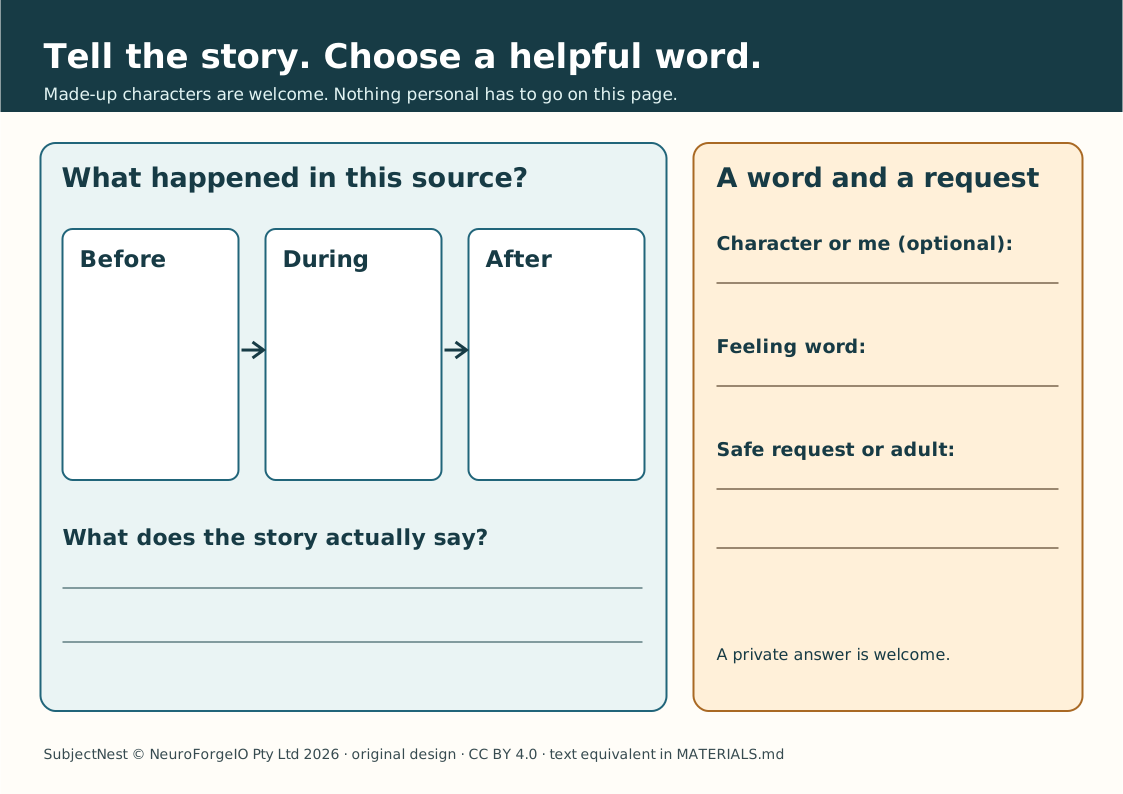
The A4 landscape SVG has two labelled halves. Left: three blank boxes in order Before, During, After, with arrows; under them “What does your source tell you?” Right: three blank lines labelled Character or me (optional), Feeling word, and A safe request / school-approved adult. There is no answer, required family identity, face emoji or colour-only meaning. Nonvisual route: three numbered tactile/spoken order cards and three separate labelled response cards, with a child-controlled marker. A child may use a fictional character throughout. Never use this printable sheet to collect a child safety disclosure for public display.
Original stories, word inventory and aid alternative © 2026 NeuroForgeIO Pty Ltd, CC BY 4.0. Credit and indicate changes.