Each lesson is 25 minutes. Use adult-read original texts, clean child cards and the story mat. Keep fresh teacher checks unseen until Days 115 and 120. These are proposed partial ACARA v9 Foundation links. Record one child's first independent print/meaning response, source, prompt and mode each day; rotate who you sample closely. No child must provide a personal celebration or emotion story.
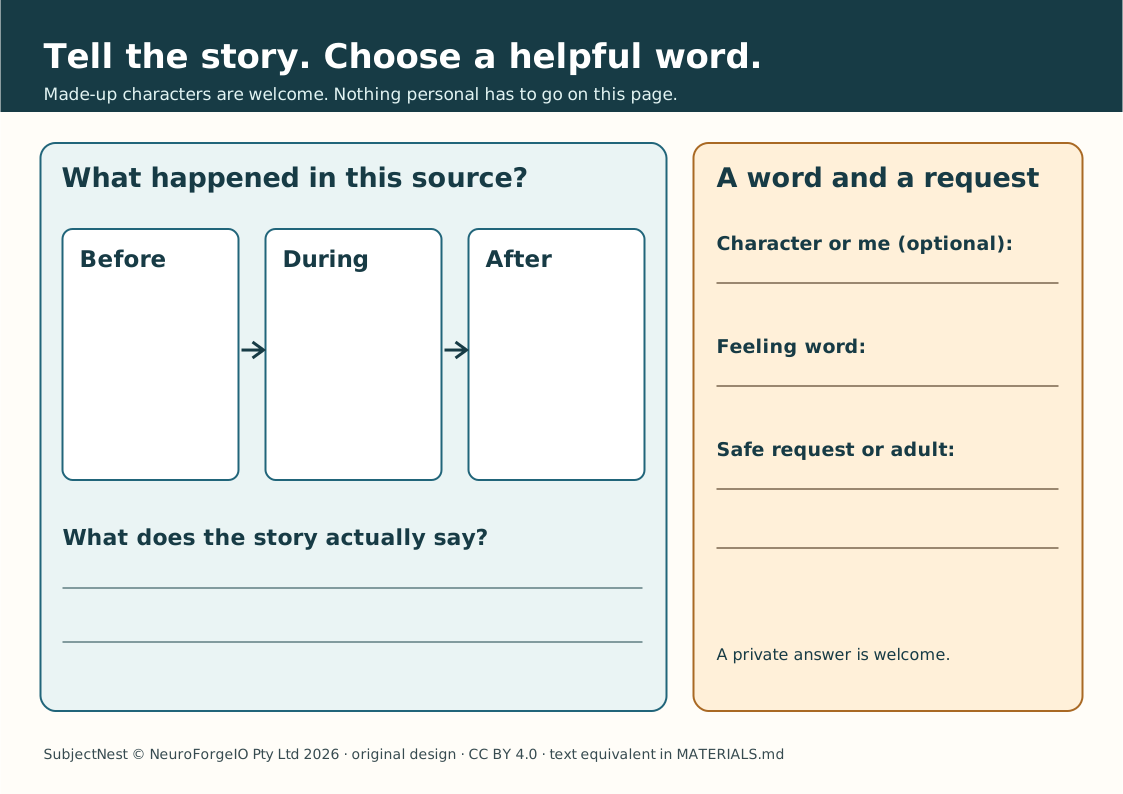
Week 23 · Day 111 — A word, a day, an event
Goal: retrieve word-final ay in known words and distinguish a named day from what happened on it. Proposed codes: AC9EFLY04, AC9EFLY10, AC9EFLA08. Prepare: Card 111, story A, large day/event cards.
- Retrieve · 3 min. Shuffle day, play, tray, mat with no picture. Hear one first blend; ask what letter team writes /eɪ/ at the end of selected words.
- Listen · 4 min. Read the first half of invented Book Day story A. Ask which day the class heard the plan and which day they shared books.
- Model · 5 min. Put Monday and Thursday on a printed week strip. Say Monday came earlier in this story; the day name does not tell us what every child did.
- Guide and try · 7 min. Adult reads three event cards: make covers, share books, pack away. Child puts them before/during/after and gives one reason tied to story wording.
- Print · 4 min. Change day to play with tiles; show which sound/letter sequence stayed. Do not treat the adult story as decodable print.
- Exit · 2 min. “What happened before the class shared its books?” Expect made covers/large bookmarks. Reteach source versus guess tomorrow if needed.
Week 23 · Day 112 — Before, during, after
Goal: retell one invented event with three ordered parts and independently read taught short print. Proposed codes: AC9EFLE03, AC9EFLY04, AC9EFLY05. Prepare: Card 112, full story A, story mat.
- Retrieve · 3 min. Show It is day. before any picture; privately hear a taught word in it.
- Model · 4 min. Reread story A. Place cover-making under Before, book sharing under During, putting books away under After.
- Guide · 5 min. Mix those cards. Child follows adult-read story clues to order them; ask which part the source says happened at lunchtime.
- Independent retell · 7 min. Child tells, points, signs or AAC-composes a three-part retell for an imagined listener. Record sequence and any adult prompt separately.
- Check · 4 min. Ask whether the story says every family visitor came. Expect no; it says visitors who were able to come and a familiar school adult was available.
- Exit · 2 min. Child gives one after event with a source clue. Tomorrow use two-card order if three parts were inaccessible.
Week 23 · Day 113 — Another event can have a different meaning
Goal: compare two fictional shared events without claiming they represent a real family's tradition. Proposed codes: AC9EFLY05, AC9EFLY02, AC9EFLY04. Prepare: Card 113 and adult story B.
- Retrieve · 3 min. Show I can play. without image; check play at the child's taught point.
- Listen · 4 min. Read story B aloud. Name three distinct invented events: garden-paper display, puzzle-project finish, quiet book sign.
- Model · 5 min. Compare Book Day and the quiet sign: both mark a shared achievement, but one has visitors and the other does not. Neither tells us what a particular real family celebrates.
- Guide and try · 7 min. Child selects two adult-read event cards, says one same and one different feature, and names the story/source supporting each.
- Choice · 4 min. Invite an optional private real event only if the child wants; otherwise remain with fiction. Record fictional source as practice, not as proof of HASS family history.
- Exit · 2 min. Ask “Can story B tell us that every family marks the same event?” Expect no. If a child generalises, return to its three different examples.
Week 23 · Day 114 — Make a listener's order clear
Goal: communicate beginning/middle/end with exact sequence words and preserve a child's meaning in shared writing. Proposed codes: AC9EFLE03, AC9EFLY06, AC9EFLY07. Prepare: Card 114 and three adult-read Book Day cards.
- Retrieve · 3 min. Privately shuffle red, cup, mat from Card 114's line; hear first blends so memorised sentence is not mistaken for decoding.
- Model · 4 min. Say “Before the books were shared, the children drew covers. During Book Day, they shared. Afterward, they packed away.” Point to actual story clauses.
- Guide · 5 min. A child chooses one of story A or B's fictional events and places three source-backed cards in sequence.
- Independent account · 7 min. Child gives three short clauses to a private adult/peer using voice, AAC, sign or ordered pictureless cards. Listener says what came first and last.
- Shared edit · 4 min. Adult scribes exactly; child notices if after was put before during and directs one meaningful correction. Do not score adult spelling as child-controlled print.
- Exit · 2 min. Child names one listener cue that made the order clear. Hold back the Day 115 story.
Week 23 · Day 115 — Fresh story-order check
Goal: listen to a new shared-event story, retell three parts, and retain taught print. Proposed codes: AC9EFLY04, AC9EFLY05, AC9EFLY07, AC9EFLY10. Prepare: held-out Day 115 text and Card 115 warm-up.
- Welcome · 3 min. Explain the new story helps the teacher choose tomorrow's practice, not rank children or their families.
- Print warm-up · 4 min. Shuffle day, map, ten, see; privately hear two independent blends, with picture hidden.
- Fresh listen · 5 min. Read the held-out story twice, without showing the teacher key or source picture.
- Independent retell · 7 min. Child places or states before/during/after and gives one exact source detail. Record first order and support.
- Check · 4 min. Reveal cards and ask one “what can we not know?” question; a corrected response is recorded separately.
- Exit · 2 min. Choose a concrete next move: two-step ordering, source wording, spoken connector or taught print review. Do not claim HASS family-event knowledge from this fictional response.
Week 24 · Day 116 — A character names a feeling
Goal: connect a precise feeling word to what a fictional speaker actually says; blend a new CVC sentence at the taught point. Proposed codes: AC9EFLA08, AC9EFLY04, AC9EFLY05. Prepare: Card 116, adult story C, two adult-read word choices.
- Retrieve · 3 min. Show I am sad. as a sentence a fictional character might say. Child blends am/sad without asking them to claim it personally.
- Listen · 4 min. Read story C. Ask what Ari said about the lost card; key word worried, not a guess from a facial expression.
- Model · 5 min. Compare “Ari felt worried because the card was missing” with “Every child would feel worried.” Explain why the second goes beyond the source.
- Guide and try · 7 min. Child chooses a character feeling card, points to/recalls exact story words, and gives a because clause. Another plausible feeling is welcome if grounded and labelled inference.
- Request · 4 min. Practise adult-read “Please help me find a spare card” to a known school adult, in speech/AAC/sign. This is fictional rehearsal.
- Exit · 2 min. Ask “How did we know Ari was worried?” Expect Ari said so. Revisit source versus inference tomorrow if needed.
Week 24 · Day 117 — A request can be specific and respectful
Goal: listen to a need, choose a clear request and respect different routes to participation. Proposed codes: AC9EFLY02, AC9EFLY05, AC9EFLY04. Prepare: Card 117, adult story D and school-approved support choices.
- Retrieve · 3 min. Child reads I can sit. at the taught point; distinguish a printed sentence from a rule every child must follow.
- Listen · 4 min. Read Jo's fictional request. Ask what Jo asked for and what the adult did; do not infer a diagnosis.
- Model · 5 min. Turn “No!” into “The sound is too much for me right now. May I use the quiet table?” Make the need and requested action clear.
- Guide and try · 7 min. Child chooses one of three fictional situations: noisy game, confusing puzzle or missing paper marker. Give a respectful help request to a named school-approved adult or via a card. Record exact words, not confidence.
- Listen · 4 min. Partner/adult repeats the request back and checks they understood. Child may revise or use a private route.
- Exit · 2 min. Ask which part names the needed help. If a child wants to share a real concern, follow safeguarding policy privately.
Week 24 · Day 118 — The same moment can feel different
Goal: separate a character's stated feeling from an inference about another person and listen to a different view. Proposed codes: AC9EFLY02, AC9EFLY05, AC9EFLY07. Prepare: Card 118, fictional puzzle and game response cards.
- Retrieve · 3 min. Read I can see a map. before a picture; hear map/see separately if the whole line is memorised.
- Model · 4 min. Describe a made-up puzzle finish: one character says “I feel pleased”; another says “I wanted more time.” Do not label the second child's emotion without asking.
- Guide · 5 min. Children sort adult-read statements into speaker said and we might ask. Model a respectful question: “How did that feel for you?”
- Independent response · 7 min. Child chooses a character, reports one exact quote or bounded inference, and listens to a partner's alternative supported view. Private adult option available.
- Revise · 4 min. Replace “Everyone feels happy” with a sentence that names the one speaker and source. Scribe child wording separately from decoding.
- Exit · 2 min. Ask what we need before naming a real classmate's feeling. Expect ask/listen, not guess from face.
Week 24 · Day 119 — Choose the word that fits the source
Goal: blend review print and select among nuanced adult-read feeling words with one story detail. Proposed codes: AC9EFLA08, AC9EFLY04, AC9EFLY05. Prepare: Card 119, short fictional puzzle and book-marker snippets.
- Retrieve · 3 min. Shuffle am, sad, sit, nap without pictures; hear two blends and one child-controlled spelling attempt with tiles.
- Model · 4 min. Read: “A puzzle piece did not fit. Min said, ‘I feel frustrated. Can you show me where to start?’” Match frustrated to Min's own words.
- Guide · 5 min. Read a different snippet: “A child finished a book mark and said, ‘I am pleased with my pattern.’” Compare pleased with frustrated without ranking feelings as good/bad.
- Independent choice · 7 min. Child chooses one of three new adult-read snippets (game too loud, missing card, finished puzzle), names a possible feeling and a source clue, then gives a respectful help request if one would help.
- Check · 4 min. Ask whether another child could react differently. Record a bounded answer; never require a child to reveal a personal safety event.
- Exit · 2 min. Choose an exact next move: explain because, quote speaker words, listen for a different view or rehearse a help request.
Week 24 · Day 120 — Fresh listening, print and help-language check
Goal: understand a new fictional emotion/help story, retain taught sound–letter links and make a clear fictional request. Proposed codes: AC9EFLY02, AC9EFLY04, AC9EFLY05, AC9EFLY10, AC9EFLY13. Prepare: unseen check, private record and approved school help routes.
- Welcome · 3 min. Explain this is a quiet teacher planning check; no personal story is needed.
- Fresh adult story · 5 min. Read the held-out fiction twice with print hidden. Ask what the character actually says they feel and what help they request.
- Held-out print · 5 min. Privately show three CVC words in changed order, without image/sentence, then dictate one for child-controlled tiles/letters.
- Independent account · 7 min. Child gives a short report with speaker, feeling word, because detail and safe request, in agreed speech/AAC/sign/drawing route. Record first version.
- Check · 3 min. Ask whether the story proves every learner would feel the same; feedback and correction follow the first response.
- Close · 2 min. Record one next teaching action; use not observed if the offered access route failed. Fictional comprehension is not evidence that the child has personally expressed an emotion under AC9HPFP03.
Use the Week 24 integrated guide for an opt-in, private, low-stakes real-feeling route if appropriate; follow local safeguarding procedures for any genuine concern.