Five 35-minute integrated blocks, Foundation / Queensland Prep · teacher draft. Use alongside English Days 116–120 and mathematics Days 116–120. The original fictional stories and snippets provide a full participation route. The story-and-choice mat and duration aid are separate: we compare the lengths of safe paper activities, never the value or intensity of anyone's feeling or help request.
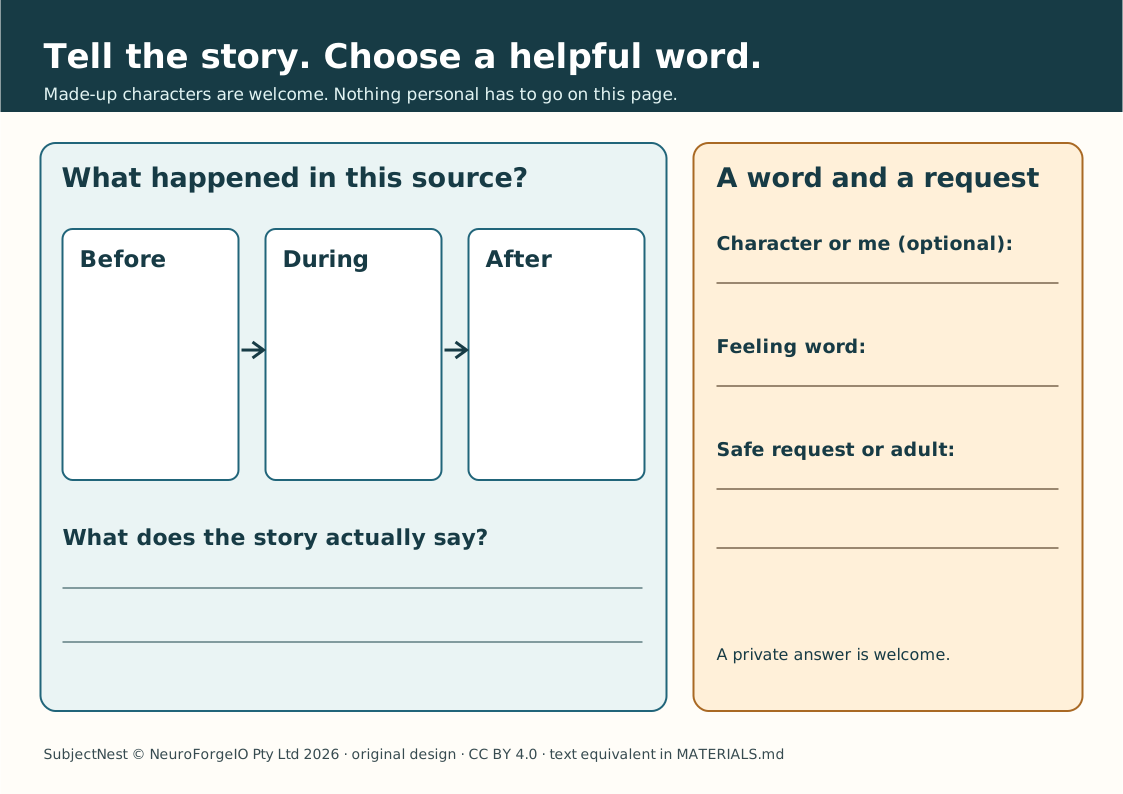
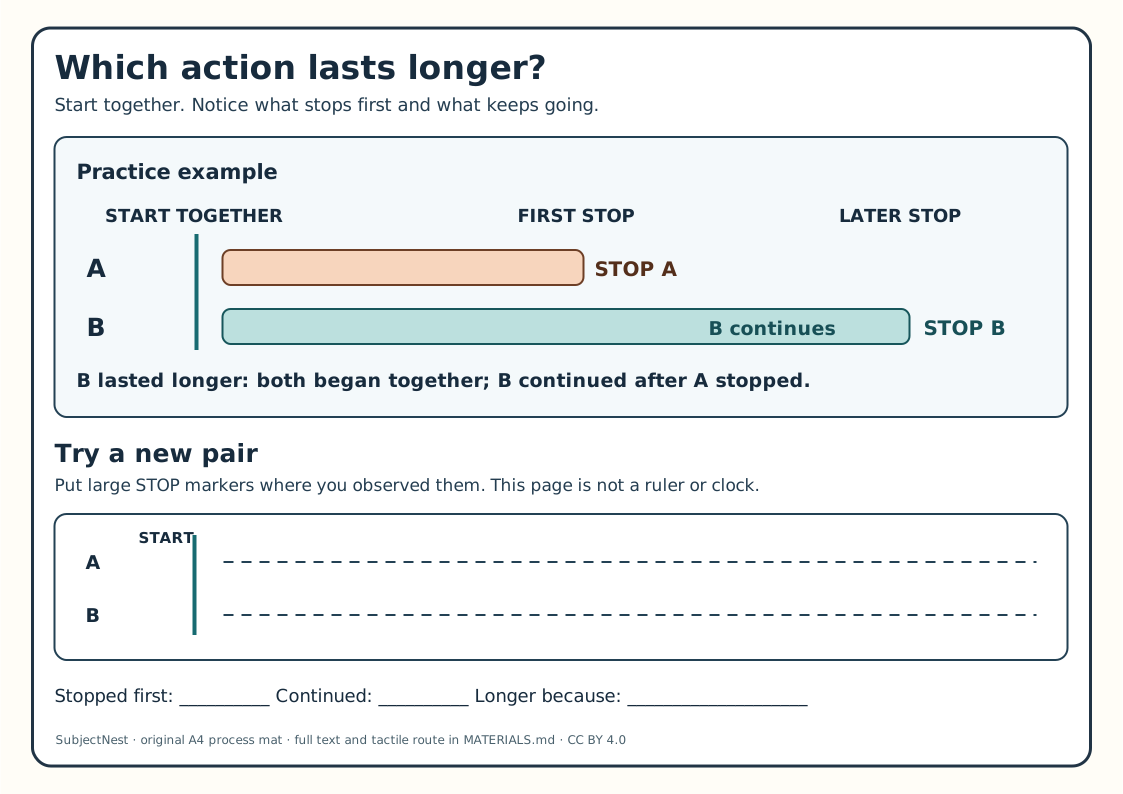
Prepare: three fictional situation cards (missing paper marker, confusing puzzle, noisy game), simple word cards worried / pleased / frustrated / calm, school-approved adult/help routes checked by the educator, a private response option, and large A/B paper lanes. Confirm with local safeguarding policy which adults, signals and steps to teach. Never promise secrecy about a real harm concern. If one arises, stop the public exercise and follow policy; do not ask the child to perform it for the group.
| Day | Thirty-five-minute integrated route | Evidence and next move |
|---|---|---|
| 116 · What did the character say? | 5 min say all feelings can be named without acting them out; 7 min adult reads Ari's lost-card fiction; 8 min sort “Ari said worried” from “we guessed”; 10 min child chooses a fictional feeling/why card and a help request to a school-approved adult; 5 min listener repeats the request to check understanding. | Record source-based comprehension and fictional rehearsal separately. Never infer a real child's feeling from face, body or silence. If the wording is broad (“help”), model a specific action, then retest with a different fictional card. |
| 117 · A clear help route | 5 min identify a locally approved adult/contact route without asking children for home details; 7 min adult reads Jo's noisy-game fiction; 8 min compare vague and specific respectful requests; 10 min child rehearses an opt-in fictional help request by voice, AAC, sign, card or private adult; 5 min ask what the adult could do and whom to ask again if the first adult is unavailable. | Keep the exact child-controlled request and response mode. Naming a trustworthy school route is taught through local policy; rehearsal samples the help-seeking part of AC9HPFP05 only. Do not certify full protective-behaviour code from this activity. |
| 118 · Different views, same fair comparison | 5 min compare two fictional characters' own words about the same puzzle; 7 min discuss a respectful “How was it for you?” question; 8 min model a shared START for a quiet story and drawing action; 10 min child chooses a fictional response route and separately judges which paper action continued longer; 5 min explain one emotion-source clue and one duration clue. | Save two distinct pieces of evidence. More words, marks, enjoyment or distress do not prove longer duration. If start times differed, rerun together. A private listening route counts equally. |
| 119 · Ask, listen, revise | 5 min sort fictional pleased/frustrated/worried quotes by who said each; 7 min practise a non-assuming question and listen to a different view; 8 min compare two simultaneous marker actions with opposite stop order from yesterday; 10 min child gives a precise fictional request and a separate observed duration reason; 5 min revisit what we cannot know about another child's feeling. | Record exact quote/reason and any adult cue. If a learner volunteers a harmless present/past everyday feeling, offer a private, child-led chance to describe it; never demand or publicly score it. A fictional statement alone is not AC9HPFP03 evidence. |
| 120 · Safe rehearsal and next step | 5 min remind children of their chosen communication route; 7 min use a practice fictional card, different from held-out English/maths Day 120 checks; 8 min child names character's stated feeling and chooses a locally approved help route; 10 min adult and child use start-together paper lanes, then child explains the longer observed event; 5 min ask what next safe action follows if the first adult cannot help. | Run after the separate held-out subject checks. Keep fictional comprehension, maths comparison and local help-route rehearsal separate. Where a child voluntarily describes an emotion they personally experience, document only the minimum privately and judge the actual wording; otherwise AC9HPFP03 remains not observed. |
Choice routes: lively/quiet roleplay without acting, private one-to-one talk, card-pointing, AAC/sign, drawing or child-directed scribe. Use the missing paper marker, confusing puzzle and noisy game as distinct everyday domains; add an accessible class-created fictional option. No child must reveal an emotion, disability, family circumstance, safety incident, personal help history or trusted person's private details. A child can pass on roleplay yet take part in source reading and mathematics. Never make “please” a condition for receiving help, especially for an urgent concern; model clear, safe communication in multiple modes.
Curriculum boundary: English AC9EFLY02/04/05/07 support listening, taught print and an account/request. Mathematics AC9MFM01 supports direct duration comparison of events and reasoning, sampled with shared starts. HPE AC9HPFP03 is express and describe emotions they experience; merely identifying Ari's emotion in fiction does not meet that wording. Offer a private, optional, ordinary self-feeling route if appropriate; decline or unavailable means not observed, never “failed.” HPE AC9HPFP05 includes protective behaviours, body-part naming and help-seeking; these five blocks sample only rehearsed help-seeking, not the whole description. Exact Foundation code/year checked in the official ACARA v9 workbook, retrieved 29 September 2026, pinned SHA-256 db446882d2c00cf7c085a03e250e2442fda6c44011fc114680c46c1dc7a822c3. These are partial proposals, not attainment, endorsement or local policy approval.
Safeguarding and access: check the school's current policy and named adults before teaching a help route. Respond to a real concern under that policy, without public retelling or promises of confidentiality. Large accessible cards and cues; no surprise loud noises, timed races or forced touch/movement. Record precise construct, source, first response, mode and prompt. Original scripts and aids © 2026 NeuroForgeIO Pty Ltd, SubjectNest, CC BY 4.0; credit, link and indicate changes. ACARA retains its terms. Human safeguarding, access, local syllabus and classroom trial review pending.