Each lesson is 25 minutes. Use teacher setups, learner cards and the original week/day-parts or duration aid. Hide the fresh checks until Days 115 and 120. Read day words aloud if needed; record maths separately from print. Each independent response may be moved, spoken, signed, selected by AAC, directed to an adult or indicated tactilely. Save the first attempt and cue level before feedback.
Week 23 · Day 111 — A week has a named order
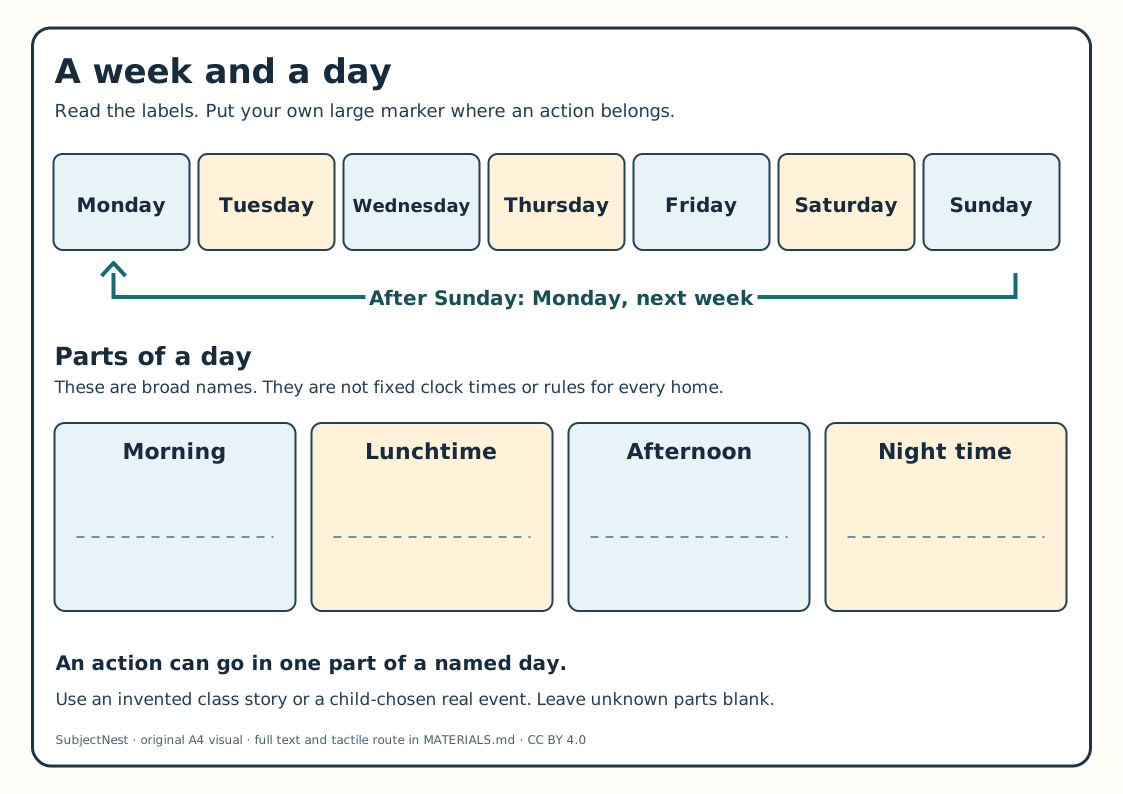
Goal: place the seven named days in order and name one immediate successor from a chosen start. Proposed code: AC9MFM02. Prepare: Card 111, seven large cards, week strip.
- Notice · 3 min. Put Monday, Tuesday and Wednesday in order. Ask what the children notice about the names; do not infer their home routines.
- Model · 4 min. On the full strip, touch/read Monday → Sunday, one named day per box; show Sunday → Monday as the next week.
- Guide · 5 min. Shuffle Tuesday/Wednesday/Thursday. Children place them after Monday, checking against the shared full strip and hearing labels read.
- Independent try · 7 min. Remove the model. Child orders seven shuffled cards starting at Monday, then finds the day after Wednesday and says how they checked. Record first order/reason.
- Check · 4 min. Ask whether a person must do the same thing every Monday. Invite fictional class examples rather than private schedules.
- Exit · 2 min. Ask “After Sunday, what comes next?” Expect Monday of a new week. If two labels swap, practise a three-card span before expanding tomorrow.
Week 23 · Day 112 — Parts within one day
Goal: sequence broad parts of day and match adult-read fictional actions to the stated part. Proposed code: AC9MFM02. Prepare: Card 112, day-part aid and invented Book Day set B.
- Retrieve · 3 min. Show Wednesday/Thursday/Friday; child identifies what comes after Thursday without using a personal calendar.
- Model · 4 min. Place morning → lunchtime → afternoon → night time. Say these are broad names, not fixed clock hours or rules for every home.
- Guide · 5 min. Read Book Day set B: Thursday morning share books, Thursday lunchtime visit book table, Thursday afternoon put books away. Place each under the named part.
- Independent try · 7 min. Shuffle action cards and part labels. Child rebuilds Thursday's story order and states one action-part match with the source words as a reason.
- Check · 4 min. Ask what the source says Book Day's Thursday night time action was. Expect none stated; do not fill a blank with a guess.
- Exit · 2 min. Child points to lunchtime between morning and afternoon. If an event was placed by assumed routine, reread its exact clause tomorrow.
Week 23 · Day 113 — Two days, two story events
Goal: compare when two fictional events happen using both the named day and stated part of day. Proposed code: AC9MFM02. Prepare: Card 113, garden-paper display cards, seven-day strip.
- Retrieve · 3 min. Child orders Monday/Tuesday/Wednesday and identifies Tuesday's place; adult reads labels as needed.
- Model · 4 min. Read: “The imagined class makes garden labels Tuesday afternoon; it shows them Friday morning.” Put both event markers on the week strip.
- Guide · 5 min. Children trace Tuesday → Wednesday → Thursday → Friday, then say the Tuesday event occurred earlier in this story.
- Independent try · 7 min. Offer the separate puzzle-project finish: Wednesday lunchtime see puzzle; Wednesday afternoon put pieces away. Child orders the two part-of-day events and names the source clue.
- Transfer · 4 min. Compare garden-paper display with quiet book sign from Materials; ask whether the week strip tells what the children's families celebrate. Expect no.
- Exit · 2 min. Ask for one true earlier/later sentence with a named day or part. If the reason is only “that card is on the left,” change the card layout tomorrow.
Week 23 · Day 114 — The sequence wraps round
Goal: continue the seven-day cycle across a weekend and place one possible action in a broad day-part. Proposed code: AC9MFM02. Prepare: Card 114, seven day cards, day-part cards, a moveable marker.
- Retrieve · 3 min. Show Friday/Saturday/Sunday in a different physical order; child restores the sequence.
- Model · 4 min. Move Sunday → Monday and name the latter as next week's Monday, not the Monday already passed.
- Guide · 5 min. Begin Thursday. Children walk a paper marker through Friday, Saturday, Sunday, Monday, naming each step without requiring travel or standing.
- Independent try · 7 min. Child starts on Saturday, takes one and then two named-day steps, then chooses one fictional morning/lunchtime/afternoon/night-time action card and labels its part.
- Check · 4 min. Ask if “night time” always means sleep. Expect it is a broad part; people may be awake, working or resting, and no home disclosure is needed.
- Exit · 2 min. Child says what comes after Sunday. If Saturday/Sunday or cycle transition was lost, use three linked cards before the fresh check.
Week 23 · Day 115 — Fresh day-and-time check
Goal: order unfamiliar story days and day-parts, then connect stated actions without adding a guess. Proposed code: AC9MFM02. Prepare: held-out library-window story, Card 115 and private record.
- Welcome · 3 min. Say the story is imaginary; the task helps choose the next teaching step and asks nothing about home.
- Orient · 4 min. Name/read the day and part labels as needed, but do not place them or reveal the event text yet.
- Fresh listen · 5 min. Read the unseen adult text twice; make the large event cards available after listening.
- Independent placement · 7 min. Child orders day cards, orders day-part labels, and matches Friday's actions. Record first arrangement and spoken/selected reason.
- Check · 4 min. Ask the earlier/later and “what can this source not tell us?” questions in Assessment; record revised response separately.
- Close · 2 min. Select one specific next move from the key: three-day span, day-part order, event-source matching or access adjustment. Do not claim the full code from one story.
Week 24 · Day 116 — Two events can start together
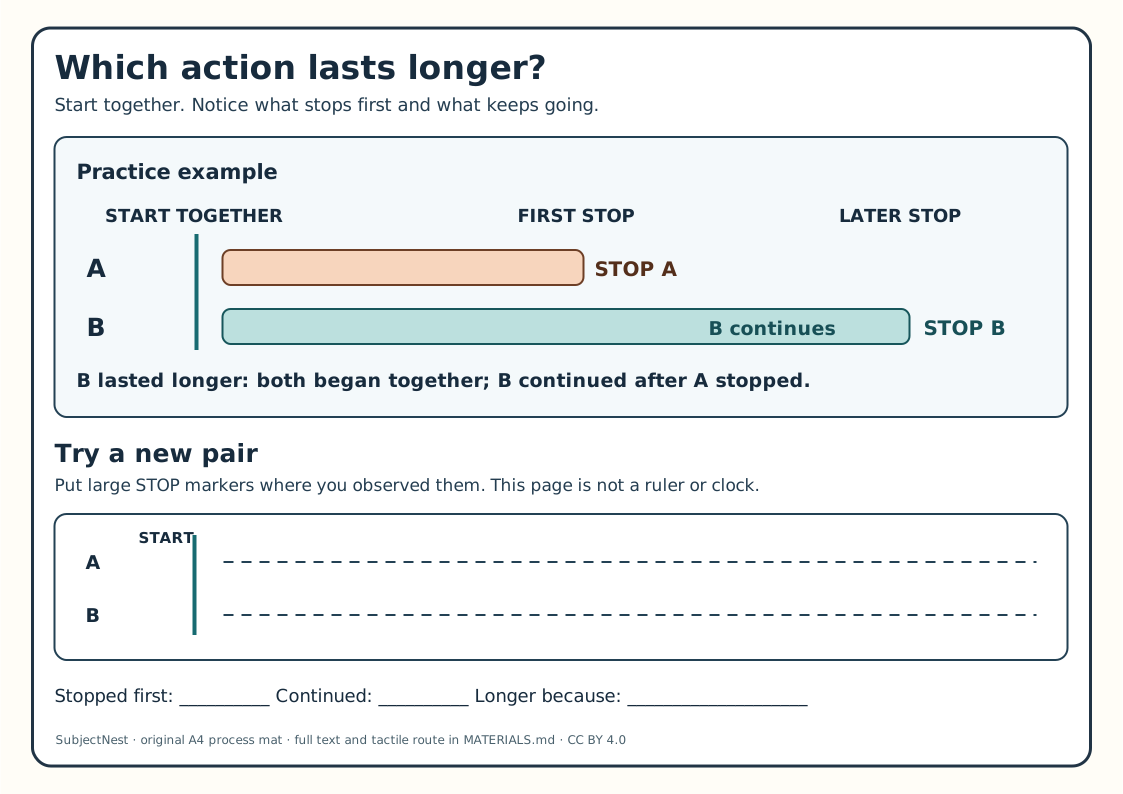
Goal: directly observe which of two simultaneous paper actions lasts longer, using stop/continue evidence. Proposed code: AC9MFM01. Prepare: Card 116, two large labelled lanes and Set E from Materials.
- Notice · 3 min. Ask what it would mean for two actions to start together; give one shared accessible START cue.
- Model · 4 min. Start A and B markers together. Stop A while B continues, then stop B. Say “B lasted longer because it was still going after A stopped.”
- Guide · 5 min. Repeat with new markers. Child points, feels or reports the moment one stops and the other continues; adult labels the two events without colour dependence.
- Independent try · 7 min. Run a new start-together pair and ask child to name first stop, continuing action and longer duration, with an observed reason. Record first response.
- Check · 4 min. Move one marker farther than the other while keeping original stop order. Ask whether distance proves duration; return to the stop/continue evidence.
- Exit · 2 min. Child completes “Both started together. ___ kept going, so ___ lasted longer.” If reversed, use STOP cards tomorrow.
Week 24 · Day 117 — Change what stops first
Goal: revise a duration claim when two start-together events have the opposite stop order. Proposed code: AC9MFM01. Prepare: Card 117, Set E with A/B stop order reversed, tactile or auditory route as chosen.
- Retrieve · 3 min. Show the prior paper diagram; child identifies why B was longer in that run.
- Model · 4 min. Start both anew and stop B first, keeping A active. Say the earlier claim must change because this run differs.
- Guide · 5 min. Children put STOP B and STOP A cards on the shared-start lanes in the order observed, then choose shorter/longer.
- Independent try · 7 min. Adult performs another pair with changed stop order but neutral labels. Child gives both comparisons: first to stop is shorter; continuing one is longer, with reason.
- Challenge · 4 min. Ask whether a paper marker that moved less could still be active longer. Demonstrate slow continued motion; duration is not distance/speed.
- Exit · 2 min. Ask “What would you look or listen for next time?” If only a colour or amount is cited, re-observe two stops tomorrow.
Week 24 · Day 118 — Compare unlike activities
Goal: transfer start-together duration reasoning from matching markers to two different safe activities. Proposed code: AC9MFM01. Prepare: Card 118, Set F quiet story/drawing setup and agreed accessible cues.
- Retrieve · 3 min. Child sees a mini run where B stops first and says which continued, using no distance clue.
- Model · 4 min. Start adult-read picture story and broad-paper drawing together; drawing ends first while story continues. Name story as longer in this observed run.
- Guide · 5 min. Children explain why count of words or drawn marks does not by itself give elapsed duration; point to shared start and different stops.
- Independent try · 7 min. Run puzzle-card sorting and cover drawing together with a new announced stop order; child reports the longer and shorter activity and the observed reason.
- Access check · 4 min. Offer equivalent visible/tactile marker or two soft distinct sounds. Ask if route change altered the comparison; it should preserve starts/stops.
- Exit · 2 min. Ask which two facts the explanation needs. Expect started together and which continued after the other stopped. If one is absent, model only that fact tomorrow.
Week 24 · Day 119 — Equal time and a fair start
Goal: recognise equal observed duration when start/stop are shared and withhold a duration claim from stop order alone when starts differ. Proposed code: AC9MFM01. Prepare: Card 119, Set G two-lane aids and separate START/STOP cards.
- Retrieve · 3 min. Child recalls how the class knew which action lasted longer in yesterday's start-together run.
- Model · 4 min. Start two actions together and stop together. State they lasted the same length of time in this run; no number of seconds needed.
- Guide · 5 min. Start A, start B later, stop A, then B. Point out that a later B stop alone does not settle which lasted longer.
- Independent try · 7 min. Give a fresh staggered-start demonstration; ask child what can and cannot be concluded. Child directs a reset with a shared START, then uses the stops to compare.
- Check · 4 min. A peer/adult offers “B was more fun, so it was longer.” Child gives one observed timing clue instead, without ranking preferences.
- Exit · 2 min. Child indicates a fair comparison setup. If they claim from staggered stop order, replay with clear distinct starts before Day 120.
Week 24 · Day 120 — Fresh direct-comparison check
Goal: compare two new start-together events by observed duration and reject an unsupported staggered-start conclusion. Proposed code: AC9MFM01. Prepare: unseen Assessment setup, Card 120, private record and accessible A/B cues.
- Welcome · 3 min. Explain that the event comparison helps choose the next activity; it does not measure how fast a child works.
- Setup · 4 min. Name two large paper actions and give the agreed cue channel; do not hint which will stop first.
- Fresh observation · 5 min. Start both together, stop A first, continue B, then stop B. Offer an identical replay only when requested/needed and log it.
- Independent reason · 7 min. Child names first stop, continuing action and longer event, then explains using the shared start and observed stop order. Preserve first response.
- Boundary check · 4 min. Present the separate staggered-start case; ask whether stop order alone settles it and how to make a direct comparison. Record any coached revision apart.
- Close · 2 min. Choose one next move from Assessment: notice continued action, equal-start rule, ignore amount/distance, or access route. One check does not certify all of AC9MFM01.
The Week 23 integrated story/time guide and Week 24 feelings/help guide offer extra practice. Preserve each subject's first independent response before group rehearsal or feedback.