These checks are original, openly available practice. They are not secure or formal school assessment instruments, a mark for technical skill, or a complete Unit 1 judgment. Choose movement, tabletop directing or notation/analysis. Movement is optional and locally supervised. A paper route can show a choreographic decision but cannot show bodily control, alignment or expressive performance. Get a neutral reading, scribe, larger print or tactile markers if useful. Submit a first response before the teacher opens worked feedback.
Day 5 Check A · New G passage
Use the new G score sheet or searchable PDF; exact text/tactile alternative is equivalent. The setting is an invented observatory display, not a real site, tradition or dance work.
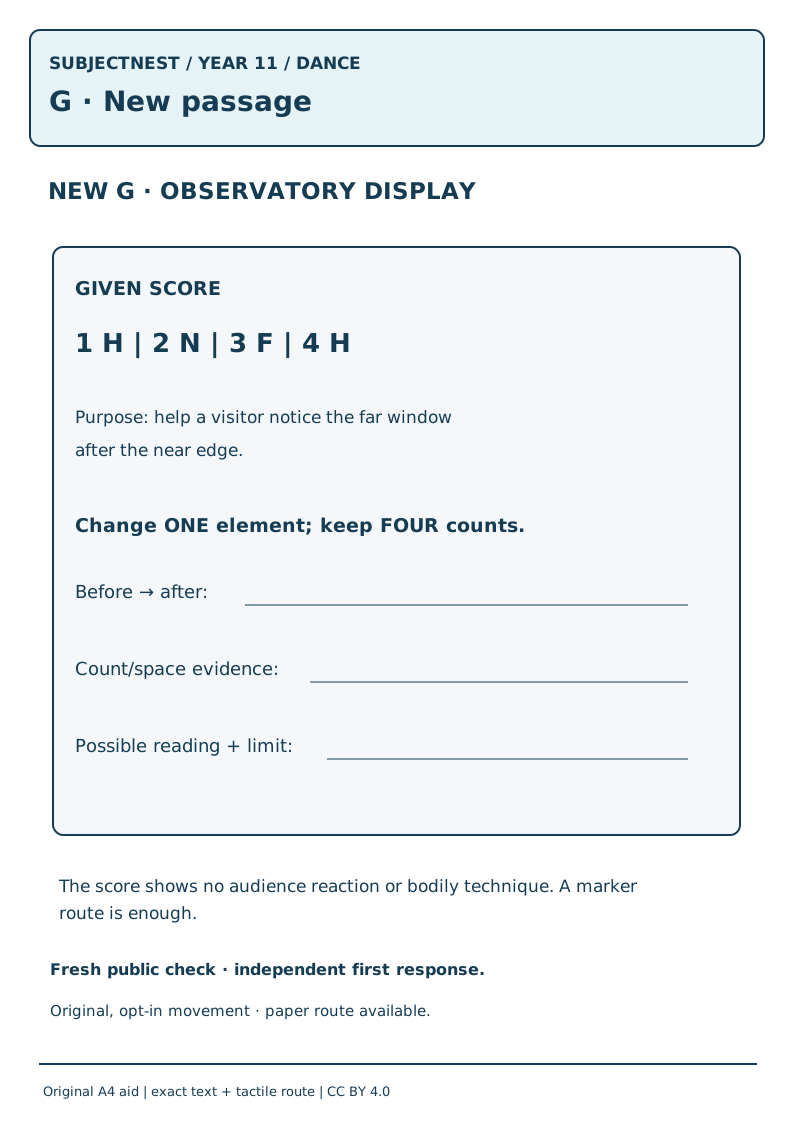
Given facts: One marker moves 1 H → 2 N → 3 F → 4 H (compact score H–N–F–H). The display designer's stated purpose is to help a visitor notice the far window after the near edge. The score does not show an audience reaction or a dancer's physical technique.
Your task (four parts):
- Mark two facts from the given score and distinguish one possible inference.
- Revise one named element (a location, duration or facing) while keeping four numbered counts. Show the before/after score or marker path clearly. Explain why your change may serve the stated purpose.
- Cite an exact count/space/time feature that supports your possible audience reading. Name one limit of what you know.
- State one safe route for making this decision without compulsory movement, contact or filming.
This response can be four brief sentences plus a score. More than one defensible revision is possible. The teacher may collect a first draft without requiring a public showing.
Day 10 Check B · New H crossing
Use the new H score sheet or searchable PDF; exact text/tactile alternative is equivalent. The setting is an invented visitor centre model, not a real community or performance.
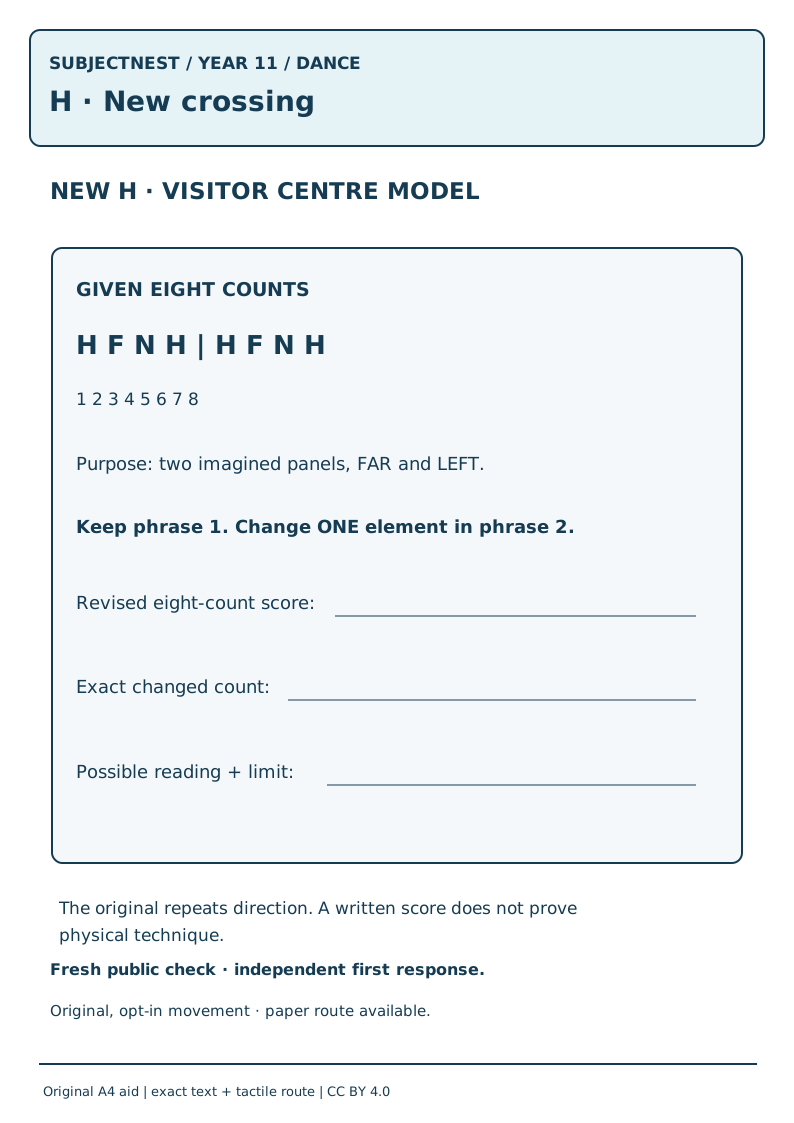
Given facts: Eight counts form two identical four-count phrases: 1 H, 2 F, 3 N, 4 H | 5 H, 6 F, 7 N, 8 H. The model has two imagined information panels, one far and one left. The designer wants a version that may help a visitor notice both panels. The original score shows repeated directions; it does not show a visitor response.
Your task (four parts):
- Label the original structure (repeat or contrast) and cite its second phrase as evidence.
- Write or direct a revised eight-count version that changes one named element in the second phrase to support the two-panel purpose. Keep the first phrase as given.
- Explain a possible audience reading with an exact count/position reference, and one limit of your claim.
- Say what this paper/marker evidence can show, and what further evidence would be needed to judge physical dance technique.
You may count silently and use a marker. No sound, walking, touch, camera or public performance is required.