Teacher setup each day: provide the movement, tabletop-directing and text/notation routes in DAILY-CHOICES.md; the learner can switch freely. Check the space and lead an appropriate local warm-up/cool-down before and after any physical option; timetable that according to your setting, not inside an unqualified card instruction. Follow access plans. None of these starts requires public performance, contact, filming, a body disclosure, a culturally specific dance or a device. The evidence target is the choreographic reasoning, not physical technique. Use A–F for rehearsal; reserve G/H for their first-response days.
Day 1 · A held direction can mean something
Target: Separate the stated H–R–R–H score from an inferred meaning, then link one count to a fictional purpose.
Prepare: A, path grid, four count cards, a marker. Offer seats/quiet paper access.
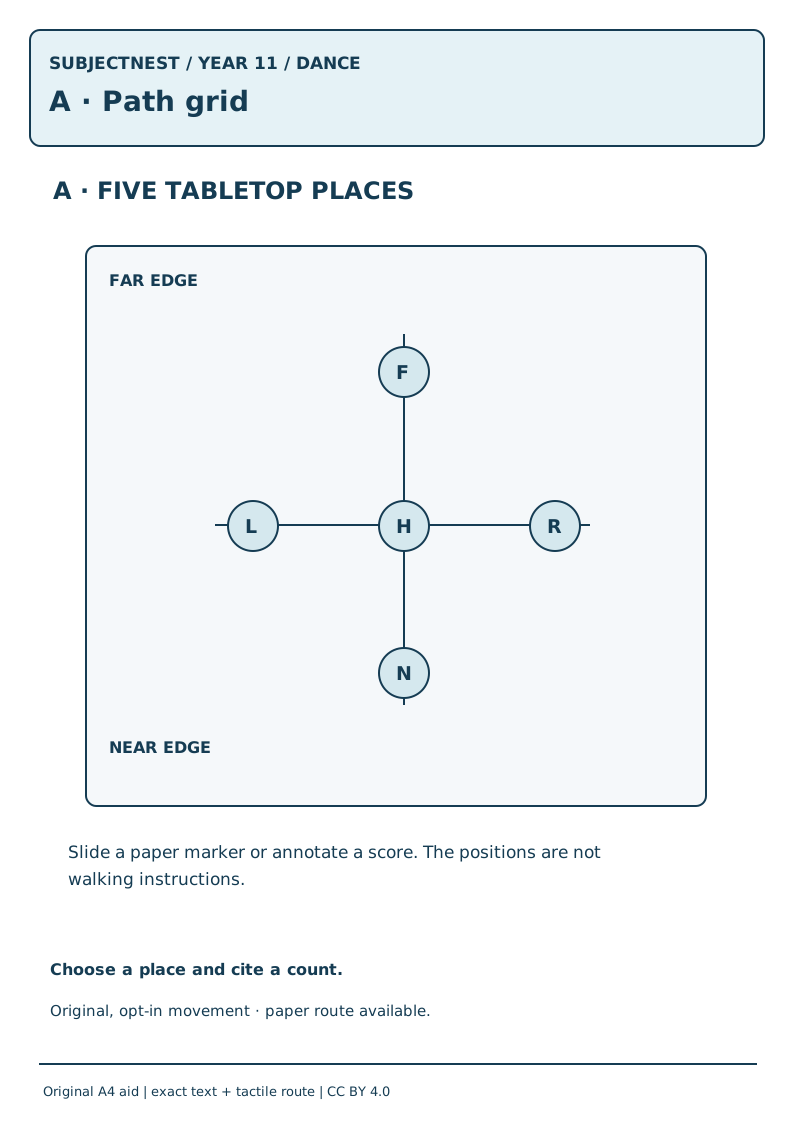
- Launch · 2 min. State that A is our own neutral composition card and that a paper marker is a full route. Invite a fictional purpose: alert a visitor to a right-hand desk.
- Model · 4 min. Put marker H on 1, R on 2, keep R on 3, return H on 4. Say “R on 3” is observable. “The visitor notices” is only possible, not certain.
- Guided looking · 5 min. Ask what would be lost if count 3 returned home. Put FACT beside the held R and POSSIBLE beside one audience reading.
- Practice route · 7 min. Learner chooses opt-in small movement, marker directing or score annotation. They state purpose, count evidence and one bounded reading; a partner may silently point to labels.
- Audit · 4 min. Teacher checks the four-count order and does not rate the learner's body. Correct “everyone looks right” to “a viewer may notice right because R is held on 3.”
- Exit · 3 min. Collect one fact/one inference and preview that tomorrow one path count changes.
Day 2 · One changed path, one changed cue
Target: Compare B's far and near count-2 routes while holding counts 1, 3 and 4 constant.
Prepare: B, path grid, two colour-independent marker rows.
- Launch · 2 min. Offer a fictional guide needing to direct attention towards either the far side or near edge; these are imagined spaces.
- Model · 4 min. Build H–F–R–H above H–N–R–H. Cover the matching counts. Name count 2 as the only different location.
- Guided looking · 5 min. Ask what a viewer can see at 2 and why a far-side purpose could favour F. Acknowledge more than one defensible answer with evidence.
- Practice route · 7 min. Learner directs, annotates or opts in to a comfortable direction gesture. They choose one route for a stated audience/context and name the changed count.
- Audit · 4 min. Count both four-beat versions, ask whether the claim predicts every viewer, and ensure no floor travel was demanded.
- Exit · 3 min. Save two route strips and one because-sentence; preview timing with locations unchanged.
Day 3 · Arrival time changes the quality
Target: Keep C's H–R–R–H places fixed and explain how sustained versus sudden arrival at R may shift attention.
Prepare: C, time strip, pencil or marker. Optional original four-count click at comfortable level; printed counts are enough.
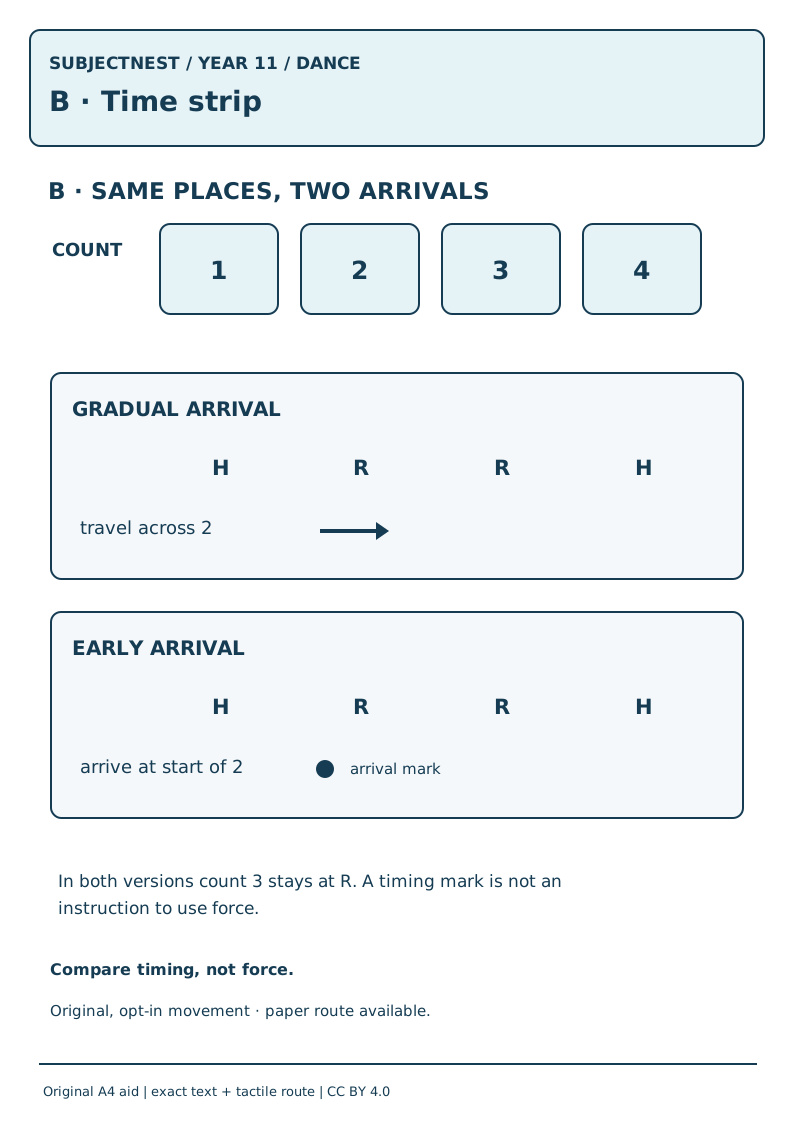
- Launch · 2 min. Distinguish a sudden timing from forceful bodily action. No one has to move fast or use audio.
- Model · 4 min. Draw a long line through count 2 for gradual arrival; draw an arrival mark at the start of 2 for the other version. Both rest at R for count 3.
- Guided looking · 5 min. Compare exactly what stays fixed and what changes. Ask which timing could make a fictional announcement feel less abrupt and why.
- Practice route · 7 min. Learner manipulates the time strip, directs a marker or opts into locally approved small movement. They record one possible reading tied to the mark.
- Audit · 4 min. Reject “stronger because it uses more force” if only timing changed. Check count sequence, comfort and no compulsory sound.
- Exit · 3 min. Collect two arrival marks and a limitation; preview a relationship to an object.
Day 4 · Near an object, or turned towards it
Target: Compare D's approach and orientation to an object and justify one choice for a fictional communication purpose.
Prepare: D, object map, two separate paper markers.
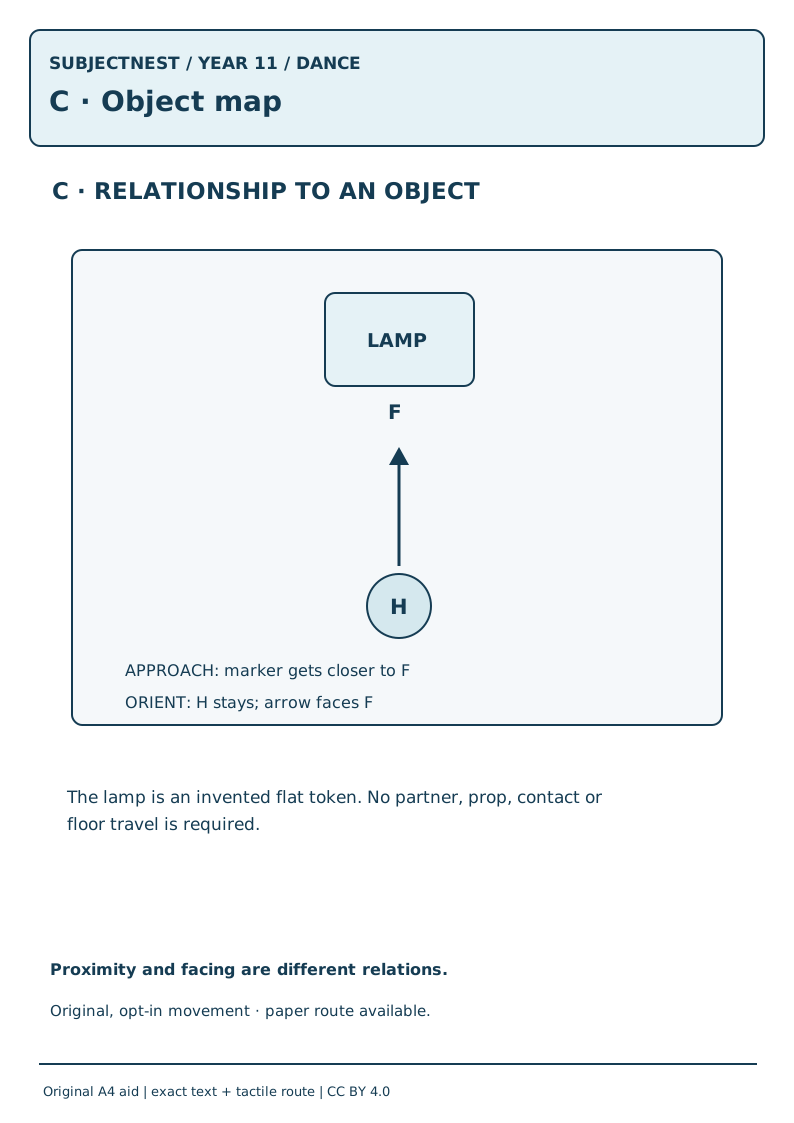
- Launch · 2 min. Keep the invented lamp as a flat marker. No one needs a partner, real prop or contact.
- Model · 4 min. Version 1 moves the marker towards F and returns; Version 2 keeps it H and points an arrow F. Show that proximity and facing are different relationships.
- Guided looking · 5 min. Ask which choice may communicate “look at the lamp” without making the lamp itself a character. Require the exact count/arrow.
- Practice route · 7 min. Learner makes one relationship choice with cards, notation or opt-in movement and adds a safety/permission choice: “tabletop is enough here.”
- Audit · 4 min. Check that the proposal requires neither peer touch nor a hazardous move, and that the audience reading is possible rather than certain.
- Exit · 3 min. Save a map and one evidence sentence; G will ask for a new independent choice tomorrow.
Day 5 · Fresh G formative check
Target: Independently adapt a new four-count route to a stated purpose and support a possible reading with count/space evidence.
Prepare: Check A, fresh G sheet, clean count cards. Keep the teacher key closed until first responses are saved.
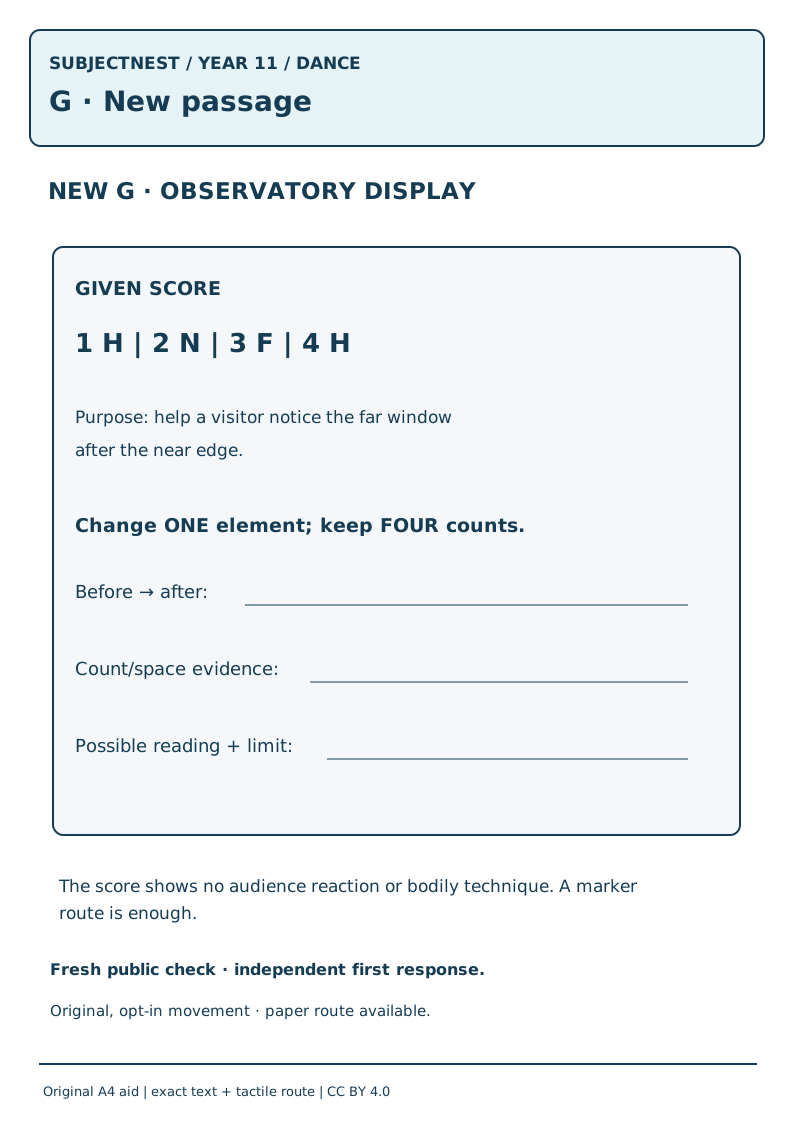
- Launch · 2 min. Say this is public practice for feedback and any of the three routes is available; there is no performance grade.
- Source access · 4 min. Let learners read G or receive a neutral exact-text/tactile reading. Explain H/F/L/R labels only; do not choose an adaptation.
- Independent plan · 5 min. Learner marks score facts, purpose, one variable they will change and their route.
- Independent response · 7 min. Learner directs markers, annotates or opts into a teacher-approved small gesture; records a four-count revised score and evidence-led possible reading.
- Self-audit · 4 min. Check all four counts remain, one named element changed and no claim of universal effect or physical technique was made.
- Submit · 3 min. Save the first answer, then use separate worked feedback. Give extra access time locally as needed.
Day 6 · Name the operation before judging it
Target: Distinguish E's left-right mirror from an early return, and explain how each manipulation changes a motif.
Prepare: E, motif-variation sheet, four H/R/L cards.
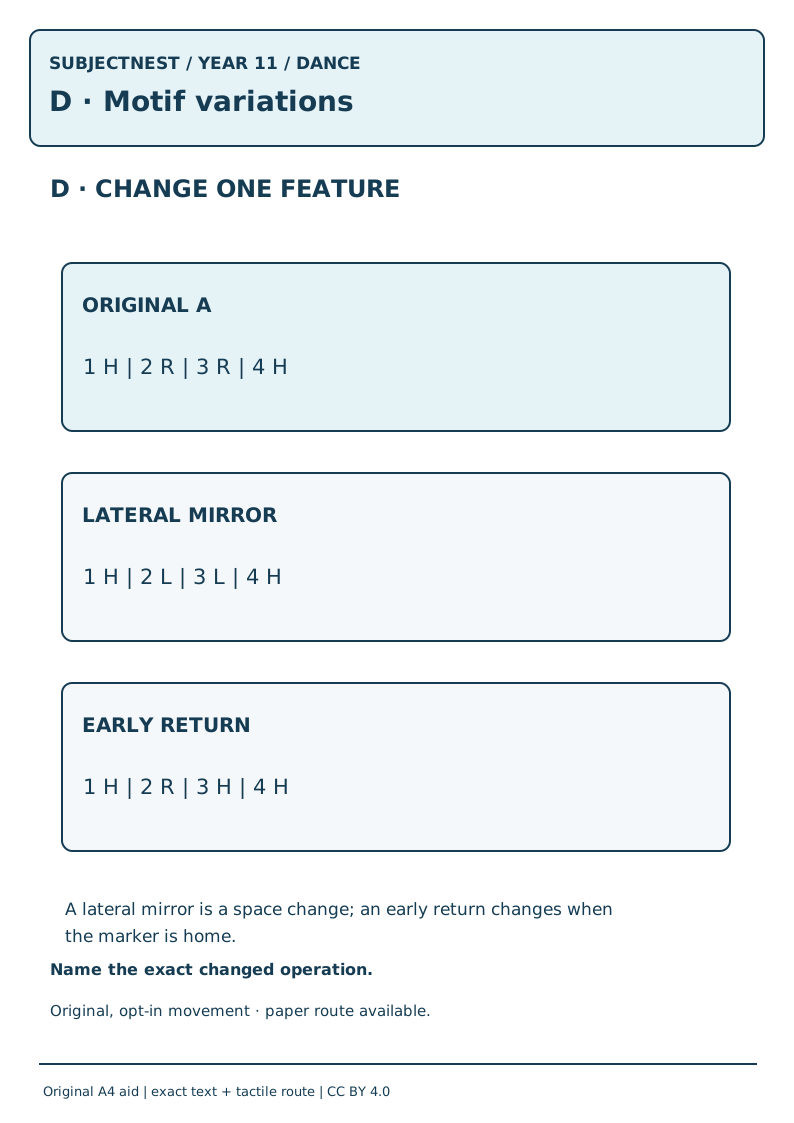
- Launch · 2 min. Ask whether “reverse” refers to space or time. E is an original score, not a traditional movement vocabulary.
- Model · 4 min. Lay A H–R–R–H. Beside it lay H–L–L–H and label lateral mirror. Lay H–R–H–H and label early return. Count each aloud or show raised numerals.
- Guided looking · 5 min. Ask why reversing A's time order at this coarse location level gives the same sequence. Use two identical token rows to make the symmetry visible.
- Practice route · 7 min. Learner selects a transformation for a fictional queue-flow or exhibition purpose, directs/notes/opts in to small movement, and names the operation precisely.
- Audit · 4 min. Check all four counts, accurate label and specific changed count/direction. Do not score bodily alignment.
- Exit · 3 min. Collect original plus two transforms and one purpose sentence.
Day 7 · A relationship can be chosen without contact
Target: Explain how D's mover–object orientation or F's side-to-side relation could focus attention without a partner.
Prepare: D/F, object map, paper object and mover markers; optional quiet room.
- Launch · 2 min. Ask “what can a viewer actually see?” A relation to space or object needs no second dancer.
- Model · 4 min. Keep mover H; turn its arrow towards the invented lamp at F on 2–3. Contrast a slide towards F. Both are compositional relationships; neither says the lamp is sacred or real.
- Guided looking · 5 min. In pairs only by consent, one person may describe a drawn version; otherwise self-check. Name the relation, counts and potential audience focus.
- Practice route · 7 min. Learner designs a two-marker or arrow score for a fictional library display, with movement/directing/analysis choice and a stated no-contact boundary.
- Audit · 4 min. Check observable position/facing evidence and a modest claim. If the physical route cannot be safely supported, use paper now.
- Exit · 3 min. Save the marked relationship and a question about how structure changes it.
Day 8 · Repetition or contrast over eight counts
Target: Compare F's P|P and P|Q structures, keeping eight counts while explaining an attention purpose.
Prepare: F, structure strip, two P and one Q card.
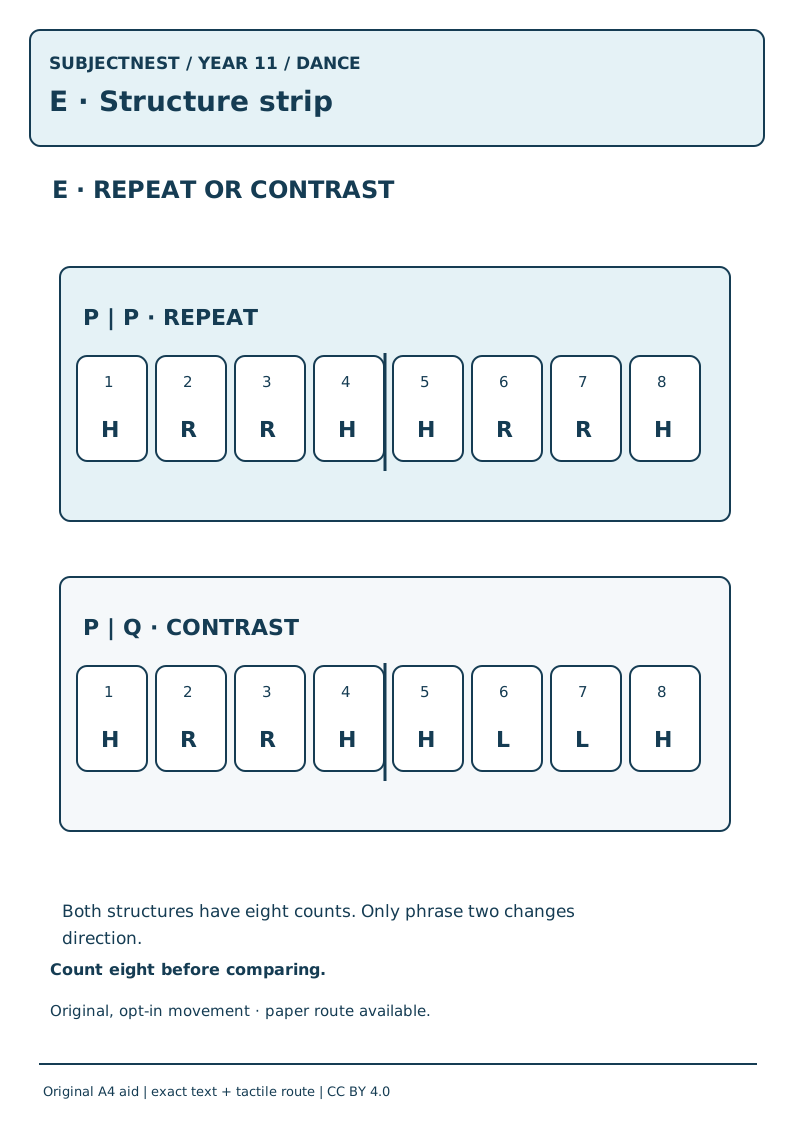
- Launch · 2 min. Point out that the two phrases are ours; no known dance or genre is being performed.
- Model · 4 min. Place P H–R–R–H twice (P|P). Change second phrase to Q H–L–L–H (P|Q). Count eight in each, including both held counts.
- Guided looking · 5 min. Ask which structure might draw attention to one side twice and which might balance attention left/right. Tie claims to the second phrase.
- Practice route · 7 min. Learner directs cards, writes eight symbols or opts into a small comfortable phrase. They choose a purpose and annotate the changed phrase.
- Audit · 4 min. Check eight counts, correct P/Q sequence and possible rather than guaranteed audience effect. Paper route remains equally valid for reasoning.
- Exit · 3 min. Submit both structures plus a one-sentence comparison.
Day 9 · Source authority before borrowing a move
Target: Distinguish source metadata, movement evidence and permission, then make an original A–F compositional choice without borrowing a work.
Prepare: first-authority pathway, choice log, text-only titles of QCAA, Bangarra and Creative Australia pages. No external dance clip is required in this starter.
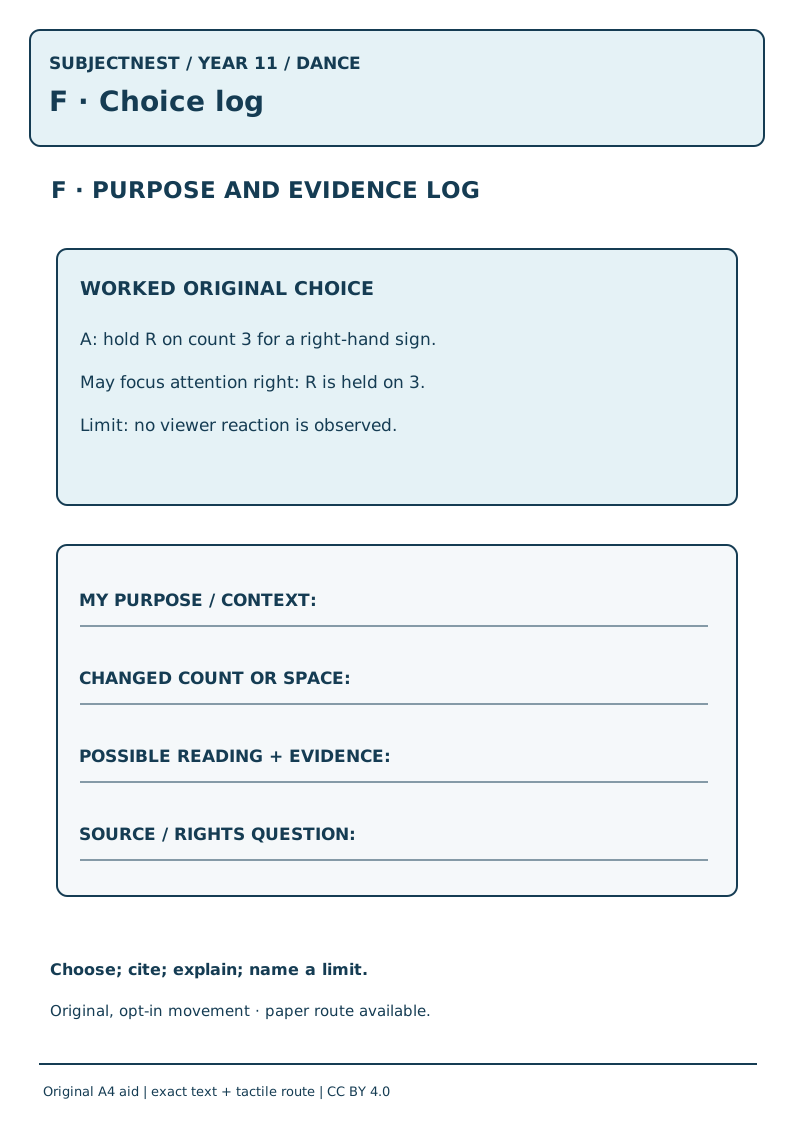
- Launch · 2 min. State that a company education page can identify its publisher and resources; it does not automatically authorise copying its dance or stories.
- Model · 4 min. Record “Bangarra publishes classroom resources” as source metadata. Put “how a specific work moves” and “may we perform/adapt it?” in separate unanswered boxes. Read Creative Australia protocol title.
- Guided looking · 5 min. Ask what would need watching, attribution, rights and cultural consultation before using a selected work. Do not have students mimic or speak for any culture.
- Practice route · 7 min. Learner records a rights/source question and makes a new original A–F marker/score choice for a fictional purpose, in any route.
- Audit · 4 min. Check own choice is clearly separate from third-party source fact and that permission is not assumed. Flag full-unit authentic repertoire as still to plan.
- Exit · 3 min. Save source question and original log; tomorrow's H is a fresh check.
Day 10 · Fresh H formative check
Target: Independently compare a repeated and contrasting phrase in a new score, then justify one purposeful revision and its limits.
Prepare: Check B, fresh H sheet, blank eight-count strip. Keep teacher feedback closed until first responses are saved.
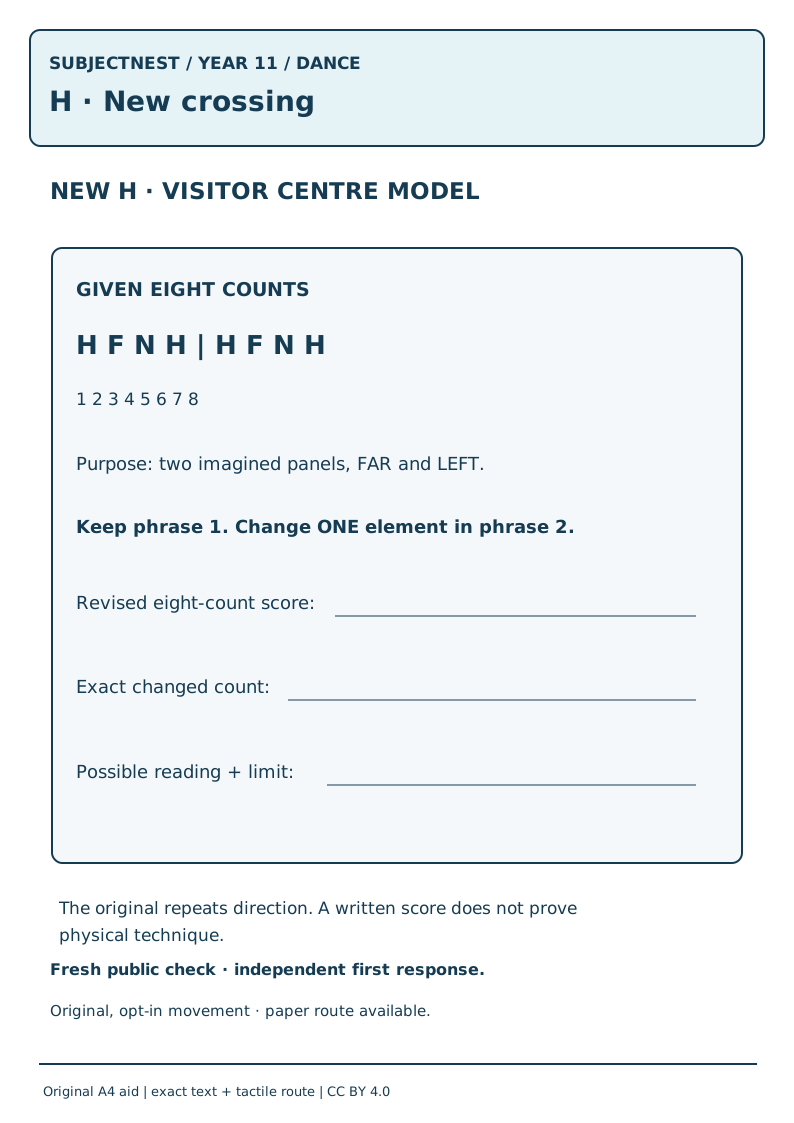
- Launch · 2 min. Offer movement, directing or annotation, including silent access. It is a public formative check, not a school performance result.
- Source access · 4 min. Read or supply H exactly. Clarify N/F/L/R/H as tabletop labels; do not reveal a preferred second phrase.
- Independent plan · 5 min. Learner marks repeated and changed counts, chooses a purpose and selects one allowed variable to revise.
- Independent response · 7 min. Learner provides an eight-count score in markers or notation, or opts into teacher-approved small movement, and explains a possible audience reading with evidence and a limit.
- Self-audit · 4 min. Check eight counts, correct source facts, purpose/context, one justified change and no physical-skill claim from paper.
- Submit · 3 min. Save the first response before using the separate key; choose later lessons for actual genre history, repertoire and technique.