Target: Explain how D's mover–object orientation or F's side-to-side relation could focus attention without a partner.
Prepare: D/F, object map, paper object and mover markers; optional quiet room.
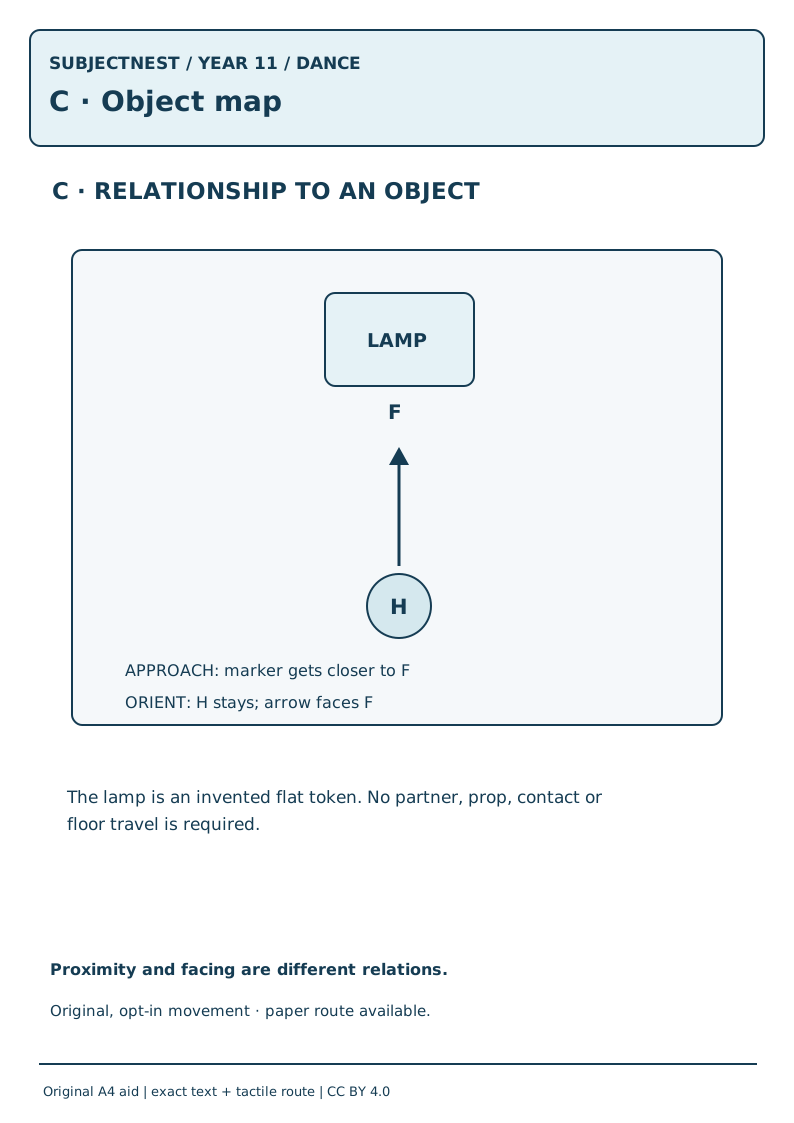
- Launch · 2 min. Ask “what can a viewer actually see?” A relation to space or object needs no second dancer.
- Model · 4 min. Keep mover H; turn its arrow towards the invented lamp at F on 2–3. Contrast a slide towards F. Both are compositional relationships; neither says the lamp is sacred or real.
- Guided looking · 5 min. In pairs only by consent, one person may describe a drawn version; otherwise self-check. Name the relation, counts and potential audience focus.
- Practice route · 7 min. Learner designs a two-marker or arrow score for a fictional library display, with movement/directing/analysis choice and a stated no-contact boundary.
- Audit · 4 min. Check observable position/facing evidence and a modest claim. If the physical route cannot be safely supported, use paper now.
- Exit · 3 min. Save the marked relationship and a question about how structure changes it.