All characters, places and situations below are invented for this pack. No scene is a cultural story, interview, classmate experience or adaptation. The story concerns a fictional object library where a parcel has arrived with a blank destination card. Actors may read privately, or learners may direct labelled paper cards instead. Nobody has to reveal anything personal or take a role. The six A4 aids provide the full opening script, stage map and sequencing/decision boards.
A · The unmarked parcel
Place: an imaginary object-library counter. Roles: MIN and JO. Props: one unmarked paper rectangle (“parcel”), a closed paper rectangle (“ledger”), a doorway marker. No real name, culture or location is implied. Intended purpose: inform an audience that a choice needs checking before a deadline.
MIN: “The destination card is blank.”
JO: “The last trolley leaves in two minutes.”
MIN: “The ledger is here. We can check.”
JO: “Then hold the door.”
Action: MIN points towards the closed ledger. JO faces the doorway. Both pause for two counts. The scene ends before the parcel is assigned; the audience cannot know the correct destination. The two-count pause is an artistic choice, not evidence of a universal feeling.
B · A changed focus, same words
Keep all four A lines. At the start, both role cards face the audience. On MIN’s “ledger” line, turn MIN’s card towards the ledger while JO remains facing the door. A director may instead turn JO on “two minutes.” Compare which information an audience sees first and justify it with line and blocking evidence. Do not add a real person’s delivery story.
C · A changed pause, same facts
Keep A’s lines and positions. Version 1 pauses for two counts after “We can check.” Version 2 pauses for two counts after “Then hold the door.” A pause occupies time; do not call one choice objectively more tense without a purpose and audience rationale.
D · Three action beats, linear order
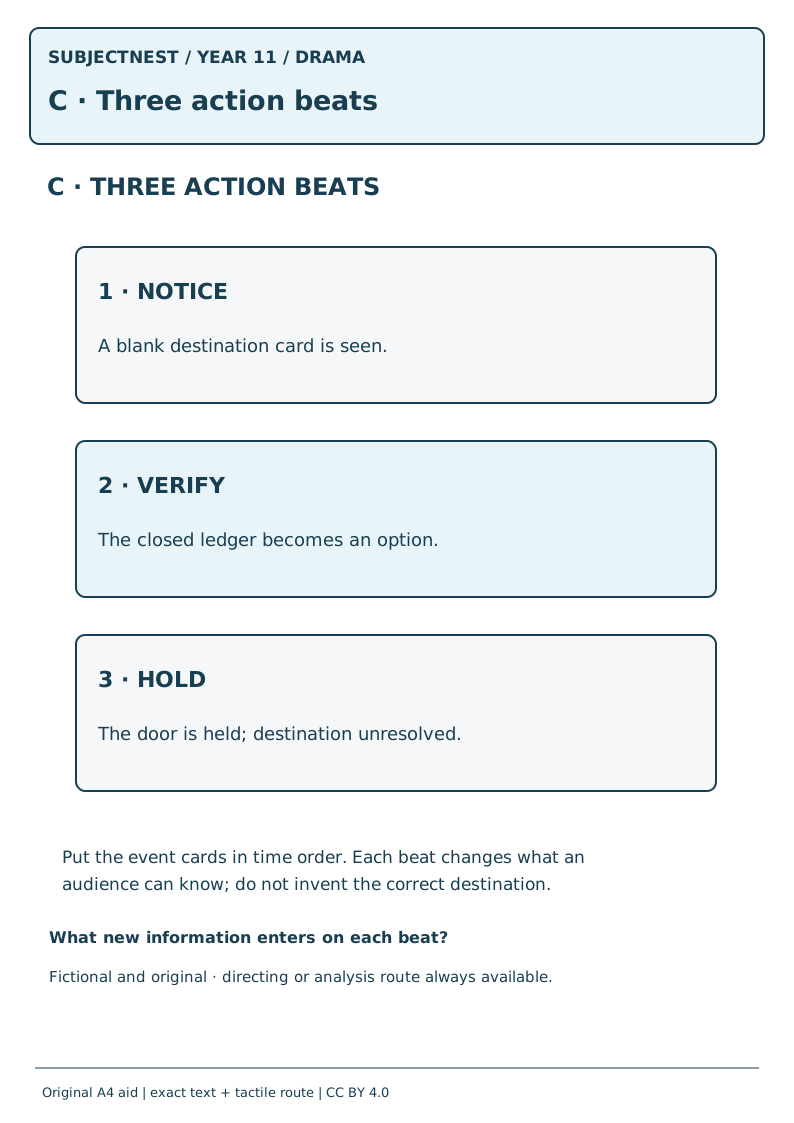
- A blank card is noticed. 2. The ledger is identified. 3. The door is held while the decision remains open. A simple linear account gives the audience information in event order. Use the three-beat board to show what each beat adds.
E · The same beats, a non-linear opening
Open with beat 3: JO faces the doorway as the door is held. Then return to beat 1 and beat 2 as a short earlier sequence. Mark “earlier” so a viewer can follow the time shift. No claim is made that this is a named inherited dramatic style. Compare what an audience is invited to wonder before the explanation arrives.
F · Optional cue or visible silence
Before JO’s “two minutes” line, a director may use an original soft tone, an original firmer tone, or a clearly held silent count. The tones are simple generated sounds, not recordings or cultural sound cues. Record whether the cue helps the chosen purpose and what a silent route can still communicate through timing and focus. No sound device is needed.