Use original A–F for practice and new G/H only on their check days. Before each lesson, offer acting, directing with paper markers, and script-analysis routes. Do not ask for a personal story, mimicry of a culture, a classmate’s experience, touch or recorded performance. The learner chooses a route without explaining why and may change it. For this starter, all three routes produce one dramatic-language choice with line/space/time evidence and a bounded audience interpretation; a school’s later assessed acting performance has different evidence needs. Use a stop/observe/reset option in any rehearsal. No one is required to improvise publicly.
Day 1 · What does the text show?
Target: Distinguish four explicit facts in the original A scene from an audience inference, and make one evidence-led dramatic question.
Prepare: A scene sheet, exact text, four blank line cards; no props beyond paper.
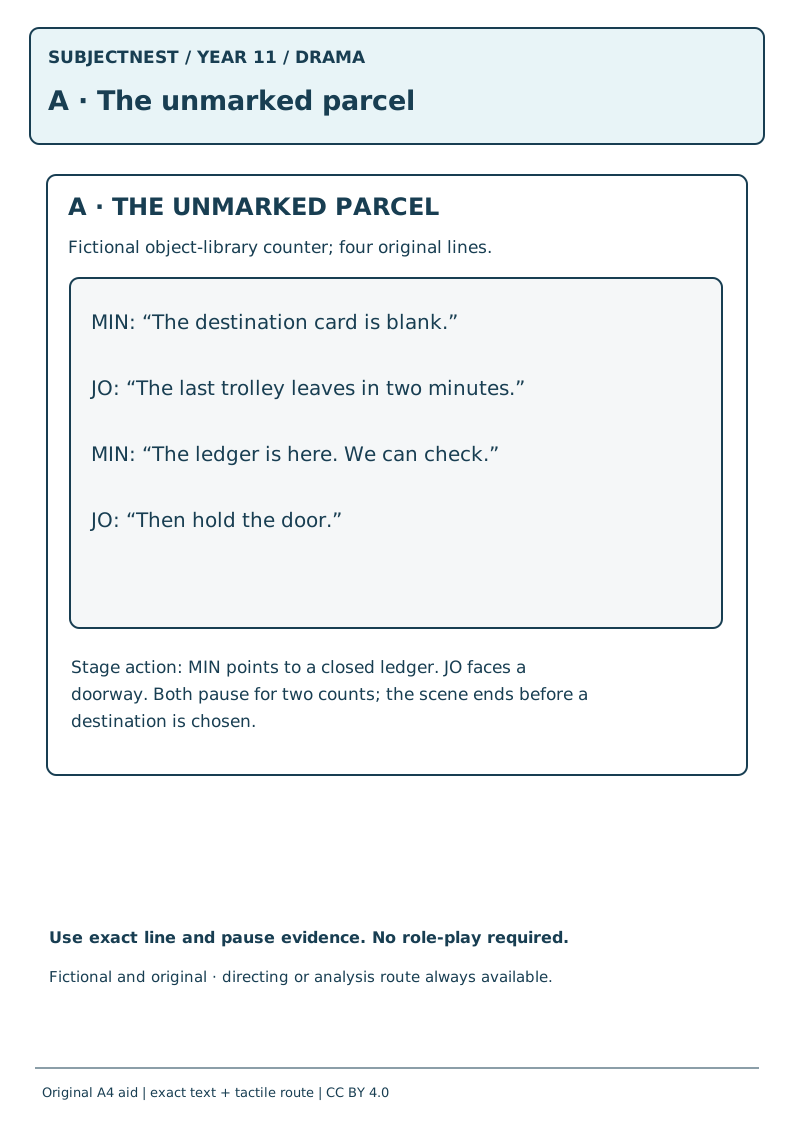
- Launch · 2 min. Say that every role is fictional and no learner’s life is requested. A partner can read while anyone follows silently.
- Model · 4 min. Read or point to A. Mark the blank card, last trolley in two minutes, available ledger and held door as stated facts. “The correct destination” is unknown.
- Guided looking · 5 min. Ask which exact line supports a choice to check, and which hoped-for outcome the text does not show. Place “known” and “inferred” cards beside a line.
- Practice route · 7 min. Learners perform a neutral reading, direct four line cards, or annotate the script. They choose an audience question such as “Will they check before the trolley leaves?” and cite one line.
- Audit · 4 min. Peer or self-check one factual statement, one labelled inference and no invented identity/background. Accept a quiet written route.
- Exit · 3 min. Collect the cited line and question; preview how stage space can change focus.
Day 2 · Purpose, audience and context
Target: Keep A’s fictional facts but state a purpose and identify how one line could inform an audience before the unresolved ending.
Prepare: A, decision log, cards reading PURPOSE, AUDIENCE, EVIDENCE.
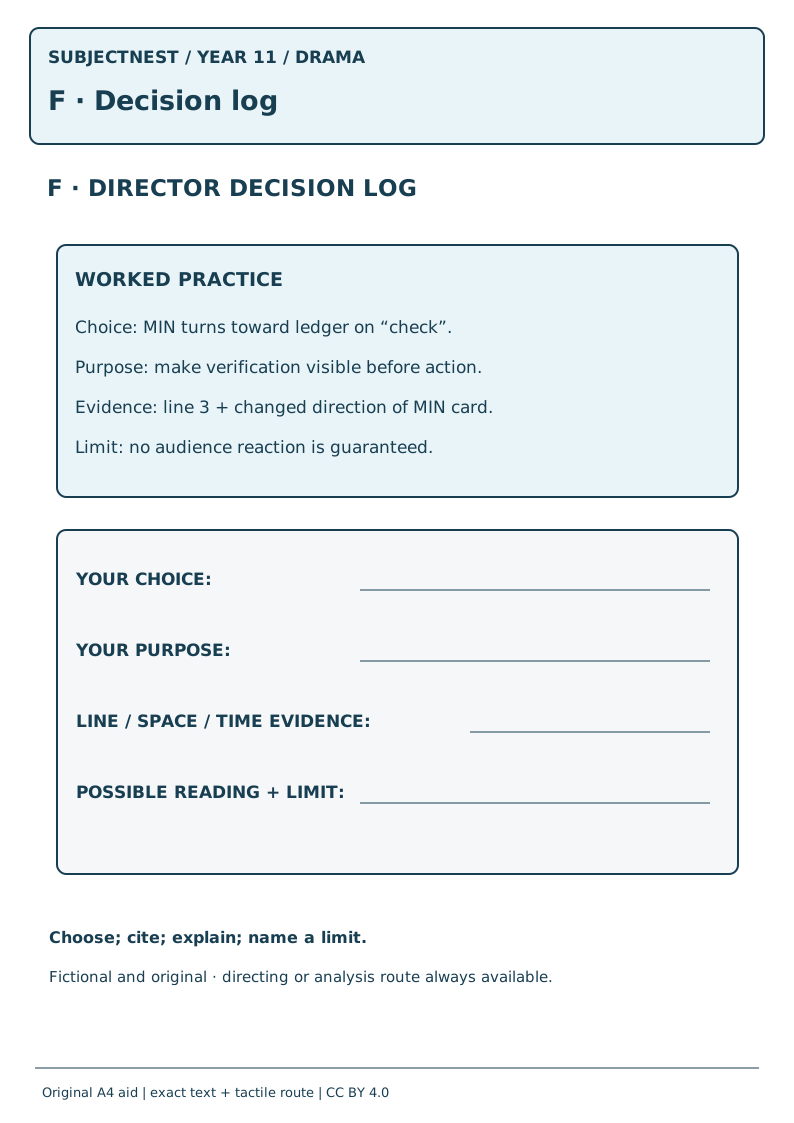
- Launch · 2 min. Ask: “What does the audience need to know before any decision?”
- Model · 4 min. Offer one defensible purpose: inform viewers that verification matters under time pressure. The line “The ledger is here” and the two-minute deadline support it; the scene does not prove where the parcel belongs.
- Guided looking · 5 min. Contrast “to inform” with “to make everyone panic.” The first names a maker’s purpose; the second wrongly predicts every viewer’s response.
- Practice route · 7 min. Learner chooses an audience (someone watching this fictional counter for the first time), selects one A line to foreground, and acts, directs or annotates that emphasis. They write a possible effect with evidence.
- Audit · 4 min. Check purpose, context and text are named separately. No real courier or customer identity is invented.
- Exit · 3 min. Save the choice and line; ask what an audience could see if a card turns.
Day 3 · A turn redirects focus
Target: Compare two B blocking choices and justify how a role card’s direction can shift dramatic focus while dialogue stays fixed.
Prepare: stage map, B scene move, two role cards and paper ledger/door markers.
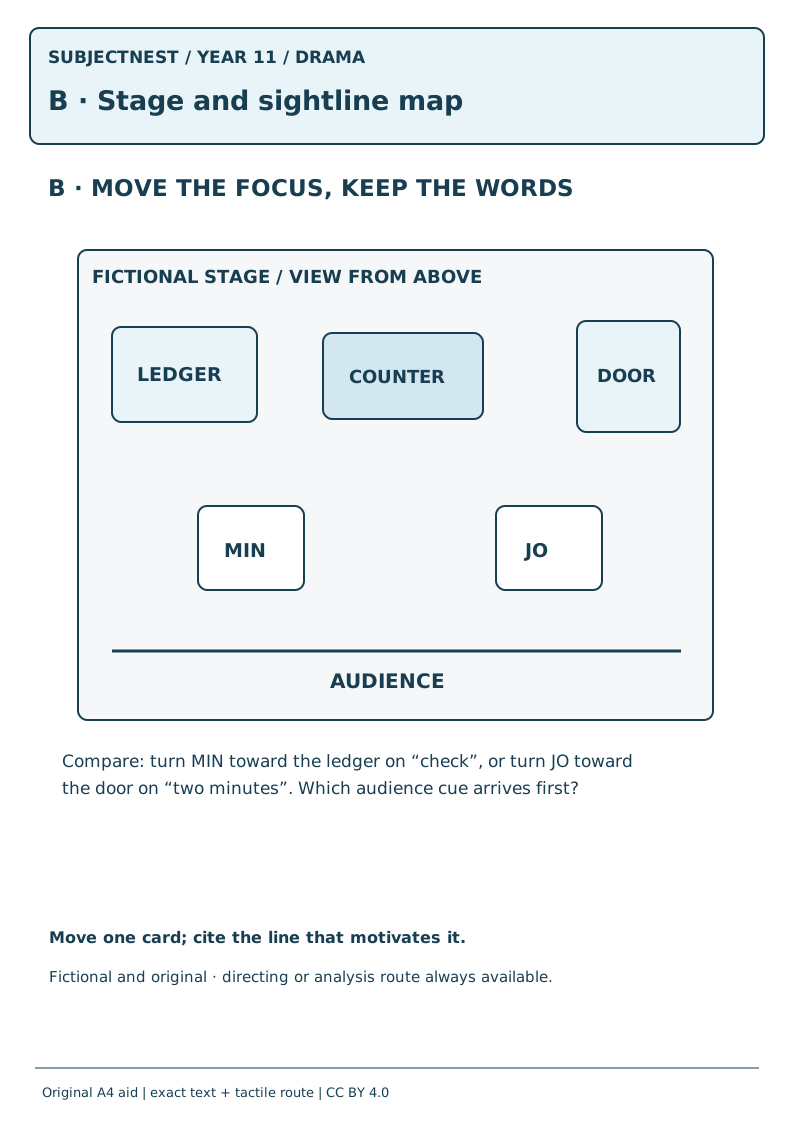
- Launch · 2 min. Establish the audience line on the map. A role card moves; no person must move.
- Model · 4 min. Keep A’s four lines. On “ledger,” turn MIN towards the ledger. On an alternate run, turn JO towards the door on “two minutes.” Never do both in the comparison.
- Guided looking · 5 min. Students point to what is now visible or attended to. A turn changes focus, not the text’s facts.
- Practice route · 7 min. Direct cards, opt-in rehearse a turn, or annotate the map. Learner chooses the better move for an informing purpose and cites the exact line/position.
- Audit · 4 min. Check that positions match the map and that a possible audience reading is not stated as certain.
- Exit · 3 min. Collect an arrow on the map and a reason; next lesson structures action over time.
Day 4 · Three beats of action
Target: Order D’s three fictional action beats and explain how each beat adds information without inventing a resolution.
Prepare: three-beat board, D, three paper event cards.
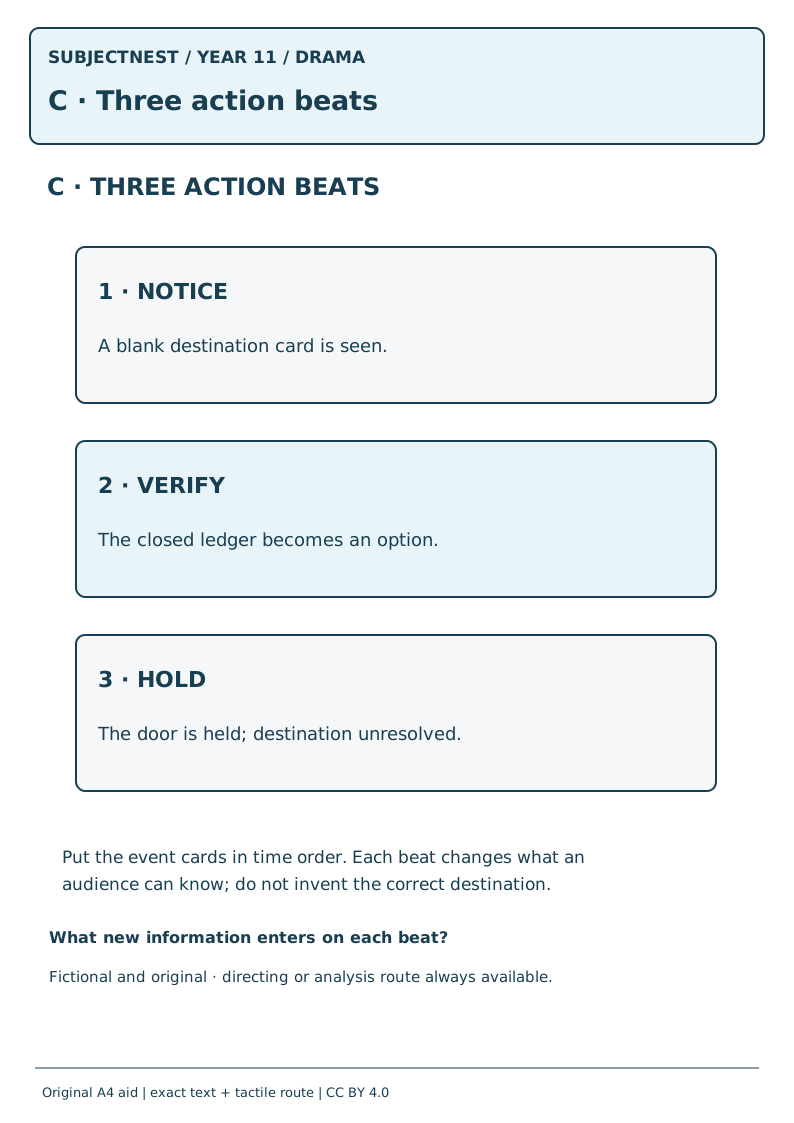
- Launch · 2 min. Ask what an action beat changes for the audience.
- Model · 4 min. Place NOTICE → VERIFY → HOLD. At each, say only what is available: blank card; ledger option; door held with destination unresolved.
- Guided looking · 5 min. Remove the middle card. Ask what the audience loses and why the held door might become less clearly motivated.
- Practice route · 7 min. Learner arranges, narrates or annotates the sequence; then restores the middle beat or proposes another order labelled clearly. Cite one changed information point.
- Audit · 4 min. Check no invented destination, no mandatory physical performance, and an exact beat/evidence claim.
- Exit · 3 min. Submit three cards and a one-sentence purpose statement.
Day 5 · Fresh G formative check
Target: Independently interpret a new fictional script, choose one focus or pause decision and justify a possible audience effect without altering its stated facts.
Prepare: student Check A, new G sheet, blank stage map. Keep worked feedback for after the first response.
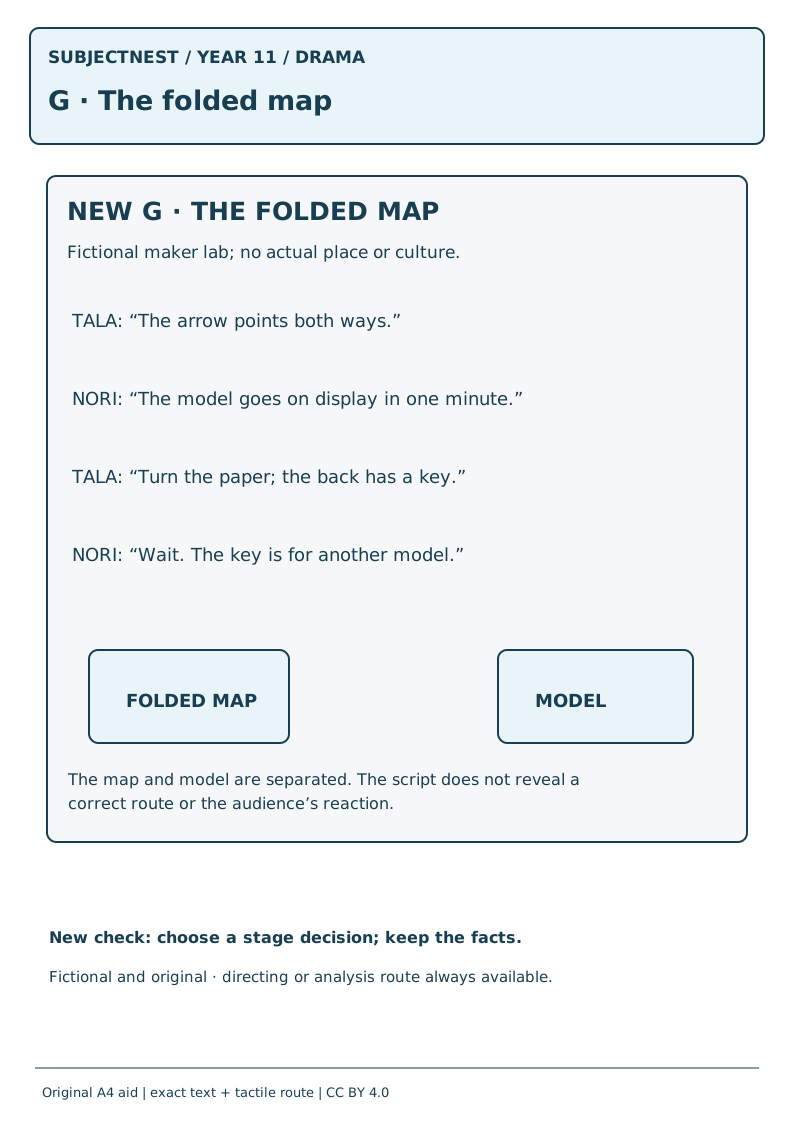
- Launch · 2 min. Explain that the scene is invented, no role-play is required, and the learner can choose a soundless route.
- Source access · 4 min. Show/read the exact G dialogue and map/model labels neutrally. Explain only the task and not a preferred staging choice.
- Independent plan · 5 min. Learner marks what the script says and what remains unknown, then chooses a focus or pause.
- Independent response · 7 min. Learner directs paper markers, annotates a script or opts in to reading, and explains one possible effect with line/space/time evidence.
- Self-audit · 4 min. Check the choice preserves G’s facts and avoids a universal audience claim.
- Submit · 3 min. Save the first response, then discuss teacher feedback. Extend response time locally for access.
Day 6 · A cue or a visible silence
Target: Compare F’s optional tone cue with a counted silence, explaining how timing/sound can support or distract from the same fictional purpose.
Prepare: F, pause sheet; optional original soft and firm tones at comfortable level. No device is needed.
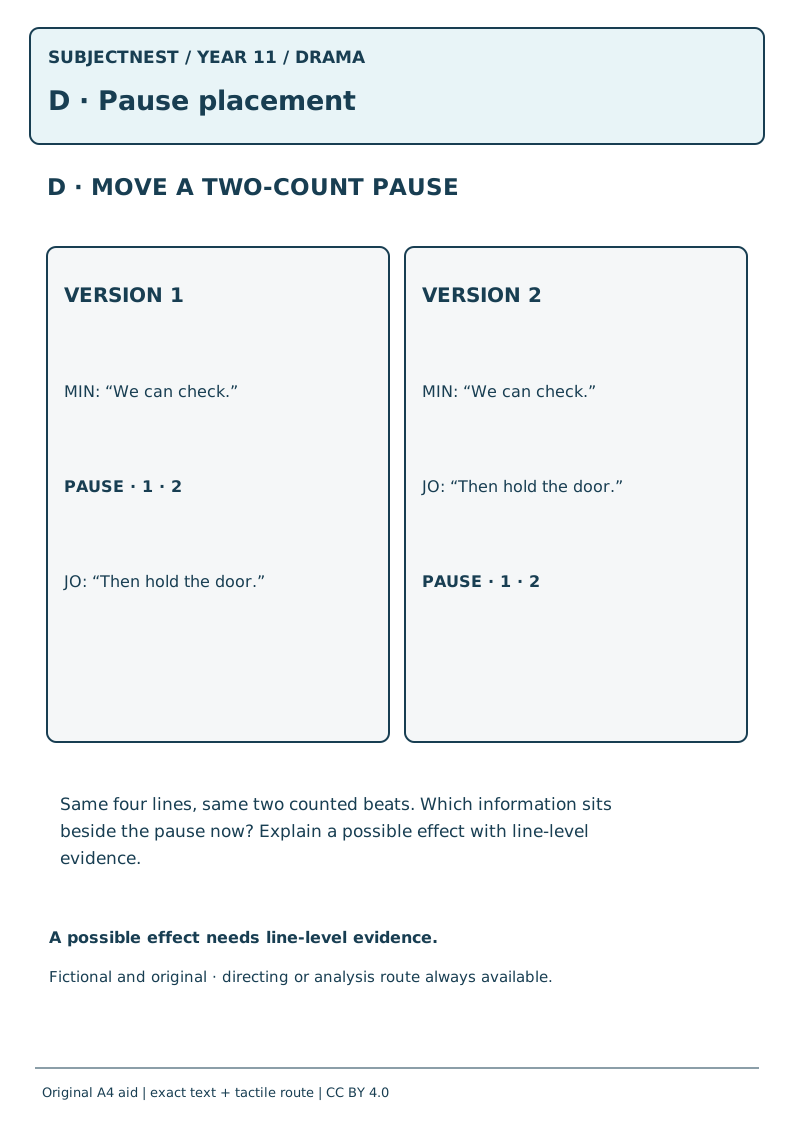
- Launch · 2 min. Invite sound, low-noise or text-only participation. A tone is not a representation of a culture or person.
- Model · 4 min. Before JO’s “two minutes,” count a silent two-beat pause. Contrast a soft neutral tone there, keeping the script and blocking fixed.
- Guided looking · 5 min. Ask what changes (presence/timbre/intensity of a cue) and what stays (four lines, timing position, purpose). Do not call louder automatically better.
- Practice route · 7 min. Learner chooses soft cue, firm cue or silence; directs it in text, cards or opt-in action. They justify whether it helps an audience attend to the deadline.
- Audit · 4 min. Check that sound was optional, speaker volume was comfortable, and one exact line/time point supports the decision.
- Exit · 3 min. Save the cue decision and its limit; next compare story order.
Day 7 · Start at the start, or later
Target: Compare D’s linear 1→2→3 sequence with E’s labelled 3→1→2 opening, identifying how order affects what an audience knows first.
Prepare: order board, D/E cards, three paper markers.
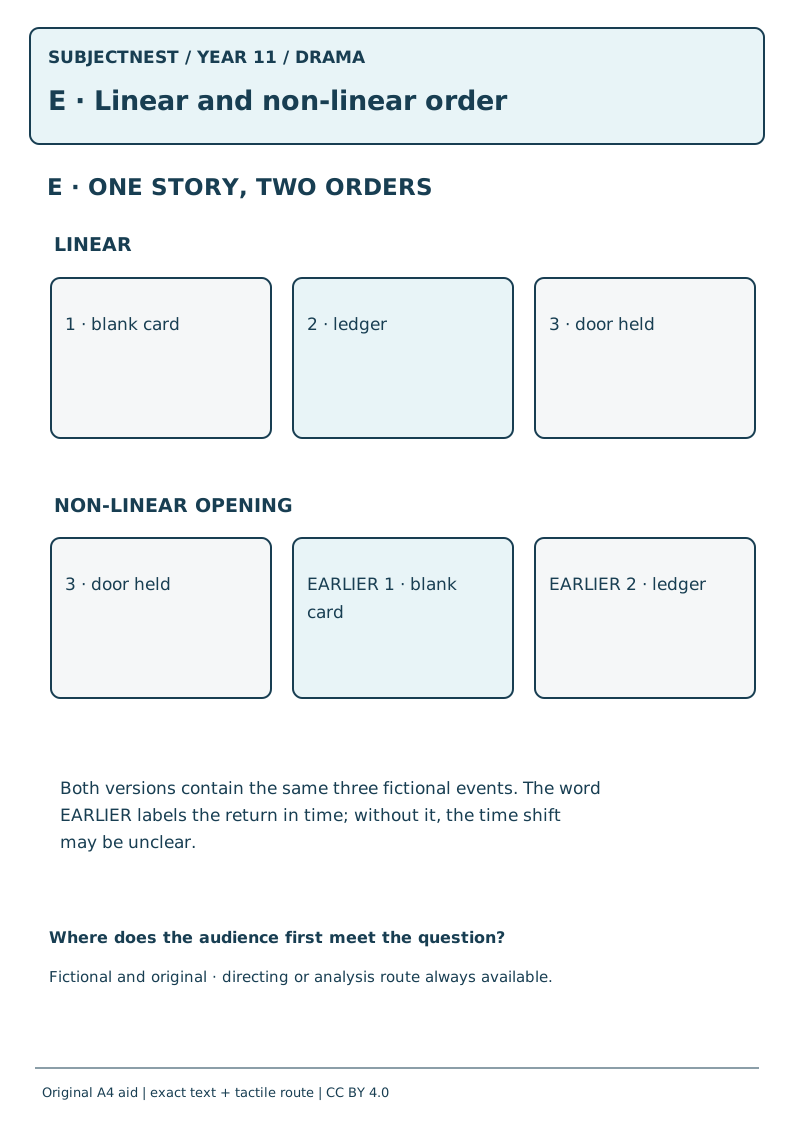
- Launch · 2 min. Say “non-linear” describes order here; it is not a cultural style label.
- Model · 4 min. Lay 1→2→3, then 3→EARLIER 1→EARLIER 2. In the second, the held door arrives before its cause.
- Guided looking · 5 min. Ask what the word EARLIER prevents: confusion about when the blank card and ledger events happen.
- Practice route · 7 min. Learner directs cards, quietly reads captions or opts in to a brief enactment. They choose an order for the purpose of inviting a question and cite event positions.
- Audit · 4 min. Check both versions contain all three events, the time shift is signalled, and possible audience curiosity is bounded.
- Exit · 3 min. Collect two orders with one evidence-led comparison.
Day 8 · Script plus space: a small hybrid choice
Target: Combine one A line with a spatial/visual cue and evaluate how the combination may communicate a purpose more clearly than either alone.
Prepare: A script, stage map, director log; no projection or recording.
- Launch · 2 min. Remind learners that “hybrid” here is a simple mix of text and visible stage arrangement, not a completed work or inherited style.
- Model · 4 min. Keep MIN’s “The ledger is here” and turn the MIN card toward the ledger. Together, language and direction make the verification option visible.
- Guided looking · 5 min. Compare text-only, map-only and combined versions. Ask which exact evidence each supplies; avoid assuming every audience sees or hears the same way.
- Practice route · 7 min. Learner selects a different A line and one paper-card move or marked pause. Write, direct or opt in to stage it; justify the combination.
- Audit · 4 min. Check the added cue does not create a new factual destination or require personal performance.
- Exit · 3 min. Save line + cue + purpose + limit in the log.
Day 9 · Who may share this story?
Target: Identify source authority and permission limits for real theatre material, then make an independent directing choice in the original A scene.
Prepare: first-authority source pathway, text-only titles of Yirra Yaakin and Creative Australia pages, director log.
- Launch · 2 min. Say that the class will not perform, imitate or reproduce cultural material. Learners need not speak for a culture or share personal experience.
- Model · 4 min. Identify Yirra Yaakin as the publisher of its education page and Creative Australia as protocol publisher. A public page can guide a source question but does not grant permission to adapt a story.
- Guided looking · 5 min. Ask what metadata can show (publisher, description of its program) and what it cannot (the actual performance, community permission for our reuse).
- Practice route · 7 min. Learner records a source/rights question, then returns to A and writes/directs one original line/space/pause decision without borrowing any cultural content.
- Audit · 4 min. Check separation of third-party source fact, permission unknown and own creative choice. No third-party image or script enters the pack.
- Exit · 3 min. Collect the question and original log. The school must still select authorised published/professional theatre for the full unit.
Day 10 · Fresh H formative check
Target: Independently compare two orders of a new fictional scene, create a clear change in dramatic focus and justify it with textual/spatial evidence and a rights limit.
Prepare: student Check B, new H sheet, three blank position cards. Do not show the worked key before the first response.
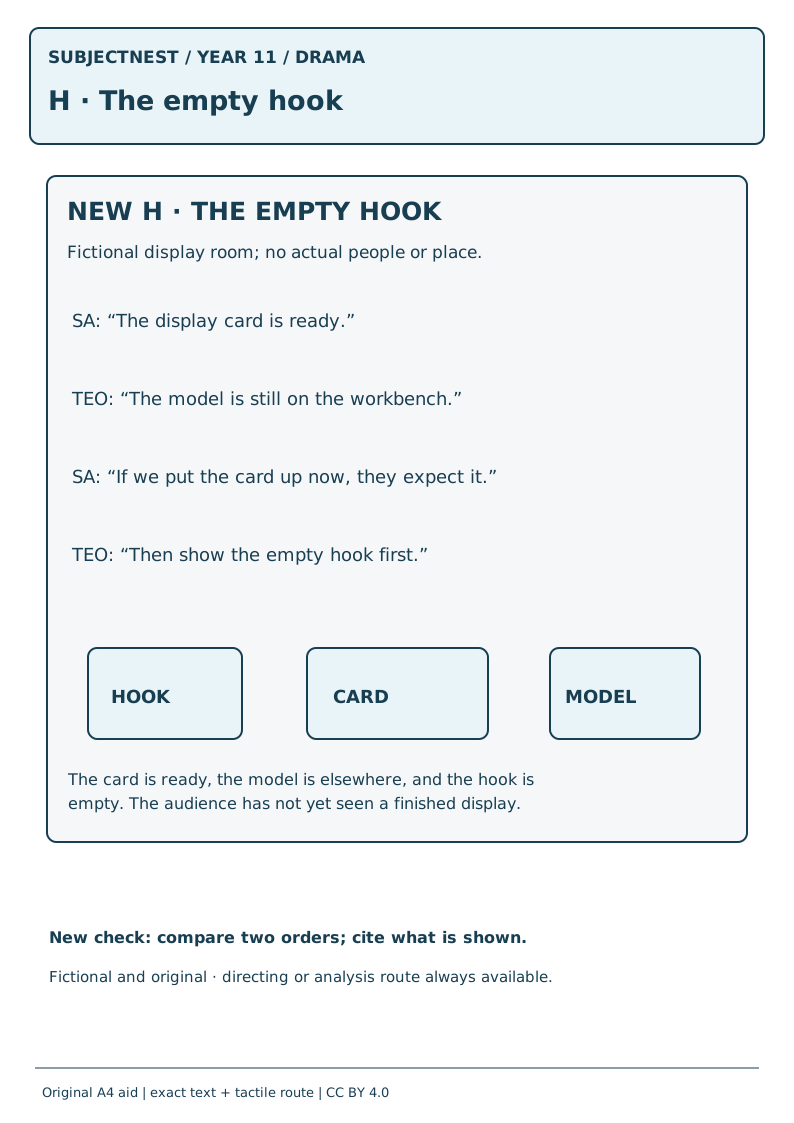
- Launch · 2 min. Offer directing, script annotation or opt-in reading. No personal story or public performance is required.
- Source access · 4 min. Read H exactly or provide quiet text/tactile access. Explain hook, card and model as separate fictional objects without choosing an order.
- Independent plan · 5 min. Learner marks two facts, a possible audience question and an opening order change.
- Independent response · 7 min. Learner builds or describes two short orders, makes one focus/space/pause choice, and explains a possible effect with evidence and a limit.
- Self-audit · 4 min. Check that H’s model is not suddenly on the hook and that copyright/cultural permission is not assumed for a proposed third-party image.
- Submit · 3 min. Save first response, then use the separate teacher key. This public check cannot determine a QCAA Unit 1 result.