All four files have SVG and PDF versions, A4 (210 × 297 mm), with numbered or full-word labels independent of colour. Each picture is a reading aid, not unique task content. The text below repeats every instructional item in order. For a tactile version, print at high contrast, cut each numbered row into a card and place the cards in order on a table; read the labels and preserve source IDs. Do not reproduce archive images. A teacher can enlarge these words or place them in a screen reader document. There is no audio file in this pack; the spoken transcript may be read live.
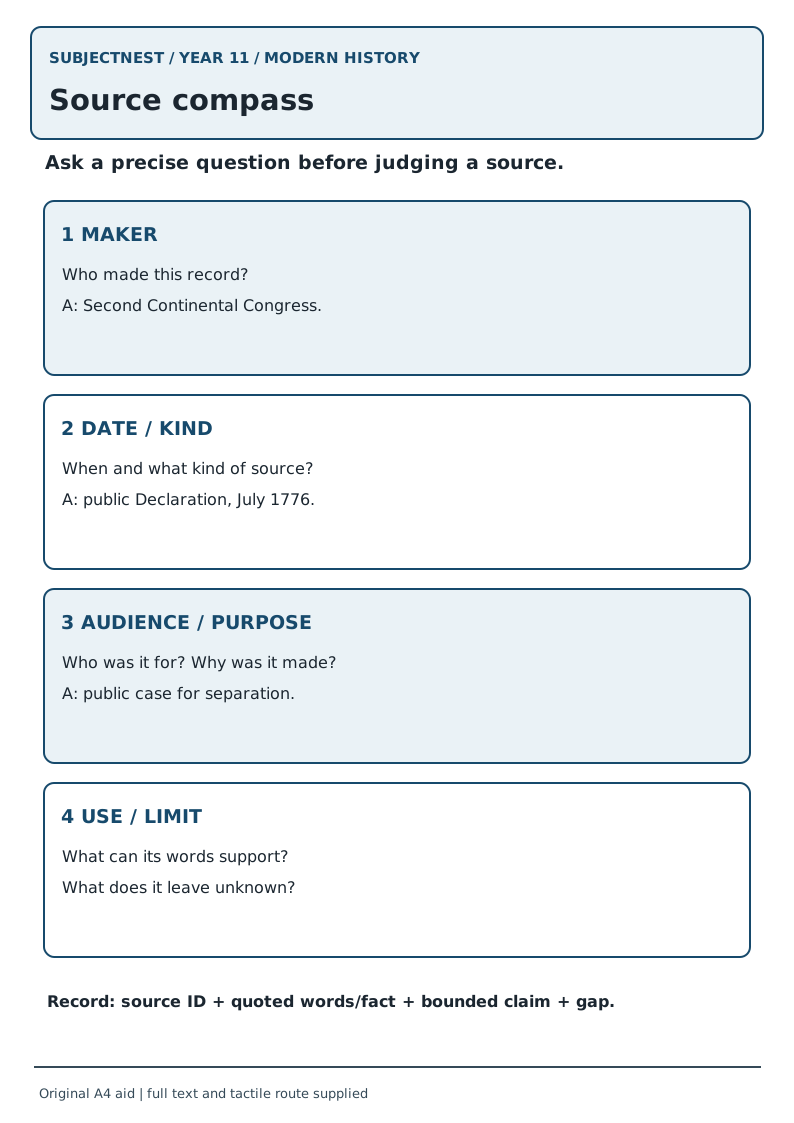
Source compass
Ask a precise question before judging a source. 1. Maker: Who made this record? A: Second Continental Congress. 2. Date / kind: When and what kind of source? A: public Declaration, July 1776. 3. Audience / purpose: Who was it for? Why was it made? A: public case for separation. 4. Use / limit: What can its words support? What does it leave unknown? Record: source ID + quoted words/fact + bounded claim + gap.
Claim ladder
Keep each claim on the rung the source can reach. 1. Source words: A: Congress used an equality phrase in 1776. Name source, date and exact words. 2. Supported claim: Congress publicly stated an equality ideal. The claim stays about what the text says. 3. Not established: This excerpt does not prove equal lived rights. A universal word needs wider evidence. 4. Next source: Seek a law, petition or affected person's record. Check maker, date and context before use. Use the ladder without asking anyone to perform a historical role.
Dated timeline
Different dates mark different historical actions. 1776 declared: Congress stated an independence case. Card A: public political argument. 1777 adopted: Congress adopted the Articles. Card C: adoption is not full ratification. 1781 ratified: All thirteen states had ratified the Articles. Card C: governing framework took effect. 1783 recognised: Britain signed the peace treaty. Card D: recognition between governments. These events do not, by themselves, show equal personal rights.
Argument weave
Build an argument that leaves room for what is unknown. Question: How did authority claims change, 1776–1783? Keep the question within the chosen sources. Three period threads: A: stated consent. C: retained state power. D: Britain recognised independence. Counterpoint / later view: B asked for women's voice. E is later commentary. Label B primary; E secondary. Bounded judgement: Ideas and institutions changed in the records. Equal lived rights require other evidence. Speak, type, write or place labelled source tokens.
Original SubjectNest text alternatives © NeuroForgeIO Pty Ltd 2026, CC BY 4.0.