Each script uses 2 + 4 + 5 + 7 + 4 + 3 = 25 minutes. Copies of practice cards, learner page, three equal-target routes, two daily evidence swaps, four A4 aids and the spoken transcript are ready. On Days 5 and 10, withhold the new check until independent response time; the teaching key is public and follows submission. These are short starts, not a complete contextual/depth/concluding topic sequence. Teacher may lengthen seven-minute practice locally.
Day 1 · A question a source can answer
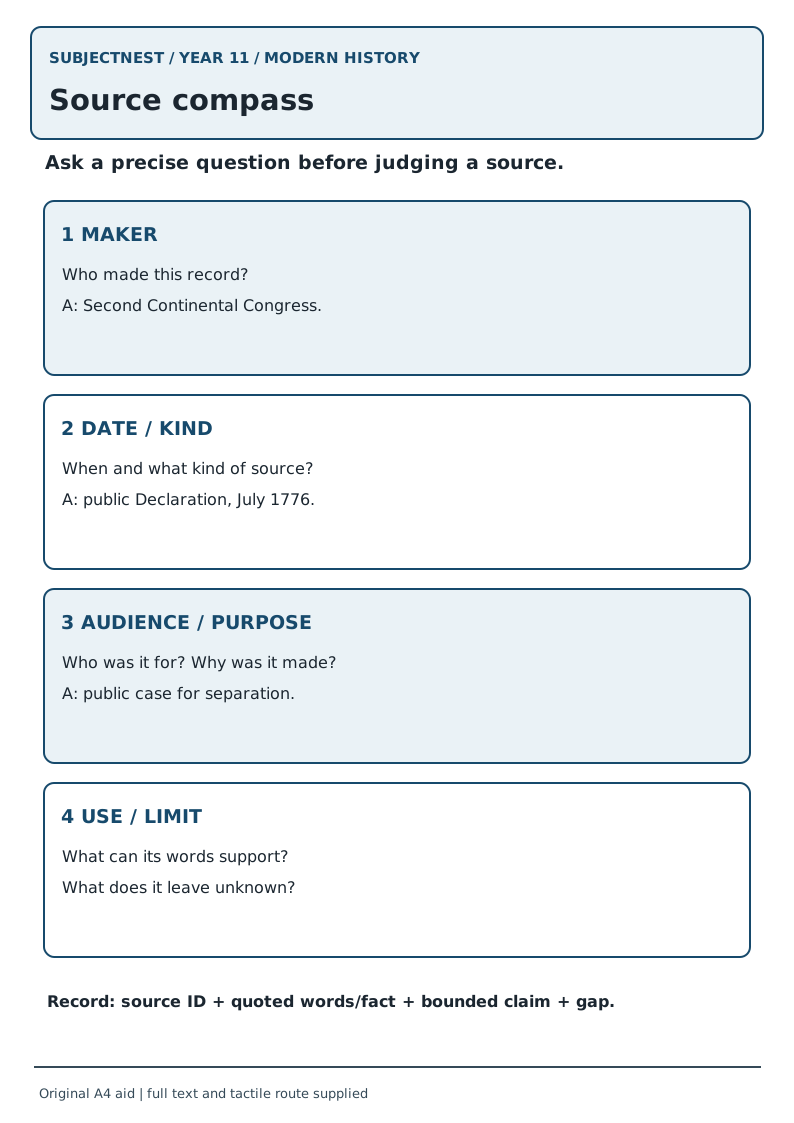
Target: devise a bounded question about one dated primary source. Prepare: Card A and source compass.
- Launch · 2 min. Ask “Did everyone in 1776 agree with the Declaration?” Let learners identify why one document cannot answer that.
- Model · 4 min. Write “What idea about government did the Congress state in July 1776?” Circle maker, date and key words on Card A. Separate that question from “Did every person have a vote?”
- Guided reading · 5 min. Learners locate the two short quoted phrases and the archive URL; label who made the statement and who has not been heard.
- Practice route · 7 min. Choose a Day 1 route. Record one answerable and one presently unanswered question, with Card A and a missing source named.
- Audit · 4 min. Partners check whether the unanswered question was quietly answered from a guess; revise any unearned “all.”
- Exit · 3 min. “What can A establish?” Key: that the Congress declared consent/equality ideas; not that all people received rights.
Day 2 · The audience changes how we read
Target: explain how purpose and audience affect the usefulness of a historical source for a claim. Prepare: Cards A/B, source compass.
- Launch · 2 min. Compare a public announcement and a private letter as kinds of writing, without judging one automatically truthful.
- Model · 4 min. Card A addresses a wider public and explains separation; Card B asks John Adams to consider women's voice in law. Point to one phrase from each.
- Guided reading · 5 min. Ask what B lets us infer about one writer's concern and what A tells us about Congress's public argument.
- Practice route · 7 min. Choose a Day 2 route. Build two purpose/audience/usefulness/limit records, one for each card.
- Audit · 4 min. Partner claims B speaks for all women; learner repairs to “Abigail Adams argued…” and says what broader evidence is missing.
- Exit · 3 min. “Which source best shows what Congress publicly argued?” Key: A; B is better for Adams's request, not a population survey.
Day 3 · Equality stated, equality experienced
Target: distinguish what a source says from what people experienced. Prepare: Cards A/B/E and claim ladder.
- Launch · 2 min. Put the quoted equality phrase beside B's call for women's voice. Ask why the pair is worth investigating.
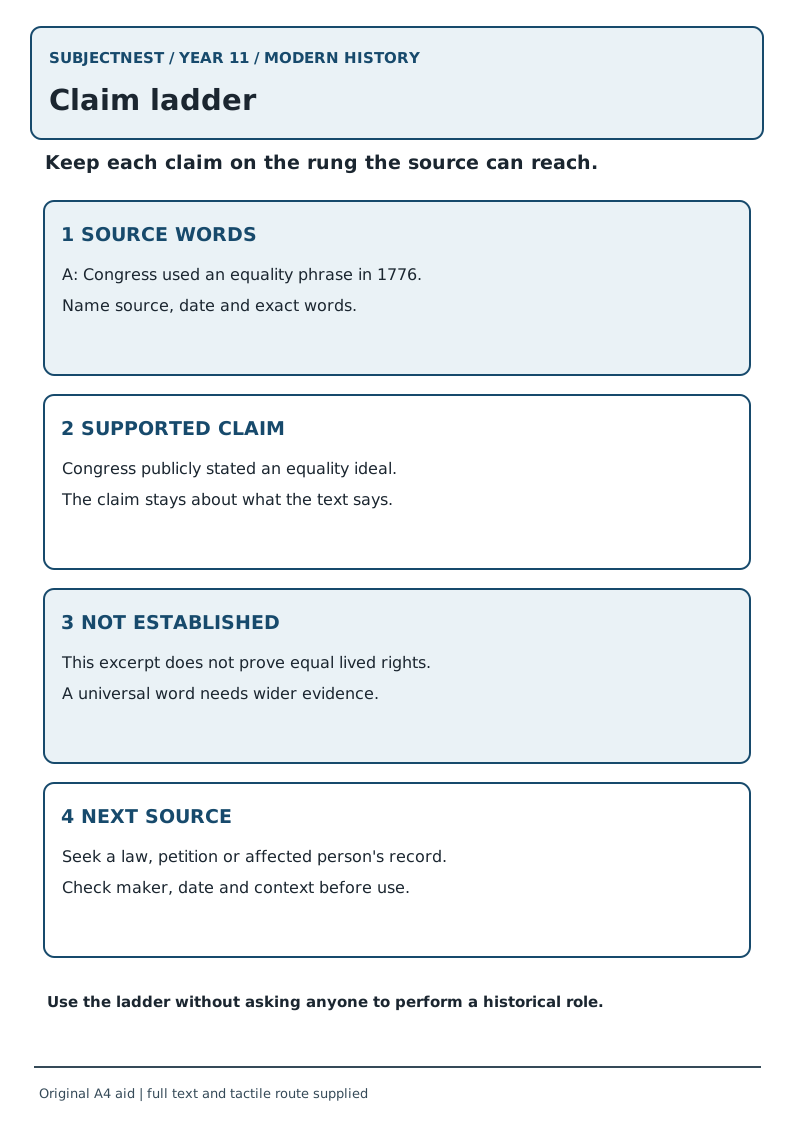
- Model · 4 min. A supports “Congress stated an equality ideal.” B supports “Adams asked for women to have a voice.” E is later commentary that inclusion was unequal; label it interpretation rather than an eyewitness.
- Guided reading · 5 min. Compare source dates and kinds. Do not ask learners to role-play exclusion or disclose identity.
- Practice route · 7 min. Choose a Day 3 route. Write a 2-source claim with a historical tension, each citation, and a limit. Example stem: “Although A states …, B shows …; these excerpts do not establish …”
- Audit · 4 min. Test whether the response calls a 2021 archive account a 1776 voice; correct the source type.
- Exit · 3 min. “Does A by itself show how rights were distributed?” Key: no; legal practice and affected people's accounts are needed.
Day 4 · Dates are part of evidence
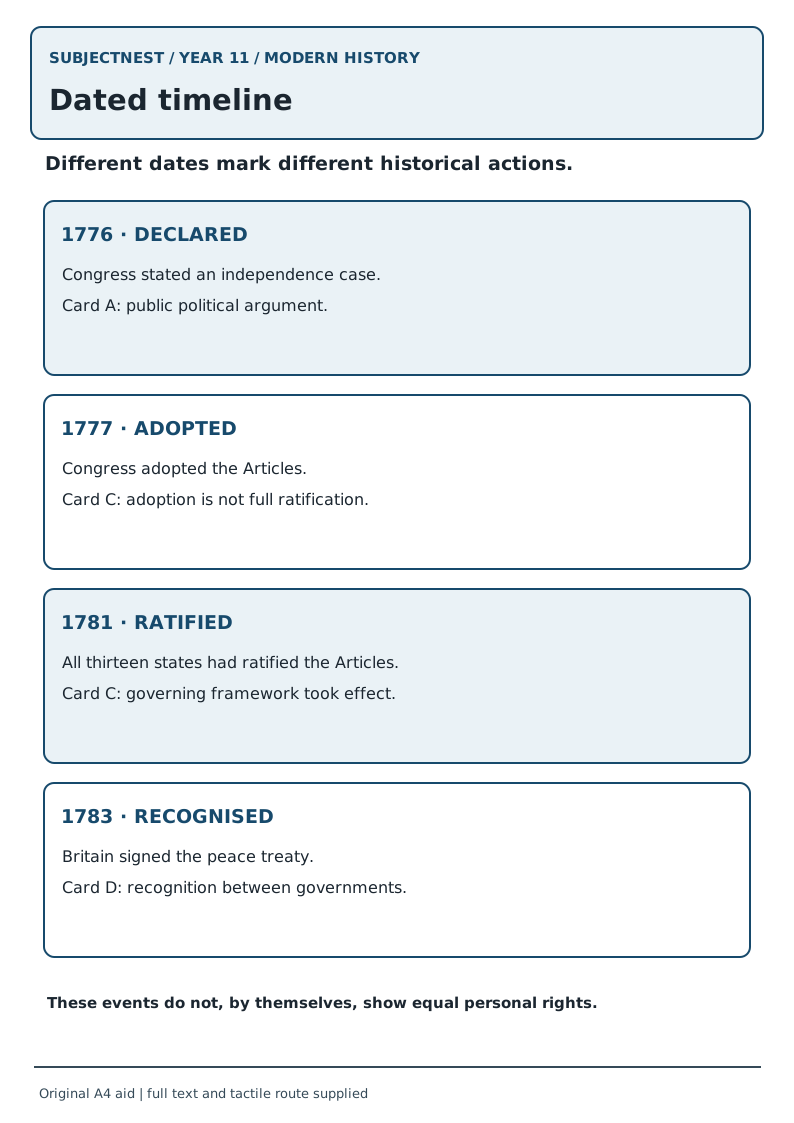
Target: sequence dates without collapsing adoption, ratification and treaty recognition into one event. Prepare: Cards A/C/D, dated timeline.
- Launch · 2 min. Place 1776, 1777, 1781 and 1783 on the board in random order.
- Model · 4 min. Order Declaration 1776; Articles adopted 1777; fully ratified 1781; peace treaty signed 1783. Say what each date marks.
- Guided reading · 5 min. Ask which document identifies Congress's political idea, which reserves state powers and which records British recognition. None establishes equal rights for all residents.
- Practice route · 7 min. Choose a Day 4 route. Make a four-event labelled chronology and write a cautious two-sentence change claim.
- Audit · 4 min. Partner changes “adopted 1777” to “in force everywhere 1777”; learner restores the 1781 ratification distinction.
- Exit · 3 min. “Which document records British recognition?” Key: D, the September 1783 treaty; recognition is not the same as universal liberty.
Day 5 · Fresh public source check A
Target: independently evaluate a new 1775 source's use for a historical claim. Prepare: Check A and a blank source compass. No practice card F before the check.
- Launch · 2 min. Say “Your claim must fit what a short source can show.”
- Source access · 4 min. Release the new source only; offer exact text, teacher reading or large print and record support.
- Independent plan · 5 min. Learner marks date, maker, audience, apparent purpose and a phrase that matters.
- Independent response · 7 min. Choose a Day 5 route; keep first response before coaching.
- Self-audit · 4 min. Learner checks for “all colonists” and for turning a petition into an achieved outcome.
- Submit · 3 min. Collect/support-log, then use the public worked key for feedback; this is not a school instrument.
Day 6 · What does “state sovereignty” show?
Target: comprehend sovereignty in Article II while separating state authority from individual freedom. Prepare: Card C, source compass and claim ladder.
- Launch · 2 min. Ask who “state” refers to in Article II: a government or each person?
- Model · 4 min. Read the short Article II excerpt. Paraphrase: states keep powers unless delegated. Mark adopted 1777 and ratified by 1781.
- Guided reading · 5 min. Ask “Would this phrase alone prove an enslaved person's freedom?” Answer no: institutional structure differs from lived rights.
- Practice route · 7 min. Choose a Day 6 route. Build a claim/evidence/limit triple for C and compare one use with A.
- Audit · 4 min. Partner asserts C is a personal bill of rights; learner names its makers and document type to correct scope.
- Exit · 3 min. “What does ‘retains’ imply?” Key: the states keep named powers not expressly delegated; check full text for exceptions.
Day 7 · The treaty settles one question, not every question
Target: identify what a peace treaty can establish and an issue it leaves open. Prepare: Card D, source compass and timeline.
- Launch · 2 min. Ask whether a treaty between governments is a diary of everyone's experience.
- Model · 4 min. Card D's Article 1 records British recognition of the United States as independent; label its signatories and 1783 date.
- Guided reading · 5 min. Compare A's 1776 declaration with D's 1783 external recognition. Ask how each answers a different question.
- Practice route · 7 min. Choose a Day 7 route. Write one continuity/change note across A and D and a source limit.
- Audit · 4 min. Partner says “the treaty gave every resident equal rights”; learner repairs to the government-level recognition the excerpt supports.
- Exit · 3 min. “Which source is stronger for what Britain formally acknowledged?” Key: D; A states the colonists' public position.
Day 8 · A later commentator is evidence too, of a different kind
Target: distinguish a modern historical interpretation from period evidence and propose corroboration. Prepare: Cards A/B/E and argument weave.
- Launch · 2 min. Ask whether a 2021 archive discussion can have witnessed 1776.
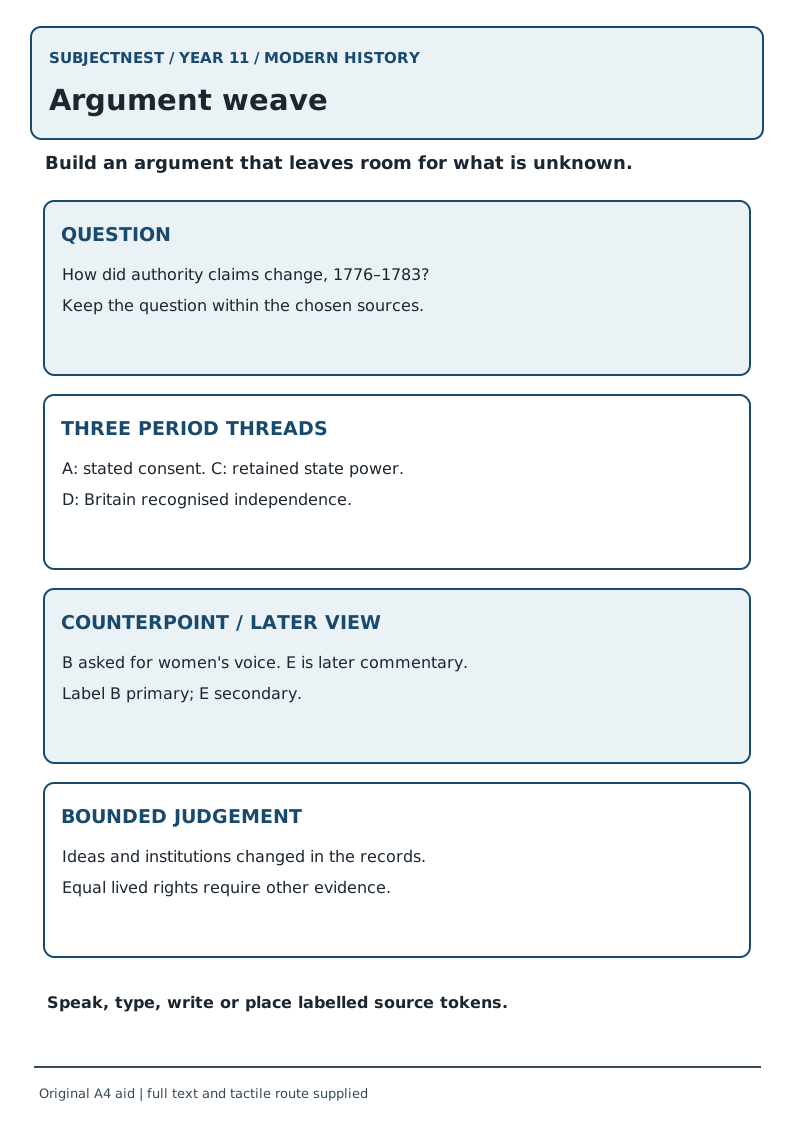
- Model · 4 min. E is secondary commentary on unequal inclusion; A and B are period words with different purposes. E opens a research question, not a final verdict about every person.
- Guided reading · 5 min. List source gaps: affected people's voices, laws and implementation. Name the later fresh-check sources only by type, not content.
- Practice route · 7 min. Choose a Day 8 route. Write a question, two currently available sources and a plan for a different voice, with no invented quotation.
- Audit · 4 min. Partner mislabels E primary; learner explains its 2021 date and analytical purpose.
- Exit · 3 min. “Useful for what?” Key: E is useful for a modern archive framing of exclusion, not direct 1776 testimony.
Day 9 · A bounded historical argument
Target: synthesise multiple sources into a claim that names an unresolved counterpoint. Prepare: Cards A–E, argument weave.
- Launch · 2 min. Offer the narrow question: “How did ideas about political authority change from 1776 to 1783?”
- Model · 4 min. Draft: A states consent; C reserves state powers; D records external recognition. Then B/E complicate a claim that all people benefited equally.
- Guided reading · 5 min. Put dates/source kinds beside each sentence. Explain that the texts support an argument about declarations and institutions, not a complete social history.
- Practice route · 7 min. Choose a Day 9 route. Compose a 90–130-word paragraph, or equivalent spoken/diagram account, using three period source IDs and one bounded limitation.
- Audit · 4 min. Partner circles every universal word and dates. Repair one leap or overclaim while retaining the main argument.
- Exit · 3 min. “What more would you seek next?” Key: relevant records from people excluded from political decision-making, plus careful scholarship.
Day 10 · Fresh public source check B
Target: use two new sources to test a simple “everyone gained freedom” claim. Prepare: Check B and blank claim ladder/argument weave. No practice card G or H before the check.
- Launch · 2 min. State that the task judges the evidence, not a classmate's identity or beliefs.
- Source access · 4 min. Release the 1773 petition excerpt and 1777 documented story together; log reading/scribing/AAC support.
- Independent plan · 5 min. Mark source kind/date, one direct claim per source and one difference in what each can establish.
- Independent response · 7 min. Choose a Day 10 route; save first evidence-based response.
- Self-audit · 4 min. Ask whether the response invented petition signers, said it succeeded, or generalised one boy's experience to all.
- Submit · 3 min. Collect first response/support log; use public key for next instruction. No QCAA result is inferred.
Original SubjectNest teaching scripts © NeuroForgeIO Pty Ltd 2026, CC BY 4.0.