Target: distinguish what a source says from what people experienced. Prepare: Cards A/B/E and claim ladder.
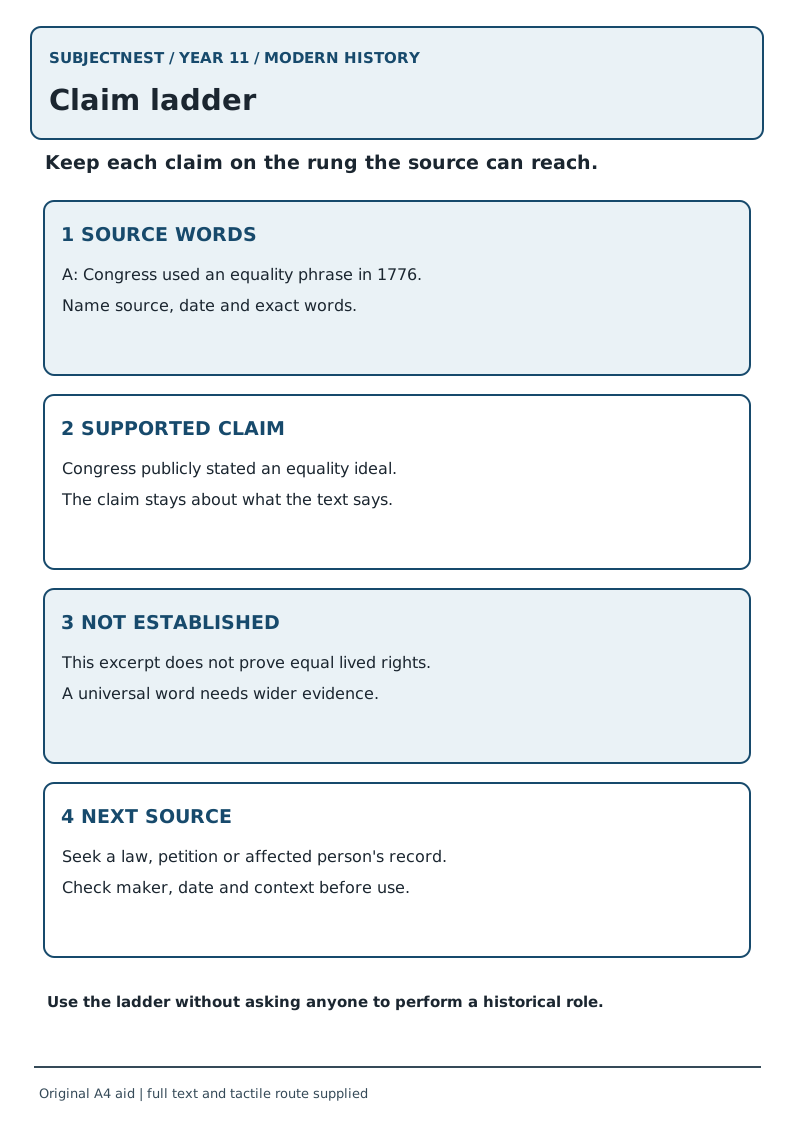
- Launch · 2 min. Put the quoted equality phrase beside B's call for women's voice. Ask why the pair is worth investigating.
- Model · 4 min. A supports “Congress stated an equality ideal.” B supports “Adams asked for women to have a voice.” E is later commentary that inclusion was unequal; label it interpretation rather than an eyewitness.
- Guided reading · 5 min. Compare source dates and kinds. Do not ask learners to role-play exclusion or disclose identity.
- Practice route · 7 min. Choose a Day 3 route. Write a 2-source claim with a historical tension, each citation, and a limit. Example stem: “Although A states …, B shows …; these excerpts do not establish …”
- Audit · 4 min. Test whether the response calls a 2021 archive account a 1776 voice; correct the source type.
- Exit · 3 min. “Does A by itself show how rights were distributed?” Key: no; legal practice and affected people's accounts are needed.