Proposed codes: AC9EFLA05, AC9EFLA09, AC9EFLY04, AC9EFLY05, AC9EFLY06, AC9EFLY13.
Goal: Read a controlled sentence and make one about the approved plant that is no stronger than the actual observation.
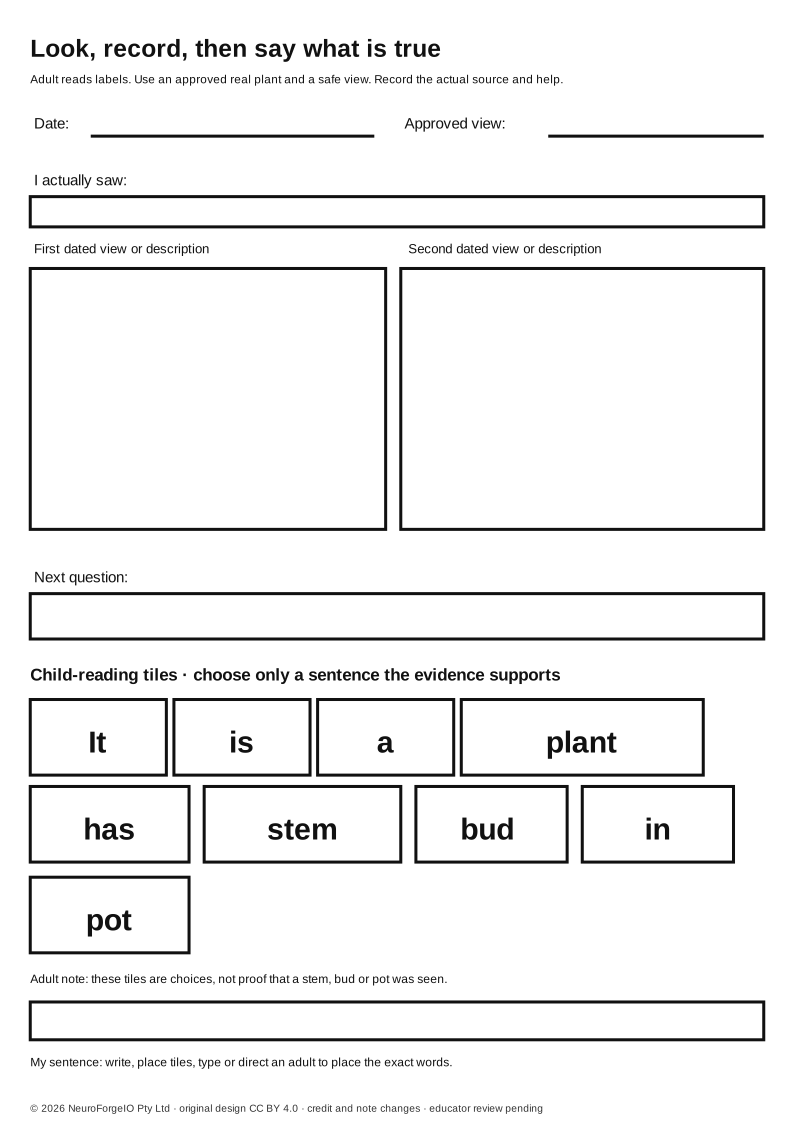
Prepare: plant evidence card or exact text alternative, school-approved plant/view, two dated blank records, It | is | a | plant | has | stem | bud | in | pot tiles, adult script D. Prepare a paper-only fictional decoding fallback if safe observation is unavailable.
- Retrieve · 3 min. Read has, moss, sing, bell in mixed order. Ask which end is /ŋ/, /l/ and /s/; note one actual error to revisit.
- Real observation · 4 min. From the approved position, adult makes an exact dated note, then reads script D with only true visible details. Ask “What did we see?” and “What are we only wondering?” If no view occurs, say “not observed today” and keep the factual sentence task pending.
- Model the safe base line · 5 min. At a verified plant, show It is a plant. Blend It /ɪt/, is /ɪz/, a /ə/, plant /p/ /l/ /æ/ /n/ /t/ only if that short vowel matches the learner's local pronunciation. Some Australian speakers use a longer vowel in plant; for them adult-read or explicitly teach this whole topic word, then select another truthful line using already taught values where possible. Do not count dialect variation as an error. Say “This line names our approved real plant. It does not say a leaf, flower or bud exists.” Check capital and stop.
- Guide a chosen claim · 7 min. Only if the actual view supports it, offer It is in a pot., It has a stem. or It has a bud. Learners choose a true line, build/read it from tiles and point to the dated evidence. Otherwise they use It is a plant. and add a richer spoken/drawn feature with adult scribing beside child print. If there was no view, offer a clearly labelled fictional practice sentence for decoding only, not a factual report.
- Make and check · 4 min. Child places/writes/independently types the chosen line on a blank strip, or directs the exact order with AAC. Ask “Where can we see the claim in our record?” Record copy/model/independent and view route. Do not score an imagined feature as observed.
- Exit check · 2 min. Show It has a stem. without a picture. Ask for a decode and “Could we put this on today's real record?” Expect only if a stem was genuinely visible; otherwise no. Record print and evidence boundary separately.
Access routes: large/tactile/digital tiles, accessible live description, same safe view or honest no-view note, private response, drawing, AAC/sign/pointing/typing or child-directed scribe. If observation access differs, record that route rather than invent direct sight.