Each lesson is 25 minutes. Before class, open MATERIALS.md for the exact oral texts, controlled print, source boundaries and aid alternatives. Adult passages are for listening and meaning; hide their print during independent child-decoding checks. Codes below are proposed ACARA v9 Foundation English links, not authority approval or proof a description is completed. On a private roster, record the exact exit item and first response, independent/after model/not observed, meaning response, source and access route. Model and retry only after the independent attempt is recorded.
Week 13 · Day 61 — Final ng is one sound
Proposed codes: AC9EFLE04, AC9EFLY09, AC9EFLY10, AC9EFLY11, AC9EFLY13.
Goal: Hear /ŋ/ at the end of selected spoken words, keep printed ng in one phoneme box, and blend ring/sing/bang/song.
Prepare: adult rhyme C and story A, one ng tile, three sound boxes, ring, sing, bang, song cards. A real bell is optional and need not be sounded.
- Retrieve · 3 min. Flash th, ck, q-u, ten. Ask for a practised sound path: one /θ/, one final /k/, two sounds /k/ then /w/, and /t/ /ɛ/ /n/. Record one specific uncertain prior link.
- Hear it · 4 min. Read adult rhyme C twice without print. Ask “Which two words sound alike at the end: ring/sing or ring/bell?” Accept pointing, AAC or speech. Say /r/ /ɪ/ /ŋ/ slowly in ring; do not add a separate /g/ sound.
- Model print · 5 min. With the word hidden, put three counters for /r/ /ɪ/ /ŋ/. Reveal r i ng. Say “These two ending letters, n and g, work together for one /ŋ/ in this word. Three sounds, four letters.” Place ng in one final sound box.
- Guide and try · 7 min. Guide sing /s/ /ɪ/ /ŋ/; ask for independent bang /b/ /æ/ /ŋ/ and song /s/ /ɒ/ /ŋ/. Explain each meaning only after the blend. Compare the changed vowel in sing/song while final /ŋ/ stays the same. No picture-first guess.
- Fiction and source boundary · 4 min. Read adult story A once. Ask “What did Nell notice about the bell?” and “Did the short printed word ring alone tell us that?” No; the adult story did. Say the people and relationships are invented; nobody needs to talk about their own family.
- Exit check · 2 min. Show sing in a fresh position. Ask for an independent blend and the number of phonemes; expect three, final ng in one box. Record the exact response.
Access routes: large/tactile ng tile, three raised boxes, private quiet blend, teacher-read story with transcript, AAC/pointing/typing for sound choice and meaning. Do not require ringing a bell or oral production of /ŋ/ if another agreed route better shows recognition.
Week 13 · Day 62 — Use ng in a readable sentence
Proposed codes: AC9EFLE02, AC9EFLY04, AC9EFLY05, AC9EFLY09, AC9EFLY10, AC9EFLY13.
Goal: Reread final ng, decode two short new lines and tell what comes from print versus adult fiction.
Prepare: ring/sing/bang/song cards, Sam can sing. Sing a song. strips, adult story A, blank print/story source markers.
- Retrieve · 3 min. Shuffle four yesterday words. Invite two independent blends and one explanation of why final ng occupies one sound box. Re-model only the link that was missed.
- Oral story recall · 4 min. Ask “What did Sam want? Why did Nell ask Pat to wait?” Reread the exact relevant adult passage if needed. Say “The long story is mine to read aloud; these two short lines are yours to read from their letters.”
- Sentence model · 5 min. Reveal Sam can sing. Point to capital S, spaces and stop; blend sing /s/ /ɪ/ /ŋ/ and read can carefully /kæn/ before a natural reread. Ask who can sing according to this printed line.
- Guide and try · 7 min. Show Sing a song. Guide tracking Sing, then listen to an independent song blend. Explain a as the taught article /ə/. Learners reread both strips in a chosen order. This is an invitation in print, not a requirement to sing publicly.
- Source sort · 4 min. Say “Sam can sing” and “Nell saw a loose loop.” Ask which idea appears in the child strip and which comes only from adult story A. Use two blank markers; keep decoding and source reasoning recorded separately.
- Exit check · 2 min. Show song alone without an image. Ask for its three phonemes and blend. Record whether /ŋ/ stays together and whether a model was needed.
Access routes: one large/tactile line at a time, ng kept together, text-only/digital strips, private listener, speech/AAC/sign/pointing for story meaning. A learner may decline to sing and still meet the reading target.
Week 13 · Day 63 — Final ll is one /l/
Proposed codes: AC9EFLA09, AC9EFLE04, AC9EFLY09, AC9EFLY10, AC9EFLY11, AC9EFLY13.
Goal: Hear /l/ at the end of selected short-vowel words, use final ll as one sound, and read the fictional name Nell.
Prepare: adult rhyme C, ll tile, three sound boxes, bell, hill, fill, doll, Nell cards, capital N and lower n.
- Retrieve · 3 min. Reblend ring, sing, song. Ask whether ng is one or two phonemes here, then briefly check one earlier card the class actually missed.
- Rhyme by ear · 4 min. Read rhyme C with print hidden. Ask which rhymes with bell, tell or ring. Accept tell by sound. The adult-only tell is not the new reading card.
- Model ll · 5 min. Hide print and segment bell /b/ /ɛ/ /l/ with three counters. Reveal b e ll and place ll in one final box. Say “Two ending letters, one /l/ sound in this word. We will check this selected set; we are not saying every /l/ ending uses two letters.”
- Guide and try · 7 min. Guide hill /h/ /ɪ/ /l/ and fill /f/ /ɪ/ /l/; invite doll /d/ /ɒ/ /l/ and Nell /n/ /ɛ/ /l/. Compare capital N with known lower n in the fictional name. Define fill after decoding.
- Encode and connect · 4 min. Dictate bell with print hidden. Learners select/write b e ll and reread; ask why four letters use three boxes. Reread the adult fiction's part where the bell was offered, with its print hidden.
- Exit check · 2 min. Show Nell among two cards. Ask for independent reading and why it starts with capital N. Record decoding and name capital separately.
Access routes: large joined ll tile, tactile or digital letters, counters, quiet/private naming, AAC/pointing or typing for segmentation and spelling, adult rhyme transcript. A child may direct an adult to place tiles.
Week 13 · Day 64 — Read the small story, hear the viewpoint
Proposed codes: AC9EFLA09, AC9EFLE02, AC9EFLE03, AC9EFLY04, AC9EFLY05, AC9EFLY10.
Goal: Read child mini-text S, follow it back to bell, and distinguish adult-story viewpoint from what the printed mini-text actually states.
Prepare: mini-text S as three individual strips, blank event cards, adult fiction A, source mat if useful.
- Retrieve · 3 min. Read bell, Nell, ring. Ask which team ends each word and how many sounds it writes. Note exact uncertainty.
- Adult viewpoint · 4 min. Reread the two sentences in adult story A about Sam wanting to ring and Nell worrying the bell could fall. Ask “Did they think the same thing?” Expect no, with each idea named from the story. Do not ask a child for an analogous personal family event.
- Model the first line · 5 min. Show Sam got a bell. Model tracking, blend bell, identify taught a /ə/, capital S and full stop. Ask what Sam got; the answer must come from print, not a prop.
- Guide and try · 7 min. Show Sam can ring it. Nell can sing. one line at a time. Prompt one missed blend after first independent attempt. Ask “What is it?” Expect the bell from the previous line. Have children put three blank event cards in text order; no picture cue before reading.
- Compare source claims · 4 min. Ask “Does this short print say Nell was worried about a loose loop? Does it say Sam and Nell are cousins?” Both no. These are only in adult story A. Place an adult-story marker and child-print marker without copying the long passage into child reading.
- Exit check · 2 min. Show Nell can sing. on a fresh strip. Listen to one independent read and ask who can sing in the print. Record exact words and meaning separately.
Access routes: large/tactile sentence strips, one line at a time, blank objects after print attempt, quiet private read, speech/AAC/sign/pointing or ordered cards for meaning. Adult-supplied words are marked supported.
Week 13 · Day 65 — Fiction, factual account and an unknown
Proposed codes: AC9EFLE02, AC9EFLY01, AC9EFLY03, AC9EFLY04, AC9EFLY05.
Goal: Tell an invented event from a real source-based statement, identify whose viewpoint is in fiction A, and reread a controlled line without treating family facts as personal disclosure.
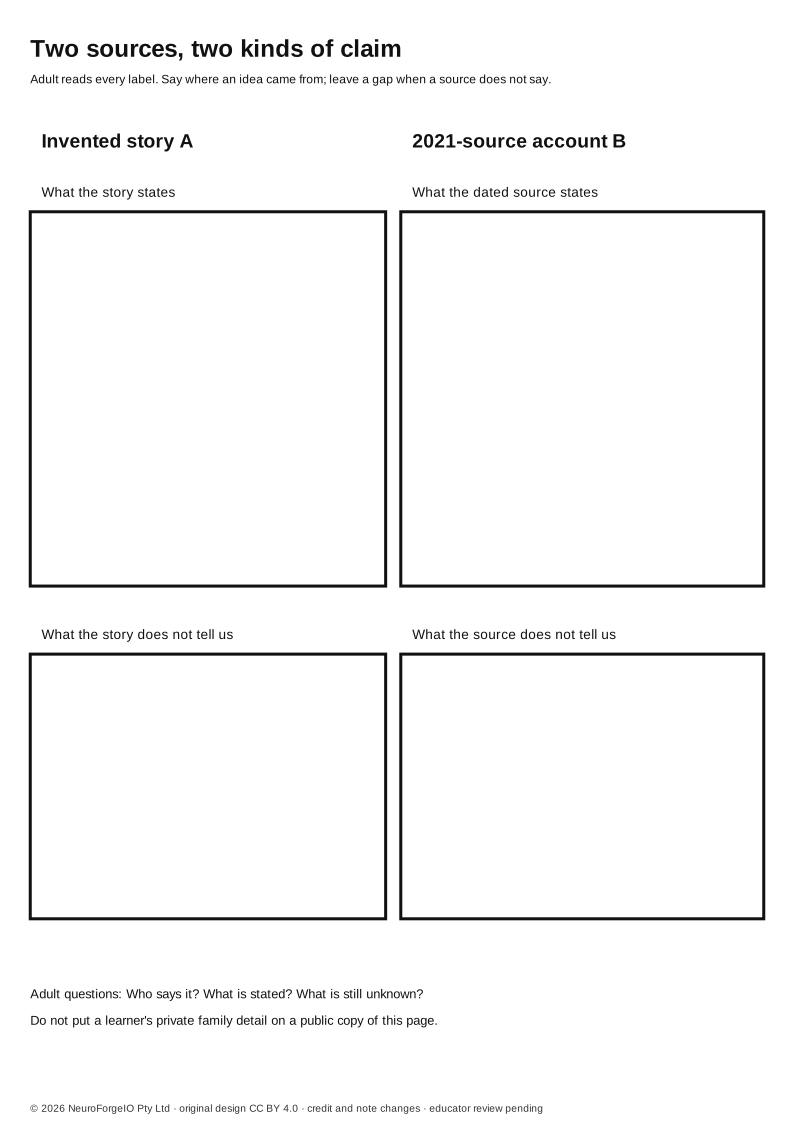
Prepare: adult fiction A and factual account B, fiction-and-fact mat or exact text alternative, Nell can sing. Sam can ring a bell. strip, adult source URLs in MATERIALS.
- Retrieve · 3 min. Read Nell, bell, ring and the new controlled strip once. Ask which word has final ll and which has final ng; record actual blending before support.
- Two adult texts · 4 min. Say “The Sam-and-Nell passage is an invented story. This next passage is our account from named 2021 Census sources.” Read adult factual account B aloud with no child print. Keep the year and source name in the read-aloud.
- Model a source comparison · 5 min. Place a blank mark under invented story for “Nell worried the bell might fall”; under 2021-source account for “The Census counted one-parent family households.” Say “One tells what an invented person thought; the other reports a category from a real dated source. Neither tells us who is in your family.”
- Guided source reasoning · 7 min. Ask “Which text names Sam and Nell? Which text names a real source and a year? Which text tells what Sam felt? Could we learn how Pat felt from either?” Expected fiction, factual account, fiction, and not stated. Use adult-read mat labels and record exact evidence; a child may pass on public discussion.
- Child-readable reread · 4 min. Show Nell can sing. Sam can ring a bell. without an illustration. Listen to an independent line, then ask whether it states that they are cousins. No. Accept a source marker, speech or AAC for the answer. Do not read AIFS text as a decoding task.
- Exit check · 2 min. Give two spoken claims: “Nell worried about the loose loop” and “The account uses 2021 Census information.” Ask the learner to place each under story or source, then name one fact unknown about Pat. Record all three responses.
Access routes: adult audio/live read and transcript, adult-labelled large or tactile A/B mat, quiet partner or private answer, speech/AAC/sign/pointing/objects/home language with verified interpretation. A child can show source reasoning with fictional cards and never reveal personal family details.
Week 14 · Day 66 — Final ss and a real question
Proposed codes: AC9EFLA08, AC9EFLY05, AC9EFLY09, AC9EFLY10, AC9EFLY13.
Goal: Blend final ss as one /s/ in a selected short-vowel set, then ask a question before a safe plant observation.
Prepare: hiss, mess, moss, fuss cards, ss tile, three phoneme boxes, school-approved plant/view or an honest no-view note, adult observation script D. Check local access and plant safety first.
- Retrieve · 3 min. Flash ng, ll, th, ck and ask how many phonemes each team writes in a familiar word. Read sing/bell once. Re-model a missed link only after recording it.
- Oral question · 4 min. Ask “What could we actually look for on our approved plant today?” Accept a visible feature or “I need a closer safe view.” Say What, Where, When aloud and, if printed, mark them adult-read. Do not ask children to decode their irregular spellings.
- Model ss · 5 min. Hide hiss, say /h/ /ɪ/ /s/ into three counters, then reveal h i ss. Place ss in one final box. Say “Two final letters write one /s/ sound in this word. We will use this selected short-vowel set; this is not a rule for every ending /s/.”
- Guide and try · 7 min. Guide mess /m/ /ɛ/ /s/; ask for independent moss /m/ /ɒ/ /s/ and fuss /f/ /ʌ/ /s/. Explain moss after blending; “This word card does not say moss is on our plant.” Contrast final ss /s/ with previously taught is /ɪz/ without changing the is word's value.
- Observe or name the gap · 4 min. At the approved view, adult makes a dated exact note, then reads the first part of script D with true filled blanks. If no safe real view is possible, read its no-observation line and plan a later view. Ask “Which phrase did we actually see, and which part is still a question?”
- Exit check · 2 min. Show moss outside the plant context. Ask for an independent three-sound blend and whether it is evidence that class plant has moss. Expect /m/ /ɒ/ /s/ and no. Record decoding and evidence reasoning separately.
Access routes: joined tactile ss tile, large/text-only word cards, safe indoor view or precise live adult description, child-directed adult mark, quiet response, AAC/sign/pointing/typing. Note direct observation versus description. No child touches, smells, tastes or collects an unknown plant.
Week 14 · Day 67 — A new common word: has
Proposed codes: AC9EFLA05, AC9EFLY04, AC9EFLY05, AC9EFLY10, AC9EFLY13, AC9EFLY14.
Goal: Read and spell has /hæz/ as a bounded common word, compare final /s/ and /z/ in familiar words, and read two short statements.
Prepare: hiss, moss, is, has cards, Sam has a bell. Nell has a box. strips, sound boxes, actual plant record if one exists.
- Retrieve · 3 min. Blend hiss, mess, moss. Ask “What one sound does final ss write here?” Then read taught is /ɪz/ without assuming all s says /z/.
- Meaning and question · 4 min. Reread yesterday's exact dated plant note if available. Ask in speech “What did we see? What is still a question?” If there was no view, say so and ask where/when a safe view can occur. All question-word print is adult-read.
- Model has · 5 min. Say has /h/ /æ/ /z/ with print hidden, three counters, then reveal h a s. “In this common word, final s sounds /z/, as in is. In hiss, final ss sounds /s/. We learn the word and check the sound; we do not call every s /z/.” Explain has in the context of a person having an offered object.
- Guide and try · 7 min. Show Sam has a bell. Nell has a box. Guide one sentence, then record an independent attempt on the other. Blend each word from the taught links, including bell final ll, box final x /k/ then /s/, and article a /ə/. Ask who has what in print.
- Encode and contrast · 4 min. Dictate has with print hidden. Learners select/write h a s and reread /hæz/. Place has beside hiss and point to where /z/ versus /s/ occurs. Record exact first spelling.
- Exit check · 2 min. Show Nell has a box. in a fresh position. Ask for an independent read and one meaning answer. Record the word has separately from whole-line support.
Access routes: large/tactile separate word tiles, three sound counters, private quiet read, digital typing, AAC/pointing for sound and meaning; actual observation can be described live rather than seen. Do not interpret a speech difference alone as failure to know the printed contrast.
Week 14 · Day 68 — A sentence anchored in a real view
Proposed codes: AC9EFLA05, AC9EFLA09, AC9EFLY04, AC9EFLY05, AC9EFLY06, AC9EFLY13.
Goal: Read a controlled sentence and make one about the approved plant that is no stronger than the actual observation.
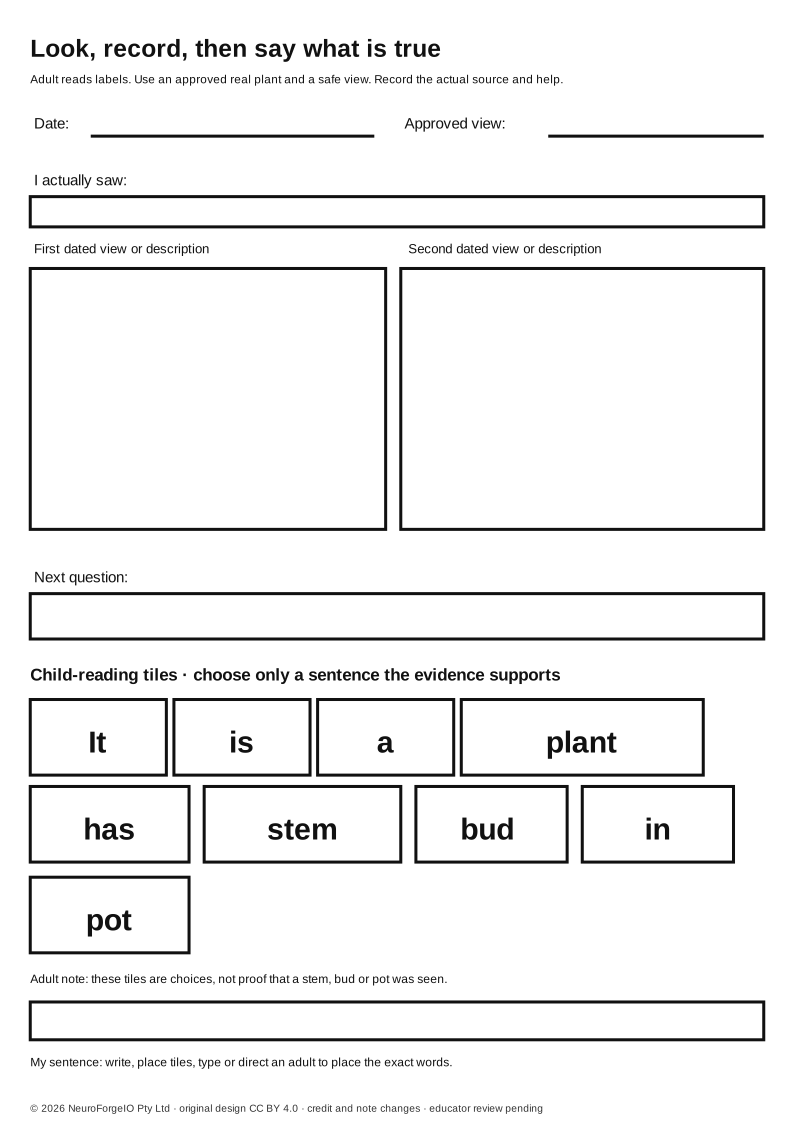
Prepare: plant evidence card or exact text alternative, school-approved plant/view, two dated blank records, It | is | a | plant | has | stem | bud | in | pot tiles, adult script D. Prepare a paper-only fictional decoding fallback if safe observation is unavailable.
- Retrieve · 3 min. Read has, moss, sing, bell in mixed order. Ask which end is /ŋ/, /l/ and /s/; note one actual error to revisit.
- Real observation · 4 min. From the approved position, adult makes an exact dated note, then reads script D with only true visible details. Ask “What did we see?” and “What are we only wondering?” If no view occurs, say “not observed today” and keep the factual sentence task pending.
- Model the safe base line · 5 min. At a verified plant, show It is a plant. Blend It /ɪt/, is /ɪz/, a /ə/, plant /p/ /l/ /æ/ /n/ /t/ only if that short vowel matches the learner's local pronunciation. Some Australian speakers use a longer vowel in plant; for them adult-read or explicitly teach this whole topic word, then select another truthful line using already taught values where possible. Do not count dialect variation as an error. Say “This line names our approved real plant. It does not say a leaf, flower or bud exists.” Check capital and stop.
- Guide a chosen claim · 7 min. Only if the actual view supports it, offer It is in a pot., It has a stem. or It has a bud. Learners choose a true line, build/read it from tiles and point to the dated evidence. Otherwise they use It is a plant. and add a richer spoken/drawn feature with adult scribing beside child print. If there was no view, offer a clearly labelled fictional practice sentence for decoding only, not a factual report.
- Make and check · 4 min. Child places/writes/independently types the chosen line on a blank strip, or directs the exact order with AAC. Ask “Where can we see the claim in our record?” Record copy/model/independent and view route. Do not score an imagined feature as observed.
- Exit check · 2 min. Show It has a stem. without a picture. Ask for a decode and “Could we put this on today's real record?” Expect only if a stem was genuinely visible; otherwise no. Record print and evidence boundary separately.
Access routes: large/tactile/digital tiles, accessible live description, same safe view or honest no-view note, private response, drawing, AAC/sign/pointing/typing or child-directed scribe. If observation access differs, record that route rather than invent direct sight.
Week 14 · Day 69 — Look again and revise without inventing change
Proposed codes: AC9EFLA07, AC9EFLY01, AC9EFLY04, AC9EFLY05, AC9EFLY06, AC9EFLY07.
Goal: Compare two dated real-plant records, use adult-spoken What/When/Where/How questions, and revise a controlled sentence only when evidence requires it.
Prepare: first and second actual observation records, approved view, adult script D, plant evidence card or text alternative, child line from Day 68, blank revision strip. If a second view is not possible, keep comparison not observed.
- Retrieve · 3 min. Reread It is a plant. or the actual verified child line. Ask where its capital letter and full stop are, then revisit one previously missed ng/ll/ss/has link.
- Second real view · 4 min. From the same safe position where possible, adult notes the date, view and one exact feature. Read the second script D only after looking. If the position or access route changed, name it. “Same, different or unclear” are all possible; do not assert growth from drawing size alone.
- Model questions · 5 min. Ask aloud “What did we see first? When? Where was our view? How do we know what we saw today?” Read any printed question labels for children; do not assess their decoding. Model pointing to the two source records before saying “same,” “different” or “unclear.”
- Compare and explain · 7 min. Children place two dated marks side by side, say/point to one exact feature in each and choose same/different/unclear with a reason. Accept “I cannot tell from this record.” If there is no second observation, mark source comparison not observed, not incorrect, and use two clearly fictional practice records for question language only.
- Revise the child line · 4 min. Reread Day 68 line. If its statement remains supported, keep it and say why. If a bud or pot claim was mistaken or no longer visible, choose a weaker true line such as It is a plant. Do not erase the original dated work. Child may dictate a richer comparison separately; adult labels it as adult-scribed vocabulary.
- Exit check · 2 min. Show the two records and the current child line. Ask “What in these records supports your line, and what is one question for another look?” Accept speech/AAC/sign/pointing; record source, support and exact question separately from decoding.
Access routes: two high-contrast dated records, tactile frames and objects, precise live adult description, private or chosen audience, AAC/sign/pointing/drawing/typing and child-directed scribe. A child can reason well about an unchanged or unclear observation; public speaking is optional.
Week 14 · Day 70 — Two-week evidence check
Proposed codes: AC9EFLA09, AC9EFLE02, AC9EFLY01, AC9EFLY03, AC9EFLY04, AC9EFLY05, AC9EFLY06, AC9EFLY09, AC9EFLY10, AC9EFLY11, AC9EFLY13, AC9EFLY14.
Goal: Show the new ng/ll/ss/has boundaries, transfer to unseen controlled print, compare invented and sourced adult accounts, and make or honestly defer an observation-grounded sentence.
Prepare: ASSESSMENT.md, adult texts A/B, private reading cards, exact dated plant records if any, blank child line, and the source/plant printable alternatives.
- Set purpose · 2 min. Say “Show me what you can do now and what we should practise next. There is no race. I can repeat a direction.” Offer the learner's valid private response route.
- Adult text distinction · 5 min. Read one short part of fiction A and factual account B with all long print hidden. Ask which is invented, which names a real source/year, and which can state Sam's feelings. Do not request personal family details.
- Oral and source prompts · 5 min. Ask the assessment's five oral sound items and two source questions as a group sample; record individual first responses only where observed. A quiet/private turn may be scheduled.
- Print sample · 5 min. Show wing, sell, miss, quill, thing individually, shuffled ng/ll/ss/has plus selected earlier links, and one fresh controlled sentence. Hear private individual blends in planned rotations, not a group chorus.
- Encoding and claim · 6 min. Dictate ring, bell, moss, has with print hidden. Ask for one line about the approved real plant backed by a dated view. If no valid observation happened, mark the factual-claim domain not observed and offer decoding practice in a clearly fictional context.
- Exit and next step · 2 min. Ask the learner to point to one ng, ll or ss word they can now read, then identify a precise next thing to practise or ask. Give one evidence-based strength; complete rubric after the lesson.
Feasible administration: The 25-minute block gathers common oral and work samples. Allow a private approximately seven-minute print and source check per learner during Days 66–70 independent-work rotations, extending the window if the class size requires it. A missing or inaccessible check is not observed, not zero. This English assessment cannot establish personal family-content knowledge or science achievement from invented sources.
Access routes: adult live read or locally made recording with transcript, large/tactile/text-only cards, sound boxes, digital tiles, quiet private check, speech/AAC/sign/pointing/typing/drawing, verified home-language interpretation for meaning, extra response time and child-directed adult mark. Record exact support and source route.