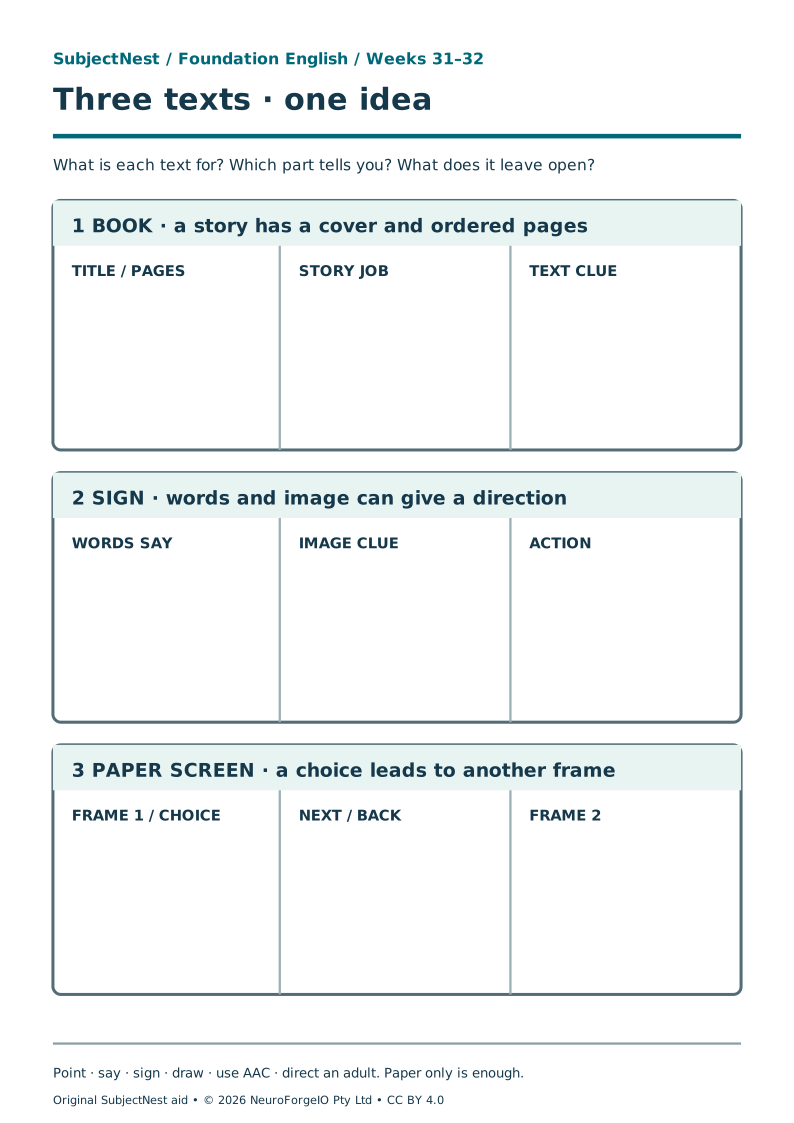
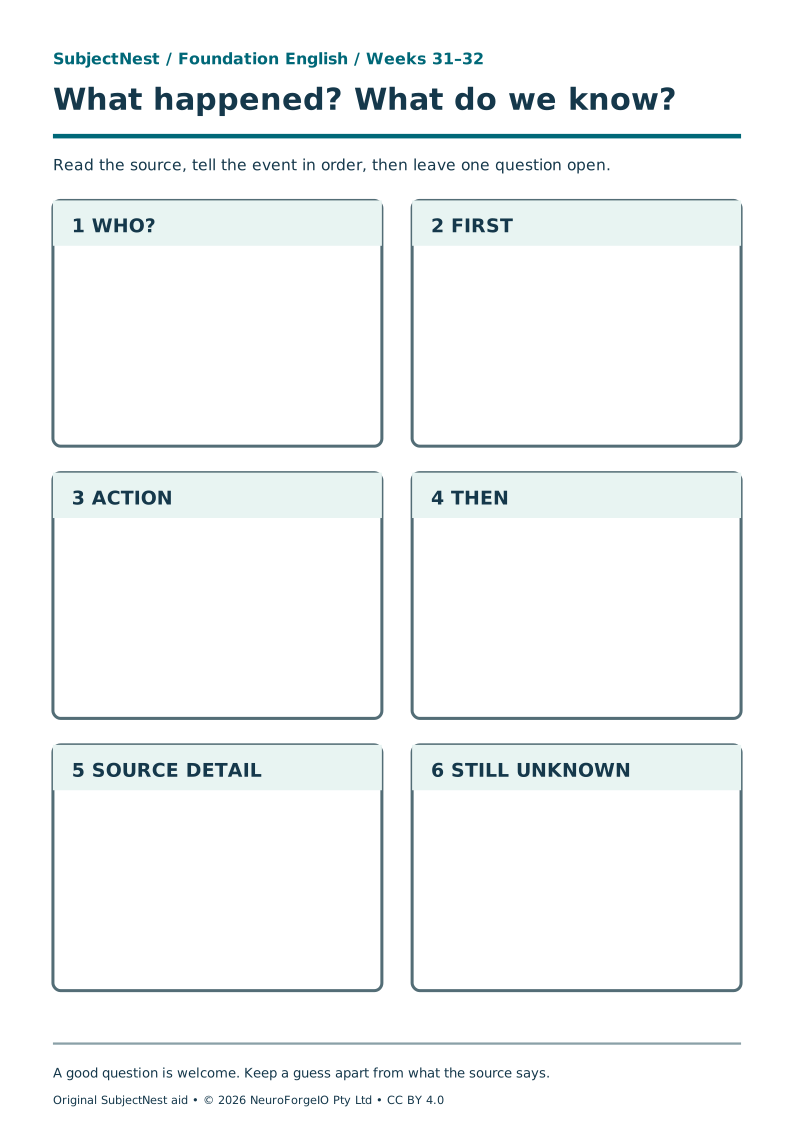
Adult reads the original sources; the child may choose any of the thirty learner routes. Show child print only at the locally taught point. The three-text and event-evidence A4 aids have exact text/tactile equivalents. Each lesson has a 3 + 4 + 5 + 7 + 4 + 2 minute sequence. “Book”, “sign” and “screen” are text forms and purposes, never a ranking of good and bad ways to learn. Save the first independent response before modelling a correction.
Week 31 · Day 151 — One idea, three text forms
Goal: identify a story book, an informative sign and a paper screen as different text forms with different jobs. Proposed codes: AC9EFLA03, AC9EFLY01, AC9EFLY03. Prepare: A, B, C from MATERIALS, three-text aid, Card 151.
- Oral/print · 3 min. Say /m/ /a/ /t/ as a spoken blend without letters; show mat only if its correspondences have been taught. Adult reads book.
- Encounter · 4 min. Read A's cover and Page 1, then B and C Frame 1 aloud. Give a real or paper book, broad paper sign and two-frame paper screen.
- Model · 5 min. Put each on the aid. Say “The story tells what Miri did; the sign gives a room instruction; the screen lets us choose what happened and find the next step.” Point to the exact source part behind each statement.
- Child try · 7 min. Child chooses a book corner, maker table or paper theatre route from Card 151 and matches its three forms to story / tell what to do / choose then see a next step. Accept point, AAC, speech, sign or adult-directed placement.
- Check · 4 min. Show B without its title and ask which part makes it a direction, not a story about Miri. Ask what C does that a single fixed sign does not; do not require a device.
- Exit · 2 min. Child chooses one text for someone who wants to know what Miri felt. Ask whether A actually tells that feeling; it does not.
Week 31 · Day 152 — Follow a book from cover to ending
Goal: use cover/page order, character, event and ending as story clues. Proposed codes: AC9EFLA04, AC9EFLE03, AC9EFLY05. Prepare: all four pages of A, broad page cards, Card 152.
- Oral/print · 3 min. Child hears mat and isolates first/last sound; show letters only if taught.
- Read · 4 min. Read A through without pointing to an answer. Invite a prediction after Page 2, then finish; label the prediction as a guess.
- Model · 5 min. Put cover first, Pages 1–4 in order and back cover last. Point to Miri, loose page, question, return box; distinguish the ending from an imagined repair.
- Child try · 7 min. With Card 152, child orders three broad scene cards, shows who had the problem and tells how the story ended. Child may direct an adult to turn large paper pages or hear the sequence again.
- Check · 4 min. Offer false ending “The page was fixed.” Child points to what Page 4 actually says and labels repair still unknown.
- Exit · 2 min. Ask why a book's cover and page order help a listener. Record a purpose/clue response, not speed of turning pages.
Week 31 · Day 153 — Read a sign's words and image together
Goal: explain what B's words say, what its image adds and what neither proves. Proposed codes: AC9EFLA07, AC9EFLA09, AC9EFLY01. Prepare: B with image described, two large cover cards, Card 153.
- Oral/print · 3 min. Say two spoken words from the adult sign and count them with two broad counters; show taught a mat separately if appropriate.
- Read · 4 min. Read B aloud and describe its image without supplying an interpretation. Ask when the sign says to use the box.
- Model · 5 min. Cover image: words still give when and action. Cover words: image suggests a book and loose rectangle go into one wide box, but cannot tell whom to inform. Reveal both; point out capital first letter and end punctuation in one sentence.
- Child try · 7 min. Child chooses a library, sports-kit or art-supplies sign route; selects one useful image clue and one word instruction for the same safe action. Adult scripts the exact child idea, not a polished replacement.
- Check · 4 min. Present false claim “The arrow alone says tell an adult.” Child corrects it with words from B. For a text-only access route, read the image description and ask the identical question.
- Exit · 2 min. Ask whether a sign can prove someone returned a book. Record instruction versus observed action.
Week 31 · Day 154 — A screen can have choices and a next frame
Goal: navigate C's paper screen conventions and compare them with a fixed sign without needing a device. Proposed codes: AC9EFLA04, AC9EFLY02, AC9EFLY05. Prepare: C on two large paper sheets, Next/Back cards, Card 154.
- Oral/print · 3 min. Adult says first / next / back; child directs three broad cards into an order. Child print remains a separate taught-point choice.
- View/listen · 4 min. Read C Frame 1. A child picks or directs one labelled choice. Adult reveals Frame 2; no click, account or personal information is used.
- Model · 5 min. Point to frame title, labelled options, Next and Back. Show that both options in this mockup lead to the same general return/tell frame; do not claim the paper screen responds differently or records a selection.
- Child try · 7 min. Child chooses a library, maker or paper transit route and directs an adult through choice → Next → Back, explaining one way this structure differs from B's single fixed sign.
- Check · 4 min. Hide the Back label, then ask what a user would need to go to Frame 1. Ask whether C requires a photo; text says no. A plain spoken transcript is equally valid.
- Exit · 2 min. Child names one screen feature that helps and one thing the screen cannot know from paper alone.
Week 31 · Day 155 — Fresh three-text check
Goal: use unseen story/sign/screen examples to identify purpose, order and source-bounded meaning. Proposed codes: AC9EFLA03, AC9EFLA04, AC9EFLA07, AC9EFLY01, AC9EFLY05. Prepare: teacher-held Day 155 ASSESSMENT, blank three-text aid. Give Card 155 only after.
- Welcome · 3 min. Explain that new texts show what to practise next; any answer may be pointed, spoken, signed or selected with AAC.
- Warm retrieval · 4 min. Use only earlier A/B/C to name story, sign and two-frame screen, without revealing the check's idea or language.
- Unseen source · 5 min. Read and describe the three fresh texts exactly as written in the teacher copy, with no gesture indicating the answer.
- First independent response · 7 min. Ask the held questions in order; save which source and clue the child selects and any adult read/repeat.
- Meaning and print · 4 min. Ask the bounded fact/inference question. If the grapheme–sound links have been taught, offer the separate held-out CVC items with no picture; otherwise mark not administered.
- Close · 2 min. Log a next teaching move before any feedback. Release Card 155 practice with different content after the record is secure.
Week 32 · Day 156 — Tell a real action from a story action
Goal: retell D's fictional taking-away event in who / first / action / then order without asserting it happened in the room. Proposed codes: AC9EFLA05, AC9EFLY05, AC9EFLY10. Prepare: D, six large paper circles or six-box strip, event-evidence aid, Card 156.
- Oral/print · 3 min. Say six circles as two spoken word units; child moves two large word cards. Show taught in / on only if appropriate.
- Listen · 4 min. Read D once. Ask who moved something and what it was; allow a recorded reread as access, not a hidden hint.
- Model · 5 min. Place six broad circles, move two to an envelope, point to four left; speak a precise retell: “Tavi had six circles. Tavi moved two. Four stayed.” The model mirrors fiction and does not claim an actual classroom event.
- Child try · 7 min. Child chooses maker supplies, pretend shop or paper sports badges from Card 156; uses a six-box strip or tokens to retell who / first / action / then. Accept adult-directed movement.
- Check · 4 min. Offer “Tavi put all six in the envelope.” Child corrects with a D line or model and states what is still unknown (who uses them tomorrow).
- Exit · 2 min. Record English retell separately from the child's count model and note the exact first response.
Week 32 · Day 157 — Keep what the source says, leave a question open
Goal: separate an event detail from a plausible but unsupported next-day claim. Proposed codes: AC9EFLY03, AC9EFLY05, AC9EFLY06. Prepare: D, two cards TEXT SAYS / WE DO NOT KNOW, Card 157.
- Oral/print · 3 min. Child orally segments ten into sounds in their dialect; only show optional written word at taught point.
- Read · 4 min. Reread D. Ask what Tavi actually checked and which amount stayed.
- Model · 5 min. Place “Tavi pointed to four circles” under TEXT SAYS and “The sports club will use them tomorrow” under WE DO NOT KNOW. Explain that a reasonable idea is still not in the report.
- Child try · 7 min. Child selects a library-card, pretend café-token or art-sticker route, retells the exact change and sorts one stated fact and one open question. Adult reads all statements.
- Check · 4 min. Swap in “Tavi moved two circles.” Ask whether it belongs with the stated facts, then request the source clue. Keep evidence and confident guessing separate.
- Exit · 2 min. Child makes one short sentence about D. Save exact words; shared editing comes later.
Week 32 · Day 158 — A report can say what was added
Goal: retell E in first / added / together order and ask an answerable next question without changing its source. Proposed codes: AC9EFLA05, AC9EFLY02, AC9EFLY05. Prepare: E, broad five-box strip, event-evidence aid, Card 158.
- Oral/print · 3 min. Say three cards / two more; child hears that these are word groups in spoken sentences, not a decoding test.
- Listen · 4 min. Read E once. Ask what Ren brought and where from.
- Model · 5 min. Place three broad bookmark cards, then two more; say “Three first. Two added. Five together.” The count is a source fact and model, not proof the real class has five.
- Child try · 7 min. Child chooses reading corner, transport-map cards or garden labels from Card 158; retells using one picture, oral/AAC sequence or adult-directed cards and asks a next question about later use.
- Check · 4 min. Ask whether E says Ren gave a card away later. Child puts that in STILL UNKNOWN and identifies the actual last sentence.
- Exit · 2 min. Ask how a listener would know the child meant “added” rather than “moved away.” Record their action word.
Week 32 · Day 159 — Make a short report and revise one thing
Goal: create a one- or two-sentence source-bounded report and shared-edit for a real observed or clearly fictional event. Proposed codes: AC9EFLA09, AC9EFLY06, AC9EFLY07. Prepare: D or E, blank event aid, first/revised record, consenting chosen listener, Card 159.
- Oral/print · 3 min. Revisit a taught CVC and one familiar word with letters only at the child's taught point; log any adult-supplied print.
- Model · 4 min. Dictate “Ren brought two cards. Five were together.” Point to two sentence ideas, first capitals and final stops. The adult supplies untaught spelling.
- Guide · 5 min. Child chooses D, E or a safe actually observed class card move. Sort who / first / action / then. If observed, count and record what actually happened; if fictional, label it story/report source.
- Create · 7 min. Child makes a spoken, AAC, signed, pictured or written one- or two-sentence report; adult scribes exact words. A child may choose private sharing. Do not award the spoken-to-peers code without actual peer delivery.
- Listener/edit · 4 min. A consenting listener says what they understood; child edits one meaningful detail or sentence stop, or explains why no edit is needed. Keep first and revised versions and adult prompts separate.
- Exit · 2 min. Ask which source or observation supports the report; hold Day 160 entirely unseen.
Week 32 · Day 160 — Fresh event-report check
Goal: retell an unseen adding/taking-away account, separate stated result from guess, and create a bounded short report. Proposed codes: AC9EFLY05, AC9EFLY06, AC9EFLY10, AC9EFLY12. Prepare: teacher-held Day 160 ASSESSMENT, blank event aid. Card 160 is after-check practice only.
- Welcome · 3 min. Explain this new paper account helps choose later practice; a child may choose oral/AAC/mark/dictated routes and a private audience.
- Warm retrieval · 4 min. Sort D's first/action/then cards; never rehearse a Day 160 object, character, quantity or wording.
- Unseen source · 5 min. Read the fresh account with a neutral, equally described diagram; do not move counters in a way that supplies the result.
- First independent report · 7 min. Child names who, first amount, action, actual result and one unknown; then makes one short source-bounded sentence. Save exact first wording, access mode and prompt.
- Optional print · 4 min. Offer held-out CVC only where all required links have been taught. Keep listening comprehension, oral phoneme work, letter blending and adult scribing as distinct rows.
- Close · 2 min. Use the teacher key for a next teaching move. Only then release Card 160 practice; any later integrated block is not an independent retest.
Planning note: These lessons support partial Foundation English descriptions, not complete coverage or a classroom trial. A teacher selects an individually appropriate response mode and checks local/state requirements. Original SubjectNest scripts © 2026 NeuroForgeIO Pty Ltd, CC BY 4.0.