No sound, speech, printer, movement, speed or audience is required. An adult may read every public mark, make large fixed tactile cards or scribe only the child's exact direction. Save the first complete response before teaching or after-check practice. The educator key is separate. S=short, M=middle, L=long planned time between starts; all four event sounds have fixed L pitch, V planned level and invented source A.
Check Gap 1 · Find the changing track
Use Gap 1 SVG or PDF. Two new tracks are printed for the same fictional four-paper-light moment:
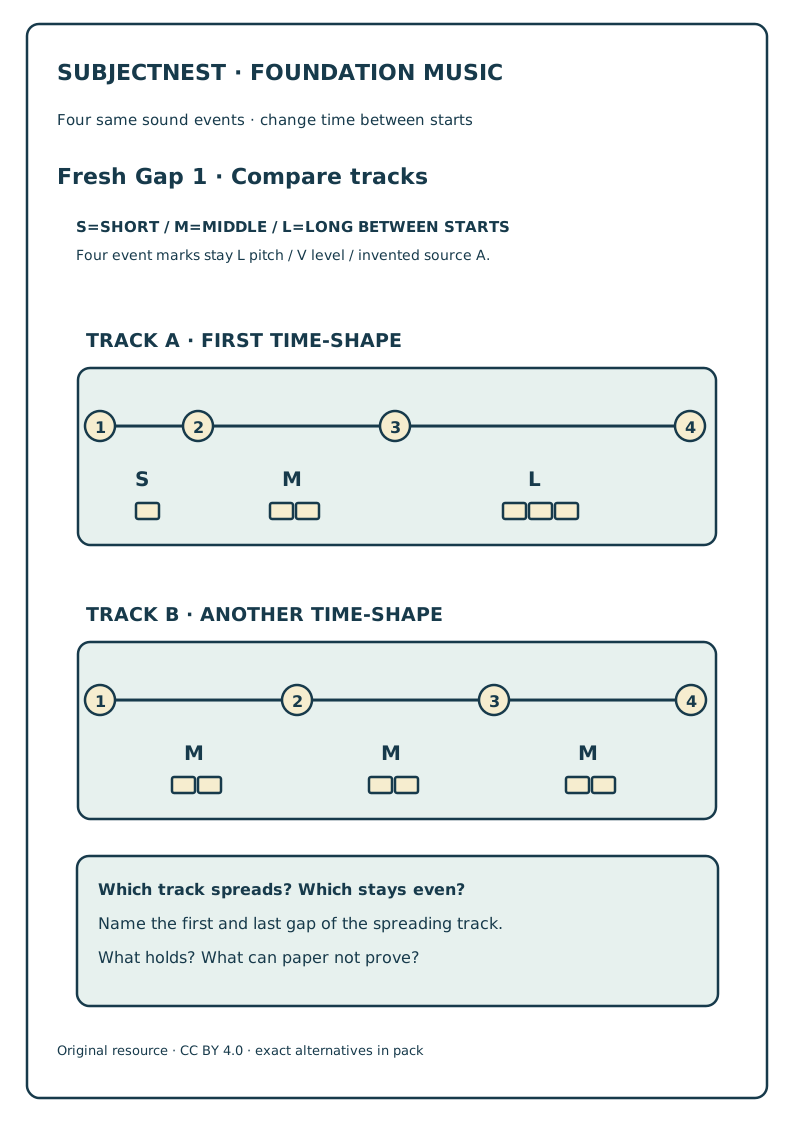
| Track | Four event marks | Three gaps between starts |
|---|---|---|
| A | same, same, same, same | S M L |
| B | same, same, same, same | M M M |
Which track makes the starts spread farther apart? Which keeps an even spacing? For the spreading track, name gap 1 and gap 3 and explain how those marks support your choice. Name one thing that stayed the same in both tracks. What can this paper not tell us about an actual performance or listener?
Check Gap 2 · Make another time-shape
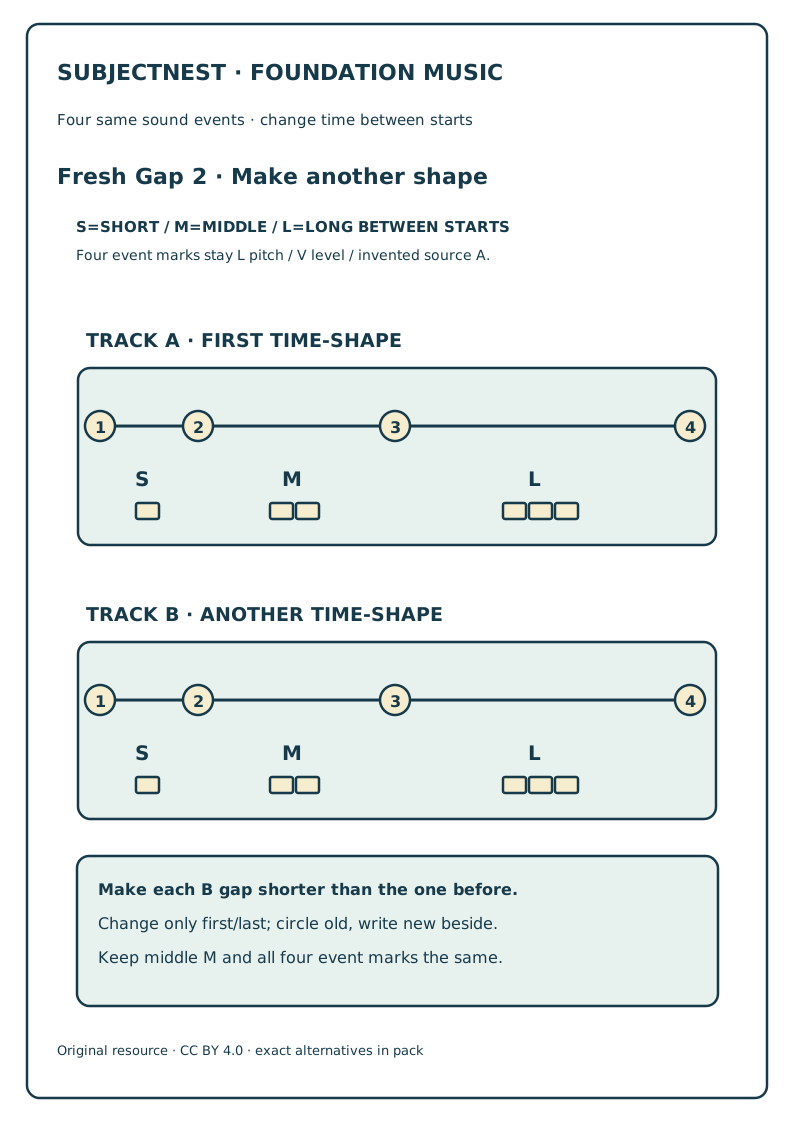
Use Gap 2 SVG or PDF. Track A has four identical event marks and gaps S M L. Track B begins as a printed copy. For the same fictional paper-kite opening, change only B's first and last gaps so each gap is shorter than the one before and its starts draw closer toward the end; keep the middle M gap and all four event marks the same. On paper, circle each old B gap letter and write your new letter beside it; with cards, replace the two gap spacers. Show your complete B, explain which two gaps changed and give your own musical reason. A score does not tell us that anyone played or heard it.