Each session totals 3 + 4 + 5 + 7 + 4 + 2 = 25 minutes. Four identical short invented events have three start-to-start gaps. S/M/L mean short/middle/long planned gaps; one, two and three blocks are a tactile/graphic comparison key, not child-facing seconds or a metronome standard. In these examples, event pitch L, planned level V, invented source A and short event duration stay fixed so only the spacing changes. M–M–M is steady; L–M–S draws events closer; S–M–L spreads them. A gap is between starts, not an extra note. Large fixed strips, full-word labels, raised blocks, neutral adult reading/scribing, AAC, quiet paper work and pass are available every day. Candidate sound stays held until human listening and local device/volume approval.
Week 25 · Day 121 · Hear or see the space between events
Target/codes: distinguish four sound-event places from the three planned gaps between their starts; AC9AMUFD01. Prepare: A gap key, Practice A, four broad event discs and gap blocks.
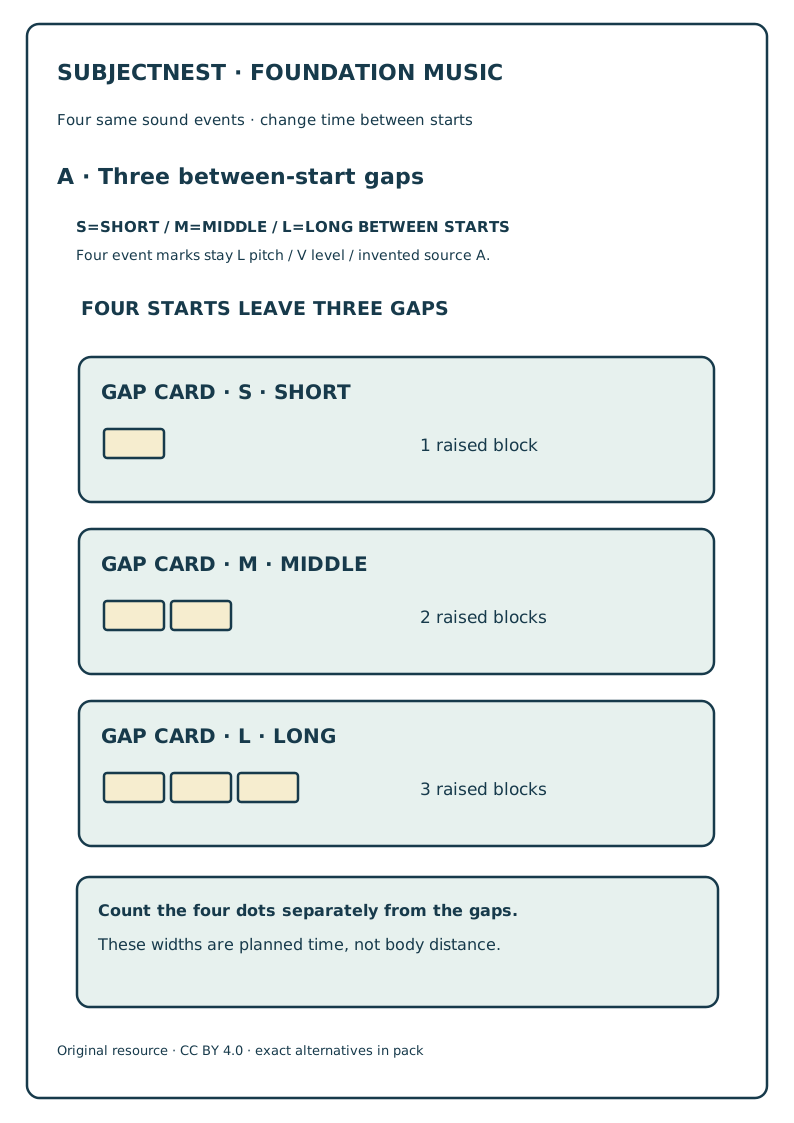
- Welcome · 3 min. Put four paper dots on a line for an invented picture page turning; count the dots, then count the spaces between them. No real event, movement or feeling is inferred.
- Model · 4 min. Set S as one block, M as two and L as three. Place the same four L/V/A event discs around them. State that a longer drawn gap is a longer plan, not measured playback.
- Try together · 5 min. Child sorts short/middle/long cards by visual width or raised block count, then locates gap 1, 2 and 3 on a fixed strip. Adult neutrally names every card.
- Child choice · 7 min. Child chooses any three gaps for a neutral four-frame book, paper bead display or plain abstract score; adult places cards only on the child's directions.
- Notice · 4 min. Save three selected gaps and whether the child located starts versus spaces. Paper cannot prove actual timing or hearing.
- Close · 2 min. Tomorrow equal gaps create a steady line.
Week 25 · Day 122 · Four events at a steady rate
Target/codes: plan four fixed events with three matching M gaps and name what is held constant; AC9AMUFD01, AC9AMUFC01. Prepare: B steady track, Practice B.
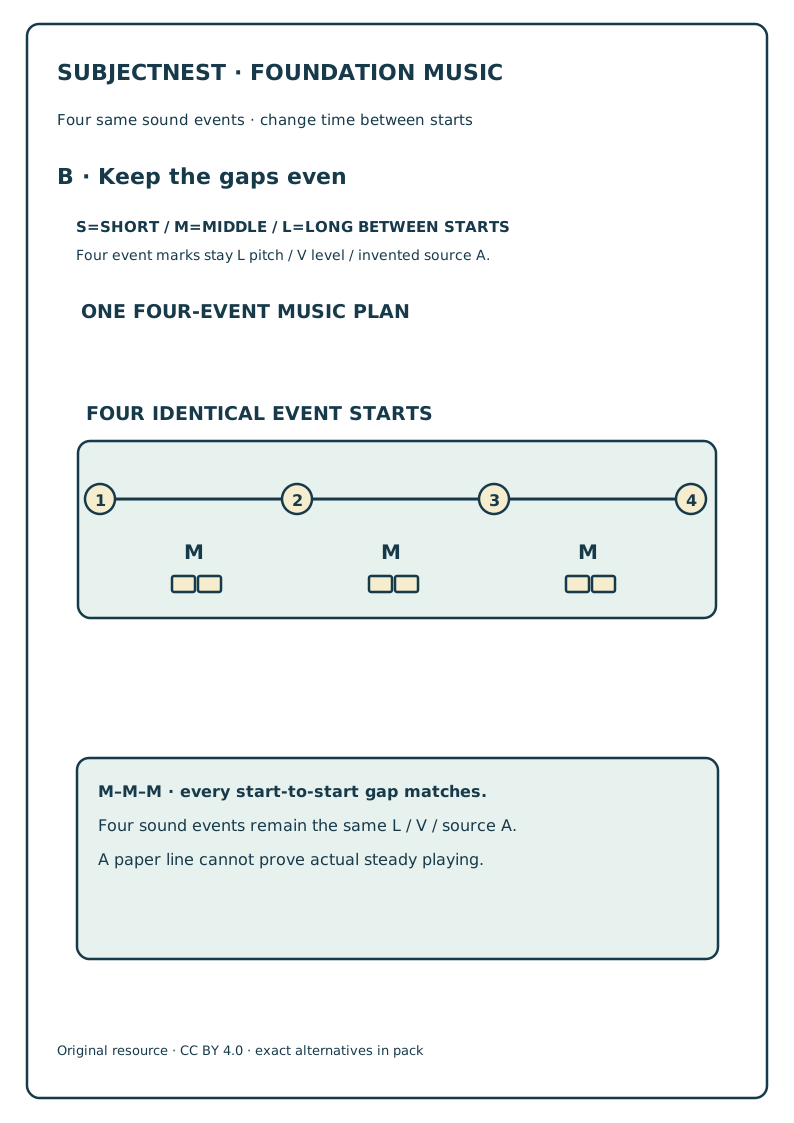
- Welcome · 3 min. A paper camera story can have four fictional frame changes; our marks are musical event starts, not an actual device's capture times.
- Model · 4 min. Read four identical L/V/A dots and the three M blocks. Point to three equal start-to-start spaces; no extra beat or sound is inserted inside a gap.
- Try together · 5 min. Child overlays three same-size tactile blocks or checks the M–M–M words. Adult may produce only locally cleared quiet sounds; the score route remains available.
- Child choice · 7 min. Child makes a steady four-event strip for a book corner, four paper lights or a plain track. They choose a reason such as “I want the starts even”; no prescribed emotion.
- Notice · 4 min. Save the three gaps and fixed pitch/source/level. Do not mark an actual steady performance observed without hearing or timing one.
- Close · 2 min. Next we keep the events but move their starts closer.
Week 25 · Day 123 · Events draw closer
Target/codes: plan a changing event rate with L–M–S gaps, identifying the first and last gap while four events stay the same; AC9AMUFD01. Prepare: C gathering track, Practice C.
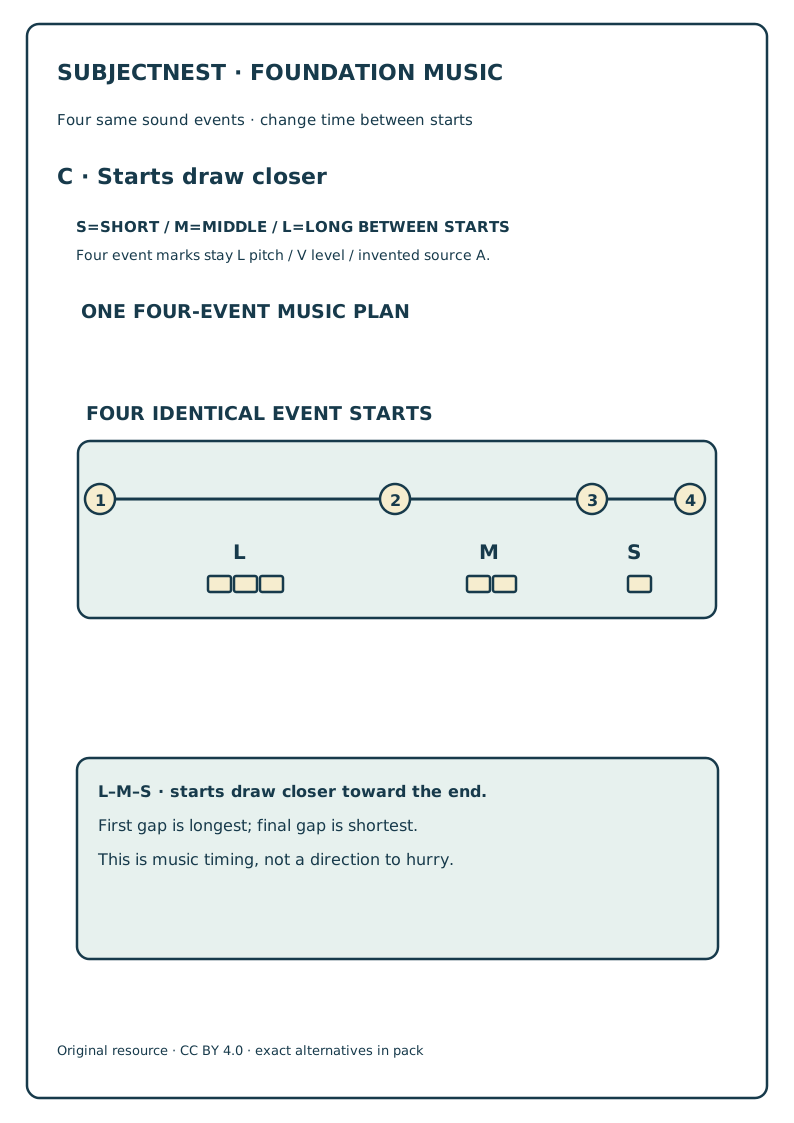
- Welcome · 3 min. “Closer” refers to event starts on this paper track, never how close people should stand or move.
- Model · 4 min. Lay L then M then S gaps between four identical event discs. Say “long wait at the start; short wait before the last event.” This is a changing spacing plan, not a faster whole-piece copy.
- Try together · 5 min. Child traces the three gaps by width or raised block count, comparing first with last without racing or tapping.
- Child choice · 7 min. Child draws a gathering cue for a fictional paper lantern sequence or uses the plain timeline; they may alter the middle gap while explaining whether the starts still gather.
- Notice · 4 min. Save actual chosen gap order and the child's comparison. Do not infer excitement or urgency from it.
- Close · 2 min. Tomorrow we let the starts spread instead.
Week 25 · Day 124 · Events spread apart
Target/codes: plan S–M–L gaps and compare early/late spacing while pitch, level, source and event count are fixed; AC9AMUFD01. Prepare: D spreading track, Practice D.
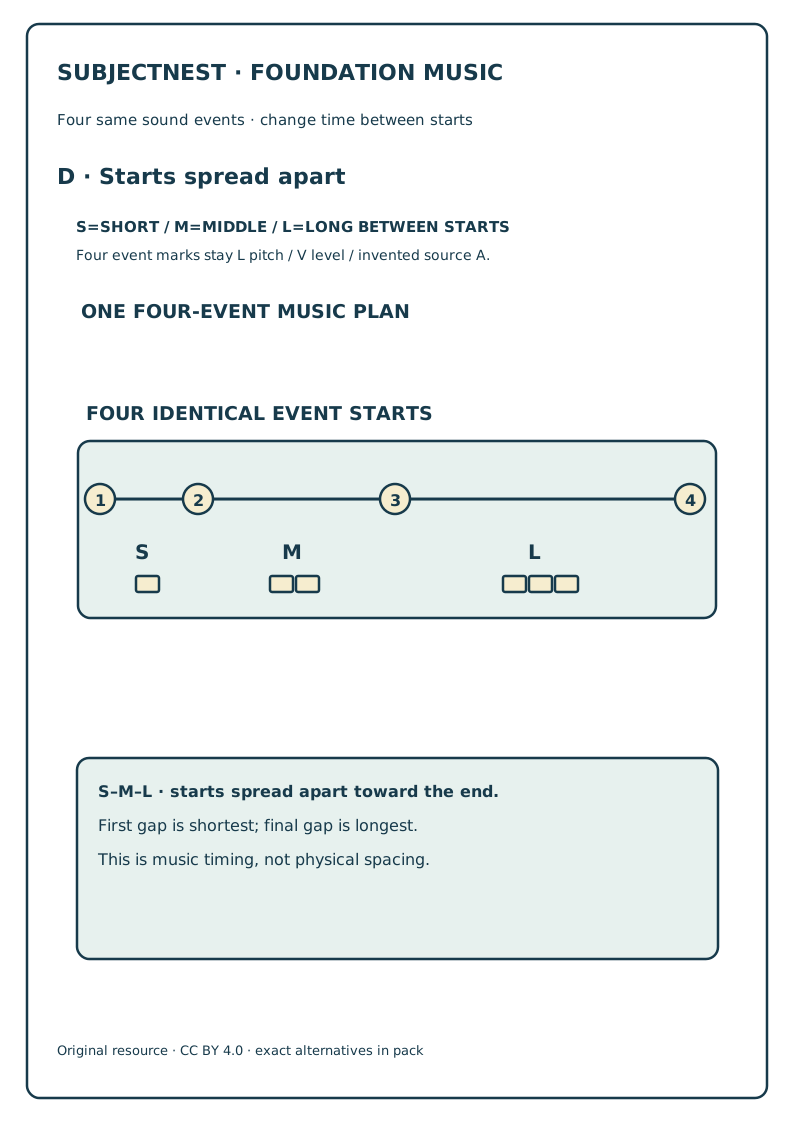
- Welcome · 3 min. Use four fictional paper-garden icons or a plain score. These are music marks, not a safety signal or instruction to travel.
- Model · 4 min. Place S, M, L between four identical dots. Contrast first short gap with last long gap, and leave the earlier gathering track out of view.
- Try together · 5 min. Child locates gap 1 and gap 3 using text, tactile block count or adult reading; describe only which is longer.
- Child choice · 7 min. Child makes their own spreading timeline for four paper stars or abstract sounds, choosing an intended musical idea in their words.
- Notice · 4 min. Save gap order and child intention; a reader's feelings and actual played spacing remain unknown.
- Close · 2 min. A fresh independent comparison follows.
Week 25 · Day 125 · Fresh Check Gap 1: compare two tracks
Target/codes: independently identify which unfamiliar four-event track spreads and which stays steady, with first/last gap evidence; AC9AMUFD01. Prepare: public Gap 1, A4 check, fixed tactile blocks; educator key closed.
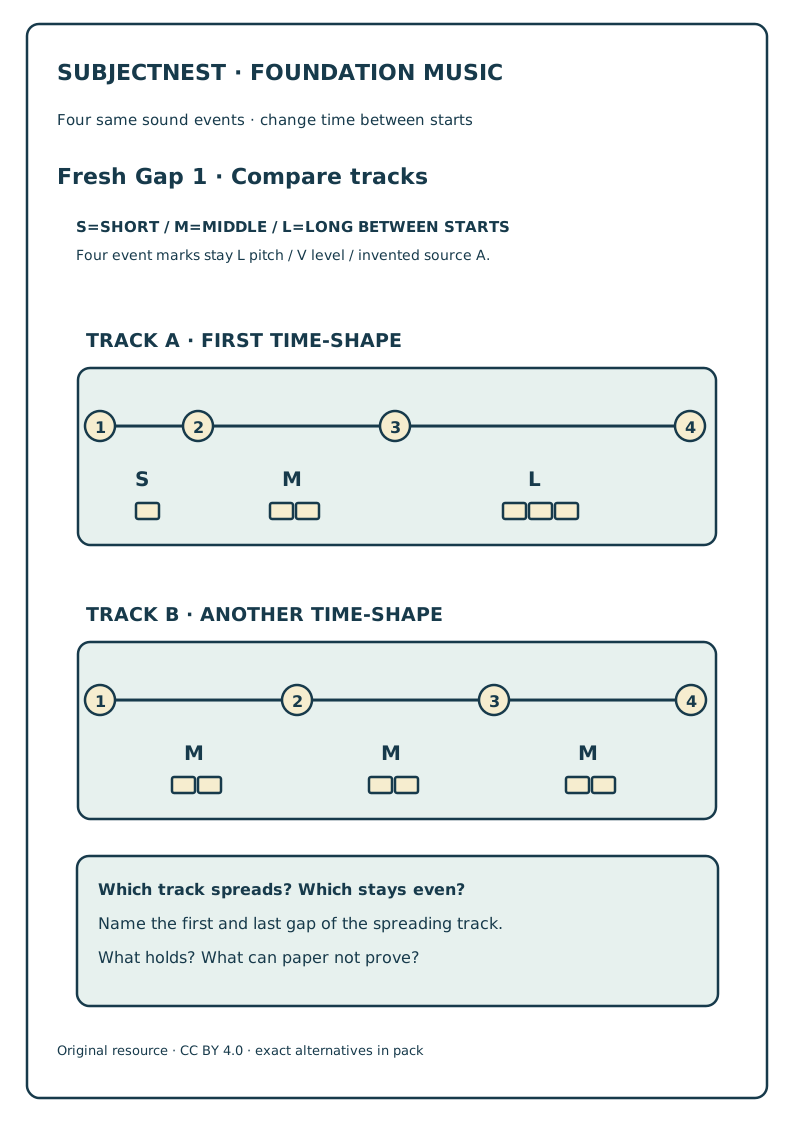
- Welcome · 3 min. Present a new paper music puzzle after any integrated held-out English/maths checks. No sound or speed requirement.
- Access · 4 min. Read the public tracks neutrally: A has S–M–L gaps; B has M–M–M. Each has four identical L/V/A event marks. Do not supply pattern names.
- Independent plan · 5 min. Child compares gap 1, 2 and 3 in each track via print, raised blocks or adult reading.
- Child response · 7 min. Save first answer: which spreads, which is steady, the first and last gap in the spreading track, one feature held constant, and one thing paper cannot tell about a real performance/listener.
- Self-check · 4 min. Child rereads both tracks without feedback or answer cues.
- Close · 2 min. Consult private key afterward; offer only different after-check tracks for practice.
Week 26 · Day 126 · Timing plans are not movement rules
Target/codes: connect a child-owned gap plan to an original fictional sequence while separating music timing from real movement safety; AC9AMUFD01/FC01. Prepare: E fixed/changed key, Practice E, optional Week 26 paper path.
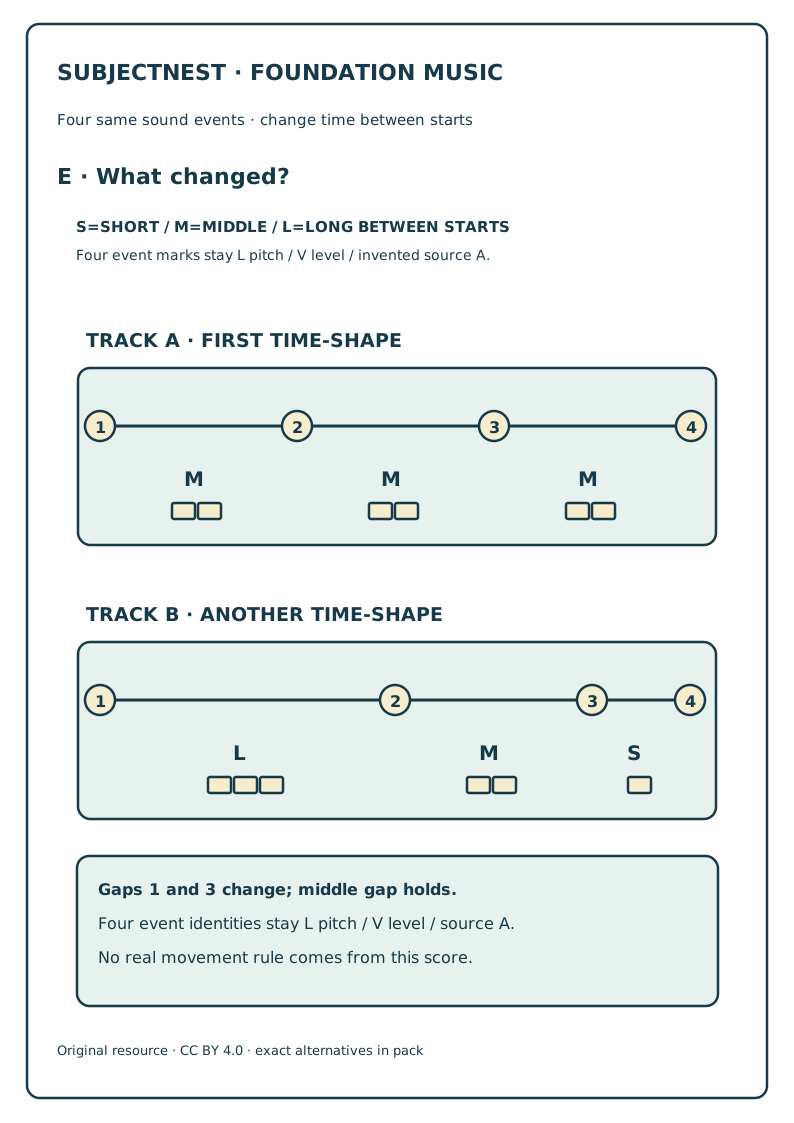
- Welcome · 3 min. A school movement rule needs people, space, consent and local safety checks. This music track directs no child's body.
- Model · 4 min. Compare four identical L/V/A event marks on M–M–M versus L–M–S gaps. Mark only GAP CHANGED, not pitch/source/level changed.
- Try together · 5 min. Child sorts “music starts become closer” from “people must move faster”; only the first is supported by these cards.
- Child choice · 7 min. Child gives four paper visitor pictures an optional quiet music plan, choosing steady or gathering gaps. They may keep it entirely abstract.
- Notice · 4 min. Save gap pattern and child explanation; keep HPE/Dance physical observations separate. No prescribed emotional or behavioural interpretation.
- Close · 2 min. Tomorrow compare a plan with what was actually played, if anything.
Week 26 · Day 127 · A plan and a real playback are different evidence
Target/codes: distinguish intended gap labels from an actually observed timing/listener response; AC9AMUFD01. Prepare: F plan/actual record, Practice F.
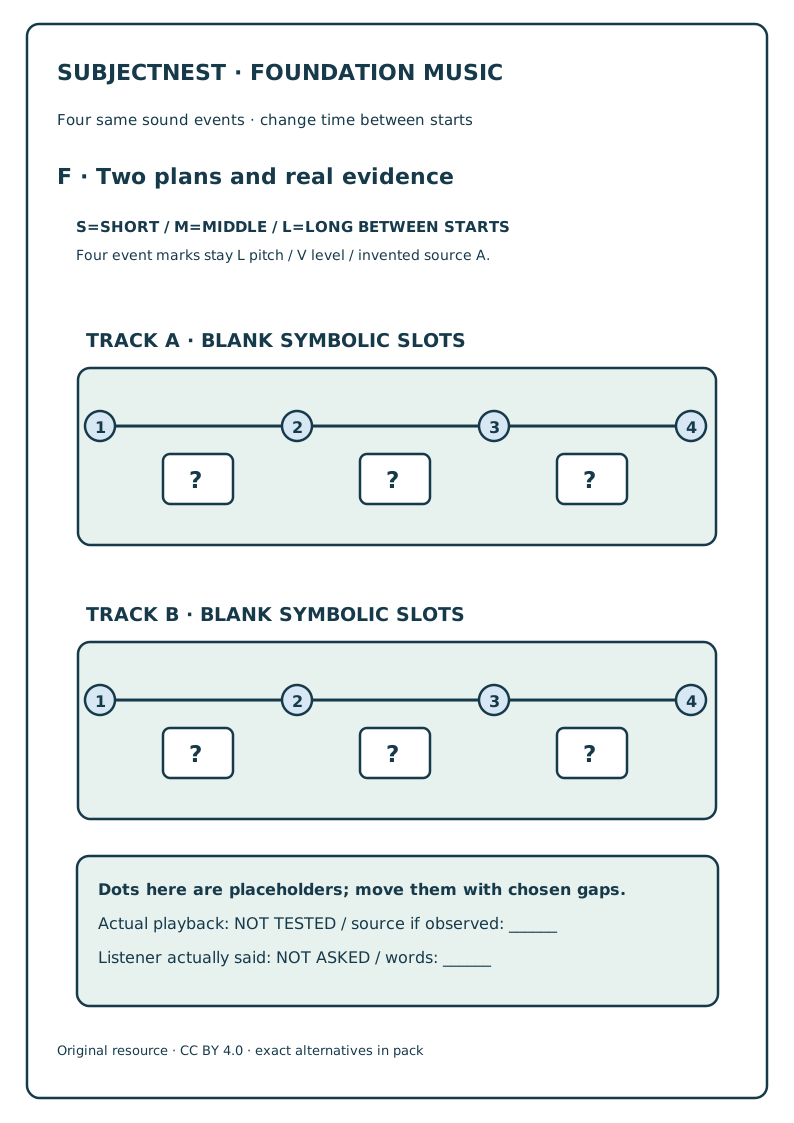
- Welcome · 3 min. A score says what its maker planned; it cannot testify that a sound was made or heard.
- Model · 4 min. Put M–M–M in PLAN. Leave ACTUAL PLAYBACK and LISTENER ACTUALLY SAID blank unless a cleared cue or willing live response occurs.
- Try together · 5 min. Child sorts “score shows S–M–L” from “I heard a wider final gap” and “someone might feel calm.” Only a real listener may state the second; the third is a guess.
- Child choice · 7 min. Child makes a four-event plan for a fictional board-game piece, gentle book reveal or abstract line; approved sound is optional, paper is sufficient for planning.
- Notice · 4 min. Save first plan and source of any actual observation. If no safe playback occurs, write NOT TESTED, never “accurate”.
- Close · 2 min. Tomorrow make two different time-shapes for the same invented idea.
Week 26 · Day 128 · Make two time-shapes
Target/codes: compose two distinct four-event tracks for the same neutral fictional brief, keeping all four event identities fixed and explaining changed gaps; AC9AMUFD01/FC01. Prepare: blank pair in F, Practice G, gap cards.
- Welcome · 3 min. Choose a fictional paper visitor, picture-story opening or plain sound plan; no real person or movement is required.
- Model · 4 min. Adult compares M–S–M with S–L–M on two separate practice strips and names the first two changed gaps. Put the example away.
- Try together · 5 min. Child corrects an adult's mixed-up statement: four event marks are unchanged; one or more gaps differ.
- Child choice · 7 min. Child authors two tracks with three S/M/L choices each. Ask which spacing they would try first and why, accepting their own music words, pointing or AAC.
- Notice · 4 min. Save both first versions and exact changed gap positions; adult moves cards only on child direction. Actual listener fields stay blank unless real.
- Close · 2 min. A willing reader may look tomorrow; private keeping is equal access.
Week 26 · Day 129 · Optional real source and willing reader
Target/codes: optionally encounter a locally permitted real music work and share a child score with a willing reader/listener; AC9AMUFD01/FC01, FE01/FP01 conditional. Prepare: real-source gate, plan/actual record, child-owned tracks.
- Welcome · 3 min. Offer private keeping, a familiar willing reader, locally approved comfortable sound or pass. Nothing is a command to move.
- Model · 4 min. Adult shows their own short invented score to a willing adult. A permitted real work, if available, is introduced with maker/source/context rather than a guessed community meaning.
- Try together · 5 min. Ask what the source supports about the real work and let the child notice or question. If rights/context are missing, keep FE01 held.
- Child choice · 7 min. Child may show either time-shape, both or neither to an actually willing person; no recording, public solo or compulsory feedback.
- Notice · 4 min. Record actual source and child response only after encounter; recipient/medium/words only after sharing. A hypothetical audience is not FP01 evidence.
- Close · 2 min. Child keeps ownership; tomorrow's paper transformation uses a fresh score.
Week 26 · Day 130 · Fresh Check Gap 2: reverse the time-shape
Target/codes: independently turn a given spreading four-event plan into a gathering plan by changing only gap 1 and gap 3, preserving middle gap and all four event marks; AC9AMUFD01/FC01. Prepare: public Gap 2, A4 check, raised cards; key closed.
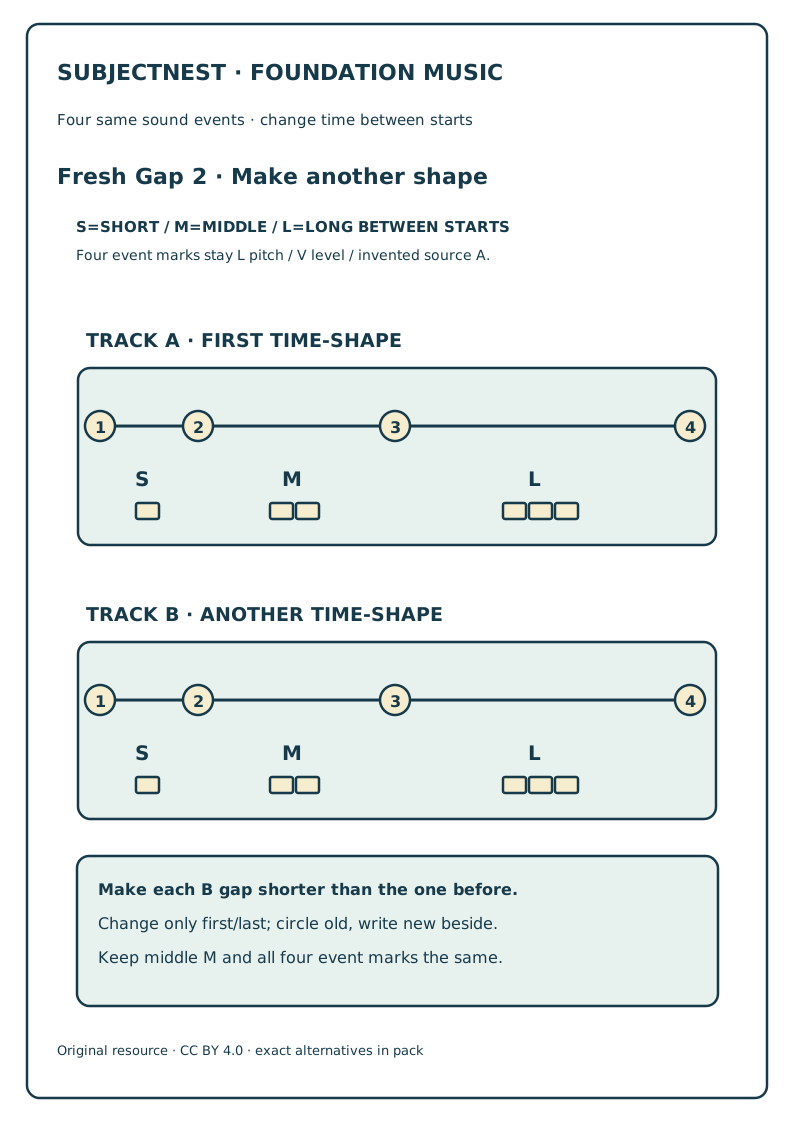
- Welcome · 3 min. New paper timing task after separate integrated subject checks; no playback, movement or audience is needed.
- Access · 4 min. Show A gaps S–M–L and an identical B copy around four same L/V/A event marks. Read every mark neutrally.
- Independent plan · 5 min. Child changes B so each gap is shorter than the one before, with M still in the middle; event identities remain.
- Child response · 7 min. Save first complete B, names of both old/new gap changes, the held middle and event marks, a child-owned musical reason, and what the paper cannot prove.
- Self-check · 4 min. Child compares all three corresponding gaps and four event marks without adult hints.
- Close · 2 min. Consult private key afterward; continue with a different base if more practice is needed.