Target/codes: relocate one PAIR while preserving four beats and total events; partial AC9AMUFD01/FC01. Prepare: move-pair example, two broad strip copies, invitation G.
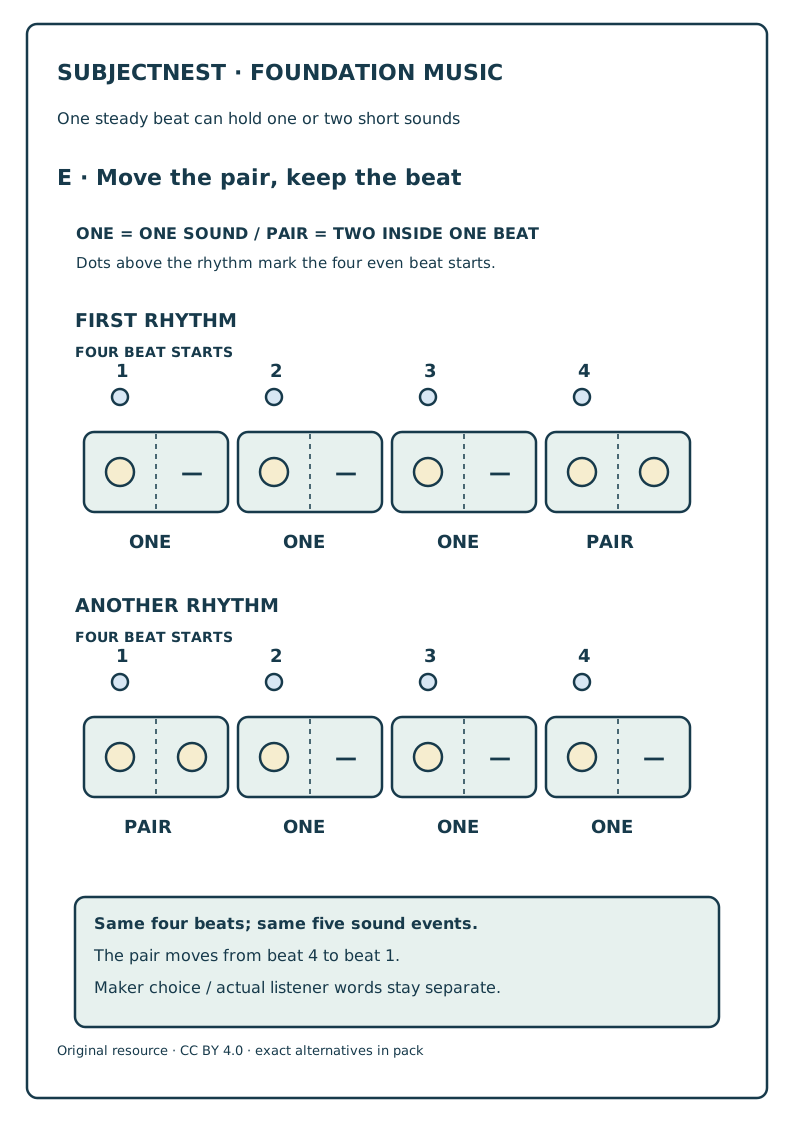
- Welcome · 3 min. “Keep the same number of sounds. Put the two quick somewhere else.” Child chooses tiny opening, ending or own playful purpose.
- Model · 4 min. Compare ONE ONE ONE PAIR with PAIR ONE ONE ONE. PAIR moves from beat 4 to 1, so beat 4 becomes ONE. Beat cards 2/3 hold; each plan has four beats and five sound events. Optional sound keeps one reviewed source and an agreed steady pace.
- Try together · 5 min. Adult leaves both new PAIR and old PAIR in place. Child notices the extra event, then restores the old place to ONE. “Moving the pair changes two cards.” Put this model away.
- Child choice · 7 min. Child makes an own four-beat piece with exactly one PAIR, copies it, and moves the PAIR to a chosen different beat. Read or optionally try both versions, choose one for a paper show or keep both. Direct adult placement by choice.
- Notice · 4 min. Save removed/added pair location, both changed cards and held event count. If the child adds a second pair, compare total discs before teaching on a different practice strip.
- Close · 2 min. Ask, “What did you move? What stayed?” Keep the final fresh source hidden; no correctness judgment about the child's preferred musical purpose.