Goal: identify visible versus outside-frame marks without concluding a real feature is absent. Proposed codes: AC9SFH01, AC9SFI03, AC9SFI05. Prepare: frame-model, Model A/B, Card 82.
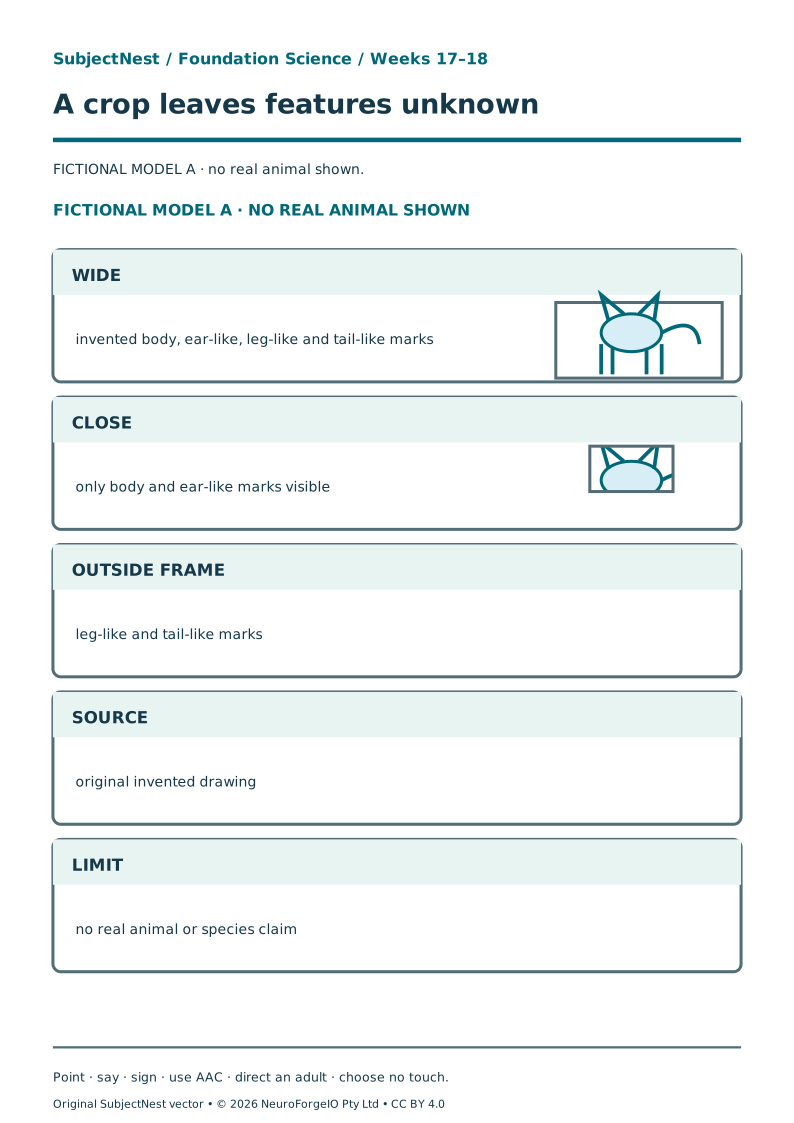
- Source · 3 min. Label A/B invented. No camera, child photo or animal is required.
- Compare · 4 min. Read WIDE then CLOSE; CLOSE shows body/ear-like marks but hides leg/tail-like marks outside borders.
- Model · 5 min. Teacher reads B's correction: “not shown in this frame” is different from “not part of the animal.” B is fictional dialogue, not actual class feedback.
- Child try · 7 min. Card 82 routes say one CLOSE fact, one WIDE fact and what a CLOSE-only viewer cannot know. Raised wide/close borders are models.
- Check · 4 min. Ask “May I call the cropped image a tailless real animal?” Child names crop and source limit.
- Exit · 2 min. Record source-bounded statement; no real external-feature credit from A.