Status: original teaching draft; human educator, local curriculum, accessibility and accuracy review pending.
Scope: ten 25-minute English lessons (Days 51–60), original oral story/rhyme/procedure, controlled child-reading, two printable aids with text alternatives, and a two-week formative check. This continues the first ten draft weeks; it is not a complete Foundation English year.
Year label: Australian Curriculum Foundation Year; Prep in Queensland. This is not pre-Prep kindergarten.
Open, download and adapt
- Ten daily teacher scripts
- Original oral and child-reading materials, with text alternatives
- Assessment, rubric and next-teaching decisions
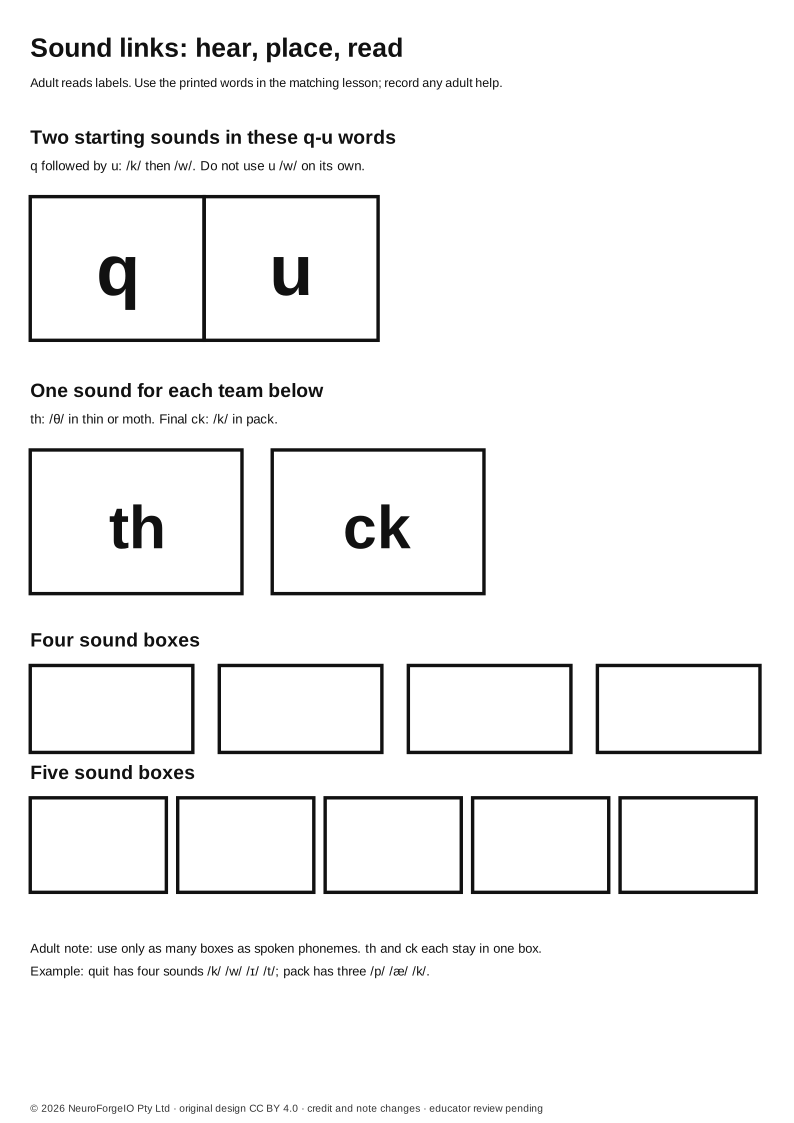
- Printable q-u, th and ck sound mat
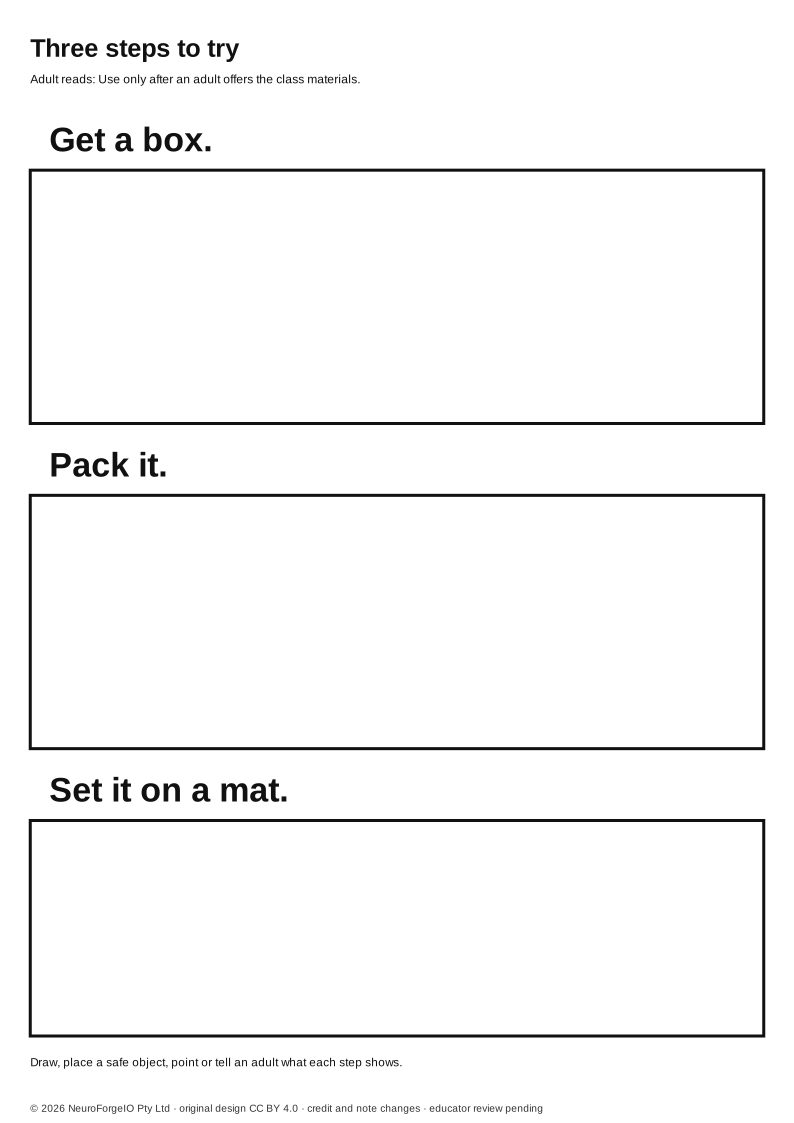
- Printable three-step child-reading card
- Curriculum source, rights, mapping and asset hashes
The original text, assessment and vector print designs are © 2026 NeuroForgeIO Pty Ltd and licensed CC BY 4.0. Print, share, adapt and reuse them, including commercially, with attribution and an indication of changes. Suggested credit: “SubjectNest Foundation/Prep English Weeks 11–12, NeuroForgeIO Pty Ltd, CC BY 4.0.” Link this pack and licence where possible. ACARA and external guidance remain under their own terms and are not included in this licence grant.
Fit with the class week
The 40-week planning map sets Week 11 around showing ten and Week 12 around ordered, fair sharing. The separate integrated guides use a ten-counting tool and shared tools and space. These English lessons give the daily sound/print instruction, source-aware oral language, a short story and an understandable three-step text. They do not score mathematics, design or protective-help skills on an English decoding result.
Days 1–50 taught the 25 single-letter links except q, plus sh /ʃ/ and ch /tʃ/ in controlled sets. They also explicitly taught standalone article a/A /ə/, the common word is /ɪz/ and It /ɪt/. This fortnight adds only the following bounded links:
| First day | Printed link | Child-read examples | Exact boundary |
|---|---|---|---|
| 51 | q followed by u, including Q in a fictional name | quit, quiz, Quin | The fixed starting q-u spelling sequence cues two phonemes /k/ then /w/ in these words. It is not one /kw/ phoneme, and this does not teach u /w/ elsewhere. |
| 53 | th → /θ/ | thin, thud, moth | One phoneme in these words. Voiced th /ð/ in the/this/that is not child-reading material here. |
| 56 | final ck → /k/ | back, neck, duck, sock, pack, deck | Two letters represent one final phoneme in this selected short-vowel set; do not claim every /k/ ending uses ck. |
| 57 | capital G in Get | Get a box. | No new /g/ value; lower-case g was taught earlier. |
Days 54–55 consolidate the Week 11 controlled mini-text and the word ten. Days 57–59 build a three-step child-readable procedure. The adult first arranges permission and safe materials. Printed Get a box. Pack it. Set it on a mat. does not itself teach permission, a complete safety rule or a mathematical equal-share method. Oral first/next/last and puppet-based requests are teacher-read and can be conveyed by speech, AAC, sign, objects or drawing. The exact q-u, th, ck order is this pack's instructional choice, not an ACARA mandate.
Curriculum, practice, access and rights
Lesson codes are exact proposed Foundation English links in the ACARA Australian Curriculum v9 workbook, retrieved 29 September 2026; original workbook SHA-256 db446882d2c00cf7c085a03e250e2442fda6c44011fc114680c46c1dc7a822c3. Consult ACARA English, version history and copyright terms for local use. ACARA does not endorse SubjectNest.
The short model–guide–try cycle, cumulative practice and evidence-based reteaching are informed by AERO Teach explicitly, Early literacy and Monitor progress. These are linked and paraphrased only; they do not certify this draft.
Use live adult reading or a locally made recording with transcript, plain text, large/tactile print, movable/digital tiles, four or five sound boxes, quiet private turns, and speech, AAC, pointing, signing, drawing, typing or handwriting for meaning. Record exactly what was independent and which route was used. Do not require eye contact, speed, public performance, use of a personal object or a fixed “learning style.” If hearing or speech access changes a phoneme task, co-plan a valid route and interpretation with the learner, family and relevant specialist. Adult-read stories and instructions are never independent child-decoding results. No third-party worksheet, story, image or recorded voice is included.