These are short teaching probes, not secure tests or formal assessment instruments. Read the brief without hinting at the solution, offer the chosen same-target route, save the first response, then consult the separate educator key. A neutral adult can move cards, but not choose or correct the branch for the child. Decline/later is allowed and is recorded as such. A paper answer does not prove an operable work or actual willing-reader use.
Check I · New triangle fork
A4 SVG · A4 PDF · exact text/tactile source.
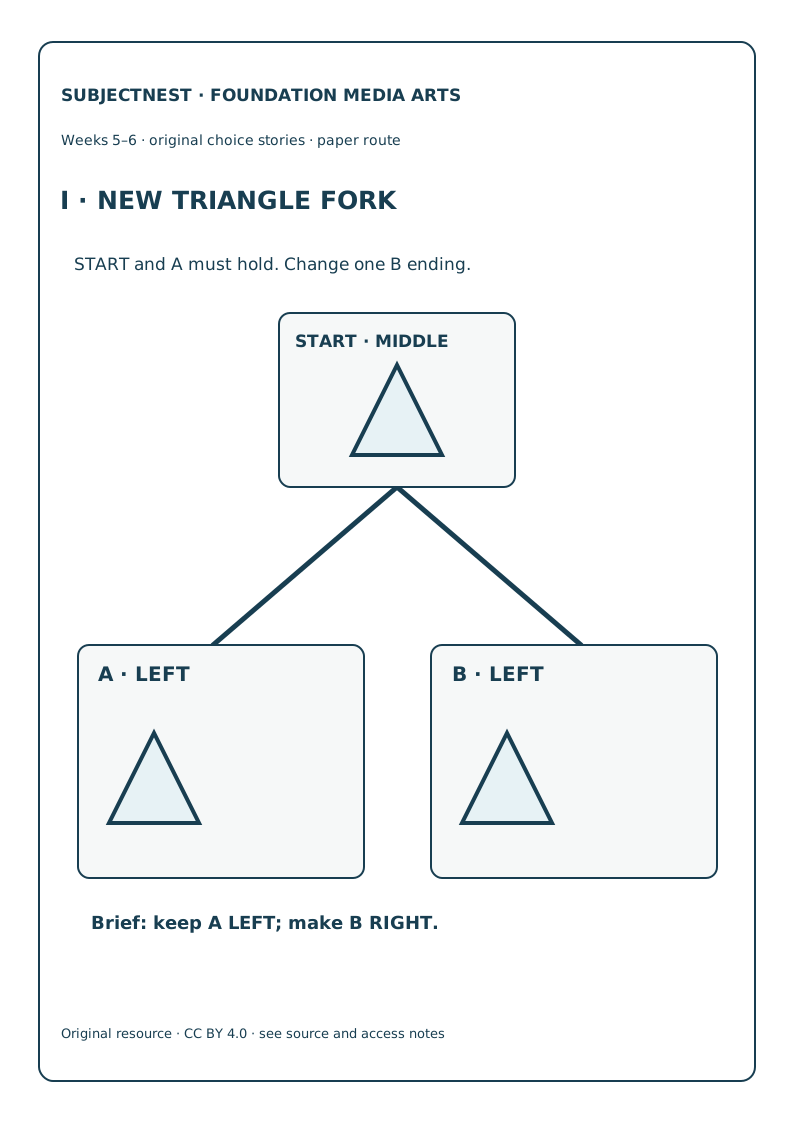
Starting source: START shows TRIANGLE MIDDLE. Branch A shows TRIANGLE LEFT. Branch B also shows TRIANGLE LEFT. Both are possible endings, not a three-step sequence.
New maker brief: “Keep START MIDDLE and A LEFT. Make B RIGHT. Change only one ending.”
Child response: Draw, select, point or direct the new START/A/B arrangement. Explain which part held and which branch changed. Adult writes the child’s exact response and support given. Do not show a solved branch map before first response.
Check J · New choice match
A4 SVG · A4 PDF · exact text/tactile source.
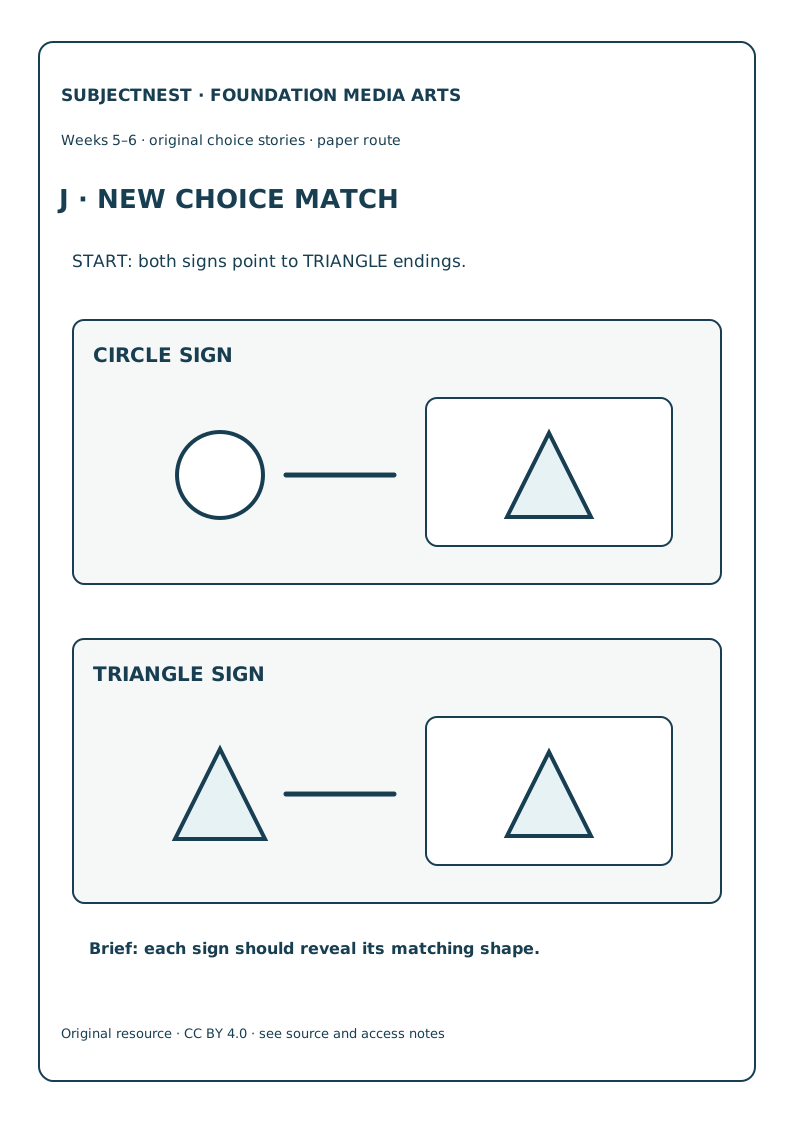
Starting source: Two distinct choice signs are CIRCLE and TRIANGLE. The CIRCLE sign currently points to a TRIANGLE ending. The TRIANGLE sign also points to a TRIANGLE ending.
New maker brief: “Each sign should reveal the shape it names. Keep both signs and the TRIANGLE-sign ending. Change only one ending.”
Child response: Show or direct one revised sign–ending pair, then trace both signs to their results. A drawn line, spoken specification, raised card mapping or assembled correction can answer this paper planning check. Do not reveal the key before first response.
Use the results to choose a next lesson: concrete branch mapping, safer physical assembly, a willing viewer encounter, or broader media making. Do not infer a child’s disability, reading level or cultural knowledge from one paper choice.