Each session is 3 + 4 + 5 + 7 + 4 + 2 = 25 minutes. Offer a drawing, fixed-card or text/tactile directed route with the same target. Adults may prepare large hinged covers or loose cards but must let the child decide the media choices. The beginning/branch maps in early lessons are plans. A child-owned assembled set of cards or flap work on Days 26–28 is actual small paper media making; it does not prove camera, audio or digital production. A real willing reader is recorded only if one actually uses the work. No child image/voice, upload, personal data, small loose part, compulsory cutting, device or public performance.
Week 5 · Day 21 · One start, two possible endings
Target/codes: hold one opening CIRCLE MIDDLE and design two distinguishable possible ending positions (model LEFT and RIGHT), without calling either the “next” frame; AC9AMAFD01, AC9AMAFC01. Prepare: A branch map, three broad circles/frames, A notes.
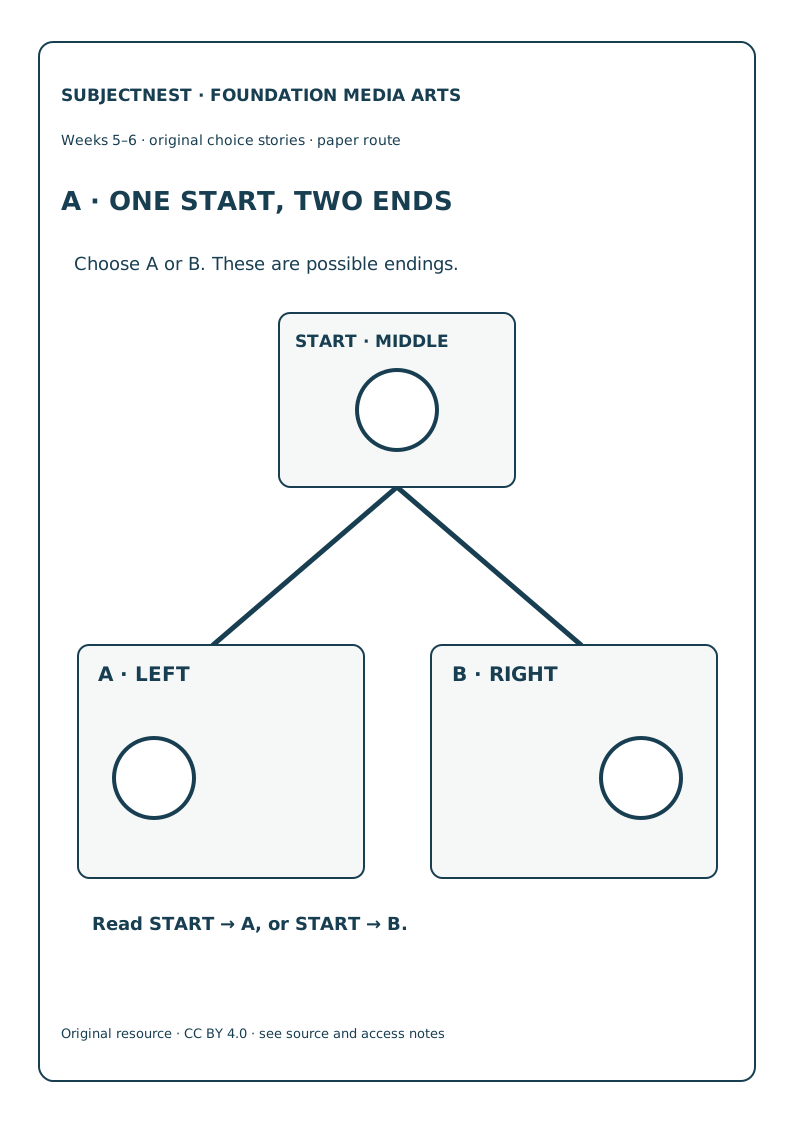
- Welcome · 3 min. Recall the earlier three-frame line. Today one opening can point to two possible ends; a reader takes one path, not both at once.
- Model · 4 min. Keep CIRCLE MIDDLE at START. Put CIRCLE LEFT at ending A and CIRCLE RIGHT at ending B. Trace the fork with two broad arrows.
- Try together · 5 min. Ask what stays (start and token) and what differs (ending position). Read A and B separately instead of as a three-step line.
- Child choice · 7 min. Child chooses two different endings for an invented paper stop card; draw, place or direct the choice. If they prefer other positions, ensure the two results can be distinguished.
- Notice · 4 min. Record start, A and B exactly, plus child’s intended difference. Do not claim a real viewer chose either path.
- Close · 2 min. Save the fork plan; tomorrow the paths need labels someone can select.
Week 5 · Day 22 · Make choice signs match endings
Target/codes: assign distinct A/B symbols to two branch endings and keep each sign attached to its intended ending; AC9AMAFD01, AC9AMAFC01. Prepare: B choice sign, large square/circle choice cards, B notes.
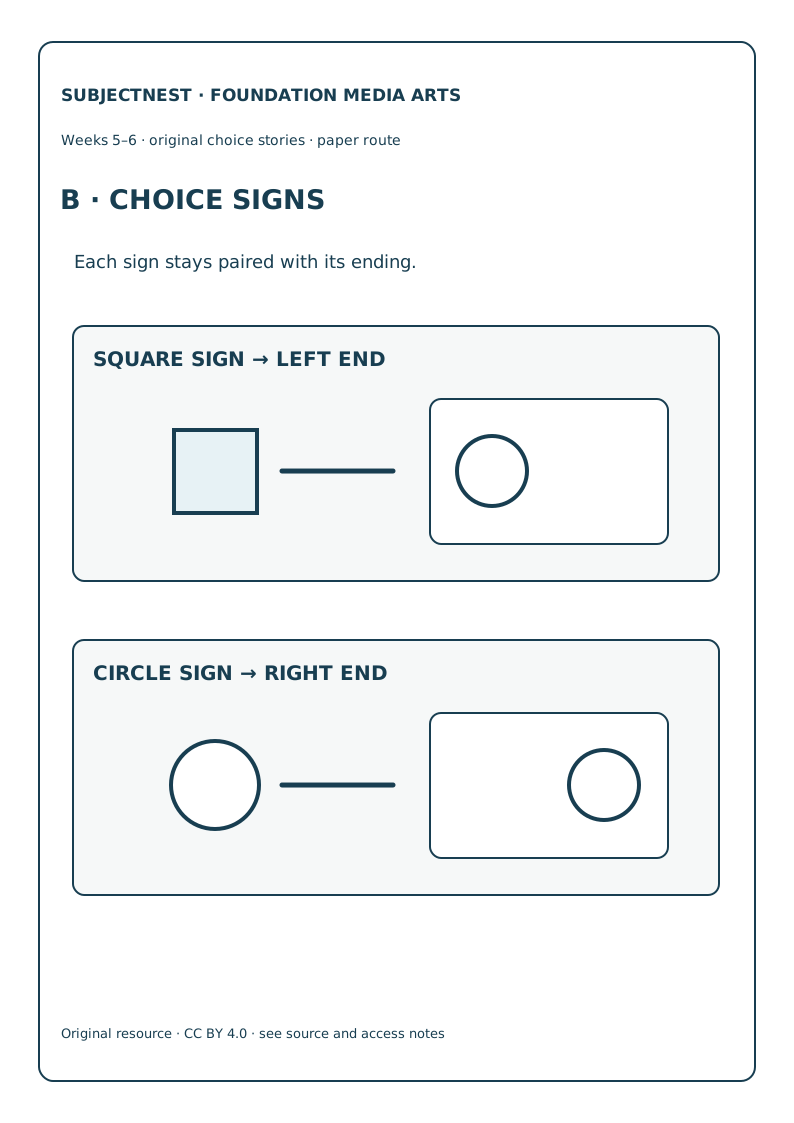
- Welcome · 3 min. Two endings need two distinguishable signs. Letters can be read aloud; geometric marks or raised outlines avoid independent reading.
- Model · 4 min. Put SQUARE sign over the LEFT ending and CIRCLE sign over the RIGHT ending. Move both signs together with their endings when rearranging the board.
- Try together · 5 min. Mix the locations of both labelled endings, then trace sign→ending so the mapping still holds. Ask which sign leads to which image.
- Child choice · 7 min. Child chooses two signs for their branch map and directs where each attaches. They may choose two textures or shapes instead of letters or colour.
- Notice · 4 min. Read the two sign–ending pairs back without supplying a preference. Fix ambiguity only after recording the child’s first pairing.
- Close · 2 min. Keep the map; tomorrow a reader’s choice can determine which ending is shown.
Week 5 · Day 23 · Let a reader choose a path
Target/codes: use a prebuilt two-path paper board to show only the ending matched to a selected sign, then reset for the other sign; AC9AMAFD01, AC9AMAFC01. Prepare: C reveal board, two large covers or loose ending cards, C notes.
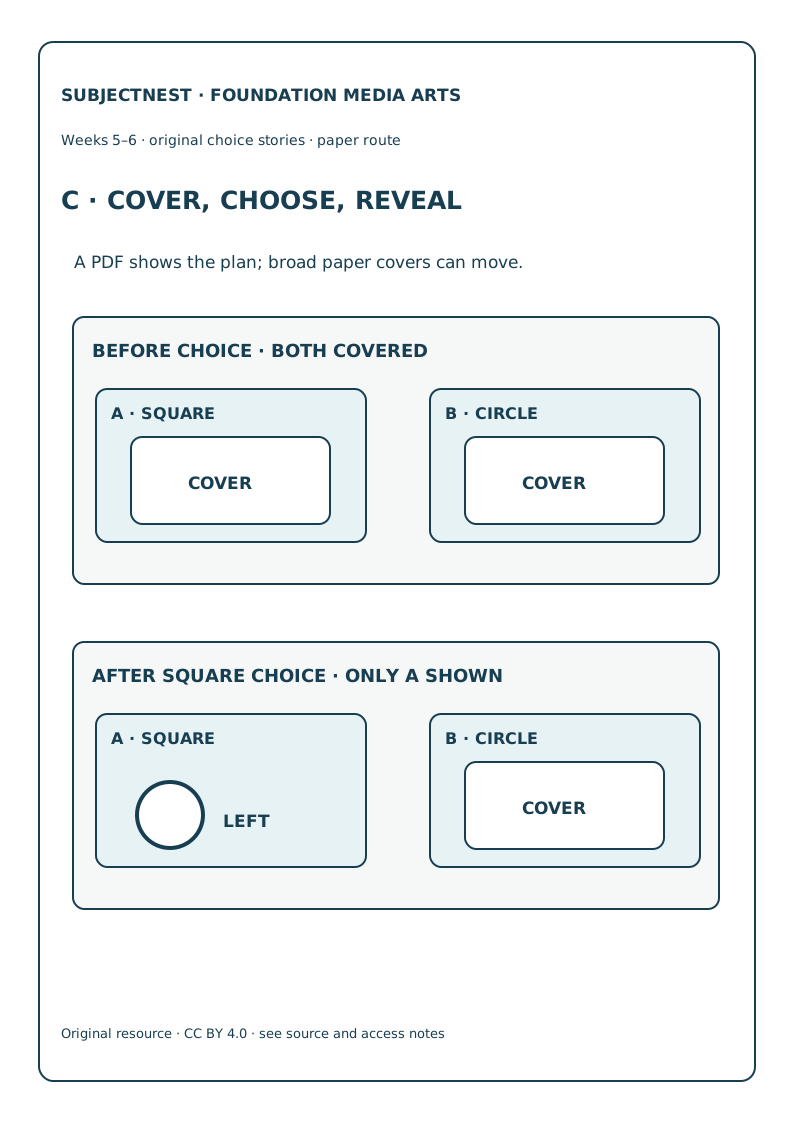
- Welcome · 3 min. Name the difference between a maker’s branch plan and a reader-operated paper board. The adult model is not the child’s finished work.
- Model · 4 min. With both endings covered, point to SQUARE sign and reveal only its LEFT ending. Reset; point to CIRCLE and reveal only RIGHT.
- Try together · 5 min. Child tells adult which sign to select; adult operates a large prebuilt cover. Ask what the reader can see now and what remains hidden.
- Child choice · 7 min. Child directs two trials on the adult’s original board, one per sign, or operates broad cards if comfortable. No role-play or touch is compulsory.
- Notice · 4 min. Log selected sign, shown ending, hidden ending and reset. This is a guided mechanism trial, not evidence an outside audience used the child’s work.
- Close · 2 min. Keep the two-path board; tomorrow the reveal order can make a difference.
Week 5 · Day 24 · Show a start before a choice
Target/codes: arrange the same opening and endings so START is visible before the reader chooses A/B, and only then an ending is revealed; AC9AMAFD01, AC9AMAFC01. Prepare: C reveal board, D sequence strip, broad START and CHOOSE cards.
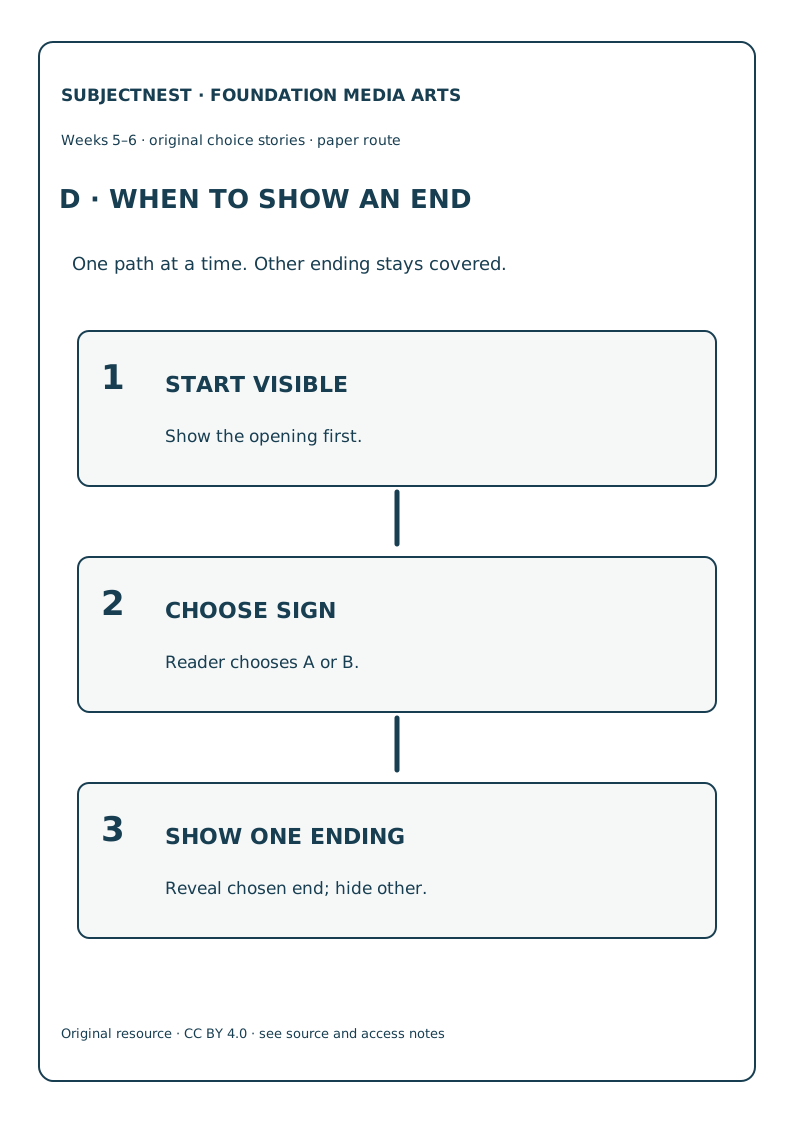
- Welcome · 3 min. A branch can be confusing if the ending is displayed first. The intended reading path is START → CHOOSE → ONE ENDING.
- Model · 4 min. On adult’s paper work, place START face-up, both endings covered, and two choice signs visible. Demonstrate one reveal after a sign selection.
- Try together · 5 min. Compare a mixed order ENDING→START with START→CHOOSE→ENDING. Ask which stage must remain hidden until a choice.
- Child choice · 7 min. Child directs the timing of an invented paper announcement with two outcomes, positioning the start and covers. Adult follows exact instruction.
- Notice · 4 min. Record visible/hidden state before choice and after one reveal; avoid claiming suspense or any particular emotional effect for all readers.
- Close · 2 min. Reset the board. A fresh branch-position check follows tomorrow.
Week 5 · Day 25 · Fresh Check I: two triangle routes
Target/codes: independently change only branch B’s ending in a new triangle fork so A remains LEFT and B becomes RIGHT; AC9AMAFD01, AC9AMAFC01. Prepare: public Check I, I A4, broad triangle cards. Keep key closed.
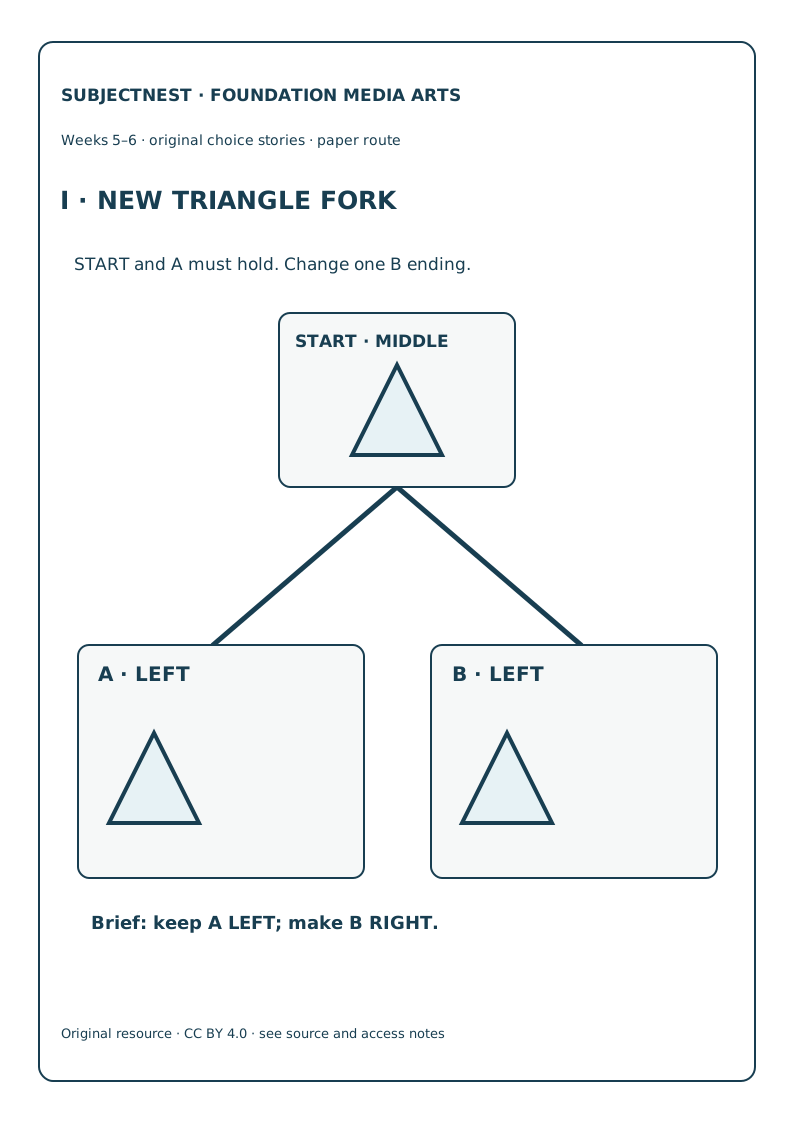
- Welcome · 3 min. This new paper puzzle shows what to teach next; there is no reading-speed score.
- Access · 4 min. Show START TRIANGLE MIDDLE, A TRIANGLE LEFT, B TRIANGLE LEFT. Read brief: “Keep A LEFT. Make B RIGHT.” Do not solve it.
- Independent plan · 5 min. Child chooses which branch must change and what stays.
- Child response · 7 min. Child draws, places, points or directs an adult to show both endings, then explains one held and one changed part. Save first response.
- Self-check · 4 min. Ask child to name START, A and B positions without confirming correctness.
- Close · 2 min. Keep first response before key; supplementary Day 25 examples are After Check only.
Week 6 · Day 26 · Make an original two-path paper work
Target/codes: create or direct an assembled paper work with one child-chosen opening, two distinguishable child-chosen endings and a way to select one; AC9AMAFD01, AC9AMAFC01. Prepare: E blank maker board, adult-prepared broad hinged flaps or loose cards, E notes.
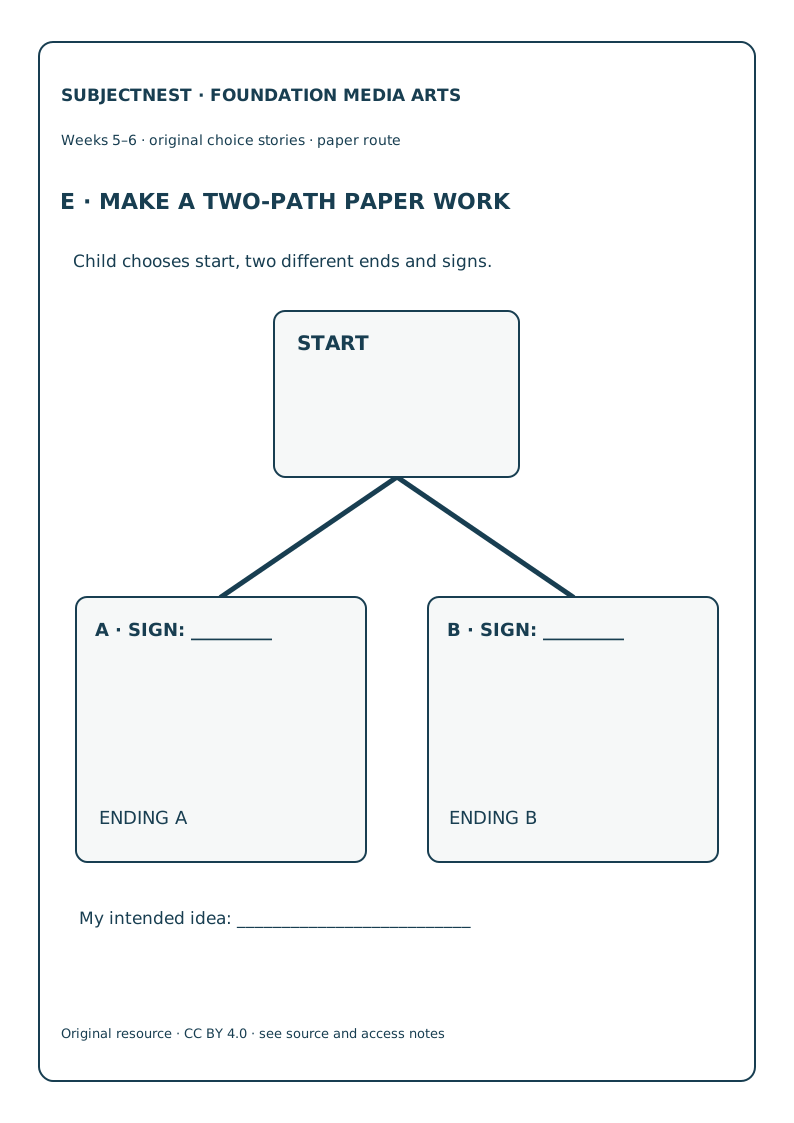
- Welcome · 3 min. A blank branch map is a plan. Today the child makes or directs an object whose reader can choose one ending.
- Model · 4 min. Adult assembles a different example: square starts TOP; one ending MIDDLE, one BOTTOM. Attach broad signs/covers and demonstrate one selection. Do not ask children to copy.
- Try together · 5 min. Child names one idea, possible start and two distinguishable outcomes. Adult offers safe paper parts and neutral descriptions.
- Child choice · 7 min. Child draws, arranges or directs the start, both endings and signs. Adult may hinge/attach large parts only as directed. Flat removable cards count as assembled if their mapping and select/reveal action work.
- Notice · 4 min. Check that two branch outcomes differ and the chosen sign reaches the intended result. Log child decisions versus adult fabrication; do not equate a spoken plan with an assembled object.
- Close · 2 min. Store the paper work locally; no photo or digital copy required.
Week 6 · Day 27 · Reset, select and check both routes
Target/codes: operate or direct the child-owned paper work through A, reset, then B, finding any sign–ending mismatch; AC9AMAFD01, AC9AMAFC01. Prepare: child’s assembled work, F testing log, large A/B or shape cues.
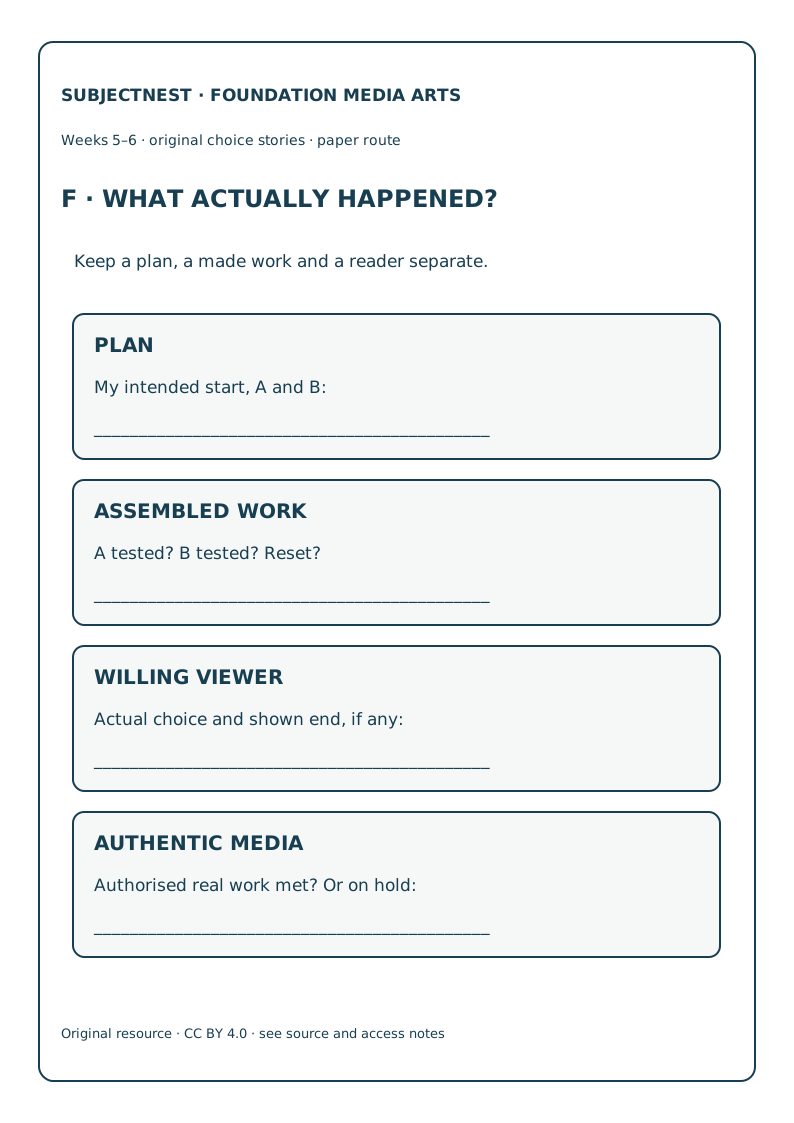
- Welcome · 3 min. The maker can check both paths privately. This is not yet an actual willing audience.
- Model · 4 min. On adult’s work, select A, reveal its ending, reset both covers, then select B. Show how a hidden ending stays hidden.
- Try together · 5 min. Child chooses first route for own work and directs/operates it. Adult records the actual ending displayed without quietly fixing it.
- Child choice · 7 min. Child tests the other route, identifies one mismatch if any and chooses a repair. Adult assists physical assembly if asked.
- Notice · 4 min. Read back predicted versus actual route outcome. If the mechanism cannot operate, mark “planned only / assembly needs work,” not “tested.”
- Close · 2 min. Save repaired or held work for clearer choice cues tomorrow.
Week 6 · Day 28 · Make the path clue clearer
Target/codes: revise one sign, label or tactile cue so two paths are distinguishable while the story endings stay fixed; AC9AMAFD01, AC9AMAFC01. Prepare: B choice signs, child’s work, thick shape/texture labels, F testing log.
- Welcome · 3 min. A viewer should know what they are choosing. No child must read A/B or rely on colour alone.
- Model · 4 min. Adult replaces two visually identical dots with SQUARE and CIRCLE signs; endings stay in place. Describe why the difference is easier to locate.
- Try together · 5 min. Child chooses two distinct signs or texture patterns for their own routes. Ask which ending each sign should lead to.
- Child choice · 7 min. Child places/directs revised signs on their assembled work; adult reads both mappings neutrally. Test one route, reset, test the other.
- Notice · 4 min. Record the one clue revised, held endings and whether each route now operates. Avoid saying a hypothetical reader found it easier.
- Close · 2 min. Ask whether the child wants a willing person to use it tomorrow or prefers a private test/pass.
Week 6 · Day 29 · An optional willing reader and an authorised maker
Target/codes: if the child chooses, share their assembled paper choice work with a willing person and record the path actually selected; if available, ask source-backed maker/purpose questions about an authorised real work; AC9AMAFP01 only for actual sharing, AC9AMAFE01 only for actual authentic encounter. Prepare: F testing/share log, child work, authorised-source slot.
- Welcome · 3 min. Child may invite one willing educator, rehearse privately, choose later or pass. No filming, upload, public display or compulsory social performance.
- Model · 4 min. Adult offers their own work to a willing adult and logs actual selected path. If an approved real work is available, read the maker’s first-party purpose statement accurately.
- Try together · 5 min. Ask “Who made this real work?” and “What do its makers say it is for?” If source/permission is absent, practise on adult original and mark authentic encounter not held.
- Child choice · 7 min. Child chooses share, private puppet rehearsal, later or pass. If a real willing reader selects a sign, log actual sign and ending plus any volunteered response; do not infer feelings or understanding.
- Notice · 4 min. Distinguish child intention, physical operation, actual viewer action and source-backed maker statement. Record nothing personal beyond local policy.
- Close · 2 min. Thank child and viewer for choices; tomorrow a new sign–ending mapping checks transfer.
Week 6 · Day 30 · Fresh Check J: matching choice to ending
Target/codes: independently repair one route in a new two-choice branch so the CIRCLE sign reveals CIRCLE and the TRIANGLE sign continues to reveal TRIANGLE; AC9AMAFD01, AC9AMAFC01. Prepare: public Check J, J A4, broad sign/ending cards. Keep key closed.
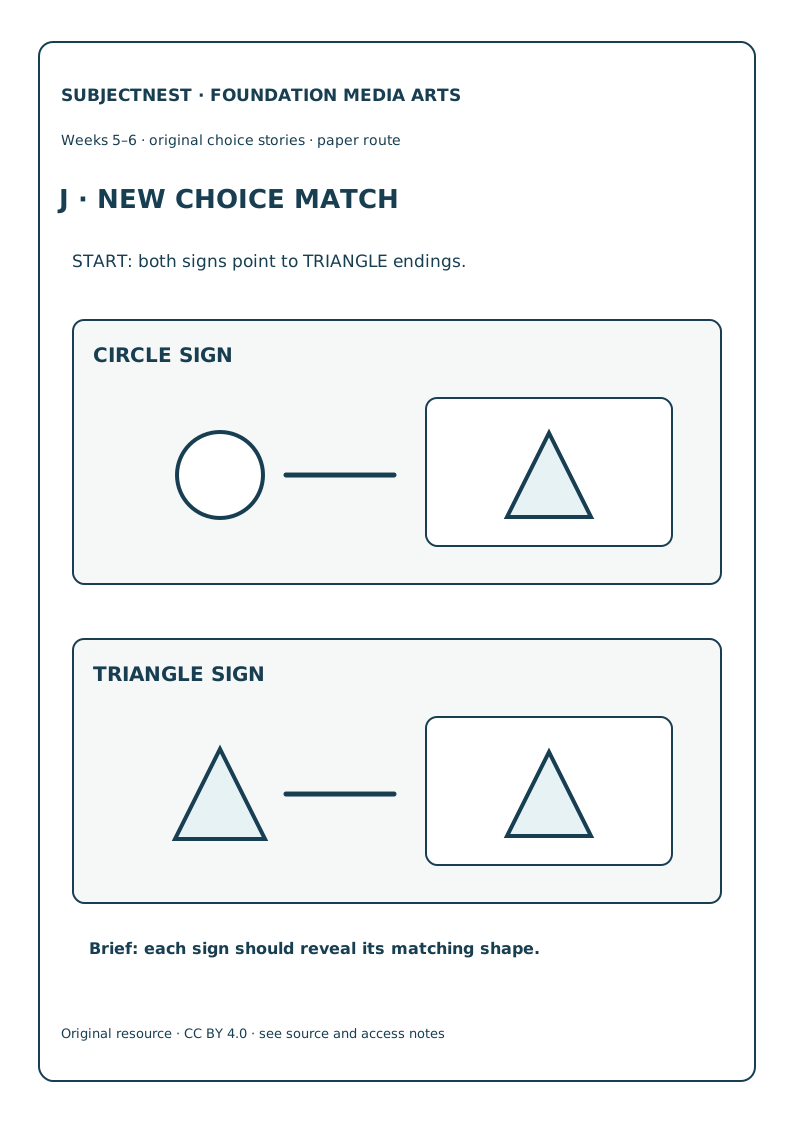
- Welcome · 3 min. Show a new paper choice board. A correct paper mapping is not proof that a real viewer used it.
- Access · 4 min. Present CIRCLE sign→TRIANGLE ending; TRIANGLE sign→TRIANGLE ending. Read brief: “Each sign should lead to the matching shape. Change only one ending.” Do not identify the route.
- Independent plan · 5 min. Child decides which ending to replace while holding both signs and the other ending.
- Child response · 7 min. Child draws, selects, points or directs the revised board and explains which route changed. Save first response.
- Self-check · 4 min. Child traces each sign to its ending without answer feedback.
- Close · 2 min. Use the separate key after response; plan later authentic media encounters, varied production forms and actual willing audiences.