Each lesson totals 3 + 4 + 5 + 7 + 4 + 2 = 25 minutes. Offer three switchable same-target routes, exact text/tactile print alternatives, broad fixed X/REST/LONG cards, AAC or neutral adult scribing. The child may pass, stop or change route. Candidate audio is used only after a human educator has listened and approved volume on intended equipment. Silent work covers the composition and structure target, not heard/played accuracy. Any pattern enquiry from another subject remains contextual; record Music evidence only.
Week 7 · Day 31 · Give a four-beat rhythm a name
Target/codes: treat X – X X as one original four-beat phrase A and identify its rest and three event places; AC9AMUFD01, AC9AMUFC01. Prepare: A motif aid, Practice A, broad four-cell strip.
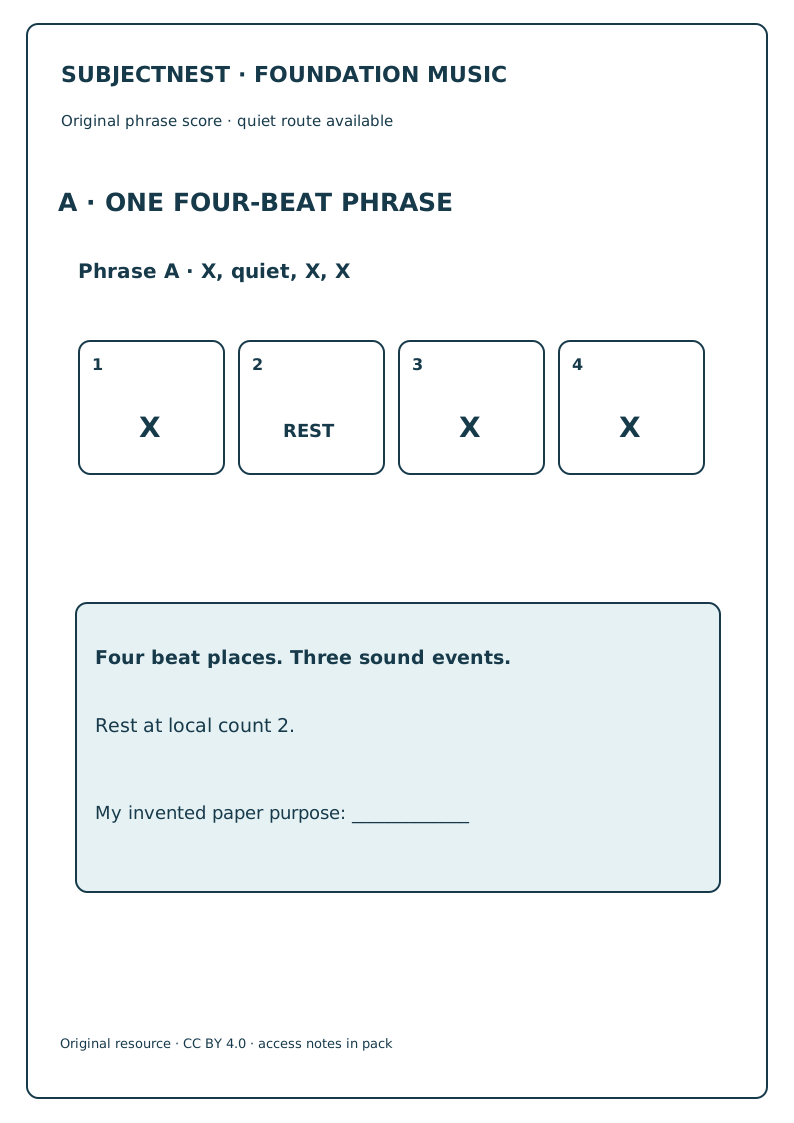
- Welcome · 3 min. Revisit the last fortnight's four steady beat places and separate rhythm marks. Tell learners that a phrase is a short grouped music idea here.
- Model · 4 min. Build A
X – X Xunder four numbered pulse places. Trace its three event cards and its second-place rest; label the complete group “A.” No sound is required. - Try together · 5 min. Child shows which four cells belong to A and which one is quiet. Adult avoids calling the pattern a real shop or community song.
- Child choice · 7 min. Child assigns A a fictional paper shop, rolling-toy drawing or neutral story purpose, then scores or optionally realises it with an approved source.
- Notice · 4 min. Record four beat places, three planned events and the child's stated musical intention. Only separately observed sound supports played rhythm claims.
- Close · 2 min. Save the whole phrase card; tomorrow it can be used twice.
Week 7 · Day 32 · Repeat a whole phrase
Target/codes: assemble A|A as two matching four-beat phrases and explain repeat across eight beat places; AC9AMUFD01, AC9AMUFC01. Prepare: B repeat aid, Practice B, two A cards.
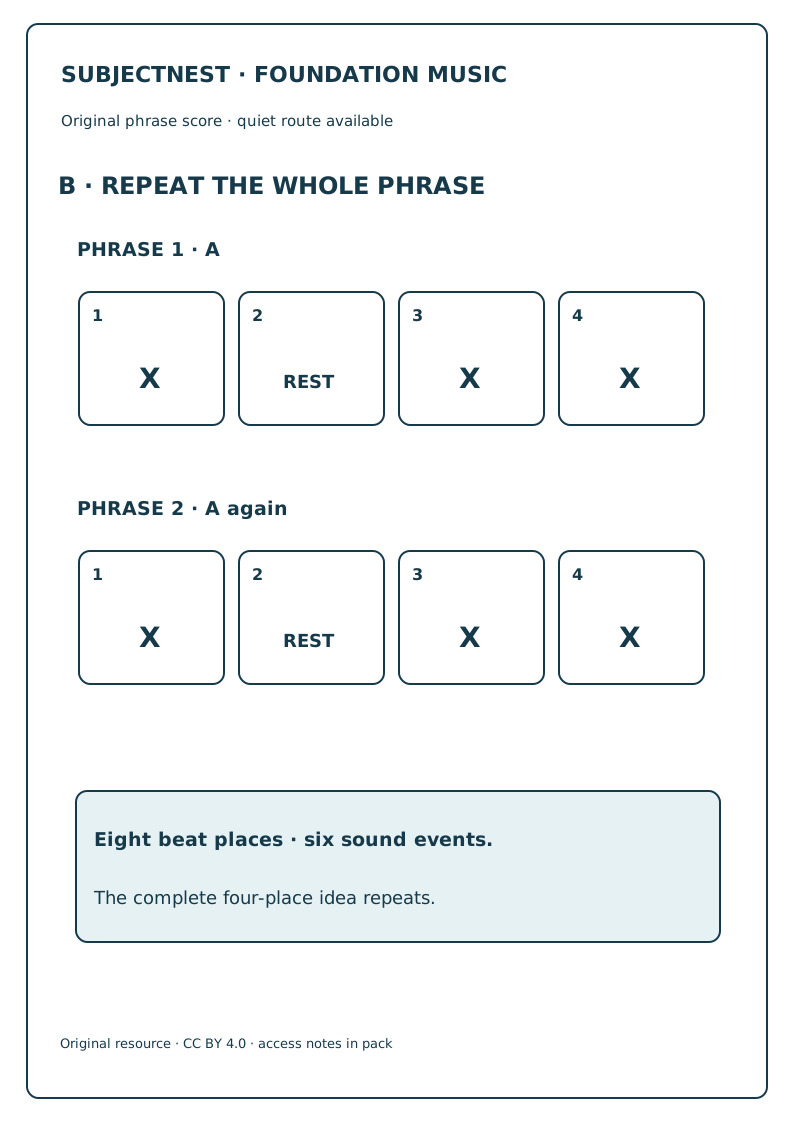
- Welcome · 3 min. Put one A on the left and ask what repeating the whole idea would need on the right.
- Model · 4 min. Make
X – X X / X – X X, separating groups visibly. Optional reviewed K cue sounds the original plan; a silent card route remains complete. - Try together · 5 min. Child compares local counts 1–4 in each group with a raised divider: same rest at local 2, same three events. Count eight beat places and six planned events.
- Child choice · 7 min. Child gives an intended use for an A|A paper gallery, fictional route card or chosen non-personal scene; a neutral adult can lay cards as directed.
- Notice · 4 min. Record the repeated phrase relation and count, not “child heard repetition” unless listening was actually offered and observed.
- Close · 2 min. Keep A|A; another distinct phrase can change the order next.
Week 7 · Day 33 · Two phrases can arrive in either order
Target/codes: compare A|B with B|A while preserving each four-cell phrase's internal order; AC9AMUFD01, AC9AMUFC01. Prepare: C order aid, Practice C, broad A and B cards.
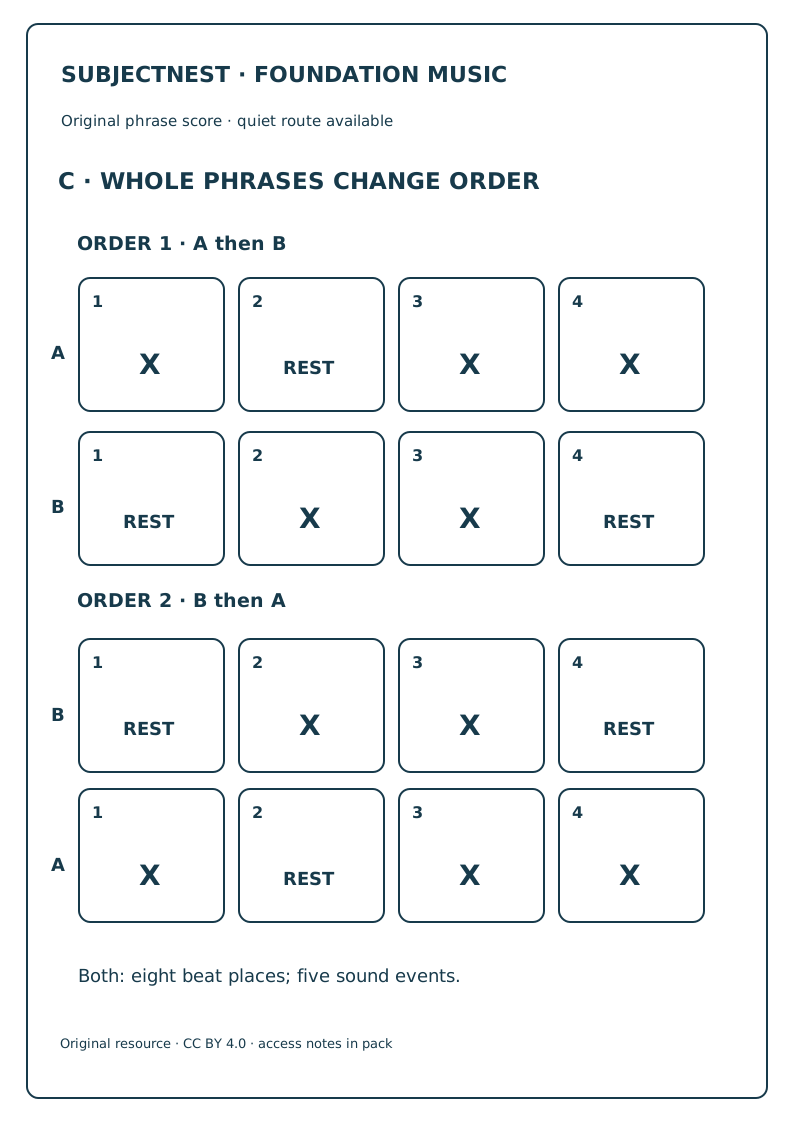
- Welcome · 3 min. Introduce invented B
– X X –next to known AX – X X. Both are original paper phrases. - Model · 4 min. Place A then B, then move the whole phrase cards to B then A without rearranging their four internal cells. Optional reviewed L cue is A|B only.
- Try together · 5 min. Child points to where A appears in each order and verifies A still has three events, B two, both four beat places.
- Child choice · 7 min. Child chooses A|B or B|A for a fictional two-page helper story or paper roll/slide comic, then explains how order may change their intended musical shape. No real listener outcome or physics claim.
- Notice · 4 min. Check eight beat places, five planned events and internal phrase cells unchanged. A static choice alone cannot establish aural order recognition.
- Close · 2 min. Store both full-score orders. Next the second phrase can vary while order stays.
Week 7 · Day 34 · Change one mark in the second phrase
Target/codes: make A|A′ by changing only the second phrase's local final X to REST; AC9AMUFD01, AC9AMUFC01. Prepare: D variation aid, Practice D, one rest card.
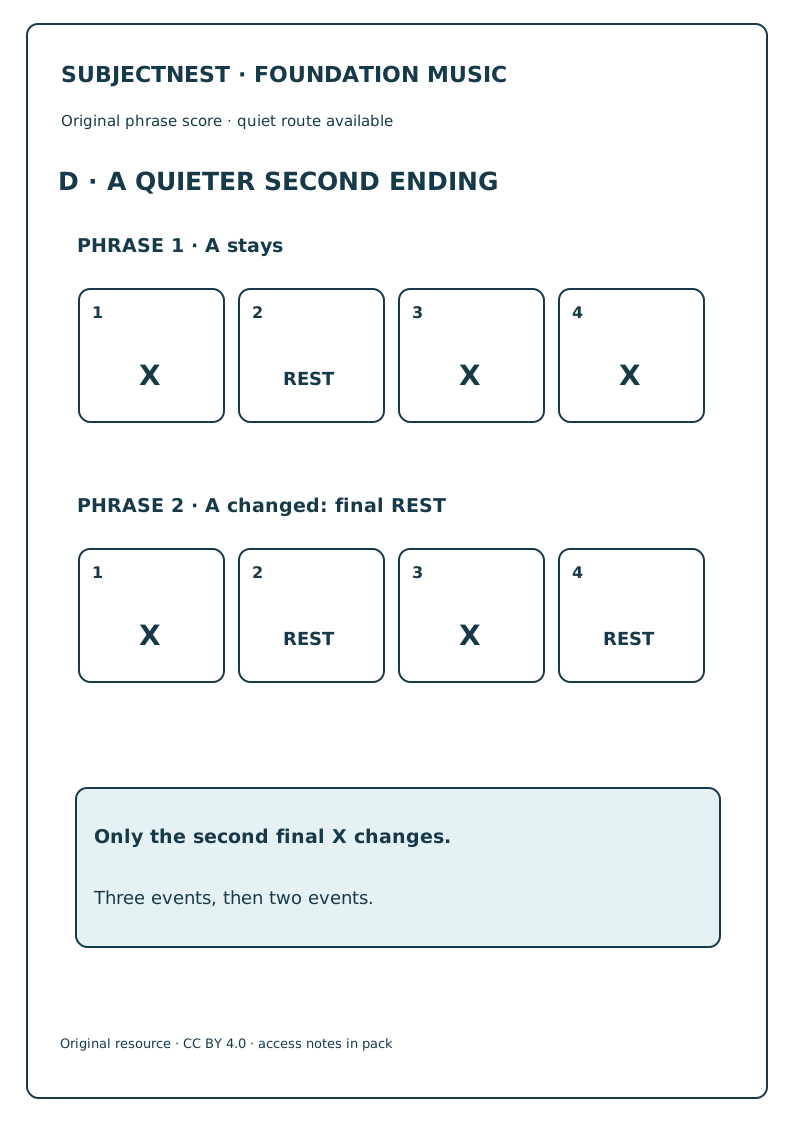
- Welcome · 3 min. Revisit A|A. Say the first A can stay fixed while the second gains one quiet ending.
- Model · 4 min. Keep group 1
X – X X; in group 2 change only local count 4 from X to REST:X – X –. Label that second phrase A′, meaning A changed. - Try together · 5 min. Child points to the changed cell and confirms eight beat places still exist; event count becomes three in first, two in second.
- Child choice · 7 min. Child uses a paper garden-gate, imaginary spaceship window or chosen neutral setting to give a possible musical reason for a quieter second ending.
- Notice · 4 min. Record what changed and stayed, and separately note any actual observed sound. Do not turn an A/A′ comparison into a Mathematics achievement claim.
- Close · 2 min. Keep the one-mark variation; the next check tests phrase order with unfamiliar cards.
Week 7 · Day 35 · Fresh Check M: postcard phrase order
Target/codes: independently reverse two unfamiliar four-beat phrase cards while preserving each phrase's internal marks; AC9AMUFD01, AC9AMUFC01. Prepare: M public check, M A4, broad cards; close the key.
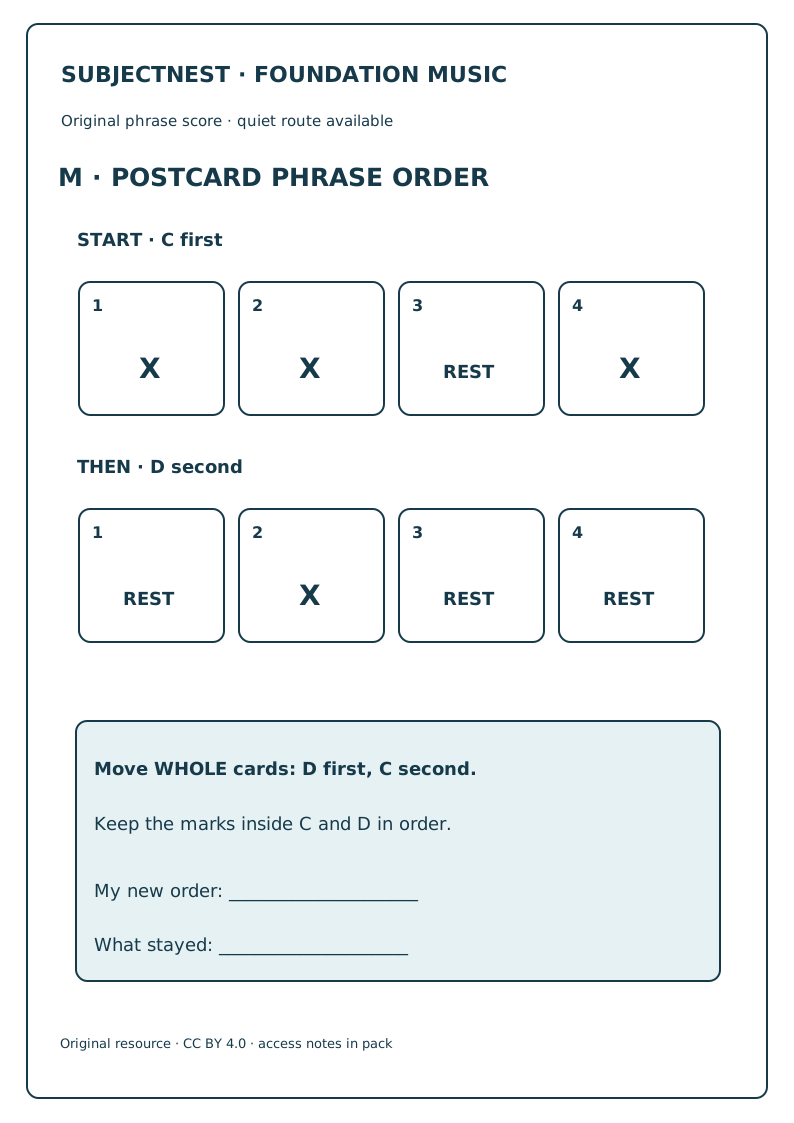
- Welcome · 3 min. Explain that the new paper music puzzle helps choose later teaching; there is no listening or performance demand.
- Access · 4 min. Neutrally show starting C
X X – Xfollowed by D– X – –in two four-place groups. Read labels without moving either card. - Independent plan · 5 min. Child plans D then C while keeping all four internal positions in each phrase unchanged.
- Child response · 7 min. Save the first full eight-place answer, where C and D now sit, and child's reason via cards, drawing, AAC, pointing or a neutral scribe.
- Self-check · 4 min. Invite counting two groups of four and checking that neither phrase was remade. No corrective hint before first response is saved.
- Close · 2 min. Open the separate key later; check-day swaps use different cards.
Week 8 · Day 36 · A held ending changes the event count
Target/codes: make A|A′ by combining the second phrase's final two short X into one LONG band across local counts 3–4; AC9AMUFD01, AC9AMUFC01. Prepare: E held-ending aid, Practice E.
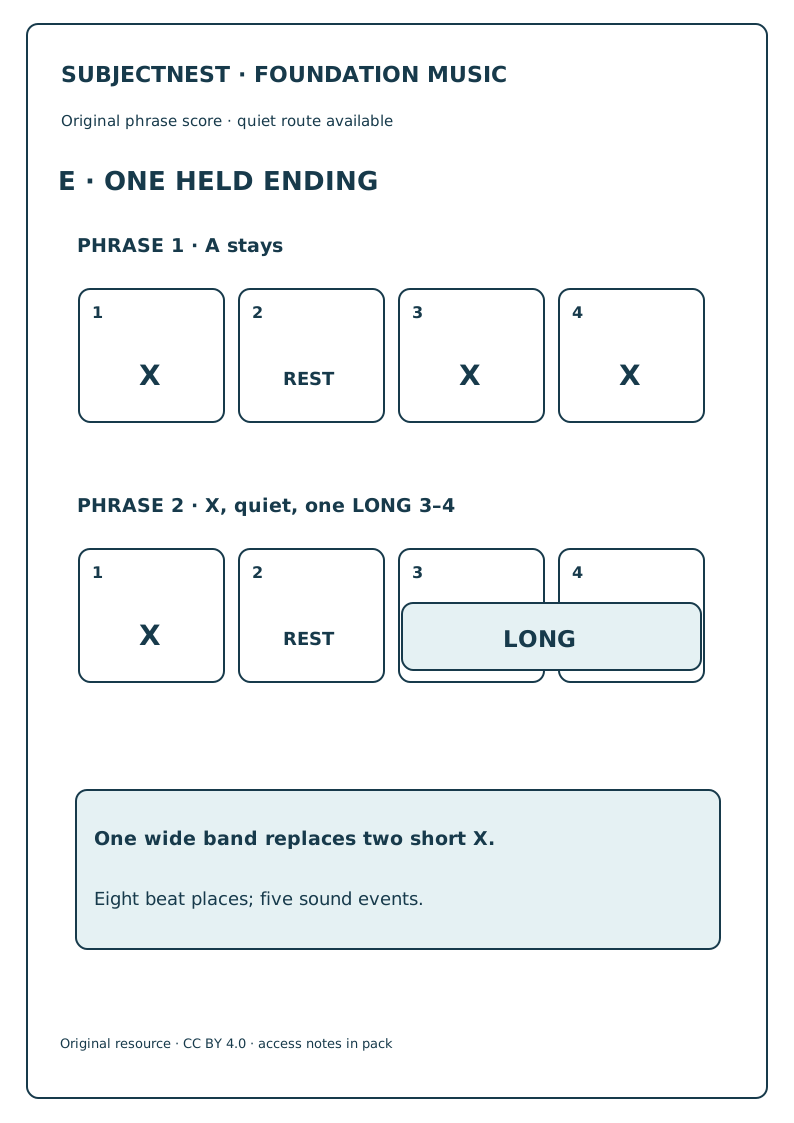
- Welcome · 3 min. Rebuild A|A. Show one broad band that covers two adjacent numbered places; it does not ask a child to hold voice or breath.
- Model · 4 min. In phrase 2 only, replace short X at 3 and 4 with one LONG(3–4). The first phrase stays A. Optional reviewed M cue is one rendering, not proof a child heard it.
- Try together · 5 min. Child counts eight beat places; phrase 1 has three events, phrase 2 now two. Trace the one band over two occupied places.
- Child choice · 7 min. Child gives the held ending an intended role in a paper help-desk display, ribbon illustration or other fictional context, through cards or optional approved sound.
- Notice · 4 min. Record five total planned events and the child's reason. A paper band cannot demonstrate sustained sound production.
- Close · 2 min. Keep both original A|A and held A|A′ for comparing tomorrow.
Week 8 · Day 37 · Same beat places, different event shape
Target/codes: compare A|A with held-ending A|A′, distinguishing unchanged occupied beat places from one fewer separate sound event; AC9AMUFD01, AC9AMUFC01. Prepare: B and E, two wide rows.
- Welcome · 3 min. Place the two complete eight-place scores side by side. Ask what the final band covers before counting sound events.
- Model · 4 min. Trace phrase 2: two short X in A|A are two events; one band across the same local places in A|A′ is one event. Both scores still have eight beat places.
- Try together · 5 min. Child uses separate broad counters to show six events versus five, while occupied places stay the same. Do not equate event number with tempo.
- Child choice · 7 min. Child chooses either ending for a fictional toy-bridge picture or drawn cloud display and explains their intended contrast, without claiming any viewer felt it.
- Notice · 4 min. Record where phrase 2 changes and one fewer event in the held version. If actual sound is chosen, note what was produced, not a presumed acoustic success.
- Close · 2 min. Save the comparison as a composition option for the next original score.
Week 8 · Day 38 · Compose two phrases with a reason
Target/codes: create an original complete eight-place score with a deliberate repeat, order or one-phrase variation; AC9AMUFD01, AC9AMUFC01. Prepare: F compose/share board, Practice F, broad four-cell cards.
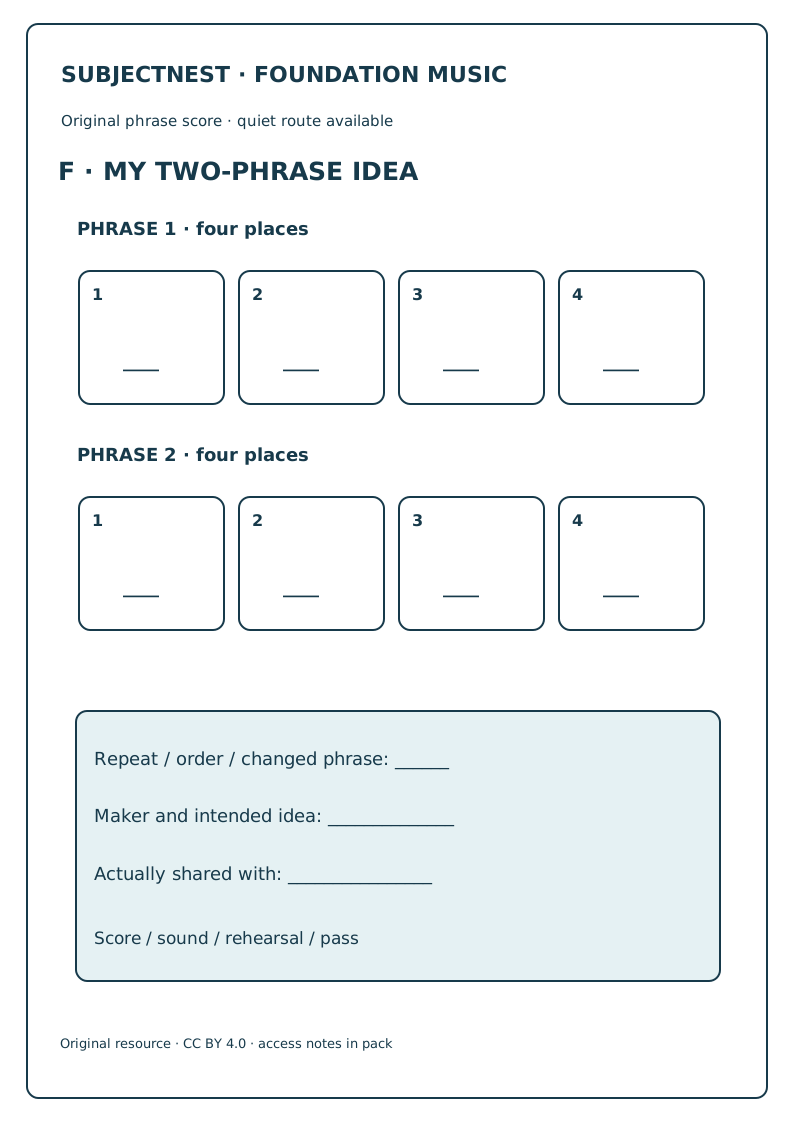
- Welcome · 3 min. Offer two empty groups of four; remind children an original musical choice can be quiet, repeated, reordered or held.
- Model · 4 min. Adult invents
X X – X / X – – Xand says the second phrase changes local count 2 to rest. This model is not the held N check source. - Try together · 5 min. Child tests a different one-cell change or a whole-phrase order swap and points to the divider, keeping four places per group.
- Child choice · 7 min. Child makes a two-phrase score for a neutral paper activity or their own impersonal idea, labels repeat/order/variation and explains intended musical effect. Adult places only child-directed cards; optional sound is separate.
- Notice · 4 min. Check eight numbered places, a readable relation between phrases and child's reason. Record authored choices without inferring a listener's interpretation.
- Close · 2 min. Save the score with its maker for optional sharing tomorrow.
Week 8 · Day 39 · Maker, permission and real sharing
Target/codes: ask a source-grounded question about a selected authentic work if authorised, and choose whether to share an original two-phrase score or approved sound with an actually willing person; AC9AMUFE01 and AC9AMUFP01 only on their respective observed conditions. Prepare: F share log, authentic source slot, child's score.
- Welcome · 3 min. Offer score share with a willing adult, optional comfortable sound, puppet rehearsal or pass; no public solo or recording.
- Model · 4 min. Share the adult's own score with a willing adult. If a real work is permitted and contextualised, introduce its named maker/source; otherwise keep the inquiry on hold.
- Try together · 5 min. Ask “Who made this work?” and “What does the maker or approved source say about its use?” Do not invent cultural interpretation from a pattern.
- Child choice · 7 min. Child chooses whether to present their original score/sound to a real willing person or rehearse/pass. Log exactly what medium was received, with withdrawal allowed.
- Notice · 4 min. Preserve the child's intention, actual share status and genuine source question. Never record an imagined audience response as fact.
- Close · 2 min. Save the sharing decision. The final check tests a new held-start variation.
Week 8 · Day 40 · Fresh Check N: a new held-start variation
Target/codes: independently transform the second of two identical unfamiliar phrases by combining its first two short events into one LONG, retaining its rest and final X; AC9AMUFD01, AC9AMUFC01. Prepare: N public check, N A4, broad fixed cards; keep key closed.
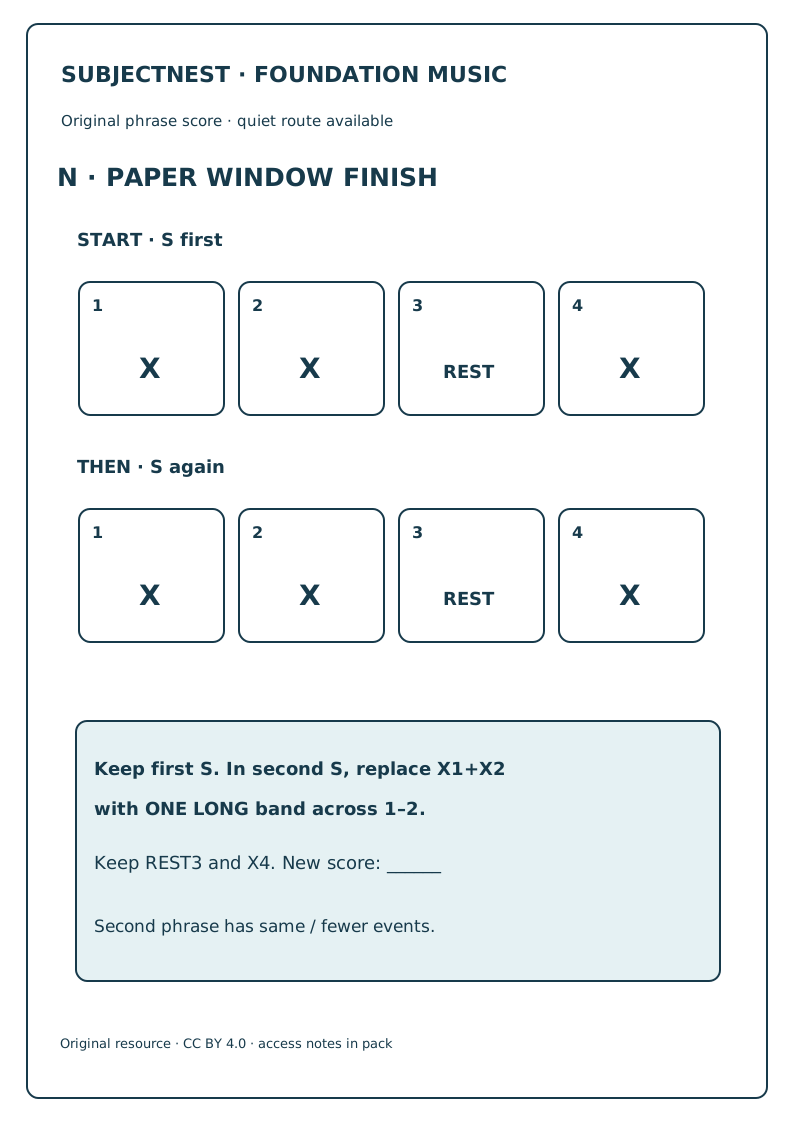
- Welcome · 3 min. Say the new paper music puzzle will guide next teaching; no one needs to play a held sound.
- Access · 4 min. Present two matching phrases S =
X X – X / X X – Xby print, tactile cells or neutral read-aloud. Do not show a LONG answer band yet. - Independent plan · 5 min. Child keeps phrase 1, and in phrase 2 replaces only its first two short X with one LONG spanning local counts 1–2; rest 3 and X4 stay.
- Child response · 7 min. Save first full two-phrase score, location of held band and explanation that the second phrase now has fewer sound events. Optional sound follows independently.
- Self-check · 4 min. Child traces the four numbered places in each phrase and checks phrase 1 unchanged, without receiving an answer hint.
- Close · 2 min. Consult the separate key; arrange later authorised real music and observed accessible sound-making where still needed.