Each session totals 3 + 4 + 5 + 7 + 4 + 2 = 25 minutes. Prepare broad fixed cards and the linked A4 page. Read the three same-target routes for that day and let the child switch or pass. Art choices belong to the child; the adult checks safety and records only observable evidence. These invented diagrams do not replace a school-authorised real artwork encounter. Locally approved material exploration is identified separately; no child must touch, cut, paint, perform, disclose or share publicly.
Week 3 · Day 11 · Same shape, different size
Target/codes: keep an invented triangle's three corners and frame constant, enlarge or reduce its size for a chosen visual focus; AC9AVAFD01, AC9AVAFC01. Prepare: A scale window, one broad small and one broad large triangle, A practice.
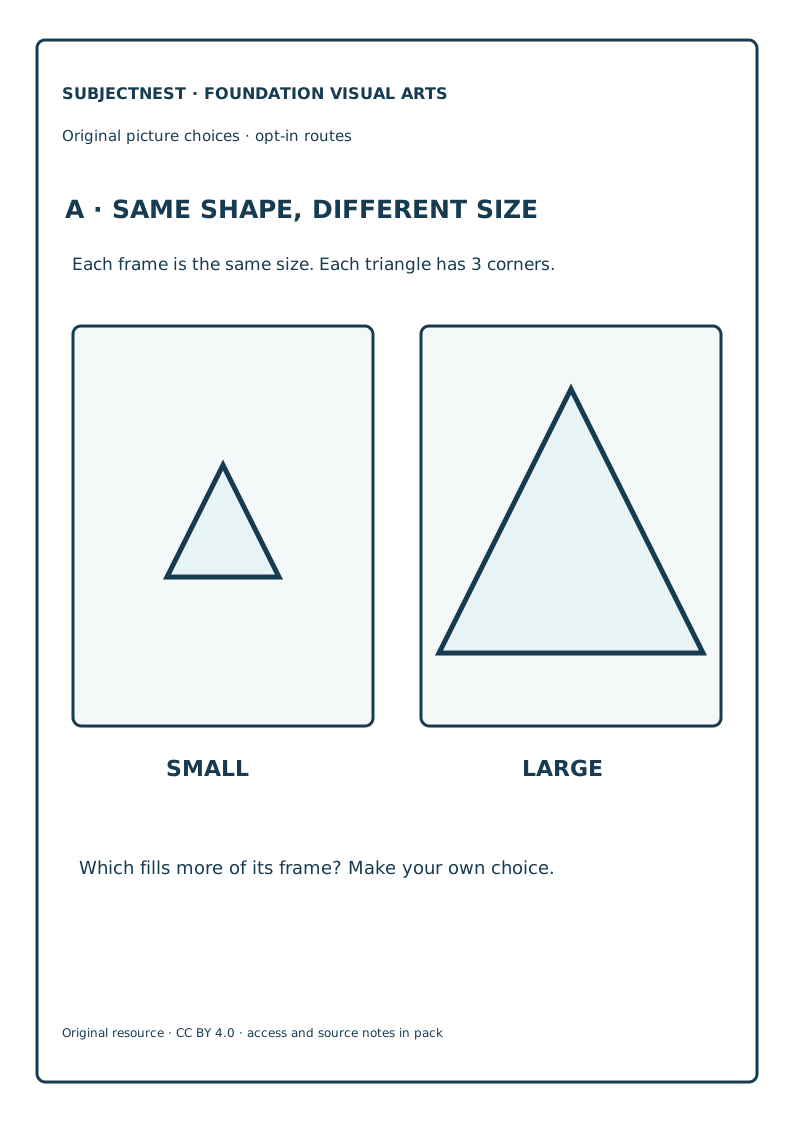
- Welcome · 3 min. Recall a shape can move from the first fortnight; now keep its identity and change only size.
- Model · 4 min. Show two same-size paper frames. Put the small triangle in one and large triangle in the other. Name three corners in each; no child must count aloud.
- Try together · 5 min. Child identifies which takes more of its frame by pointing, AAC, tactile frame/card comparison or words. Ask what stayed the same.
- Child choice · 7 min. Child makes or directs a small or large triangle in an invented library display, choosing what they want a viewer to notice. Offer both candidate layouts; accept another coherent size.
- Notice · 4 min. Record the chosen triangle, frame and child's stated intention. Do not claim an actual viewer looked there.
- Close · 2 min. Keep both frames available; tomorrow a frame can show only part of a shape.
Week 3 · Day 12 · Whole shape or a cropped part?
Target/codes: distinguish a complete invented shape inside a frame from one cut by the frame edge; AC9AVAFD01, AC9AVAFC01. Prepare: B whole/part, large fixed frame with broad oval card, B practice.
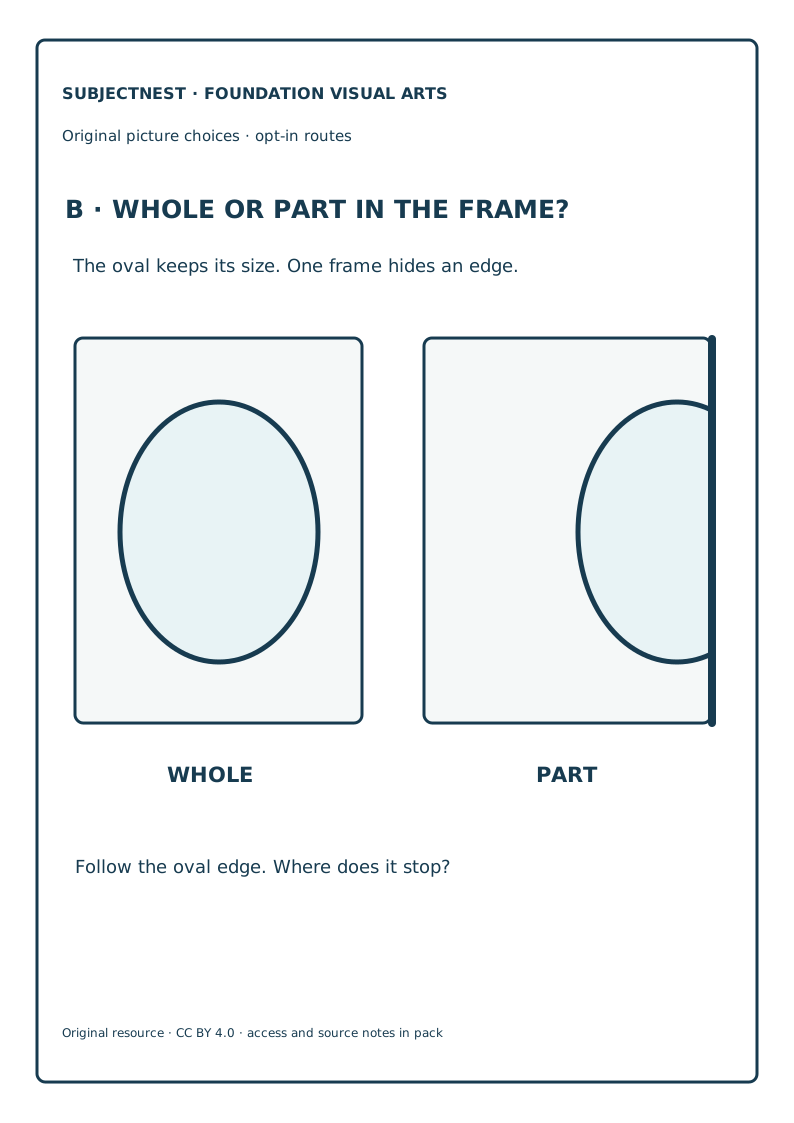
- Welcome · 3 min. Show a whole oval on paper. Ask whether all of its outline can be followed.
- Model · 4 min. Keep the same oval card; slide part behind a broad frame mask. Name which arc is hidden. The frame changes what is shown, not the oval's original shape.
- Try together · 5 min. Child compares whole and part by visual, spoken or fixed tactile outline. An adult moves the card only as directed.
- Child choice · 7 min. Child chooses whole or part for a fictional paper parcel image and makes an outline or directs a masked card.
- Notice · 4 min. Ask “Can we see all its edge?” Record what the image actually shows, separate from an imagined outside part.
- Close · 2 min. Save the frame choice. Tomorrow look at the area that has no drawn shape.
Week 3 · Day 13 · Leave room on purpose
Target/codes: compare a crowded frame with one that deliberately leaves an open region, and explain why; AC9AVAFD01, AC9AVAFC01. Prepare: C open area, broad fixed rectangle and three large invented shapes, C practice.
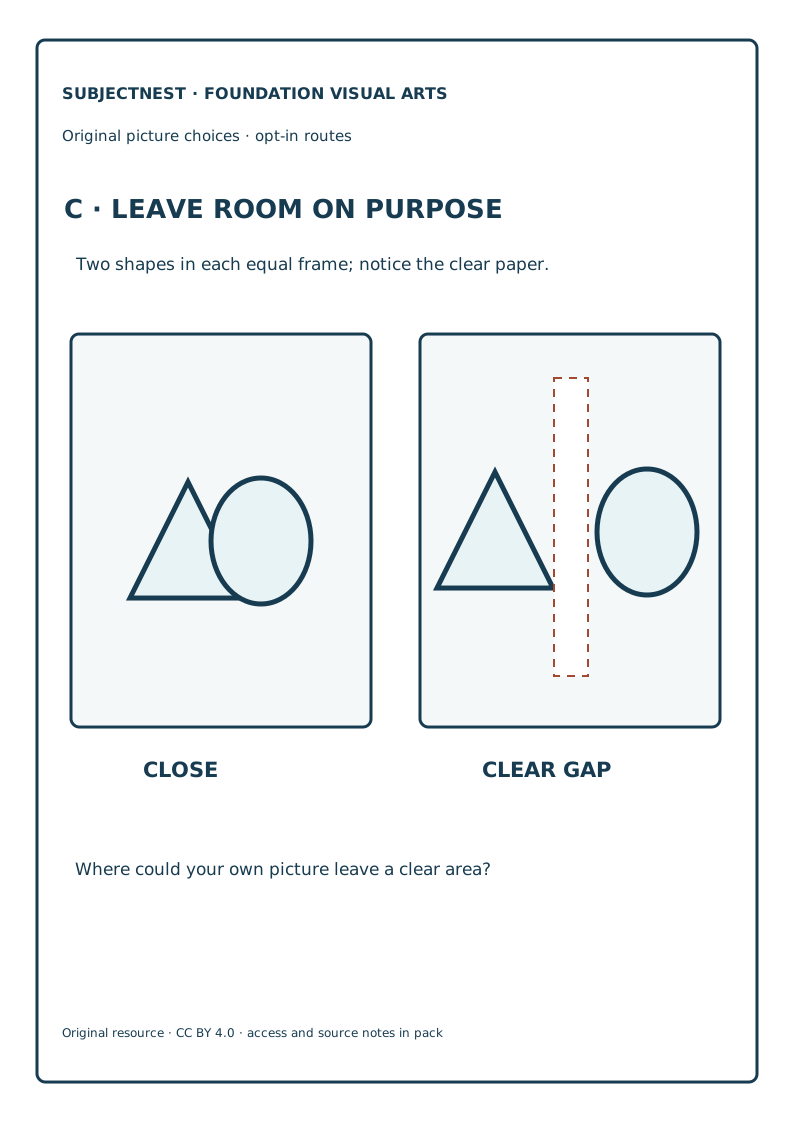
- Welcome · 3 min. Point to an area without a drawn shape on an invented card. Open paper is part of the image plan.
- Model · 4 min. Put the same two large shapes close together, then spread them to leave a broad clear region. Keep shape names and count stable.
- Try together · 5 min. Child names or indicates where a large card could sit without covering either shape. No precise left/right term is required.
- Child choice · 7 min. Child makes an invented menu cover with a clear region for an eventual title or an equally coherent open purpose. A blank title area is a plan, not a printed title.
- Notice · 4 min. Record which region was left open and the child's reason; do not score how much white paper remains.
- Close · 2 min. Keep the chosen arrangement; combine size, frame and open region tomorrow.
Week 3 · Day 14 · Compose a notice image
Target/codes: combine a chosen size or crop with one deliberate open area in an original fictional image; AC9AVAFD01, AC9AVAFC01. Prepare: D image plan, frames and large fixed shape cards, D practice.
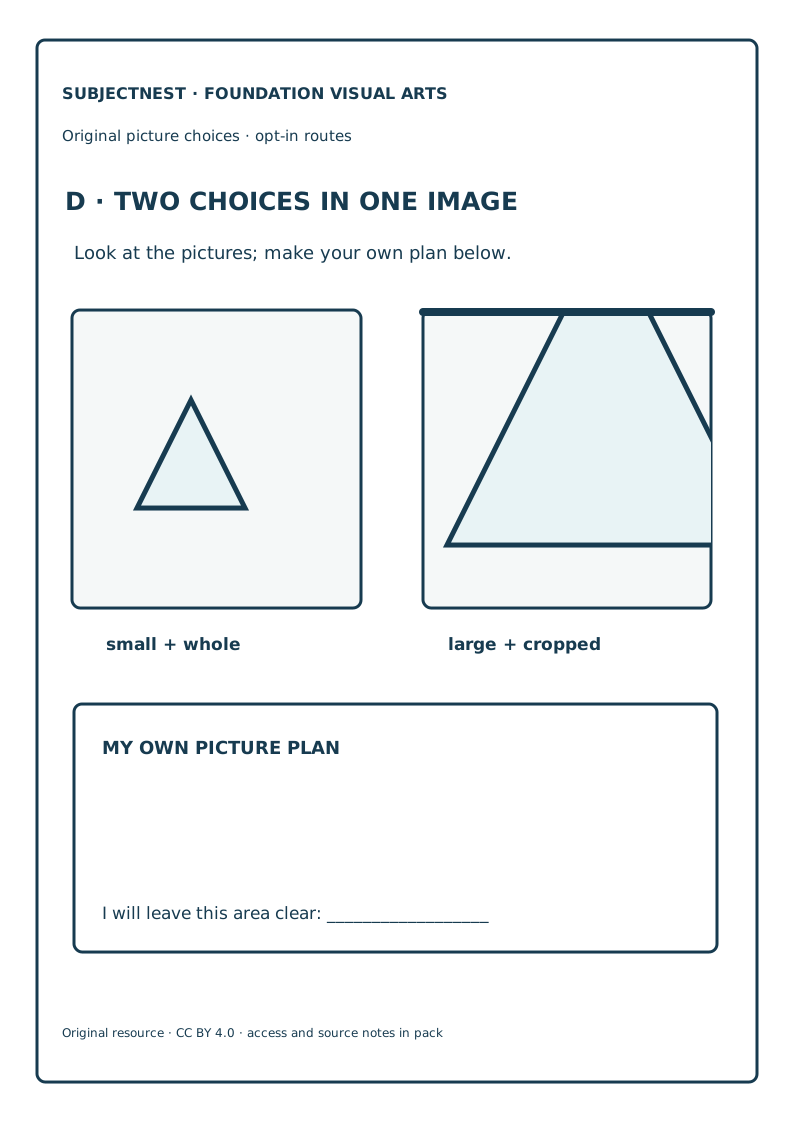
- Welcome · 3 min. Invite a fictional purpose: a paper notice for a quiet reading corner, repair station or shared table. No actual school sign is made.
- Model · 4 min. Use a broad triangle that fills much of a frame while leaving a clear band. Name each decision without assigning a fixed meaning to size.
- Try together · 5 min. Child offers a different combination; adult lays out the two choices and asks what they intended to show.
- Child choice · 7 min. Child draws, arranges or directs an original frame. They may choose small/large, whole/part and a space to leave clear. Record their own purpose.
- Notice · 4 min. Compare the visible result with the child's intention. If a requested open region was covered, invite a revision rather than correct it for them.
- Close · 2 min. Put the image plan away. Tomorrow's fresh check uses a new shape and new constraint.
Week 3 · Day 15 · Fresh Check I: paper shelter emblem
Target/codes: independently change size of a new five-corner form while holding its shape and frame; AC9AVAFD01, AC9AVAFC01. Prepare: public Check I, I A4, broad five-corner card. Keep the teacher key closed until first response.
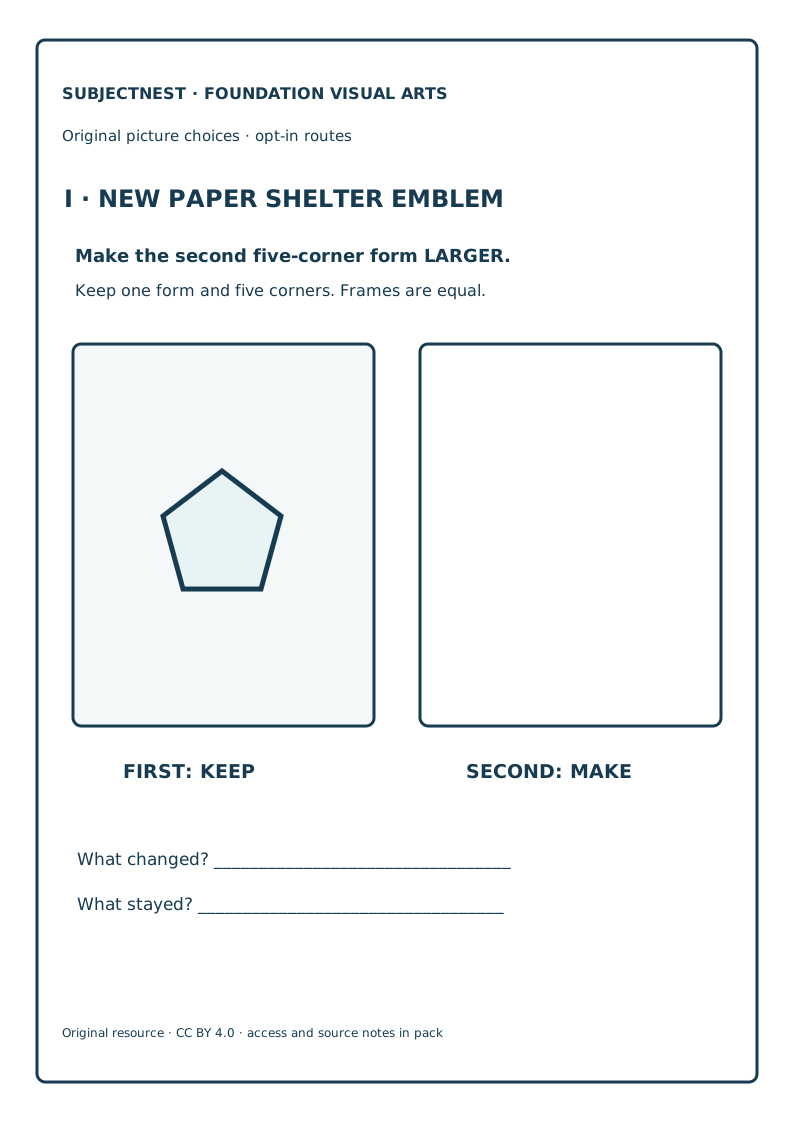
- Welcome · 3 min. Say this is a new picture puzzle to inform the next lesson, not a neatness test.
- Access · 4 min. Give two equal frames: the first has a small five-corner form; the second is blank. Read “make a larger version in the second frame while it keeps five corners.” Do not point to an answer.
- Independent plan · 5 min. Child decides what must stay and what will change using a chosen route.
- Child response · 7 min. Child draws, places or directs the second five-corner form and identifies the change. A neutral adult records the first response without adjusting it.
- Self-check · 4 min. Ask if the form still has five corners and which fills more frame. This is a question, not corrective coaching.
- Close · 2 min. Save the first response; only then open the key. The next two lessons explore marks and materials, a different decision.
Week 4 · Day 16 · Marks made by a process
Target/codes: choose a surface mark and, where safe school approval exists, explore how one physical tool/process makes it; AC9AVAFD01, AC9AVAFC01. Prepare: E mark trials, dry broad marker and/or school-approved large sponge/card edge on fixed paper, material gate, E practice.
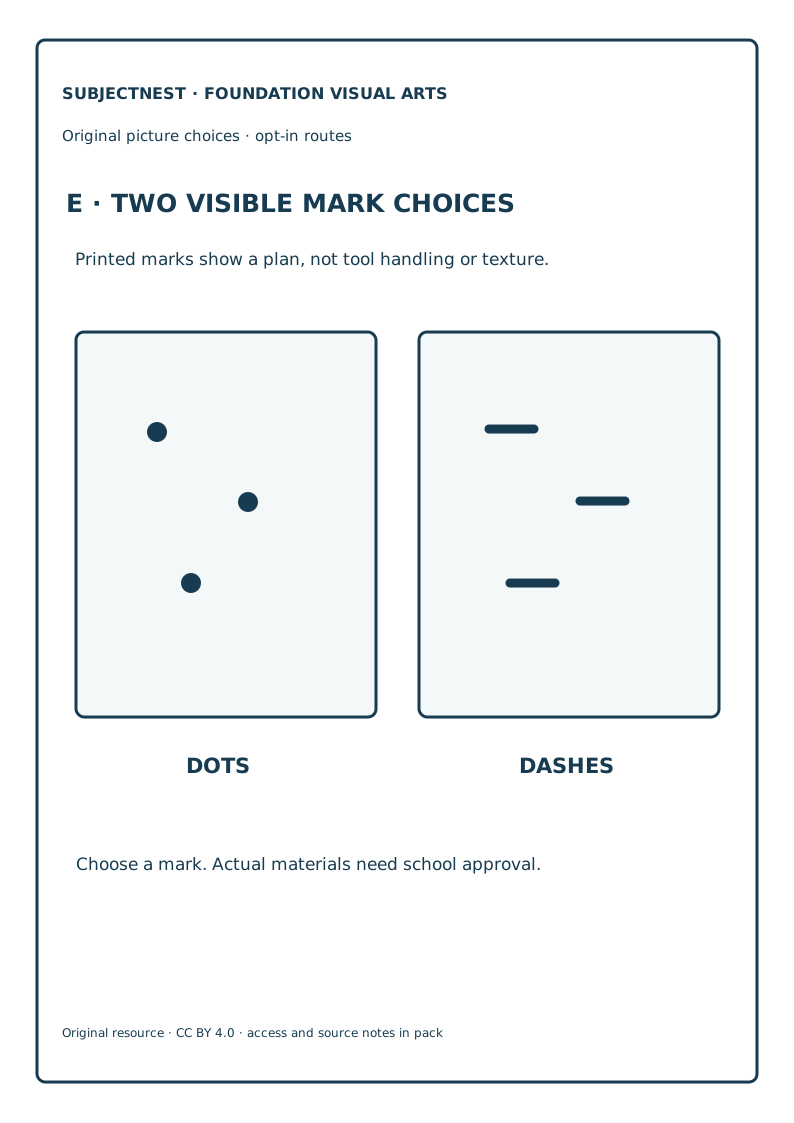
- Welcome · 3 min. Compare an original page of printed dots and dashes. Say those prints show possible marks, not a felt texture or the act of making.
- Model · 4 min. On paper, the educator demonstrates a dry broad pen dab versus short pull. If cleared, show one approved physical alternative; identify exactly which process was observed.
- Try together · 5 min. Child selects a mark by looking, hearing description, AAC or tactile fixed sample if approved. Never press a sample onto skin.
- Child choice · 7 min. Offer actual making with a cleared material, accessible stabilised tool and opt-in handling only after local safety/access approval. Otherwise child draws or directs a paper plan for the mark; record it as planning only.
- Notice · 4 min. Record visible mark choice and, separately, any observed child handling/process. Do not infer tactile perception from labels or a printed proxy.
- Close · 2 min. Clean/put away according to local practice; keep only permitted work. No material route is a prerequisite for tomorrow.
Week 4 · Day 17 · Few marks, many marks
Target/codes: keep an invented shape and marked region fixed while comparing sparse versus dense marks; AC9AVAFD01, AC9AVAFC01. Prepare: F few/many, fixed broad shape with removable mark strips, F practice.
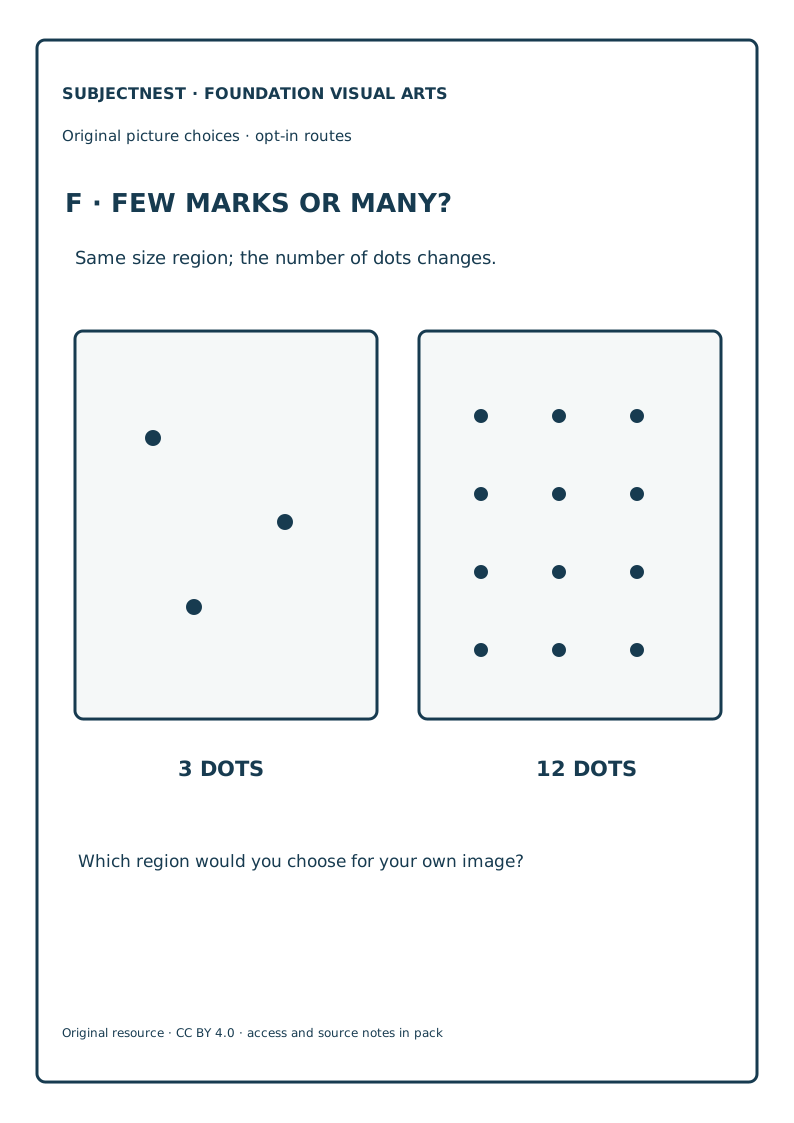
- Welcome · 3 min. Show the same outlined rectangle twice. Both contain dots; one has three, the other has many separated dots.
- Model · 4 min. Explain “few” and “many” as count comparison within the same region. It is a visible/labelled density decision, not a claim of actual roughness.
- Try together · 5 min. Child chooses a card and explains by count, pointing, AAC or fixed raised samples. Exact counting is not the art target.
- Child choice · 7 min. Child draws or directs marks inside an invented paper parcel label, choosing sparse or dense for their own intended effect. Approved actual marking is optional.
- Notice · 4 min. Record which has more marks and what child meant to emphasise. A unique alternative distribution can be valid if explained.
- Close · 2 min. Save both options for a larger composition.
Week 4 · Day 18 · Make and revise a small image
Target/codes: compose an original image with one size/crop/open-space choice and one surface-mark choice, then revise one feature after inspecting it; AC9AVAFD01, AC9AVAFC01. Prepare: D image plan, E marks, F few/many, broad fixed paper.
- Welcome · 3 min. Offer invented prompts: a paper tool box, travelling library card or water refill reminder. A child may invent another non-personal context.
- Model · 4 min. Adult makes a small oval in one frame and a sparse mark region, then increases oval size only. Say which feature changed and what stayed.
- Try together · 5 min. Child directs an alternate one-feature revision using cards; adult names the child's decision without saying the revised work is better.
- Child choice · 7 min. Child makes or directs their own two-feature image, then can keep or revise one feature. Cleared physical materials are optional; paper direction remains valid idea evidence.
- Notice · 4 min. Save before/after if permitted and child's stated intention. Do not turn a functional prompt into a rule about what art must do.
- Close · 2 min. Ask whether the child would like this work available for an actual willing audience next time; a no is enough.
Week 4 · Day 19 · Real maker, real source, chosen sharing
Target/codes: respond to a school-authorised real work through observation and source-stated context; optionally share own work with a willing person; AC9AVAFE01 and AC9AVAFP01 only if respective events occur. Prepare: source slot, G encounter log, a real cleared work/access description if available, child's work if they wish.
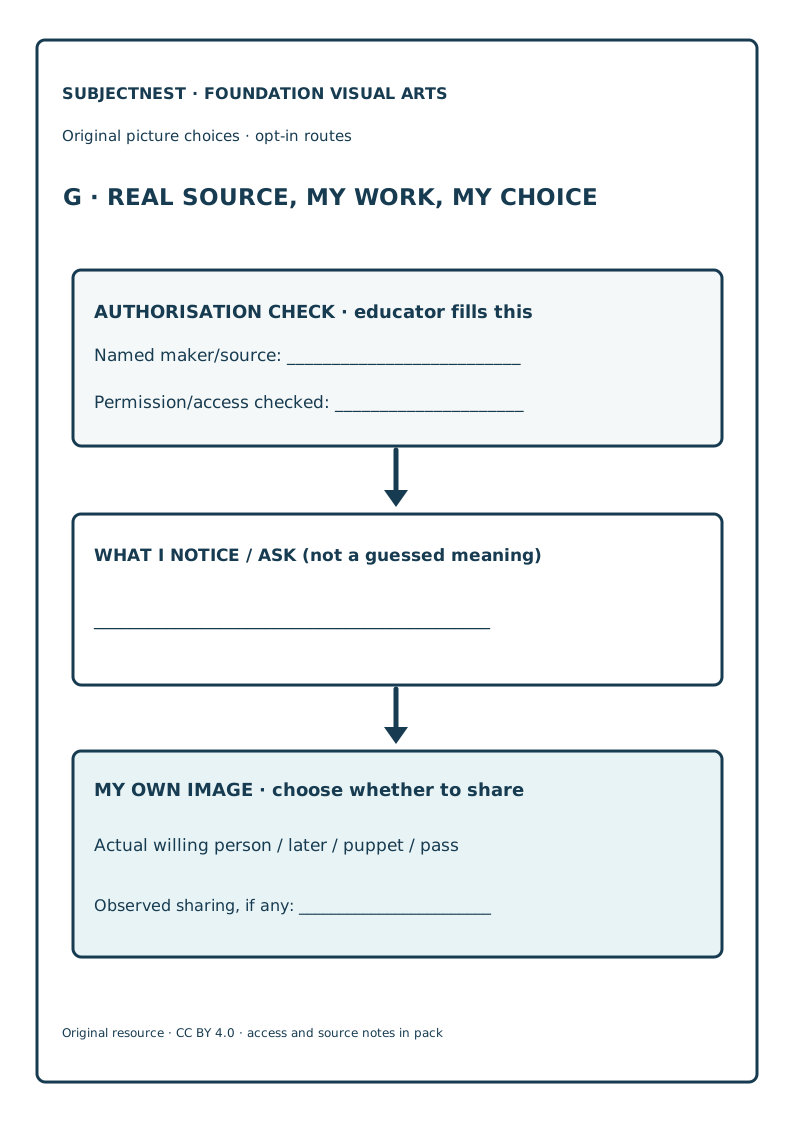
- Welcome · 3 min. Offer observation, quiet description, tactile access only if authorised, or a pass. No child must speak for a maker or disclose family art.
- Model · 4 min. Name the approved real maker/source and one visible or source-stated fact. If no cleared work is present, say the encounter is held and use an unrelated original diagram to practice questions only.
- Try together · 5 min. Ask “What do we actually notice?” and “What does the maker/source say?” Record unknown meaning as unknown.
- Child choice · 7 min. Child responds by drawing, speaking, AAC or directing a description. They may separately show their own image to one actual willing person, plan later sharing, rehearse with a puppet, or pass.
- Notice · 4 min. Log real work and maker if encountered; log actual audience only if sharing happened. Paper puppet rehearsal and planned sharing do not count as actual audience evidence.
- Close · 2 min. Ask whether any chosen work should be retained under school policy. Protect maker and child rights.
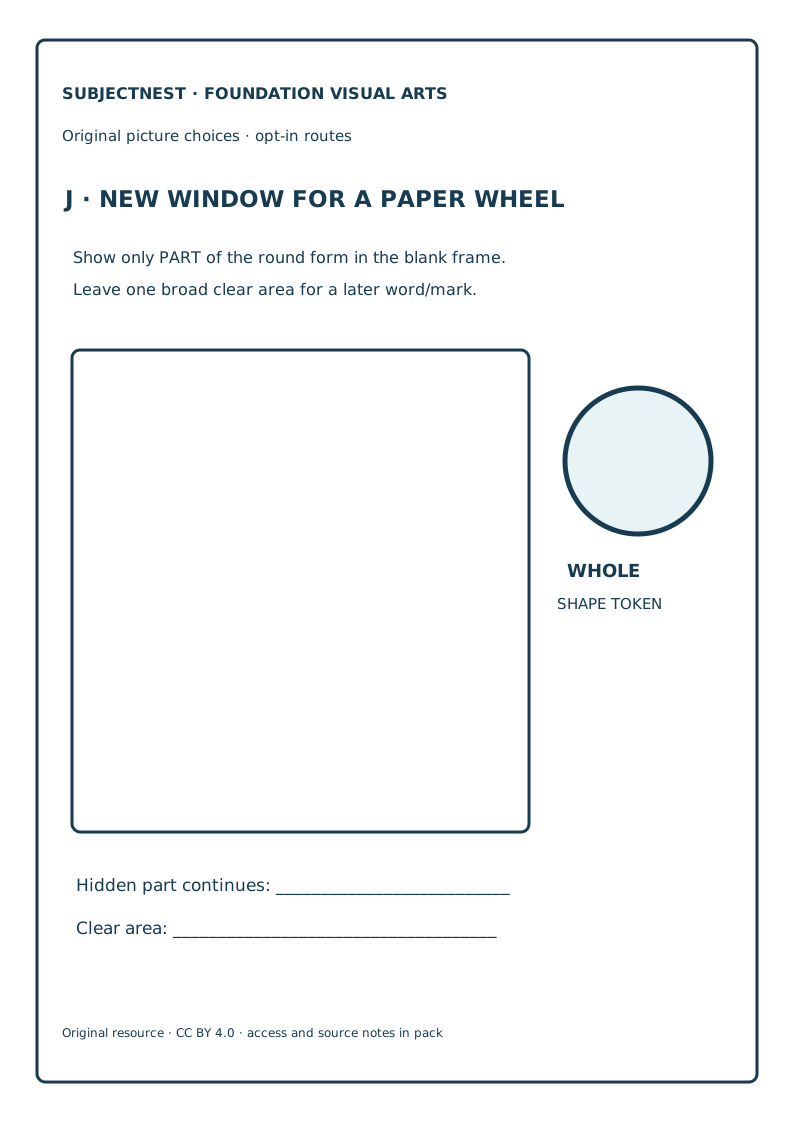
Week 4 · Day 20 · Fresh Check J: window for a paper wheel
Target/codes: independently crop an invented round form at a frame edge and preserve a purposeful open region; AC9AVAFD01, AC9AVAFC01, AC9AVAFP01 only if actually shared. Prepare: public Check J, J A4, broad fixed round form. Keep key closed until first response.
- Welcome · 3 min. Explain the new frame choice is a low-stakes art probe; there is no single beautiful answer.
- Access · 4 min. Present a blank frame and an invented round paper wheel. Read the two conditions: show only part of the wheel at the frame edge; leave one clear region for a possible word later. Do not position the form for the child.
- Independent plan · 5 min. Child decides where the crop and open region will be; they can respond by drawing, directing or fixed tactile cards.
- Child response · 7 min. Child creates or directs the picture and says where the missing continuation would be. Record first response and whether any actual willing person later sees it.
- Self-check · 4 min. Ask “Can we see the whole wheel?” and “Where is the space you kept clear?” Do not reveal the key until after first response.
- Close · 2 min. Keep child-approved work, open key, and plan the next genuine material and real-art encounters where held.