Target: interpret Text T's comma/full-stop imagery and line ending as a literary response, not garden data. Prepare: T and sequence windows.
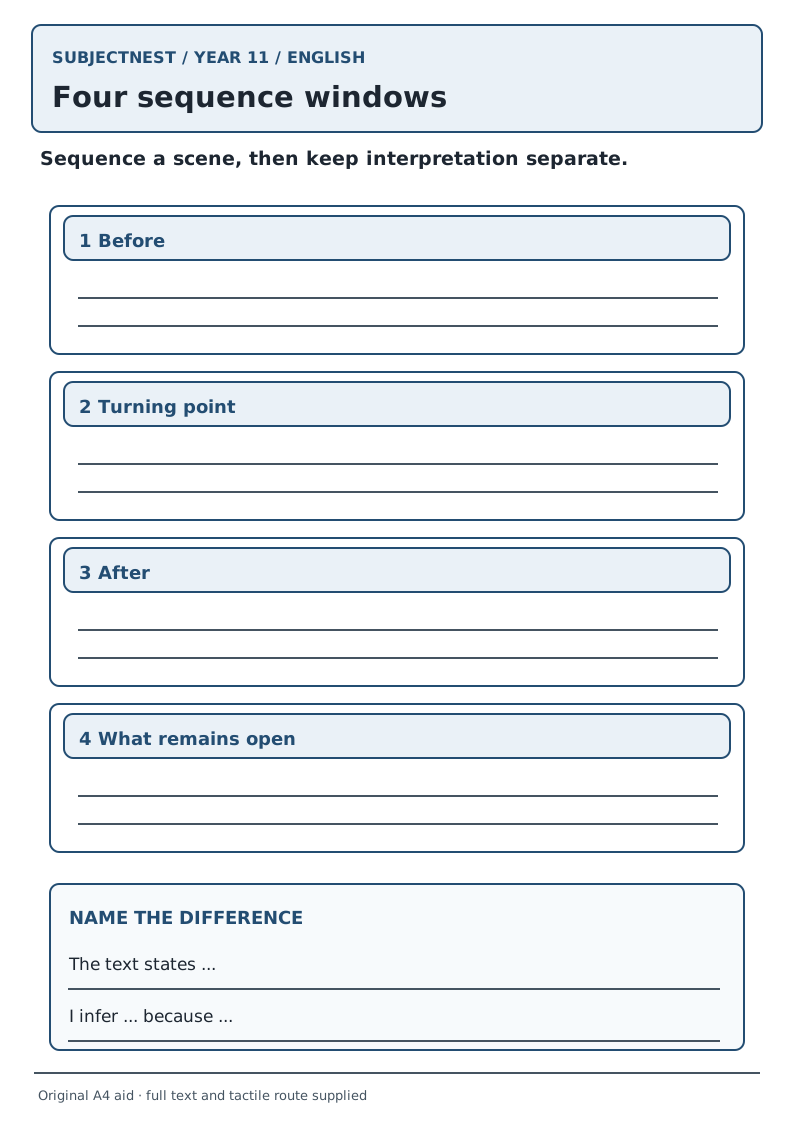
- Launch · 2 min. Show “Six small green commas.” Ask what a comma usually does in a sentence.
- Model · 4 min. Read T twice with natural pauses. Contrast comma/open continuation with full stop/possible ending; note the poem's “I want” belongs to an invented speaker.
- Guided reading · 5 min. Pair T's six/four with S's observation but ask what the poem does differently: it creates a feeling of unfinishedness through punctuation images and line breaks.
- Practice route · 7 min. Choose Day 27 route. Make one interpretation supported by two exact poem details and say what the poem cannot predict.
- Peer audit · 4 min. Partner tests whether the interpretation permits another reading; avoid treating “dark full stops” as botanical proof.
- Exit · 3 min. “Why does morning leave the page open?” Accept a source-backed reading about uncertain later growth, not a scientific forecast.