Target: distinguish a physical hazard process, a mapped hazard zone, exposed assets and an unsupported disaster claim. Prepare: Cards A/B and hazard-to-impact aid.
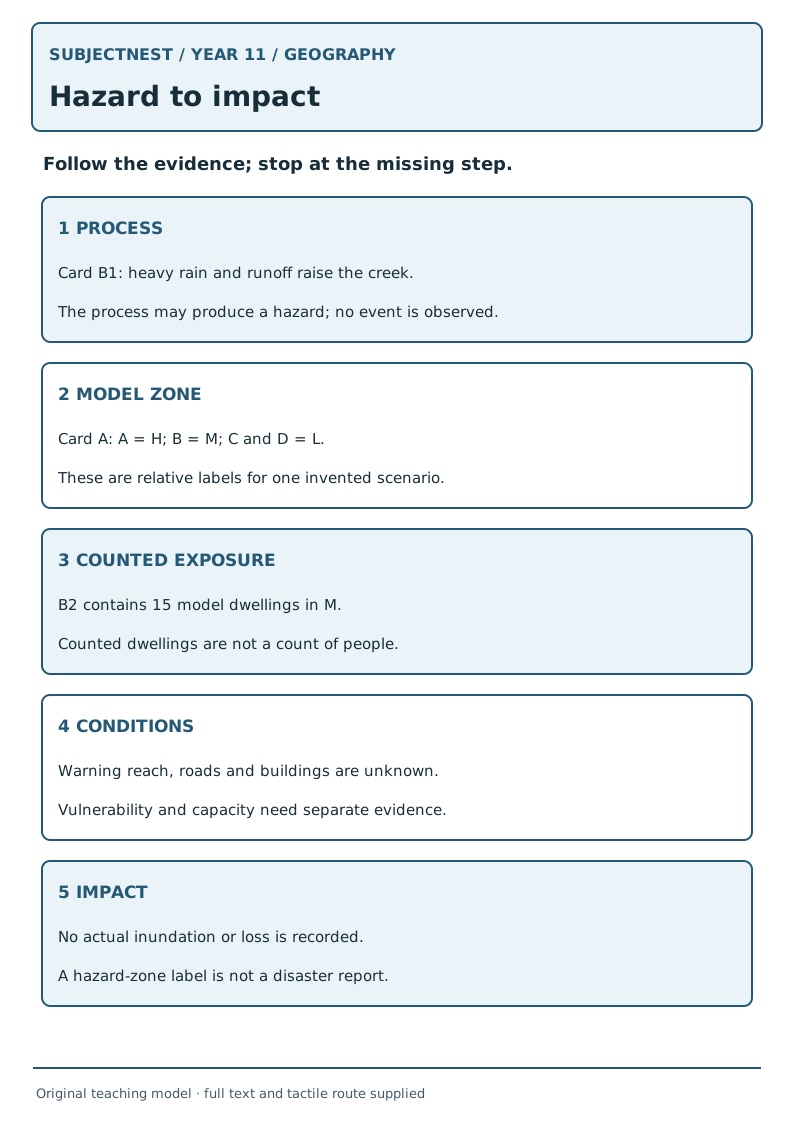
- Launch · 2 min. Show the claim “A1 is H; nobody lives in A1.” Ask which part the card supports and which part jumps beyond its dwelling count.
- Model · 4 min. B1 describes rain/runoff/creek overtopping; A labels potential model inundation. A's zero dwellings in A1 does not establish zero people, roads or ecosystems. No serious disruption has been recorded, so do not call this an observed disaster.
- Guided reading · 5 min. Pairs sort four statements: B1 process, A's M-zone band, 8 dwellings in B1 cell, “all residents evacuated.” Only the first three are supplied; the fourth is invented.
- Practice route · 7 min. Choose Day 1 route. Give one process→zone→exposure chain and one missing consequence datum for A.
- Audit · 4 min. A peer tries “higher hazard means most damage”; learner narrows it to this map's relative label and names missing vulnerability/capacity data.
- Exit · 3 min. “Does H with zero dwellings mean zero exposure?” Key: no; only zero counted dwellings in this teaching card.