Read the original Texts A–D, offer three meaningful learner routes per day, and prepare the source/scope, panel sequence and viewpoint aids or their exact text alternatives. Read-aloud comprehension is valid but is not scored as independent print reading. Keep fresh Days 15 and 20 and the teacher key from learner view until the check. Record first independent response, mode and prompts before feedback. Codes are proposed partial Year 5 links; see the exact crosswalk.
Week 3 · Day 11 — Who said it, and what can they know?
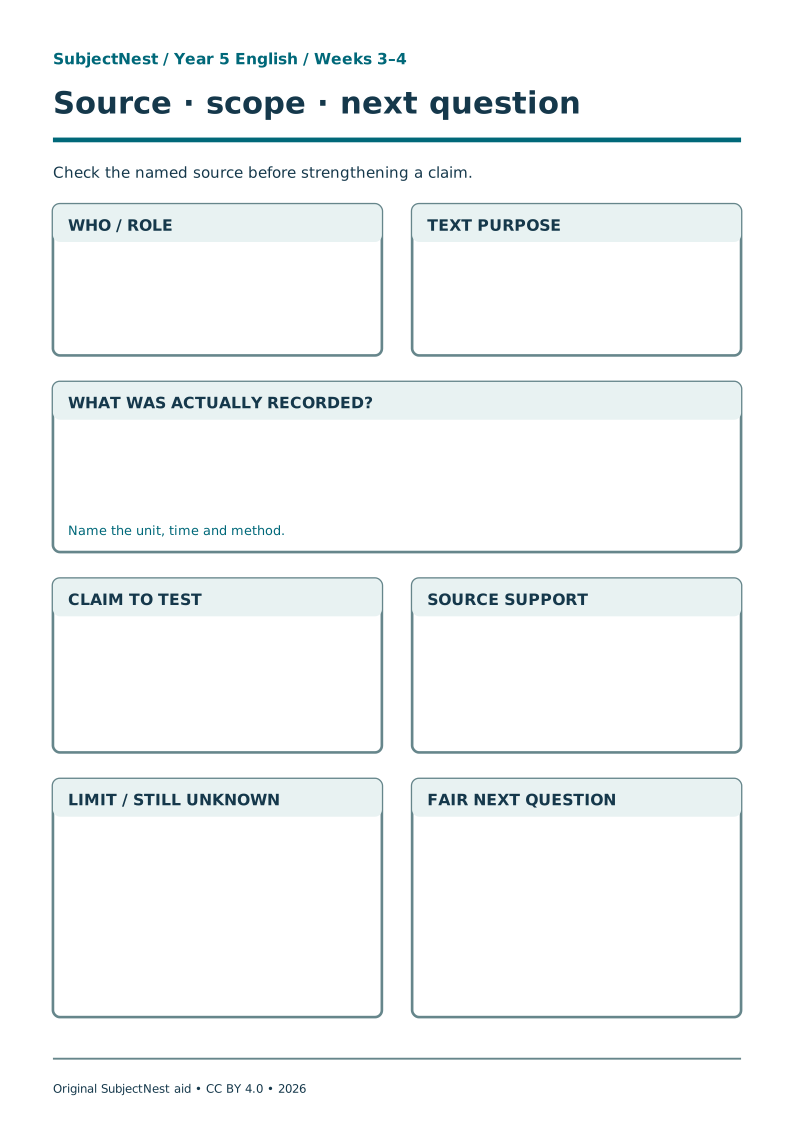
Goal: distinguish a named trial record from an anonymous poster's stronger claim, while noticing text purpose. Proposed codes: AC9E5LA01, AC9E5LA02, AC9E5LA03, AC9E5LY02, AC9E5LY03, AC9E5LY05. Prepare: Text A, source/scope mat, Card 11.
- Word/start · 3 min. Compare
check/recheck; ask whatre-changes. Locate the named team and anonymous poster without treating either label as proof. - Read · 4 min. Learners independently read or hear Text A. Teacher names access mode, then asks for its section headings and the poster's purpose.
- Model · 5 min. Place “27 recorded sleeves” under source says, and “27 visitors wanted a permanent station” under claim outruns source. Compare the team's cautious “could” with the poster's certain “prove”: each word positions its writer differently toward a reader. The team can report its log but cannot guarantee durability from it.
- Choose/respond · 7 min. Learner selects library, sports kit or paper-bike-station version from Card 11 and writes, types, marks or dictates a two-column source/claim distinction with one exact Text A line.
- Partner challenge · 4 min. Partner paraphrases before disagreeing: “I heard you say …; which part of the source supports it?” Save exact first and revised claim.
- Exit · 2 min. Ask: “How many different visitors attended?” Key: the notice does not say. If learner says 27, tomorrow revisit the missing method.
Week 3 · Day 12 — Find the right part before answering
Goal: skim headings, scan for a detail, then confirm meaning in its sentence and source scope. Proposed codes: AC9E5LA08, AC9E5LY04, AC9E5LY05, AC9E5LY09. Prepare: Text A, Card 12, three colour-neutral tab labels PURPOSE/WHEN/RECORDED.
- Word/start · 3 min. Build
read/rereadandorder/reorder;re-means again here. Give the basepaintand have learners spellrepaint, checking the prefix. Do not splitrepairas “pair again”. - Demonstrate · 5 min. Skim Text A's headings for a future-opening question; scan When for the two exact past sessions, then read the whole “No future opening” sentence.
- Guided search · 4 min. Learners find 15 in What was recorded and say what was counted. Contrast a precise sleeve with vague “person”.
- Choose/respond · 7 min. Card 12 offers a bus notice, maker schedule or club poster question. Learner navigates Text A, identifies the heading and quotes/paraphrases one sentence with its limit.
- Confirmation · 4 min. Pair asks “Would searching for 27 alone tell us if repairs lasted?” Learner reopens the relevant section and corrects any overread.
- Exit · 2 min. Name the best heading for a durability question and explain why the source cannot answer it yet. If a learner only keyword-hunts, teach rereading the full sentence tomorrow.
Week 3 · Day 13 — Make the first words guide the reader
Goal: build a cohesive short paragraph with message-first sentence starts and a precise scope limit. Proposed codes: AC9E5LA02, AC9E5LA04, AC9E5LY06. Prepare: Text A, four idea strips, Card 13.
- Retrieve · 3 min. Learners identify
recheckas “check again” and restate one Text A fact without the poster's exaggeration. - Model · 4 min. Write “The two-session trial recorded 27 sleeves.” Begin next sentence “That total …” and point back to the same total; then use “However” to introduce what was not recorded.
- Guide · 6 min. Place strips in order: main message / counted evidence / limit / next question. Move a sentence start from “They…” to “The team…” where the reference is unclear.
- Independent paragraph · 6 min. Choose Card 13 context and compose four sentences: bounded message, exact Text A evidence, limit, possible next step. Use source/scope mat if needed; record scribing.
- Reader test · 4 min. Partner highlights the opening of each sentence and traces what it refers to. Writer revises one confusing start, preserving first version.
- Exit · 2 min. Ask which beginning makes scope clearer: “Everyone found success” or “In these two sessions, the team recorded…” Key: second; no outcome guarantee.
Week 3 · Day 14 — Put the picture in a different place
Goal: explain how order of images changes a reader's first inference without inventing an event. Proposed codes: AC9E5LA07, AC9E5LY05, AC9E5LY06. Prepare: Text B, panel-sequence sheet/cards, Card 14.
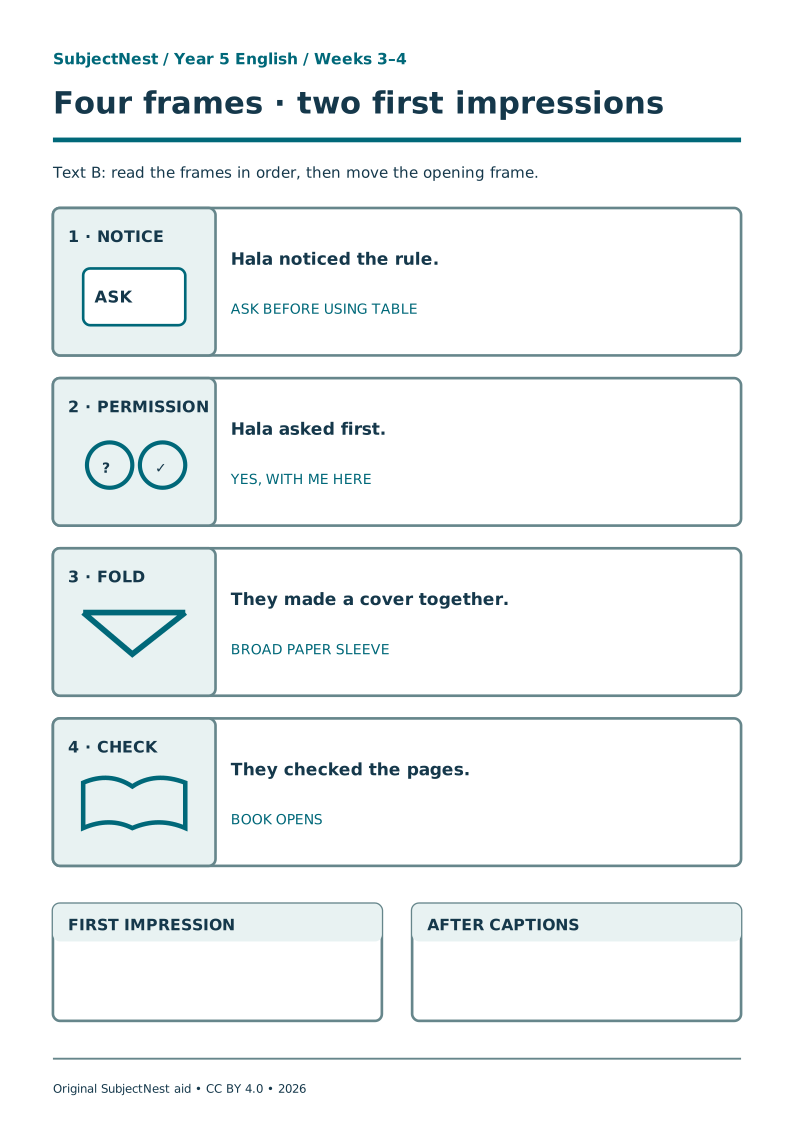
- Look without captions · 3 min. Show/describe Frame 3 first, then Frame 1. Ask what a viewer might infer before all captions arrive; mark inference, not fact.
- Read · 4 min. Read all four exact captions in Text B. Learners identify what happens in each frame; no photograph of classmates is needed.
- Model · 5 min. Lay 1→2→3→4, then 3→1→2→4. Think aloud: opening with folding could make action appear to precede permission, even though later text clarifies it.
- Independent sequence · 7 min. Choose Card 14's book, model bike or sports-equipment scene. Arrange four abstract cards, write two captions and state how changing the first image alters likely meaning.
- Challenge · 4 min. Partner asks what the images do not establish: for Text B, cover lifespan. Learner revises an overclaim if needed.
- Exit · 2 min. Point to the frame that makes permission visible. If “permission happened” was guessed without Frame 2/caption, return to exact evidence.
Week 3 · Day 15 — Fresh notice and visual-order check
Goal: independently navigate an unseen informative source, bound a claim and explain an unseen image-order effect. Proposed codes: AC9E5LA02, AC9E5LA03, AC9E5LA07, AC9E5LY04, AC9E5LY05, AC9E5LY06. Prepare: private Day 15 stimulus, no practice source in sight; Card 15 after check.
- Set up · 2 min. Explain this new fictional source helps choose next teaching. Confirm reading/access mode and keep the teacher key closed.
- Fresh read · 4 min. Learner reads or hears unseen notice and three image descriptions; do not paraphrase its answer-bearing limit.
- Plan · 5 min. Learner independently points to relevant heading, exact observation, unsupported claim and panel order on a blank mat.
- Respond · 8 min. Write/type/dictate a short note: one supported fact, one limitation, one answerable next question and why an altered opening panel changes a first impression. Capture first version.
- Source confirm · 4 min. Learner returns to the source to mark words backing the claim and checks whether any added detail was invented. Record prompting.
- Close · 2 min. Choose component-specific next instruction from separate key. Release Card 15 only after the check.
Week 4 · Day 16 — What did the narrator know?
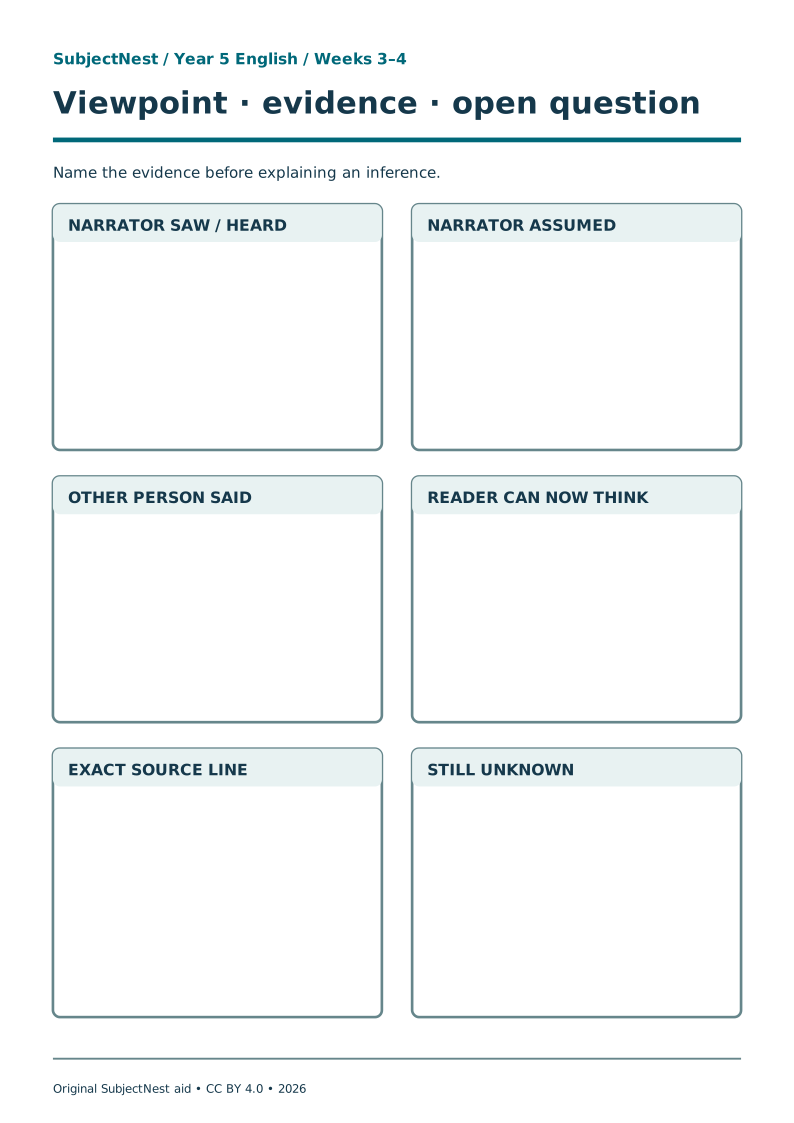
Goal: separate a first-person narrator's observation from inference and consider another viewpoint. Proposed codes: AC9E5LE02, AC9E5LE03, AC9E5LY05. Prepare: Texts C/D, viewpoint mat, Card 16.
- Word/start · 3 min. Compare
tell/retellandview/review; use a plain explanation before terminology. - First reading · 4 min. Read or listen to Text C. Learner records one sentence the narrator directly observed and one meaning they inferred.
- Model · 5 min. Place “Sol held a loose cover” under saw/heard and “Sol wanted me to hurry” under assumed. Read Text D only after this first record.
- Choose/respond · 7 min. Card 16 offers book, bus-stop paper model or sports-equipment queue. Learner explains how Text D alters their view, using a specific line; they may hold a different justified opinion.
- Dialogue · 4 min. Partner paraphrases the other's opinion, then asks which text line led there. Record any change of mind without requiring agreement.
- Exit · 2 min. Ask whether a glance proves Sol's private feeling. Key: no. If the learner treats inference as a reported fact, revisit the two columns tomorrow.
Week 4 · Day 17 — What does the image in a sentence do?
Goal: explain an effect of a simile, metaphor or personification using exact story words and a reader response. Proposed codes: AC9E5LE02, AC9E5LE04, AC9E5LY05. Prepare: Text C, three short device strips, Card 17.
- Word/start · 3 min. Revisit
reread, then reread only the queue, clock and pebble lines. Ask what is literal before naming a device. - Model · 4 min. “The queue curled like a ribbon” compares shape/movement; it does not make a real ribbon. Name simile and explain how it helps picture a long winding line.
- Guide · 5 min. Contrast “The clock nudged us onward” (personification) with “my worry was a pebble” (metaphor). Learners identify the literal situation each figurative phrase changes.
- Choose/respond · 7 min. Card 17 offers station line, maker shelf or game-field boundary. Learner selects a story phrase, explains its effect in their own terms and tests one alternative literal wording.
- Other reader · 4 min. Partner shares a different effect a phrase had; learner cites a line and responds respectfully rather than memorising one approved feeling.
- Exit · 2 min. Ask which phrase actually describes a queue rather than proving Sol's feeling. If devices are labelled but effects are missing, prompt “What picture does it make?” next lesson.
Week 4 · Day 18 — Give a sentence enough detail, then stop
Goal: build a precise expanded noun group and a complete complex sentence without importing a feeling as fact. Proposed codes: AC9E5LA05, AC9E5LA06, AC9E5LY06, AC9E5LY09. Prepare: Text C, movable clause strips, Card 18.
- Word/start · 3 min. Build
write/rewrite; learners spellrewritefrom its known base and check the retained letters. Ask ifrepairfollows the same transparent split (not taught as such). - Model · 5 min. Expand “cover” to “Sol's loose book cover”, tracing each detail to Text C. Reject “Sol's angry cover” as a claim about feeling, not sourced description.
- Clause guide · 4 min. Join dependent “Because the pages could fall” to main “Sol pressed the cover closed.” Move the dependent clause after the main and discuss which message now comes first.
- Choose/respond · 7 min. Card 18 offers paper book, model timetable or sports prop. Learner writes one supported expanded noun group and one complete main-plus-dependent sentence about a chosen source detail.
- Peer edit · 4 min. Peer removes the dependent clause; if the remaining main clause cannot stand, learner repairs it. Check every new detail against source.
- Exit · 2 min. Ask if “Because Sol looked down.” stands alone as the full intended explanation. Key: it is dependent/incomplete here; looking down alone does not establish motive.
Week 4 · Day 19 — Write a scene another reader can question
Goal: create/edit a short original viewpoint scene using purposeful image order, dialogue and a bounded inference. Proposed codes: AC9E5LA07, AC9E5LE05, AC9E5LY02, AC9E5LY06, AC9E5LY07. Prepare: Text C/D for reread, blank three-panel card and Card 19.
- Set audience · 3 min. Learner chooses a book-repair, garden-sign or game-equipment scene and a consenting small audience. State that invented character voices are fictional.
- Model · 4 min. Teacher sketches observed action, narrator assumption, later clarification in three panels; a caption order can hide or reveal the misunderstanding.
- Plan · 5 min. Learner maps one character's limited viewpoint, one exact observation, another possible explanation and a short quoted line with punctuation. Try a figurative and a plain version of one image, then choose the one that better serves the scene.
- Create · 7 min. Write/type/dictate 5–7 sentences or a comparably developed multimodal sequence with at least one deliberately expanded description; keep an independently authored first version.
- Share/edit · 4 min. Rehearse a brief version, then deliver it to a consenting listener with panels and a pace/volume or AAC timing chosen for that audience. Listener paraphrases known versus assumed and asks one clarifying question; writer changes a caption, sentence opening or dialogue for meaning.
- Exit · 2 min. Learner names which line or frame makes the viewpoint limit clear. Record actual spoken-presentation features only if delivery occurred; other communication modes remain valid work.
Week 4 · Day 20 — Fresh literary viewpoint check
Goal: independently interpret a new narrator, explain one figurative effect and create a source-faithful alternate viewpoint. Proposed codes: AC9E5LE02, AC9E5LE03, AC9E5LE04, AC9E5LE05, AC9E5LY05, AC9E5LY06. Prepare: private Day 20 story and separate key; Card 20 after.
- Welcome · 2 min. Explain that a different invented story checks the reading/writing moves, not a learner's feelings or lived experience.
- Fresh read · 5 min. Learner reads or hears story once and may reread; record reading access, no answer-leading gesture.
- Plan · 4 min. On blank viewpoint mat, child notes one observation, narrator assumption, later clarification and a figurative phrase.
- Independent response · 8 min. Explain how the narrator's view shaped first interpretation; explain one phrase's effect; create 4–6 sentences or equivalent panels from the other character's plausible source-bound perspective. Save first version.
- Source check · 4 min. Learner marks exact lines supporting claims and revises if they choose; keep initial and revised evidence separately.
- Close · 2 min. Use teacher key to select next component-specific lesson. Offer Card 20 practice after the check, with a different story.
No single response certifies Year 5 English. Use several modes and samples; give feedback about the specific reading, reasoning or composition move seen. Original SubjectNest lessons © 2026 NeuroForgeIO Pty Ltd, CC BY 4.0. Credit, link and indicate changes.