Teacher draft. Ten 25-minute scripts continue the taught print, oral comprehension and child-controlled composition from Days 91–100. Week 21 uses exact descriptive words and one reason while children examine original paper art. Week 22 asks children to listen to, give and check a two-step route on a fictional paper map. This is one fortnight of a larger Foundation program, not a whole-year course or a reading-age test.
| Open | Classroom use |
|---|---|
| Daily scripts | Model, guide, independent attempt, response and next move for Days 101–110. |
| Teacher source texts | Two original adult-read texts, controlled child print inventory and an exact text alternative for the aid. |
| Learner cards | Clean reading and response prompts without the teacher's answer keys. |
| Descriptor and direction mat | Original A4 landscape vector; text equivalent in materials. |
| Assessment | Day 105 and held-out Day 110 checks, keys, observation fields and next teaching moves. |
| Week 21 art/shape guide and Week 22 route guide | Separate optional integrated evidence. |
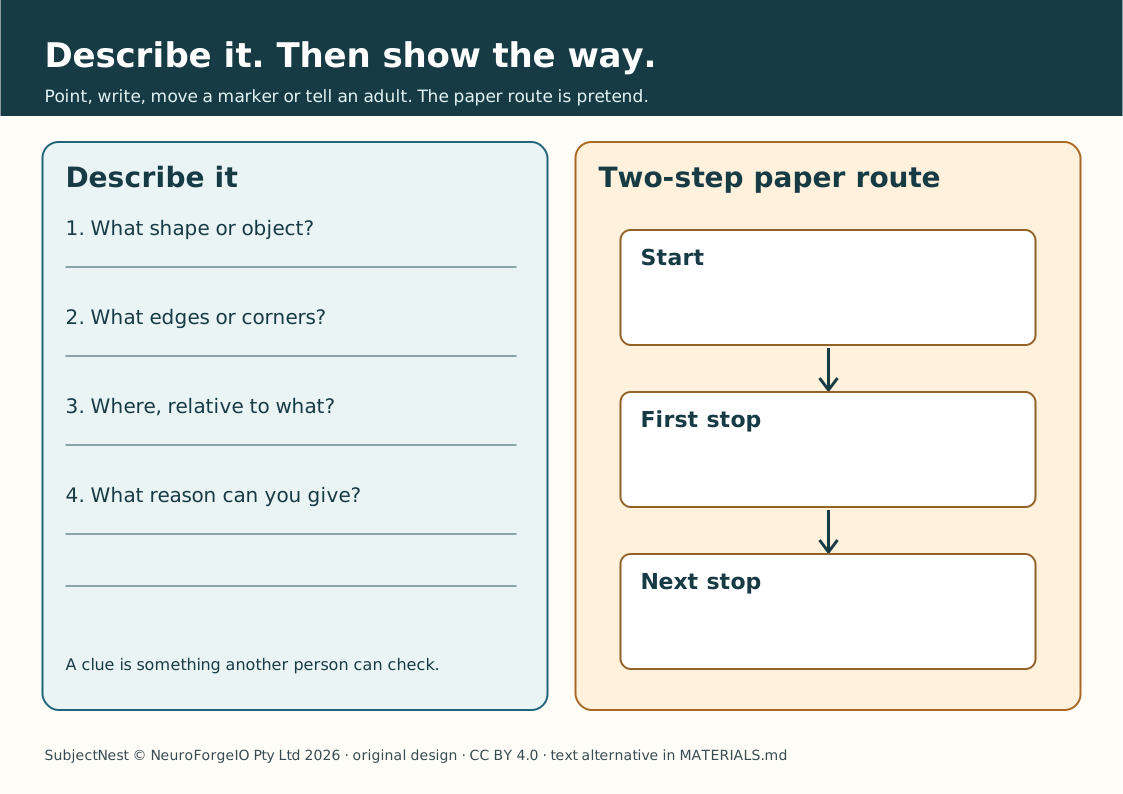
Reading boundary. No new letter–sound link is introduced here. First show map, mat, cap, cup, red, ten, see, play and the short child lines without a picture; use only graphemes and high-frequency words actually taught to this learner. Revisit a missed link explicitly before a later attempt. The adult story vocabulary (curved, corner, between, beside) is for listening and oral use; never ask a child to decode the adult story as if it were controlled print. An image can help check meaning after the first reading attempt. A read-aloud supports comprehension but does not establish independent decoding.
Curriculum proposal. This fortnight samples ACARA v9 Foundation English AC9EFLA07, AC9EFLA08, AC9EFLY02, AC9EFLY04, AC9EFLY05, AC9EFLY06, AC9EFLY07, AC9EFLY10 and AC9EFLY13. Codes and year verified against the official ACARA v9 workbook, retrieved 29 September 2026; pinned workbook SHA-256 db446882d2c00cf7c085a03e250e2442fda6c44011fc114680c46c1dc7a822c3. Each code is a partial teaching link, not a claim of achievement, endorsement or state adoption. Check the locally applicable syllabus and individual taught sequence. The model–guide–try–respond pattern is informed by AERO's early literacy guidance and monitoring progress; those sources do not evaluate this pack.
Access and privacy. Offer plain/large print, tactile or moveable letters, spoken description, child-directed adult placement, speech, sign, AAC, drawing, typing and a quiet private response. Ask the learner what helps; do not assign a fixed learning-style label. Record the exact first response, adult cue and access route. If a route blocks valid evidence, mark not observed and arrange another. No home address, real route, learner photo, public performance, translation or recorded voice is required. Keep child records in the school's approved private system.
Original texts, prompts and SVG © 2026 NeuroForgeIO Pty Ltd, SubjectNest, CC BY 4.0. Credit SubjectNest by NeuroForgeIO Pty Ltd, link the licence and indicate changes. ACARA and AERO material retains its own terms. Human educator, local syllabus, access and classroom timing review are pending.