Teacher draft, 29 September 2026. Week 27 asks how an informative label can name an observed object property without inventing a use. Week 28 practises asking a consent-based question, listening and reporting a fictional source's answer without changing it. Ten distinct 25-minute scripts, original adult text and print inventory, clean choice cards, separate teacher-held checks/keys, an A4 fact/question/report aid with exact text/tactile alternative, and source/rights/role review support an educator. The Week 27 and Week 28 integrated guides offer five 35-minute blocks each.
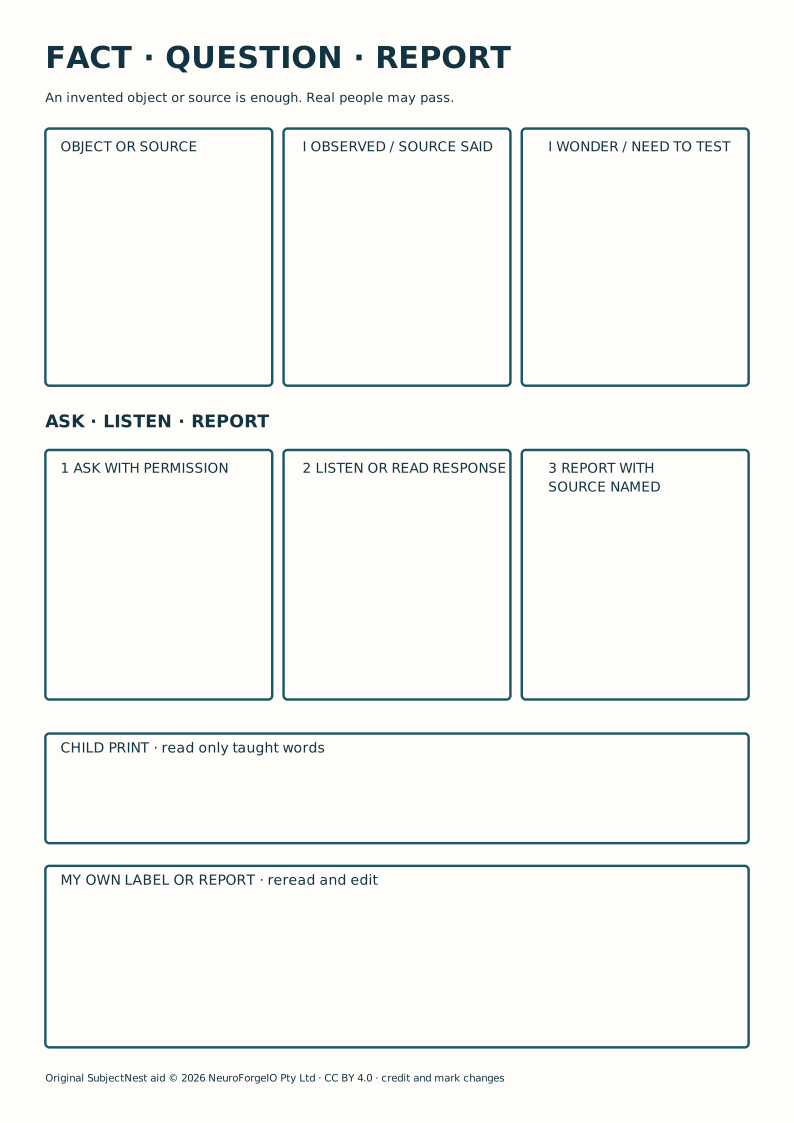
Print boundary: Review only letters and words established by the school for each child. The child lines use earlier selected single-letter CVC and familiar A/a, I, is, on, in, can, see; see requires its previously taught ee link. An adult reads rich labels, interview scripts and any untaught child line aloud without scoring decoding. Child-controlled oral/AAC description and print are separately recorded. We do not impose a national order of phonics.
Proposed national links: AC9EFLA07 (image/word contribution), AC9EFLY01 (purpose of familiar informative text), AC9EFLY02 (listening interaction when actually observed), AC9EFLY04 (taught child print), AC9EFLY05 (understand heard/viewed text), AC9EFLY06 (shared editing when actually done), AC9EFLY07 (short peer report by voice when actually delivered), AC9EFLY10/12/13 (oral sounds, CVC and child spelling when observed). Exact Foundation Year wording and row numbers are in the source review against the official Australian Curriculum v9 workbook, downloaded 29 September 2026, SHA-256 db446882d2c00cf7c085a03e250e2442fda6c44011fc114680c46c1dc7a822c3. Links are partial, not achievement or authority endorsement.
Privacy and access: The default interviews use teacher-performed fictional respondents. A real interview is optional only with freely given consent, a pass route, a neutral object question, no names or private details, and school storage/retention rules. A learner never has to reveal family, culture, home, diagnosis, language or personal preference. Speech, sign, AAC, pointing, tactile objects, enlarged print and child-directed scribing are available. Mark which communication feature was actually observed; alternative modes are full participation, but do not silently claim peer voice evidence. No recording, upload or public display is required.
Original SubjectNest scripts, cards, stories, checks and vector aid © 2026 NeuroForgeIO Pty Ltd, CC BY 4.0. Credit, link and indicate changes. ACARA retains its own terms. Human educator, state syllabus, access, cultural and classroom trial review pending.