Each session is 3 + 4 + 5 + 7 + 4 + 2 = 25 minutes. The repeated four numbered beat places inside each phrase help children plan a musical relationship; they are not a demand for exact timed performance. Offer three same-target routes, tactile/text sheets, broad fixed X/REST cards, AAC and neutral adult scribing. A child may pass, stop or change route. All optional sound requires local listening/volume review and consent. Silence preserves a compositional planning target; it cannot evidence hearing or playing.
Week 9 · Day 41 · A phrase can call and echo
Target/codes: give two original four-place phrases roles and make an exact echo, T | T = X REST X REST / X REST X REST; AC9AMUFD01, AC9AMUFC01. Prepare: A call card, Practice A, two wide four-cell strips and role icons.
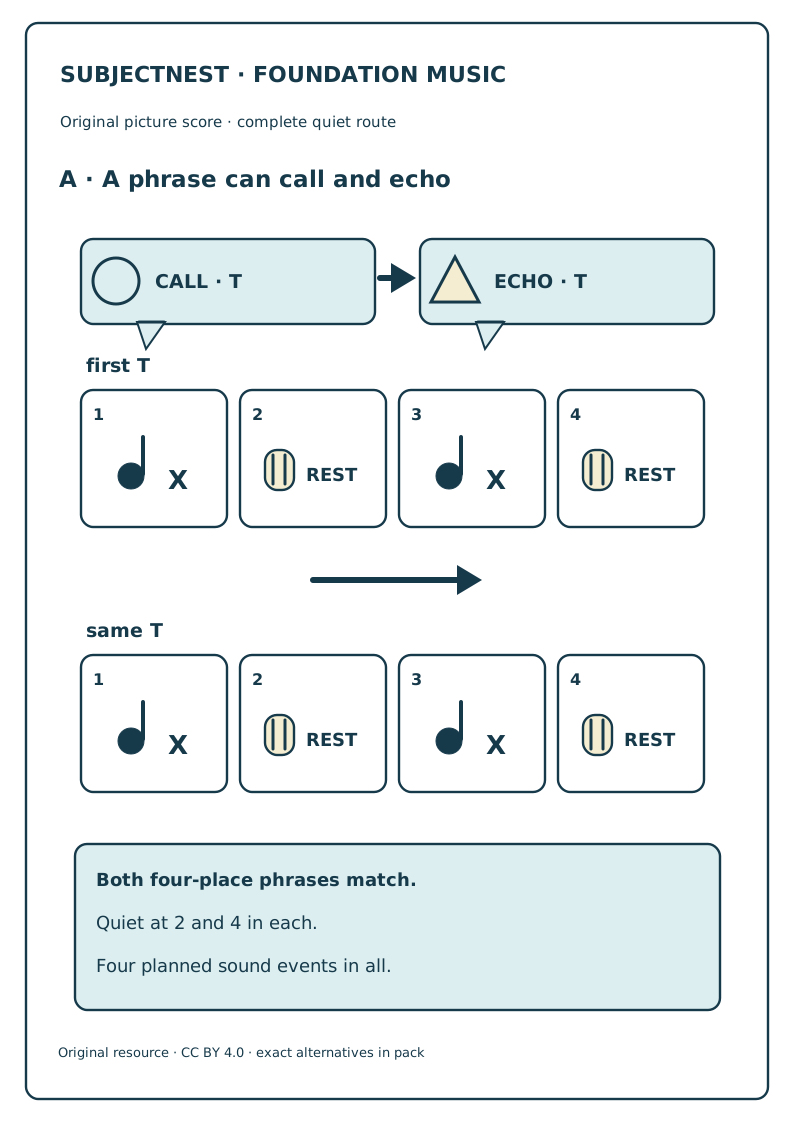
- Welcome · 3 min. Show an inviting speech-bubble picture and explain that “call” and “answer” are labels for two positions in this invented musical plan; no child must call aloud.
- Model · 4 min. Lay T = X REST X REST under counts 1–4. Put another whole T in the reply position. Point to the phrase divider and say the reply echoes every mark.
- Try together · 5 min. Child compares the two four-cell groups: local 1 and 3 have X, local 2 and 4 rest, eight beat places and four planned events total.
- Child choice · 7 min. Child chooses a fictional paper scene or neutral plain pattern, assigns role icons, and directs an exact echo using cards, marks or optional approved sound.
- Notice · 4 min. Record the full score, role order and the child's intention. A paper echo is not evidence that either phrase was heard or played.
- Close · 2 min. Keep the first T unchanged; tomorrow one answer mark can change.
Week 9 · Day 42 · Change just one answer mark
Target/codes: keep first T unchanged and turn its second phrase local X3 to REST, T | T′ = X REST X REST / X REST REST REST; AC9AMUFD01, AC9AMUFC01. Prepare: B change card, Practice B, broad rest tile.
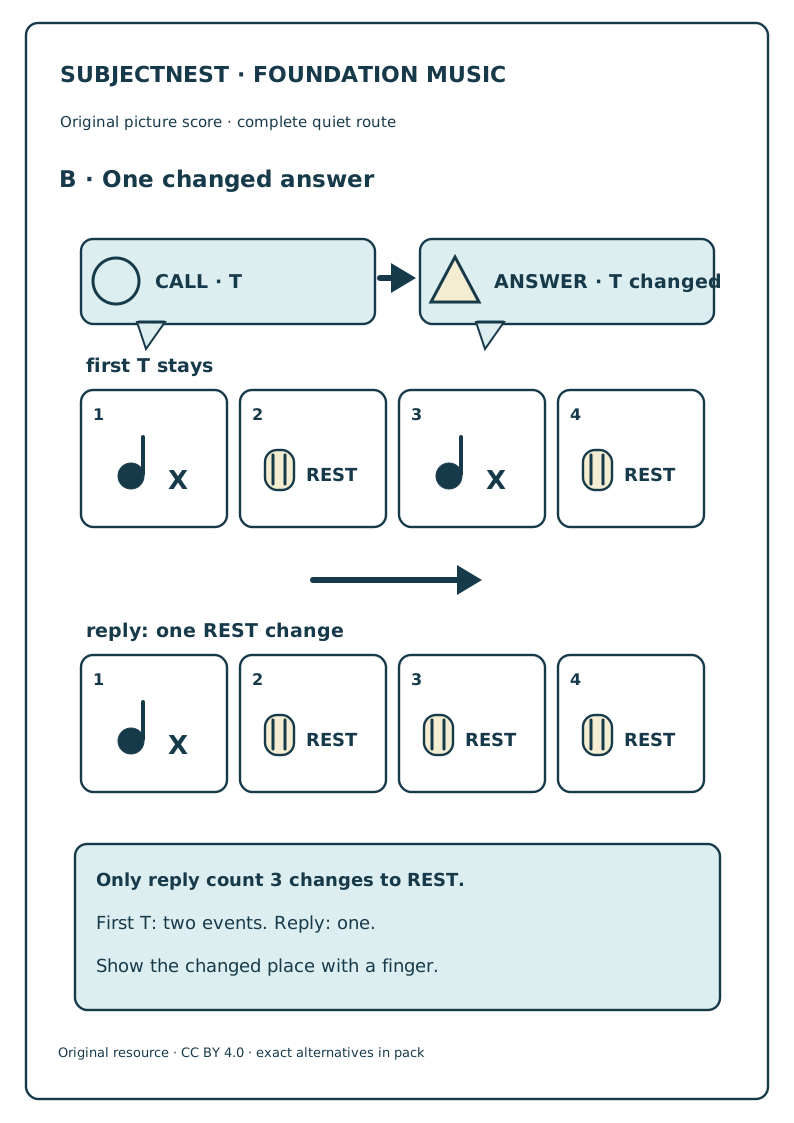
- Welcome · 3 min. Revisit two matching T cards and ask where a response can differ while the first phrase stays.
- Model · 4 min. Replace only the second phrase's local count 3 X with REST. Trace unchanged counts 1, 2 and 4 in both cards; phrase 2 has one event, not two.
- Try together · 5 min. Child names the only changed cell and shows eight beat places, two events in call, one in answer.
- Child choice · 7 min. Child makes the one-mark change in a paper garden, puzzle-station or neutral score and states an intended quieter or shorter musical plan, with no claim about a listener's feeling.
- Notice · 4 min. Save first attempt, changed location and explanation. Optional actual sound, if chosen, is observed separately.
- Close · 2 min. Put the two wide cards in call-then-answer order for a safe hand-off plan.
Week 9 · Day 43 · Who takes each turn?
Target/codes: use two role symbols to assign first T and then T′ while keeping their marks and sequence; AC9AMUFD01, AC9AMUFC01. Prepare: C turn arrow, Practice C, large circle/triangle cards.
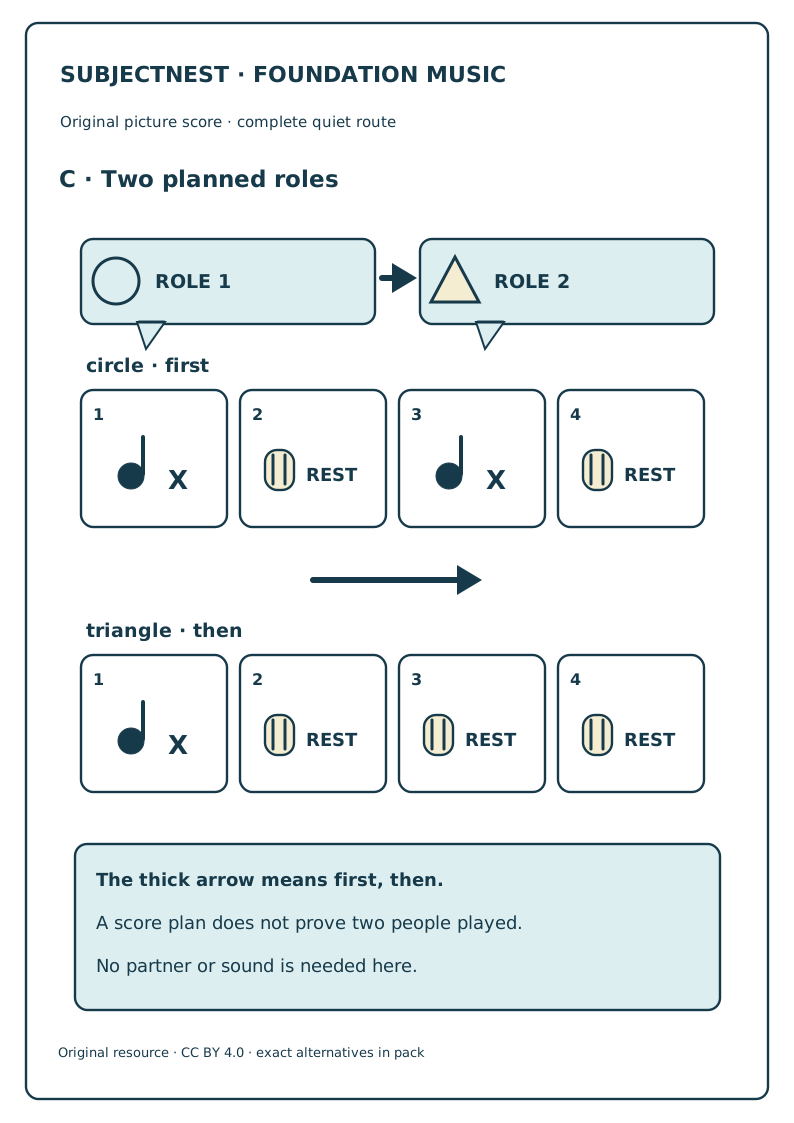
- Welcome · 3 min. Offer circle and triangle as non-personal role symbols. These are score labels, not required classmates or instruments.
- Model · 4 min. Place circle above T and triangle above T′, with one thick arrow crossing the phrase divider. The arrow means planned “first, then,” not a measured speed or forced turn.
- Try together · 5 min. Child points from role 1 to role 2, keeping T = X REST X REST and T′ = X REST REST REST intact.
- Child choice · 7 min. Child directs role cards for a two-window gallery or plain score. If people or sound are later involved, ask each person and choose comfortable safe sources; a paper plan is enough today.
- Notice · 4 min. Record the child's role allocation and score order. Never infer that two people actually took turns from the arrow alone.
- Close · 2 min. Save the hand-off score and invite comparison with another possible answer.
Week 9 · Day 44 · Two different answers can be intentional
Target/codes: compare changed answer T′ = X REST REST REST with contrasting U = REST X REST X after the same first T; AC9AMUFD01, AC9AMUFC01. Prepare: D answer-choice board, Practice D.
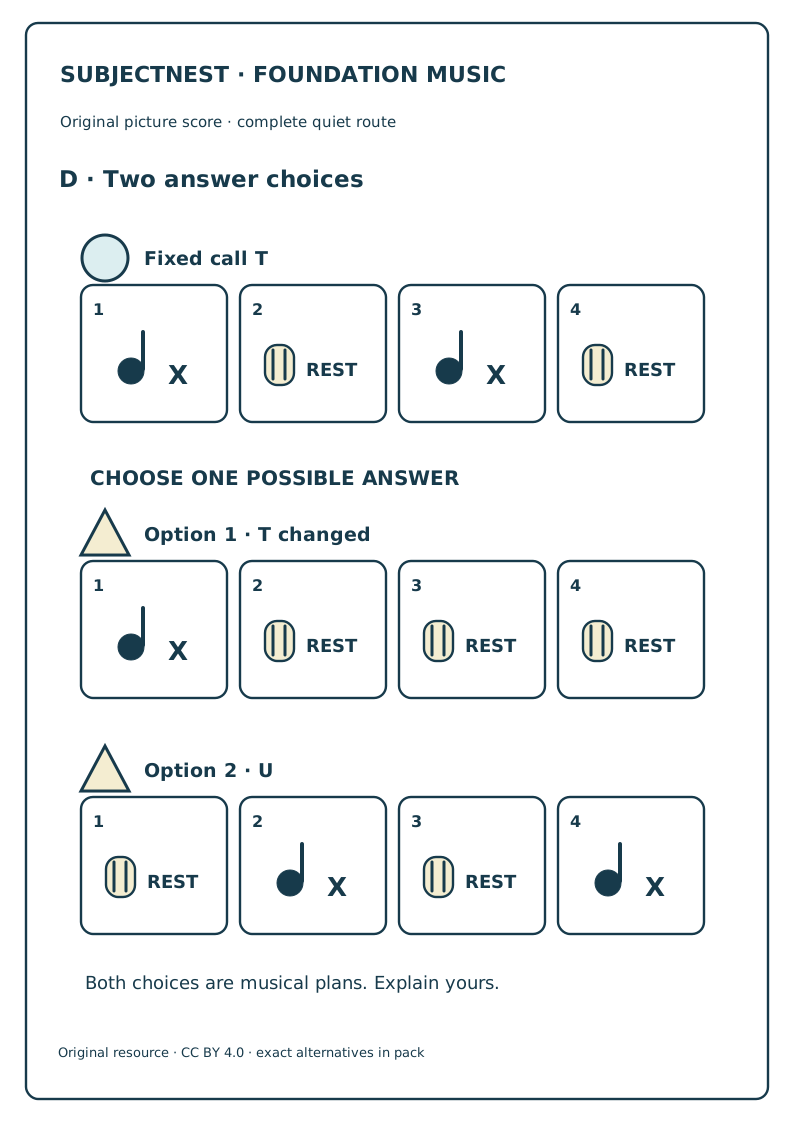
- Welcome · 3 min. Place first T in a fixed left role. Show two possible whole four-cell reply cards; both are legitimate invented plans.
- Model · 4 min. Trace T | T′ (two then one events) and T | U (two then two). U begins with a rest and answers on local 2 and 4. Do not call one reply universally “happy” or “better.”
- Try together · 5 min. Child identifies which reply copies more of T and which changes the opening; all versions keep two four-place groups.
- Child choice · 7 min. Child chooses a reply for a fictional paper bridge, light-box or own impersonal idea and explains what their choice is meant to do musically.
- Notice · 4 min. Record chosen score and stated reason. A silent board cannot establish any heard contrast.
- Close · 2 min. Put away practice cards. Tomorrow uses unfamiliar J cards without coaching.
Week 9 · Day 45 · Fresh Check O: paper lantern reply
Target/codes: independently keep an unfamiliar call J and make a one-mark changed answer under the public brief; AC9AMUFD01, AC9AMUFC01. Prepare: public O brief, O A4, broad cards; keep educator key closed.
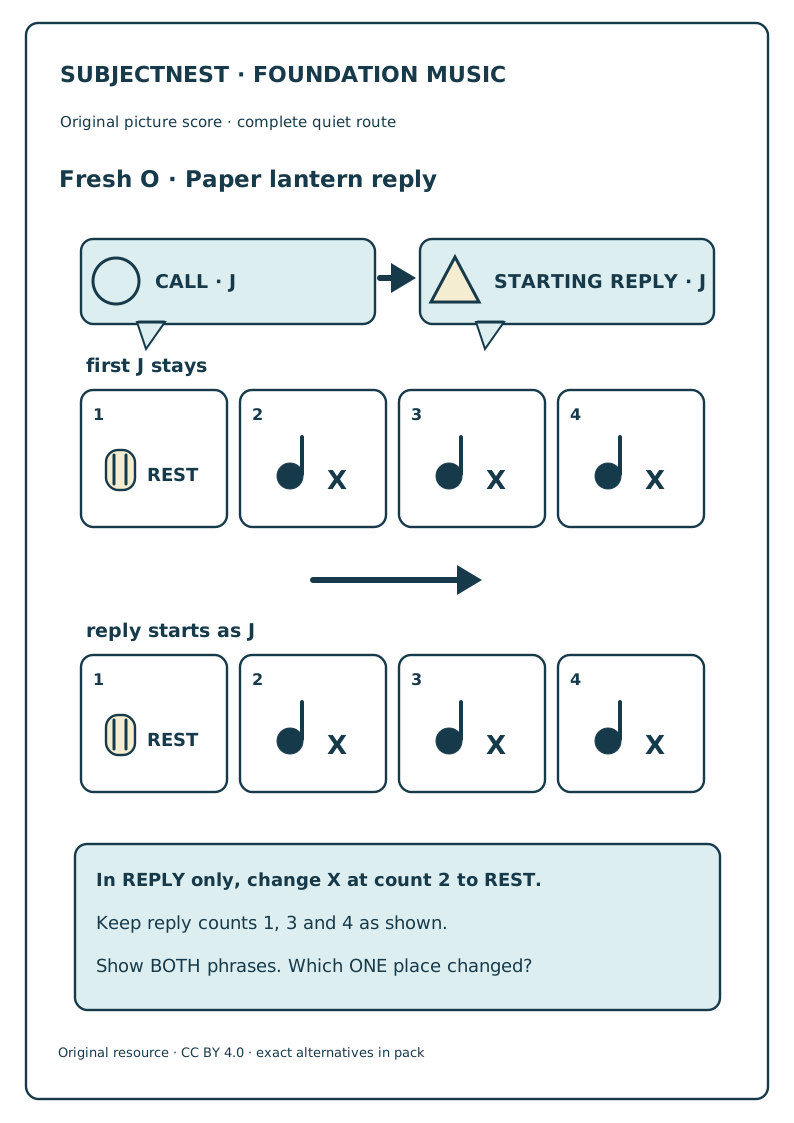
- Welcome · 3 min. Tell learners this new paper music puzzle helps choose next teaching; no sound or performance is needed.
- Access · 4 min. Show J = REST X X X as the first phrase and an identical J in the reply slot. Read the request neutrally: keep first J, change only the reply's local count 2 X to REST.
- Independent plan · 5 min. Child plans the full call and response, preserving reply counts 1, 3 and 4.
- Child response · 7 min. Save the first complete eight-place response and explanation by cards, drawing, AAC, pointing or a neutral scribe.
- Self-check · 4 min. Child checks two groups of four and one changed reply mark, without an adult placing the answer.
- Close · 2 min. Later open the separate key; use only after-check swaps after the independent first response.
Week 10 · Day 46 · Choose a sound-source plan
Target/codes: add two different source labels to T | T′, while recognising that a source card is an intended option until actual sound is observed; AC9AMUFD01, AC9AMUFC01. Prepare: E source cards, Practice E, circle/triangle tokens.
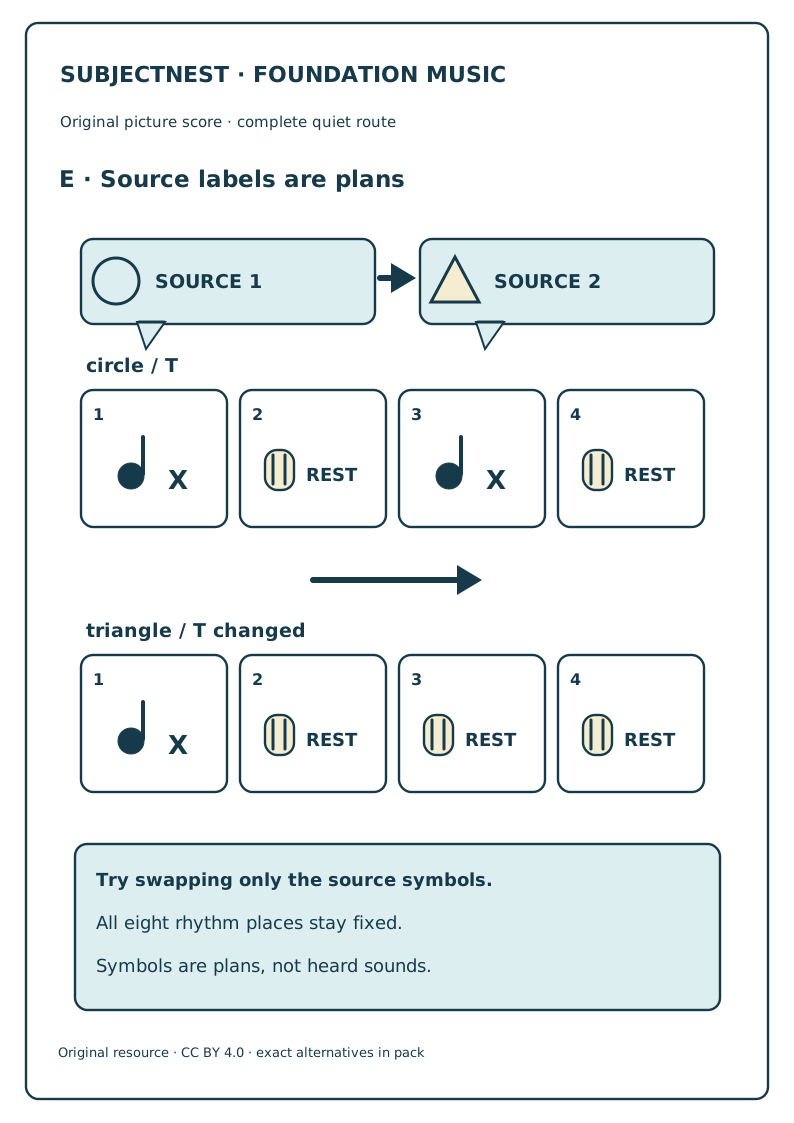
- Welcome · 3 min. Show two simple paper source icons. A child can label them “source 1” and “source 2” without choosing a real object.
- Model · 4 min. Circle/T: X REST X REST; triangle/T′: X REST REST REST. If locally reviewed, candidate O cue (playback review held) models two pure tones of different pitch; it does not imitate a real instrument or teach timbre by itself.
- Try together · 5 min. Child keeps the rhythmic cells fixed while placing one source label per phrase and tracing the hand-off. Explain that a new source mark does not change beat places or event count.
- Child choice · 7 min. Child chooses safe, locally approved sound sources or keeps abstract labels. If actual sound is chosen, everyone can stop; no striking or breath-holding is required.
- Notice · 4 min. Record labels as a plan. Only describe an actually heard source, pitch or timbre when that sound was presented and observed.
- Close · 2 min. Keep both phrase cards. Tomorrow swap source labels without changing the rhythm.
Week 10 · Day 47 · Swap sound labels, keep the phrase
Target/codes: compare circle-on-T/triangle-on-T′ with triangle-on-T/circle-on-T′ and explain what changed versus stayed; AC9AMUFD01, AC9AMUFC01. Prepare: E source board, two broad source icons.
- Welcome · 3 min. Fix T | T′ in a high-contrast frame; agree both scores will keep their rhythm marks.
- Model · 4 min. Swap only the circle and triangle source labels above the two complete phrases. Four-plus-four beat places and three planned events remain unchanged.
- Try together · 5 min. Child shows one unchanged rhythm cell and the two changed source labels. Do not call visual source labels proven acoustic timbres.
- Child choice · 7 min. Child selects an order of two abstract source cards for a paper robot or tactile picture, gives an intended sound contrast, or chooses the plain score. Optional reviewed sounds can be compared only if comfortable.
- Notice · 4 min. Record source order planned and what actual sound, if any, the child noticed. A generic PCM pitch change is not evidence of two instrument timbres.
- Close · 2 min. Save one version as a composing choice; tomorrow each learner can author both phrases.
Week 10 · Day 48 · Compose a small musical conversation
Target/codes: author two four-place phrases with an exact echo, one-mark change or deliberate contrast, plus role/source labels and intended musical idea; AC9AMUFD01, AC9AMUFC01. Prepare: F maker board, Practice F, broad fixed cards.
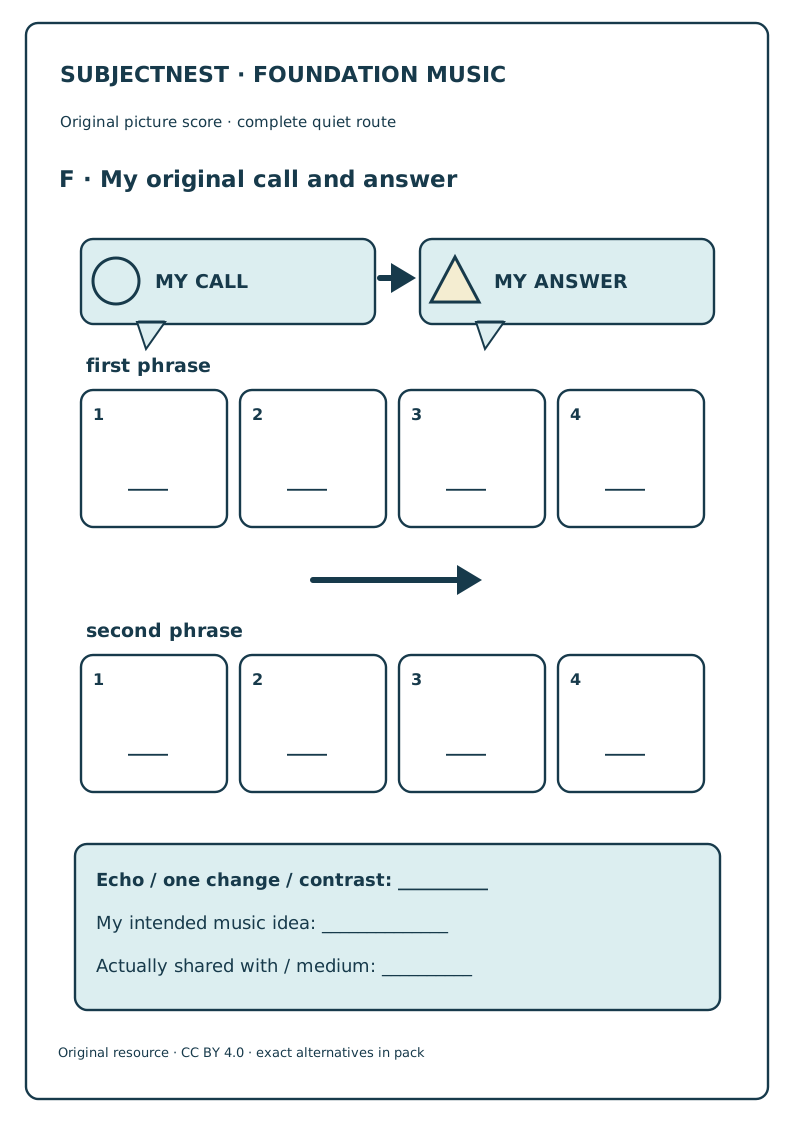
- Welcome · 3 min. Offer two empty four-cell groups and a role arrow. A call and answer may be the same or different by the maker's choice.
- Model · 4 min. Adult makes a new example X X REST REST / X REST REST REST: one local count 2 changes in the reply. Identify the adult's reason without claiming a listener felt it.
- Try together · 5 min. Child tries a different echo/change/contrast on broad cards, and chooses or declines abstract source labels.
- Child choice · 7 min. Child authors both four-place phrases, marks first/then roles, and states an intended musical effect or purpose by speech, AAC, pointing or a neutral scribe.
- Notice · 4 min. Save the child's authored cells, relationship and intention. An adult may handle cards only under child direction. Optional sound is a separate observation.
- Close · 2 min. Keep the score with its maker for tomorrow's optional sharing invitation.
Week 10 · Day 49 · Real maker, real audience, real choice
Target/codes: ask a source-grounded question about an authorised real work if available, and optionally share a child-authored score/sound with an actually willing person; AC9AMUFE01 and AC9AMUFP01 only when their distinct conditions occur. Prepare: F maker/share board, authentic source hold, the child's saved score.
- Welcome · 3 min. Offer a real willing adult, a one-to-one paper share, optional comfortable sound, puppet rehearsal or pass. No recording or public solo.
- Model · 4 min. Educator shares their own score with a willing person. If a real work is permitted and contextualised, name its maker/source; otherwise leave that inquiry on hold.
- Try together · 5 min. Ask who made the selected real work and what its maker/approved source says about use. Do not infer cultural purpose from an invented rhythm.
- Child choice · 7 min. Child decides whether a willing person receives their original score or approved sound, or whether to rehearse/pass. Stop or withdraw at any point.
- Notice · 4 min. Log actual recipient, medium and whether receipt happened; separately note authentic source/title and child response if it occurred. An offer with no recipient is not sharing evidence.
- Close · 2 min. Save child choice with dignity. The final check uses a new phrase and source-label change.
Week 10 · Day 50 · Fresh Check P: two-role reply plan
Target/codes: independently transform unfamiliar V in the reply, preserving three specified cells, and change an abstract source label; AC9AMUFD01, AC9AMUFC01. Prepare: public P brief, P A4, broad role/source cards; close key.
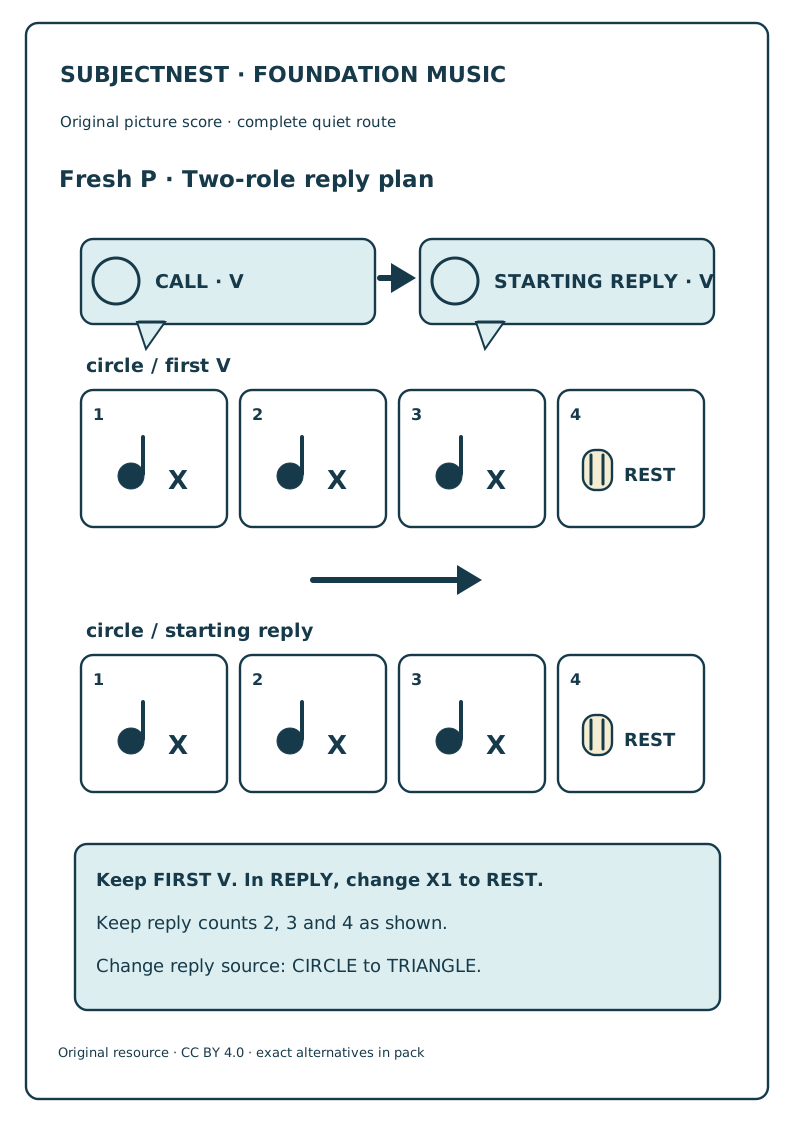
- Welcome · 3 min. Introduce a new paper score puzzle to plan later teaching. It does not need a sound source or audience.
- Access · 4 min. Show V = X X X REST first, and V again in the reply. Both starting source labels are circles. Brief: keep first V and its circle; in second V replace only local X1 with REST, keep 2–4, and change its source label from circle to triangle.
- Independent plan · 5 min. Child considers the full two-phrase sequence and both source symbols with no model of the answer.
- Child response · 7 min. Save first complete response by cards, drawing, AAC, pointing or neutral adult scribing, plus changed-cell and source explanation.
- Self-check · 4 min. Child traces two groups of four, unchanged first V and one changed reply cell. No answer hint before first response is saved.
- Close · 2 min. Use separate key for next steps. Actual hearing, playing and genuine sharing remain separately evidenced.