Each session totals 3 + 4 + 5 + 7 + 4 + 2 = 25 minutes. Our A/B key selects between two invented tone recipes at a fixed 330 Hz fundamental and fixed event times, so these particular files can model planned timbre contrast without changing the stated fundamental. Equal programmed peak does not guarantee equal perceived loudness or successful listening on a device. A card route meets the source-planning target; only a separate real observation can support an aural or production claim. Offer broad fixed circle/striped-square cards, raised keys, AAC, pointing, neutral reading/scribing, a quiet route and pass. Sound requires educator human listening/volume approval on the intended equipment and child choice.
Week 15 · Day 71 · Two invented sound recipes
Target/codes: distinguish an A/B source key from a pitch/volume claim and choose two possible tone recipes; AC9AMUFD01. Prepare: A legend, Practice A, large circle/striped-square cards.
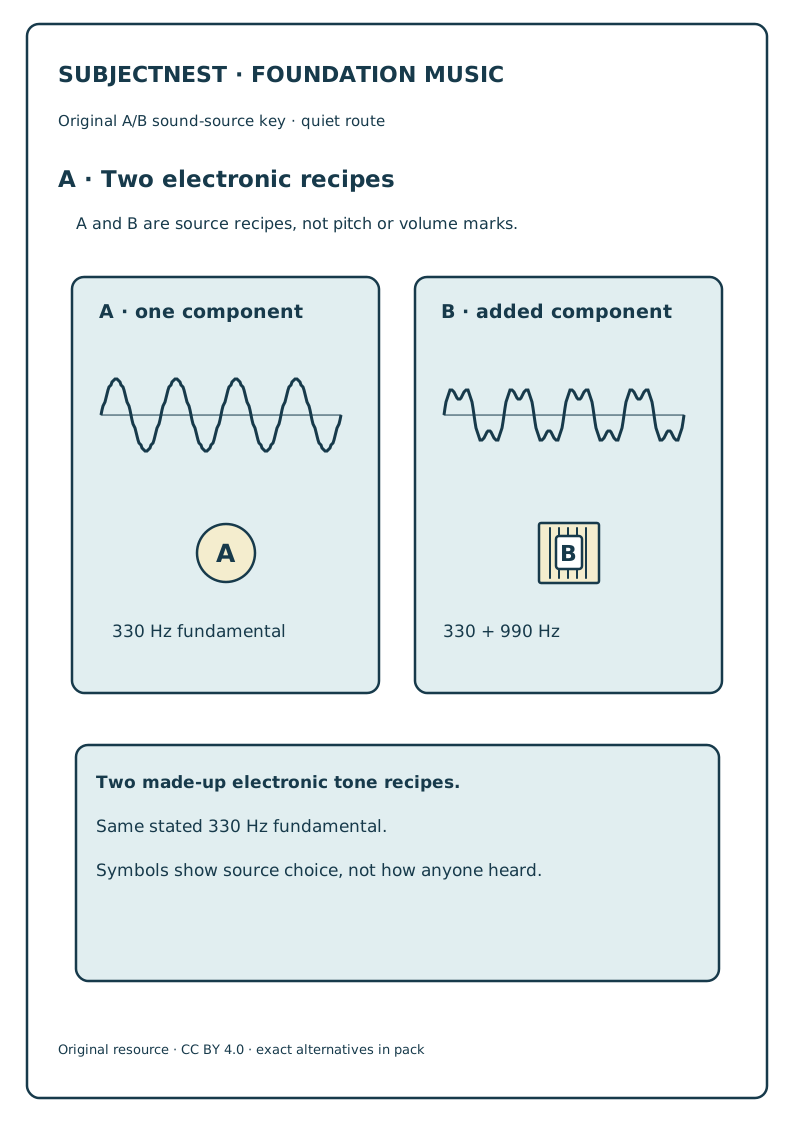
- Welcome · 3 min. Recall that last fortnight changed pitch; today the written pitch stays fixed while a sound recipe may change.
- Model · 4 min. Show A circle and B striped square. Both generated recipes have 330 Hz fundamental; B includes an additional component. Trace drawings describe file construction, not a guaranteed feeling or instrument identity.
- Try together · 5 min. Child matches two broad keys to the A/B legend by word and shape. If locally cleared, an adult may play A and B, noting only what was actually heard.
- Child choice · 7 min. Child chooses whether a paper gallery display uses A, B, both or a plain card plan. They may suggest their own observation word after real listening, without a supplied “correct” emotion.
- Notice · 4 min. Save A/B source choices and any separate actual hearing note; do not write “identified timbre by ear” from a circle match.
- Close · 2 min. Keep the source key; tomorrow it repeats across four places.
Week 15 · Day 72 · Keep a source across four events
Target/codes: plan four event places with one repeated source recipe and compare A-only/B-only plans; AC9AMUFD01, AC9AMUFC01. Prepare: B one-source board, Practice B, four broad source cards.
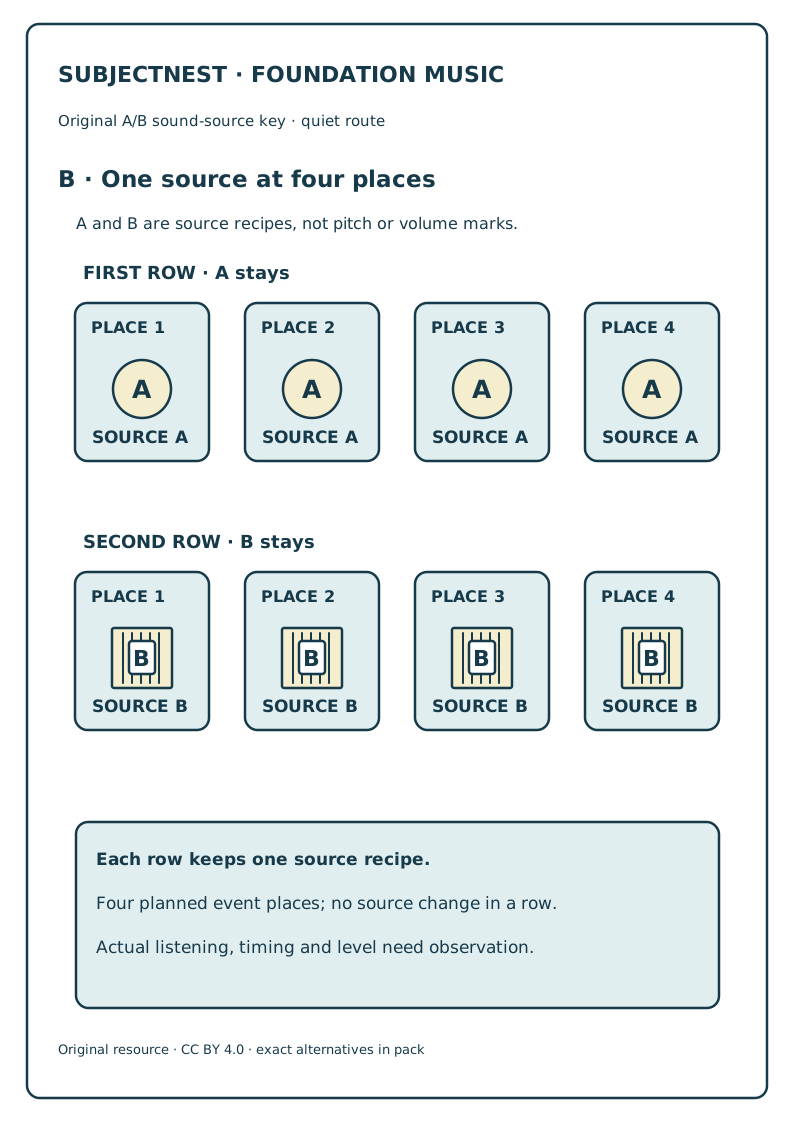
- Welcome · 3 min. Point to four numbered places; this is a short invented Music plan, not a counting assessment.
- Model · 4 min. Fill all four with A circles. Replace all four with B squares on a second strip, keeping every place and stated pitch fixed.
- Try together · 5 min. Child traces which row stays with one source throughout and uses the circle/striped-square tactile key.
- Child choice · 7 min. Child makes an all-A or all-B version for a paper exhibit or plain music score, then says/shows why that consistent source helps their idea. Optional approved sound is separate.
- Notice · 4 min. Save four actual chosen cards and child's reason; do not infer how even the sounds were to a listener.
- Close · 2 min. Ask where a different source could begin next time.
Week 15 · Day 73 · A source can switch mid-piece
Target/codes: use A A B B to place and name one source change after event 2; AC9AMUFD01, AC9AMUFC01. Prepare: C switch board, Practice C, A/B key and wide boundary marker.
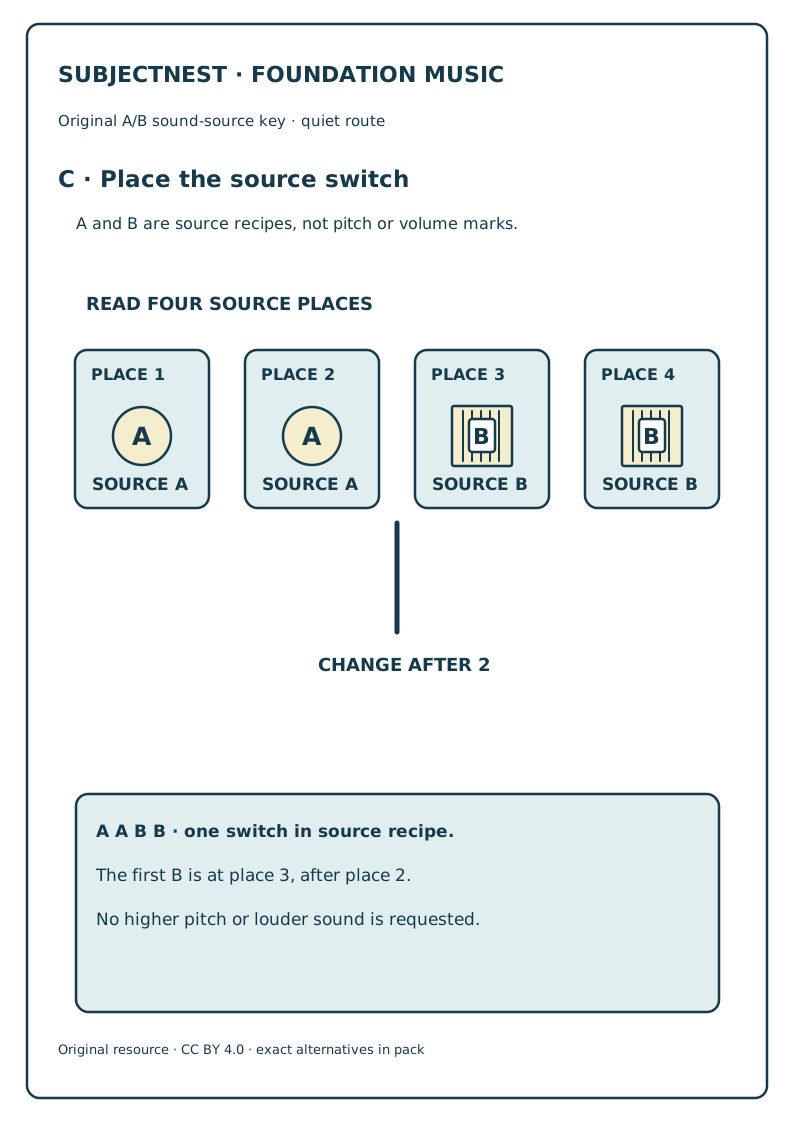
- Welcome · 3 min. Keep pitch and four event places fixed; source choice is the changing element.
- Model · 4 min. Lay A A B B, then place a large marker between 2 and 3. That marks the first B, not a higher pitch or louder instruction.
- Try together · 5 min. Child uses word, shape and raised texture to locate the sole A→B source transition.
- Child choice · 7 min. Child chooses a different switch point or keeps AABB for an invented game-room cue or plain score, explaining a musical reason. Optional AABB candidate needs prior review.
- Notice · 4 min. Save source sequence and stated switch; separately note if a real listener perceived a contrast.
- Close · 2 min. Tomorrow a source's sound depends on an action, not just its name.
Week 15 · Day 74 · Source and action both matter
Target/codes: plan or safely compare two source/action combinations and state only actual observations; AC9AMUFD01. Prepare: D lab log, Practice D, locally approved optional objects or symbolic source cards.
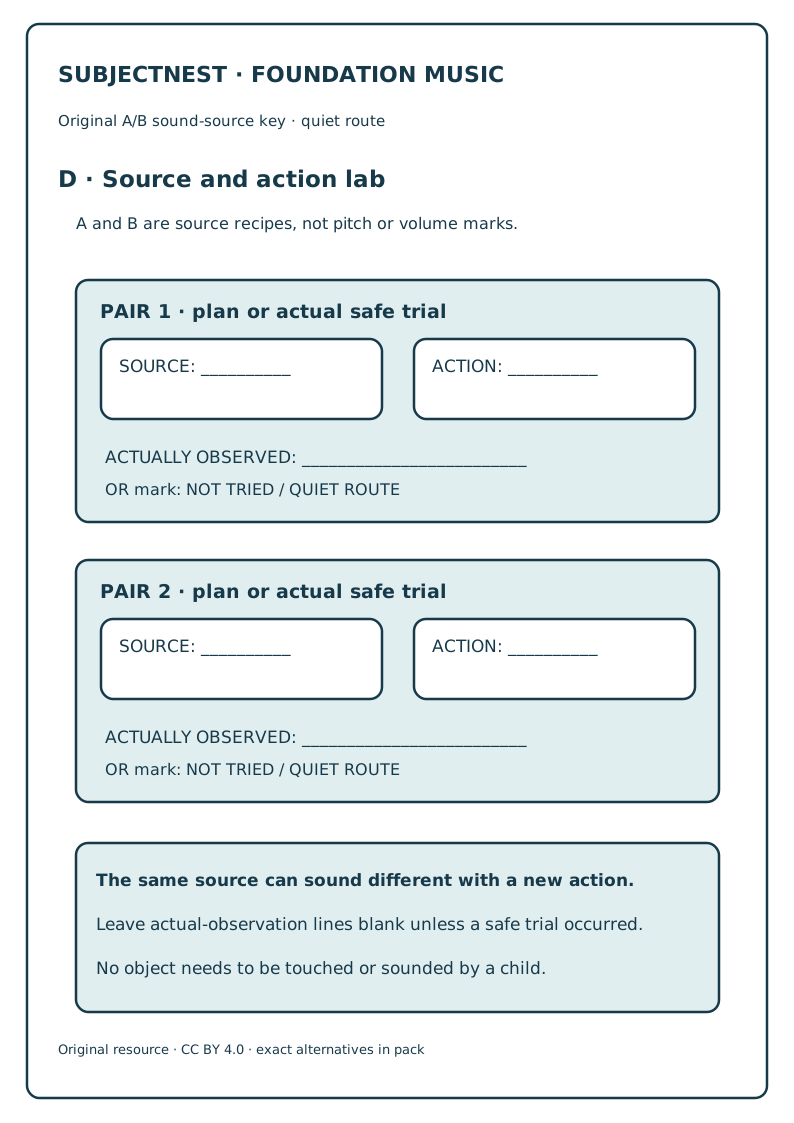
- Welcome · 3 min. Explain that a material label does not tell us exactly what sound an action will make.
- Model · 4 min. Educator draws one safe teacher-selected source and action pair. If approved, demonstrate gently once at comfortable level; otherwise keep the “actually heard” line blank.
- Try together · 5 min. Child keeps source and action as two separate choices, then identifies what could be observed only by actually trying/listening.
- Child choice · 7 min. Child plans or directs two safe source/action pairs for a fictional workshop or plain investigation. An adult handles materials as needed; no child must touch or strike them.
- Notice · 4 min. Record source, action, whether a sound happened, and exact child response. Do not claim one material always has one timbre.
- Close · 2 min. Put materials away; a fresh paper source-key check follows.
Week 15 · Day 75 · Fresh Check U: read an unfamiliar source key
Target/codes: independently decode a new A/B five-event plan and locate every source change; AC9AMUFD01. Prepare: public U, U A4, broad A/B cards; close the key.
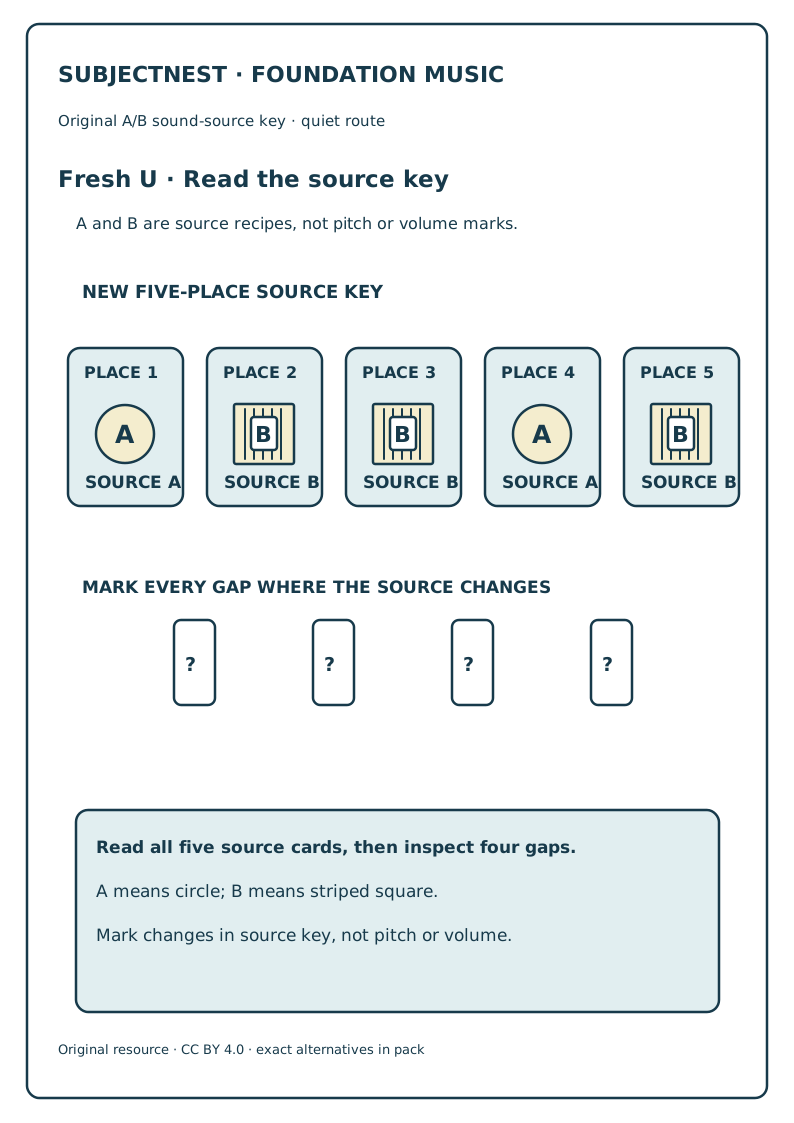
- Welcome · 3 min. Offer a new paper music puzzle with no sound or speed requirement.
- Access · 4 min. Present A B B A B by word, circle/square print, raised symbols or neutral read-aloud. Do not mark any boundary.
- Independent plan · 5 min. Child tracks each neighbouring pair and finds where the source key changes.
- Child response · 7 min. Save first complete source sequence and every change boundary by card, drawing, AAC, pointing or neutral scribe.
- Self-check · 4 min. Child checks all five places and four gaps without an adult adding an answer.
- Close · 2 min. Consult the separate key later; after-check practice uses different sources.
Week 16 · Day 76 · Hear, feel, see or plan a safe source trial
Target/codes: distinguish a proposed timbre from an actually observed sound, with a separate source/action record; AC9AMUFD01. Prepare: D lab log, Practice D, adult-selected safe sources if available.
- Welcome · 3 min. The integrated week's dry A/B capacity station is a different task; sound cannot show which vessel holds more.
- Model · 4 min. Educator points to SOURCE, ACTION and ACTUALLY OBSERVED as different fields. A drawing is a plan, not the observation itself.
- Try together · 5 min. If safely available, an adult produces two comfortable sounds from approved actions and accepts hearing, vibration, visible action or pass. If not, use source cards and leave acoustic fields blank.
- Child choice · 7 min. Child chooses which pair to compare or designs a silent paper version. Ask only what this particular trial showed, not what every paper/plastic object sounds like.
- Notice · 4 min. Record actual event, route and response, including “not heard,” “too much,” or “preferred silent.” No diagnosis or generalisation.
- Close · 2 min. Keep any first observation separate from tomorrow's score revision.
Week 16 · Day 77 · Move the source switch earlier
Target/codes: preserve A A B B, change only place 2 to B in a second version A B B B, and show the switch moved earlier; AC9AMUFD01, AC9AMUFC01. Prepare: E two-version board, Practice E, two broad numbered strips.
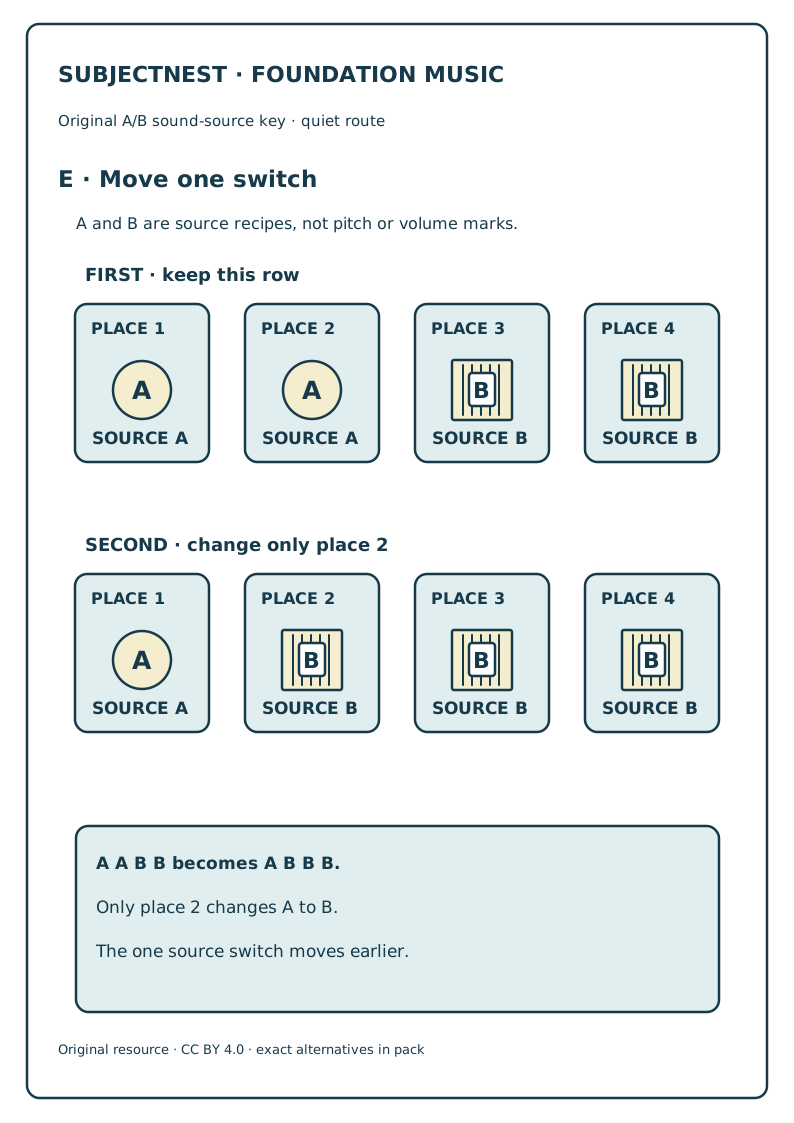
- Welcome · 3 min. Put first and second versions side by side; keep the original visible.
- Model · 4 min. Replace only second-row place 2 A with B. The single boundary moves from 2→3 to 1→2; do not change pitch, event count or loudness.
- Try together · 5 min. Child overlays the two versions and points to exactly one changed source card.
- Child choice · 7 min. Child keeps or changes this switch placement for a fictional train-window scene or plain score and explains the intended musical difference.
- Notice · 4 min. Save original, revision, changed place and reason. Do not claim a listener noticed it without a real trial.
- Close · 2 min. Offer a blank palette to author tomorrow.
Week 16 · Day 78 · Compose a child-owned timbre palette
Target/codes: author four A/B source choices with a source key and intended musical idea; AC9AMUFD01, AC9AMUFC01. Prepare: F maker board, Practice F, large A/B and boundary cards.
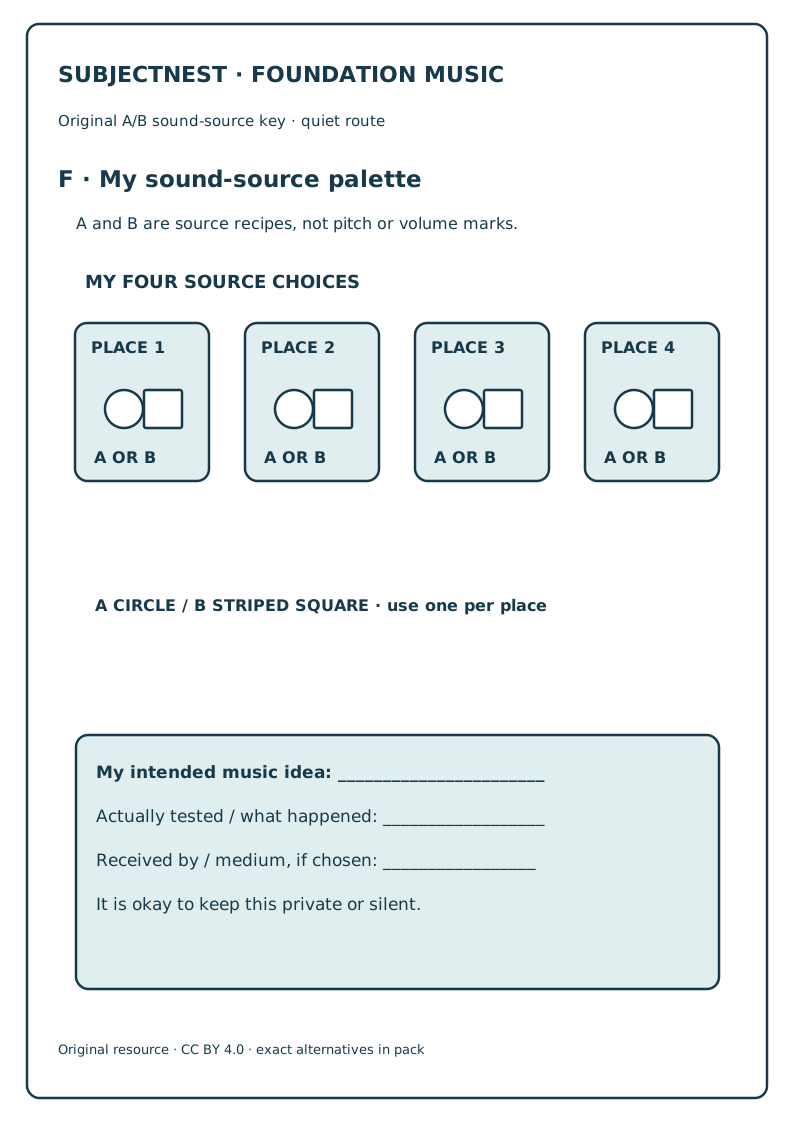
- Welcome · 3 min. Four blank event places are open; same source throughout or any child-chosen switch is allowed.
- Model · 4 min. Adult invents B A A B and states its two source changes. This differs from both fresh U and V.
- Try together · 5 min. Child directs one alteration to the adult's practice copy, then updates the source-change explanation.
- Child choice · 7 min. Child authors an original four-place source palette and reason. Broad cards, AAC, drawing or neutral scribe count as a composition plan; approved sound may follow separately.
- Notice · 4 min. Save exact first score, key and child intention. Do not assume it sounded as imagined.
- Close · 2 min. Child may choose private sharing tomorrow.
Week 16 · Day 79 · Ask a maker; choose a willing recipient
Target/codes: respond to a permitted real work if one is available, and optionally share the child's palette with an actually willing person; AC9AMUFE01 and AC9AMUFP01 only under those separate conditions. Prepare: F share fields, authentic source hold, child score.
- Welcome · 3 min. Offer private paper sharing, approved comfortable sound, puppet rehearsal, quiet observation or pass. No public solo or recording.
- Model · 4 min. Educator shows their own invented palette to a willing adult. If a locally authorised real work exists, name its maker and direct context source; otherwise hold inquiry.
- Try together · 5 min. Ask what the maker/approved source says about a real work's use. Never infer culture, instrument or purpose from the A/B electronic traces.
- Child choice · 7 min. Child decides whether a willing person actually receives their original score or approved sound. They may withdraw.
- Notice · 4 min. Record recipient and medium only if received; separately record real work/source and child response only if encountered. An offer is not audience evidence.
- Close · 2 min. Return the work to its maker; tomorrow is a new independent ending brief.
Week 16 · Day 80 · Fresh Check V: ending source contrast
Target/codes: compose from an unfamiliar brief: four places, A at 1–3 and one B at the end, then name the single source change and intention; AC9AMUFD01, AC9AMUFC01. Prepare: public V, V A4, blank A/B source cards; key closed.
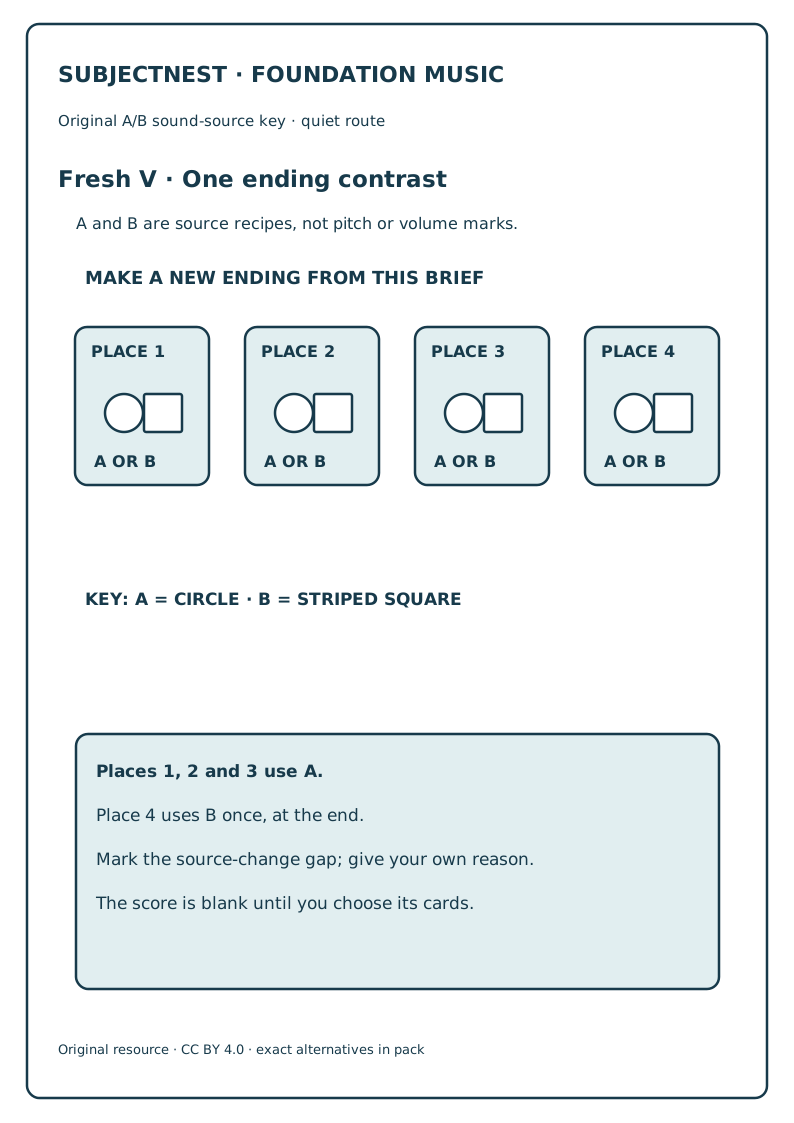
- Welcome · 3 min. This paper composition puzzle helps plan next teaching and does not demand sound.
- Access · 4 min. State the new brief exactly: first three events keep A; final event uses B once. Show blank four-place source strip and A/B legend, not a completed row.
- Independent plan · 5 min. Child selects one source per place and considers the three gaps.
- Child response · 7 min. Save first full four-card score, the source-change boundary and a child-stated musical intention by cards, AAC, pointing, drawing or neutral scribe.
- Self-check · 4 min. Child checks all four places against the written brief without answer cues.
- Close · 2 min. Consult separate key later. This score is not proof that B was heard, played or shared.