Optional Foundation/Prep starts, Days 131–140. Each is 3 + 4 + 5 + 7 + 4 + 2 = 25 minutes. Read materials and choose access routes before the session. A model is practice; remove it before the child's first response. Record task / exact child action or words / response and information route / model or prompt / next step. Offer rest/pass and a quiet, private route throughout. Do not interpret sound or shape choices as a child's emotion, diagnosis or identity.
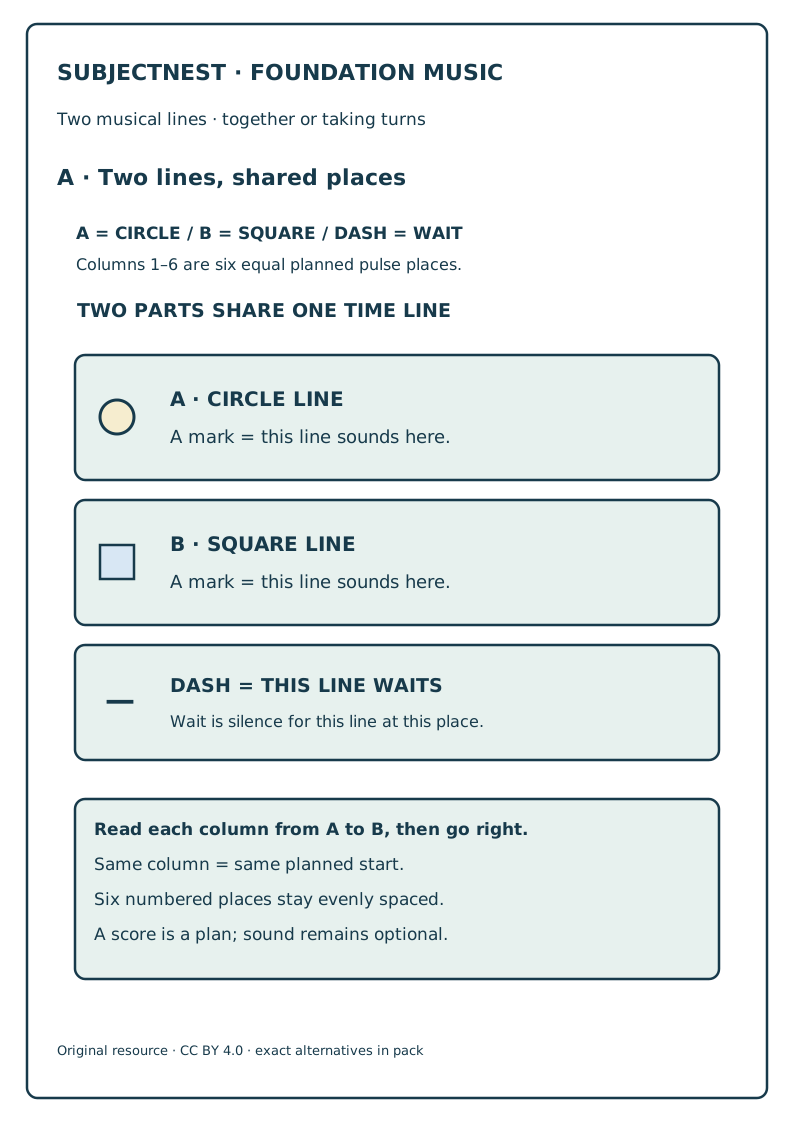
The paper convention has six evenly timed places. Within each numbered column, read A then B before moving right. Circle = A sounds; square = B sounds; dash = this line waits; question mark = undecided. A wait is for one line at a place, not the old S/M/L gap key. Both lines may wait at a place. The words together and take turns describe planned starts. The practical outcome is an original short duo piece: two willing makers can realise a child’s own plan using two fixed, locally reviewed quiet sounds, or the child can direct two adults. Use a comfortable steady pace and a visible column pointer; keep each chosen sound short, and leave space before moving to the next place. Agree a stop/pass signal and preview each sound. No learner must make or hear sound. A live duo can be tried again for musical enjoyment; record its actual coordination separately from the paper plan. These are optional Music starts alongside the integrated day, not extra compulsory timetable periods. Keep Day 135/140 checks unseen until their own Music session; integrated practice follows separate checks where required.
Week 27 · Day 131 · Two lines use one time line
Target/codes: read A and B within each shared place; distinguish a line's sound from its wait; partial AC9AMUFD01. Prepare: line key, two strips with six aligned columns, large circle/square/dash cards fixed on a stable surface; invitation A.
- Welcome · 3 min. Say, “Today two parts share six places. You can read, point, direct me or work without sound.” Offer a view of first/then/finish, rest and pass.
- Model · 4 min. Place A at 1 and B at 2, dashes elsewhere. Say at column 1, “A sounds; B waits”; at column 2, “A waits; B sounds.” Touch the column divider before advancing. Explain that a dash is not a new sound event.
- Try together · 5 min. Add both marks at place 3. Ask, “What does A do? What does B do in the same place?” Deliberately read across all A first; invite correction by selecting a column and reading both rows. Reset the model.
- Child choice · 7 min. Child chooses a new place for an A circle and a different place for a B square, fills remaining cells with waits, then describes all six columns. Adult places only on exact directions; accept AAC, sign, home-language explanation with suitable interpretation or pointing.
- Notice · 4 min. Preserve the first read of one occupied and one empty column. If the child treats a dash as a sound, model a single column's sound/wait contrast and retry elsewhere; do not score reading or motor speed as music understanding.
- Close · 2 min. Child may keep the score private. Ask which part needs a mark to join the other tomorrow. No cue playback is needed.
Week 27 · Day 132 · Both parts can meet
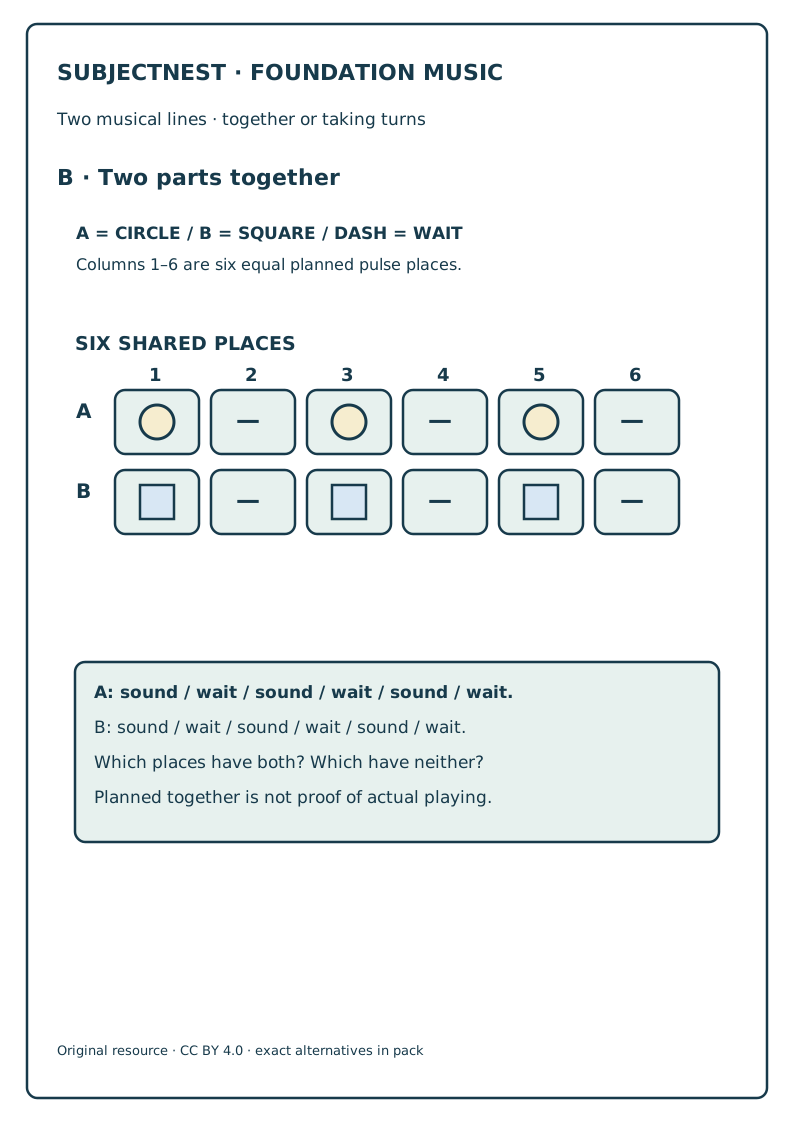
Target/codes: find simultaneous places in a two-line plan and explain each line's wait; partial AC9AMUFD01/FC01. Prepare: together grid, independent blank strips; invitation B. Optional cue-together remains held until human clearance.
- Welcome · 3 min. Offer cards, a neutral adult reader or locally cleared comfortable sound. Say, “Together means the same planned start; it is not a rule for our bodies.”
- Model · 4 min. Show A and B at 1,3,5. Read both rows within place 1 and trace their vertical alignment. Read place 2: neither sounds. Say that both parts keep their own identity even when they start together.
- Try together · 5 min. Cover all but place 3, then place 4. Ask for “both” or “neither” and the circle/square or two dashes that justify it. Remove this score before making.
- Child choice · 7 min. Child chooses any three places for A and places B in those same places; fills waits. Ask, “Tell a reader where the parts meet.” For an optional approved quiet live duo, the child chooses whether to make A, make B, direct two willing adults or stay with paper. Follow the child’s three shared places with a steady visible pointer and short reviewed sounds. Alternatively compare a cleared cue to its practice score. Record any actual sound separately.
- Notice · 4 min. Record the child's three meeting places and one waiting column, with support. If row reading obscures togetherness, reduce to two broad columns, then restore the six-place score. Actual sound fields remain NOT TESTED unless heard or made.
- Close · 2 min. Choose a private title or leave untitled. Keep this score for tomorrow's comparison; no preferred title or emotion is expected.
Week 27 · Day 133 · One part leaves room for the other
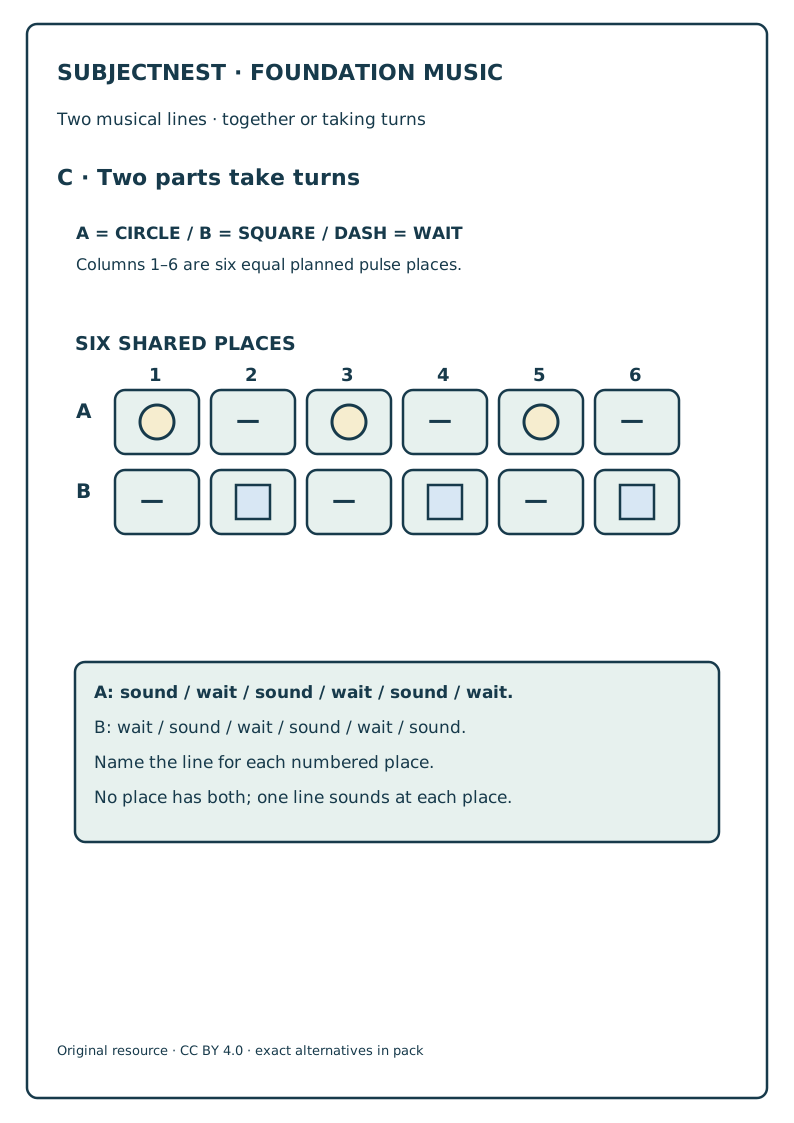
Target/codes: make a score with one active line in each shared place; partial AC9AMUFD01/FC01. Prepare: turn grid, invitation C, blank strips; cue-turns optional and held.
- Welcome · 3 min. Preview “read / rearrange / explain.” Child chooses whether to touch cards; an adult can move them on direction. Sound and movement are optional.
- Model · 4 min. Keep A at 1,3,5 and move B to 2,4,6. Say column 1 “A alone,” column 2 “B alone.” Compare yesterday's meeting places: same six places and three marks per line, different relationship.
- Try together · 5 min. Put one B square over an A circle. Ask whether that column still has only one active part; let children remove the extra meeting and explain. This is a practice error, not the later public check.
- Child choice · 7 min. Child chooses three A places; B takes the remaining three. Count marks per line separately from the six columns. Reader follows all six columns and asks, “Does any place have both? Does any have neither?” Do not supply the remaining positions. An optional reviewed quiet duo can try the child’s piece once, swap willing roles and try again; the child can direct adults or keep the no-sound plan.
- Notice · 4 min. Save first layout and any revised column. If a child simply copies an alternating arrangement without reading both lines, try clustered practice A 1,2,4 and invite a different arrangement; record prompts rather than calling it independent.
- Close · 2 min. Child states one thing that held and one thing that changed. Keep the maker's words; no listener interpretation is invented.
Week 27 · Day 134 · Make a texture for an invented scene
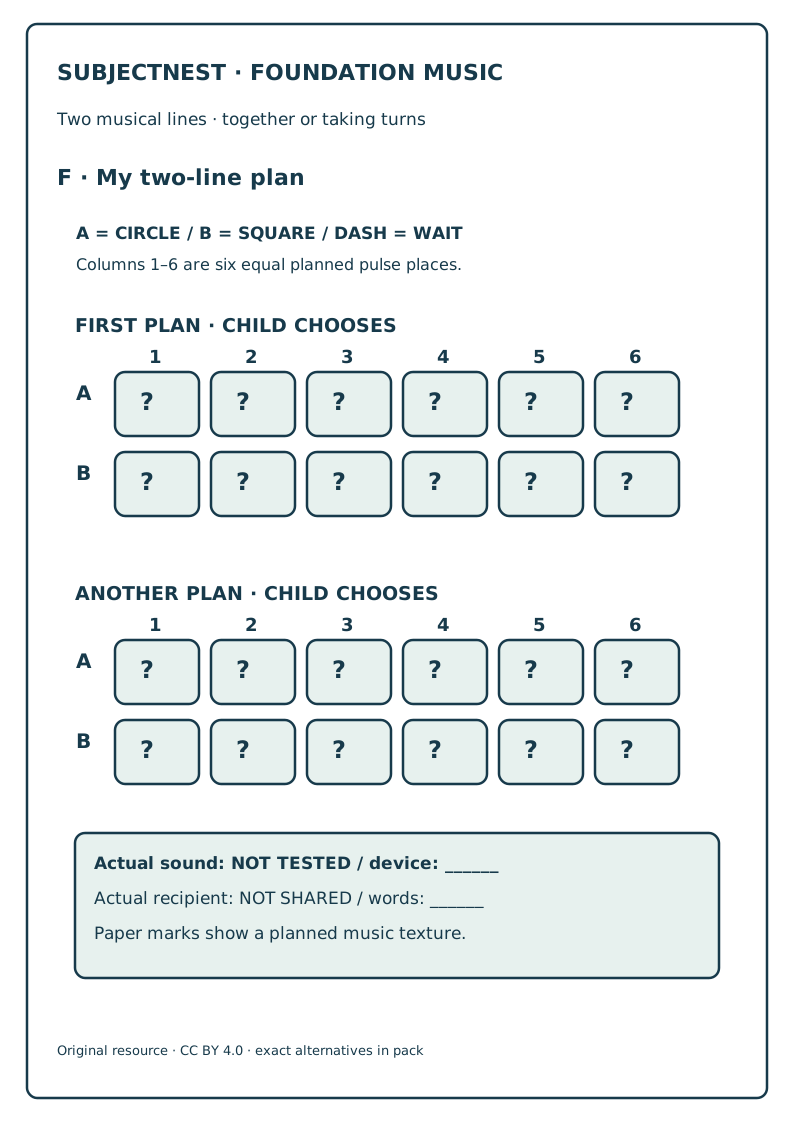
Target/codes: choose together/turns to communicate the child's own idea; partial AC9AMUFD01/FC01. Prepare: invitations B/C/D, blank score, original fictional picture of two paper kites; plan/actual aid.
- Welcome · 3 min. Offer two paper kites, two drawn lights or a child-invented neutral scene. “What might two music parts do in your scene?” No real person's feeling is required.
- Model · 4 min. Adult chooses three meeting places for an invented “two lights appear together” idea. Then makes a turn-taking version and says, “I chose this; another maker can choose differently.” Put both models away.
- Try together · 5 min. Read a child's volunteered practice column only with consent; otherwise use a new adult column. Ask which parts start there and whether the maker's stated purpose is known. A picture alone cannot supply a music purpose.
- Child choice · 7 min. Child authors a six-place score, at most three marks per line today, choosing meeting or turns. Child gives an own reason through any established communication route. Child can invite a willing reader to see it or, after local sound review, invite two willing makers to realise the short duo at a comfortable pace. Offer a second try if the child wants to hear their idea again. Record listener words only if actually given.
- Notice · 4 min. Record first score, stated intention and one relational place as evidence. If purpose is absent, record “not stated” and ask about the plan rather than supplying a story. Paper making shows planned texture, not sound-control skill.
- Close · 2 min. Keep public check sheets hidden. Offer private keeping, no title and pass as equal choices.
Week 27 · Day 135 · Fresh Check Texture 1: two new plans
Target/codes: independently read a fresh pair and justify together versus turns with aligned places; partial AC9AMUFD01. Prepare: public Texture 1, new A4 pair, exact raised equivalent; teacher key closed.
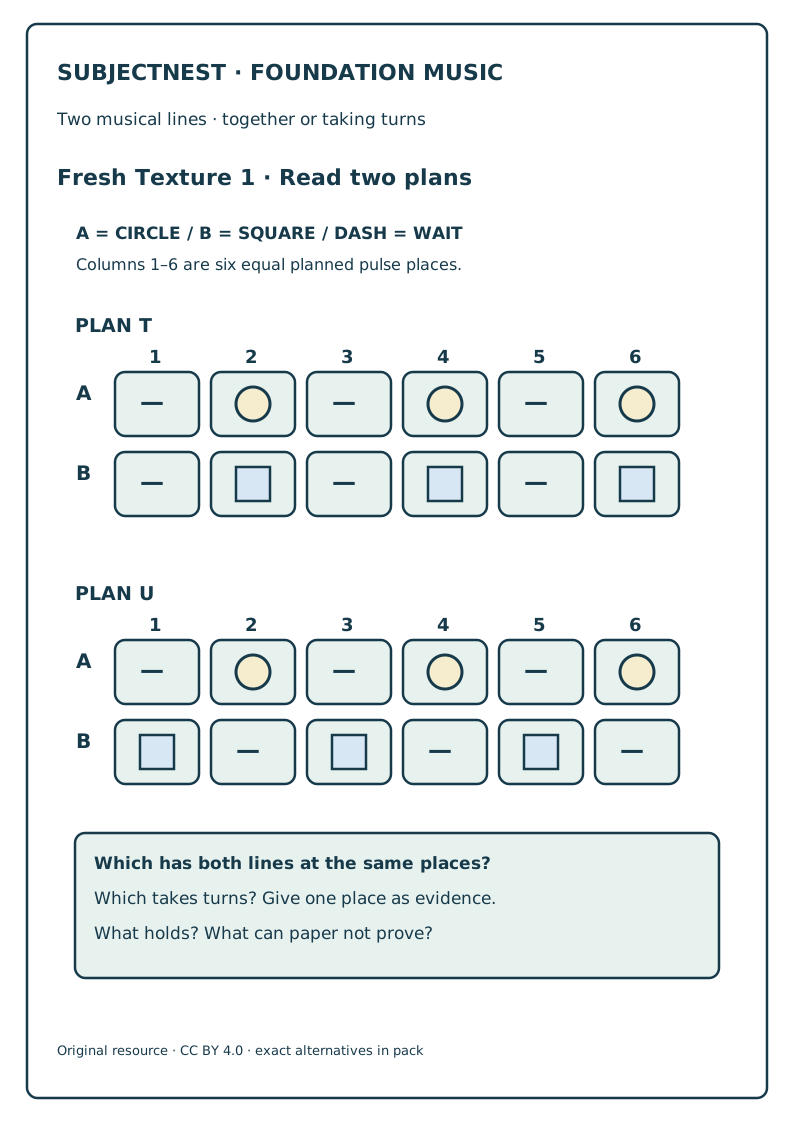
- Welcome · 3 min. Explain, “These plans are new. Show your first idea; you may ask me to repeat the task.” Offer no-sound, private response, rest and pass. Schedule separately from integrated Day 135 practice.
- Access · 4 min. Present T and U and read every circle, square and dash neutrally in column order if requested. Explain the shape key without classifying either plan. Do not play a matching audio cue or reveal the key.
- Independent plan · 5 min. Ask which plan has both lines starting in the same places and which takes turns. Child may point, mark, sign, speak, use AAC or direct a neutral adult. Save the first complete choice before hints.
- Child response · 7 min. Invite one place as evidence for each choice, one thing held between plans and one thing paper cannot prove. Read questions neutrally; do not praise a specific choice during the check.
- Self-check · 4 min. Child can inspect all six columns without a teacher hint. Preserve first response and self-revision separately. If access is uncertain or child passes, mark unobserved and offer another opportunity later.
- Close · 2 min. Consult the separate teacher key afterward. Worked swaps and home practice for this day occur only after this check.
Week 28 · Day 136 · Hear or read one line, then both
Target/codes: relate each individual part to a combined score and identify what joining adds; partial AC9AMUFD01. Prepare: together/turn grids, broad paper row covers, invitation E; any sound clearance record.
- Welcome · 3 min. Ask the learner to choose silent reading, adult-directed tokens or approved optional sound. Covering a row hides its plan; it does not erase the musical part or prove it was muted in real playback.
- Model · 4 min. On a practice meeting score, cover B. Read A at 1,3,5. Uncover B and read each column with both. Say, “The plan adds B in the same places.” If live sound is cleared, one willing maker may realise A alone, then a second joins at the planned places. Let the child choose a familiar reviewed short sound for each part and keep those sources fixed; record what actually occurred.
- Try together · 5 min. Cover A on the turn grid, read B's 2,4,6, uncover A and inspect the previously waiting columns. Ask which line fills those places; a row cover should not become an answer cue on a fresh check.
- Child choice · 7 min. Child makes an own six-place plan, chooses which row a reader first examines, then uncovers both and explains two columns. A willing duo can try the child’s piece one part first, then both, with an agreed steady visible pointer; the child may perform, direct adults or use paper. “Please repeat” and “pass” remain available.
- Notice · 4 min. Preserve individual-line and combined descriptions. If a child confuses an uncovered square with a circle sound, revisit the identity key before comparing texture. Log paper read, heard example or actual sound-making separately.
- Close · 2 min. Child names what the second part adds in their plan. Any real listener's response is quoted only if actually received and locally permitted.
Week 28 · Day 137 · A piece can meet and separate
Target/codes: combine a simultaneous place with later separate starts in one two-line plan; partial AC9AMUFD01/FC01. Prepare: mix grid, invitation F, blank strip; candidate cue-mix held.
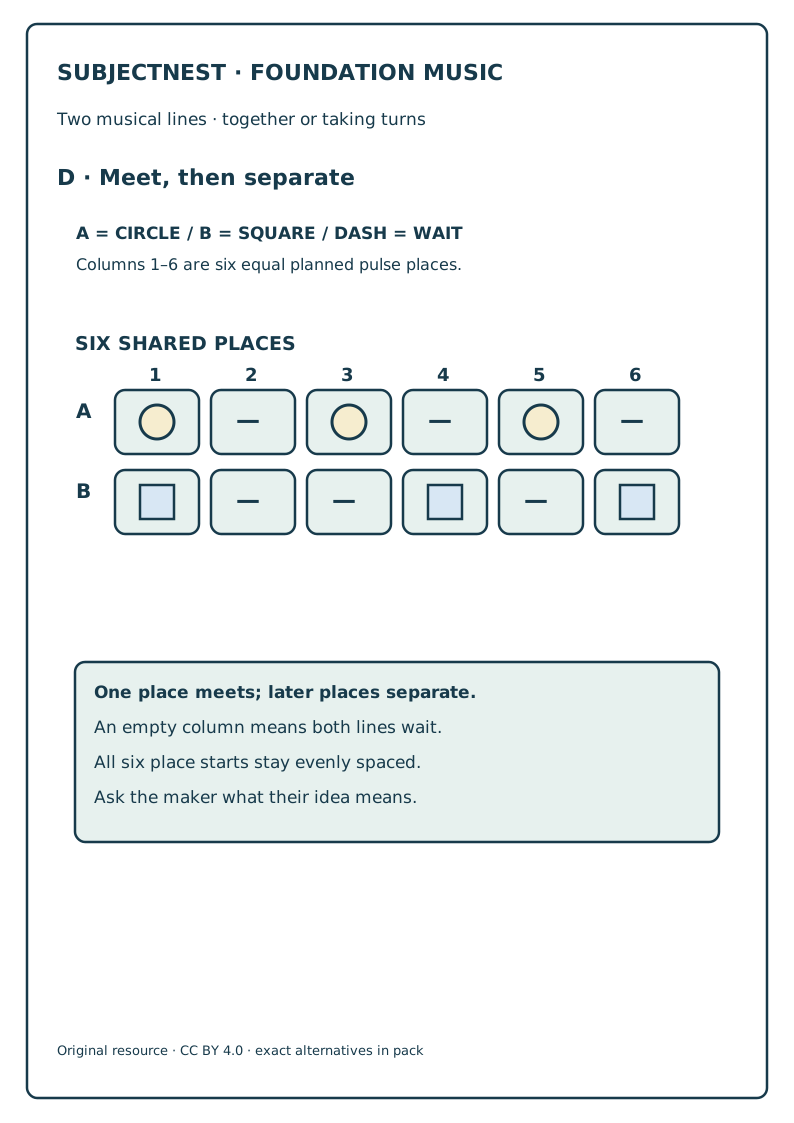
- Welcome · 3 min. Say, “A whole piece need not use the same relationship everywhere.” Offer private making, neutral description and no-sound routes.
- Model · 4 min. Read A 1,3,5 and B 1,4,6: both at 1, neither at 2, then A/B/A/B. Point to the two waits at 2. “A quiet place is part of this plan; it is not a seventh event.”
- Try together · 5 min. Ask for one meeting place, one separating place and the empty place, with column evidence. Then remove the example. Do not prescribe “busy,” “happy” or a listener response for any texture.
- Child choice · 7 min. Child creates a score with at least one both-place and at least one one-line place, no more than three marks per line. Child may leave both waiting elsewhere. Choose an own reason, or record that no reason was offered. Child may try an approved quiet live duo with willing makers, listening/reading for their one meeting place and later separate starts; offer another musical try by choice.
- Notice · 4 min. Check the first score against the child's intended relation in each named place. If one-line and no-line are merged, compare two broad columns with distinct one-mark/zero-mark counts, then return to their score.
- Close · 2 min. Child keeps or changes the title. Sound remains held unless reviewed; a mixed score alone does not establish auditory recognition.
Week 28 · Day 138 · Hold one part, revise the other
Target/codes: preserve every A decision and B mark count while revising B's relation to A; partial AC9AMUFD01/FC01. Prepare: hold/change example, invitation G, two blank score copies.
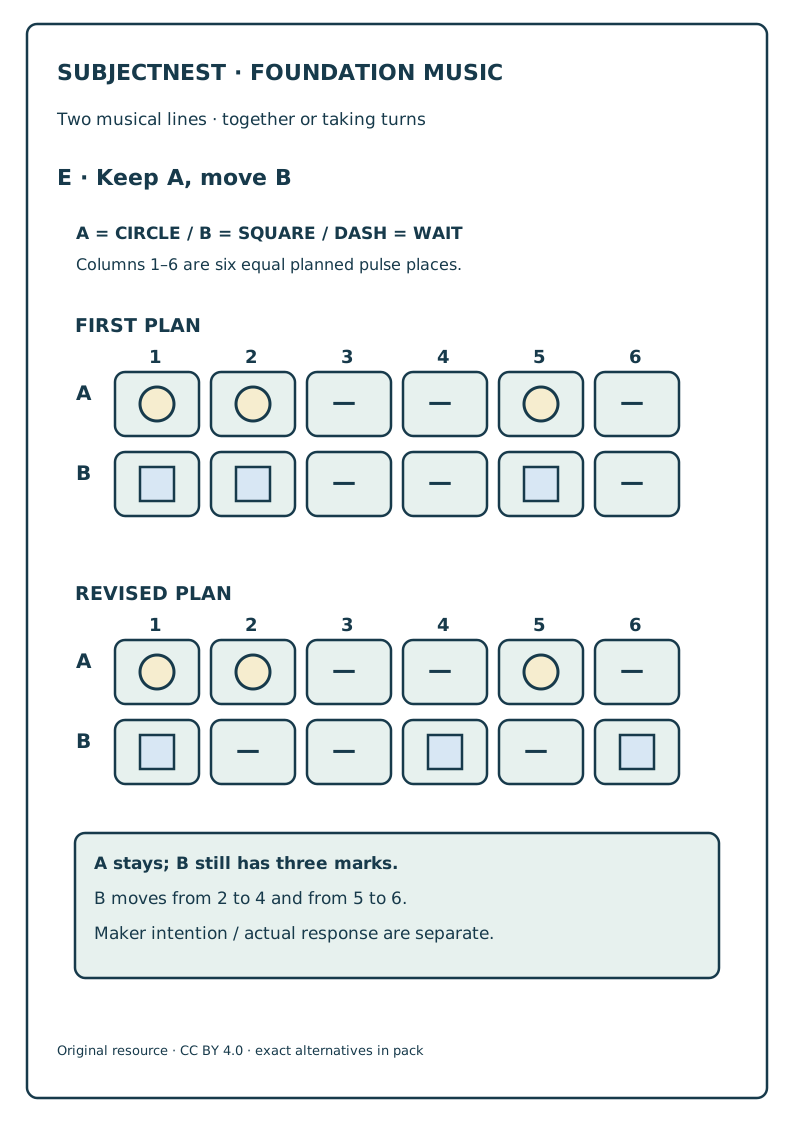
- Welcome · 3 min. Offer an invented maker display, two paper lights or a learner's neutral context. Say, “We can hear/read a new relationship while keeping one part.”
- Model · 4 min. Read the practice first score A/B 1,2,5. Compare revision A 1,2,5; B 1,4,6. Name removed B places 2/5 and added 4/6; A and three B marks hold. This is different from the final unseen transformation.
- Try together · 5 min. Adult accidentally moves A's place 5. Ask what broke the promise to hold A; child directs restoration. Then remove the example before their composition.
- Child choice · 7 min. Child copies an own A line exactly to a second strip, copies B, then relocates one or two B marks while keeping B's count. Ask how any specific place's relationship changes and why they chose it. Adult copies only on child direction. If the learner wishes and local sound review passes, two willing makers try first and revised duo pieces at the same comfortable steady pace. Child chooses a preferred version or keeps both; no listener agreement is required.
- Notice · 4 min. Preserve both versions and all removed/added positions, not just an attractive finished score. If counts change, use one-to-one B token pairing and revisit the relocation. Record any assistance.
- Close · 2 min. A learner may prefer their first version. Choosing to keep it is valid; the teacher can note the demonstrated revision separately.
Week 28 · Day 139 · Real work, optional sharing and faithful response
Target/codes: optionally encounter a locally permitted real music work and share the child's plan with a willing recipient; partial FD01/FC01, FE01/FP01 held until actual events. Prepare: authentic-source gate, child-owned scores, consent/pass choices and plan/actual fields.
- Welcome · 3 min. Offer private work, a familiar willing recipient, an approved real source or pass. Keep a pass free of a request for explanation. No recording or compulsory performance.
- Model · 4 min. If cleared, introduce the real work with maker, source, permitted use and the source's actual stated context. Ask what two parts do in one short permitted excerpt without assigning community meaning. If clearance is absent, use an adult invented score and leave FE01 held.
- Try together · 5 min. Practise “Would you like to see/hear my score?” with an adult role. A roleplayed yes is not an actual audience. Accept “no/pass” and stop; only an actual willing receiver can supply sharing evidence.
- Child choice · 7 min. Child may show either own version to an actual willing person under local policy. Ask one neutral question, “What did you notice about the two parts?” Child may use an adult question reader. Keep own intention and recipient's exact words apart; no altered or invented reason.
- Notice · 4 min. Enter source/context and child response only after encounter. Enter recipient/medium/receipt/actual words only after sharing, with privacy limits. A listener may notice something different; do not score agreement as success.
- Close · 2 min. Child retains ownership and can withdraw display under policy. Keep tomorrow's fresh score hidden; no public-upload step is offered.
Week 28 · Day 140 · Fresh Check Texture 2: keep A, relocate B
Target/codes: independently create a new two-line plan with A preserved, three B marks, one active line in each of six places and no both-place; partial AC9AMUFD01/FC01. Prepare: public Texture 2, fresh A4 transform, exact raised equivalent; teacher key closed.
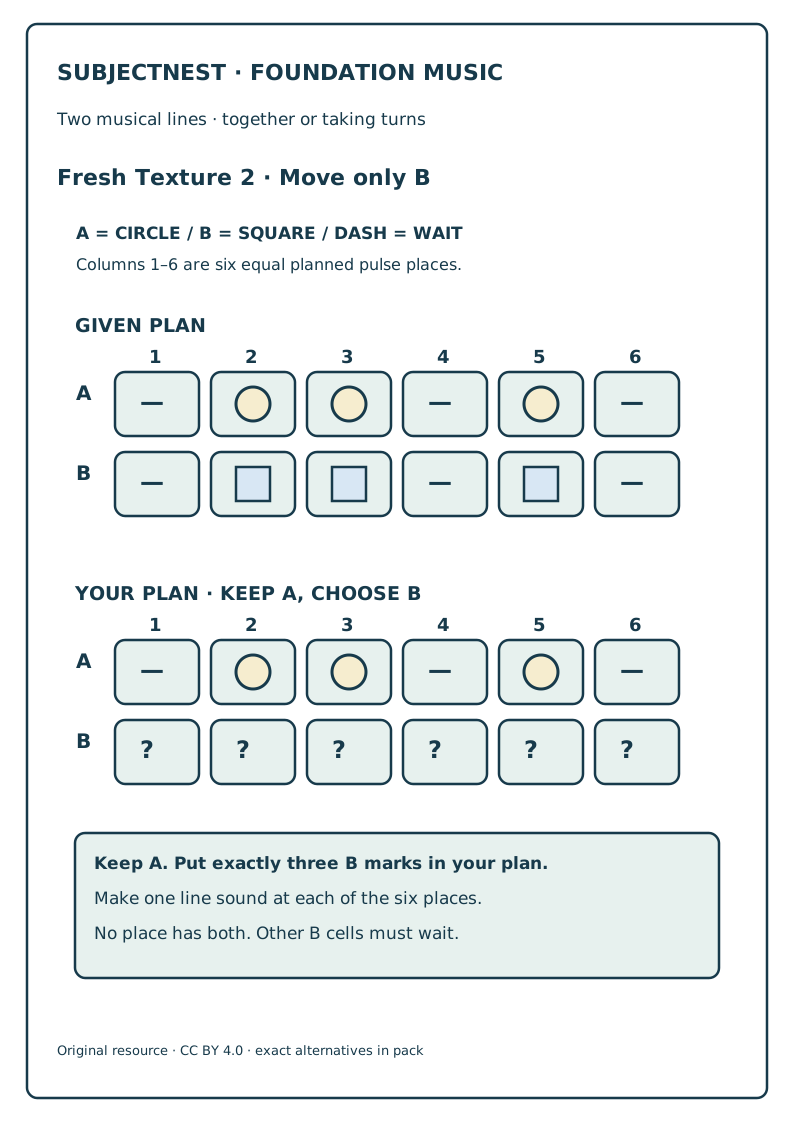
- Welcome · 3 min. Tell the child, “Your new plan must keep A and change B.” Offer no-sound, an uncluttered strip, neutral adult placement, AAC/sign/words, rest and pass. Keep this apart from integrated checks.
- Access · 4 min. Read the given score and all three public constraints neutrally: keep A; exactly three B marks; one line in every place with no both-place. Question marks are blank response cells, not waits. Provide enough dash cards to complete the line.
- Independent plan · 5 min. Child chooses B positions on the response grid without modelling the solution. Adult follows exact directions. Save first complete plan, including the wait decisions, before checking.
- Child response · 7 min. Child names removed and added B places, shows A held, and explains one relational place and an own musical reason or “not stated.” Ask what paper cannot prove without asking for a performance.
- Self-check · 4 min. Child inspects all six columns and both line counts independently. Save first work and self-revision separately; no cue or arrow points to the correct B cells. Mark unobserved if access is unavailable or child passes.
- Close · 2 min. Consult the separate key after the response is saved. Offer a later new practice base if needed. Do not turn a single plan into whole-standard achievement.