Every session is 3 + 4 + 5 + 7 + 4 + 2 = 25 minutes. Prepare broad paired rows, circle A/square B sound cards, dash waits, a thick separator after four beats and a neutral pointer. Both parts share steady beats; local numbers restart 1–4 for round 2. The backing A copies all four sound/wait choices; B changes at least one in its second round. This is an accompaniment plan, not an instruction for a body, device or safety action. “Backing/other part” are musical roles; neither defines pitch height, importance or learner type.
For optional locally reviewed quiet making, preview a familiar short sound for each part, keep each source fixed, agree stop/pass and use an adult's comfortable steady visible pointer 1–4, then 1–4 again. Two willing makers can play, one learner can choose one part, or the child can direct two adults. First rehearse one round of A, then B, then both by choice; no forced independence or perfect timing. Silent raised/graphic/exact-described rows fully meet planning. Log actual maker/heard route/kept beat/part decisions and actual recipient separately; an adult's sound is not child performance. Candidate file tempo is production information, not a learner speed requirement.
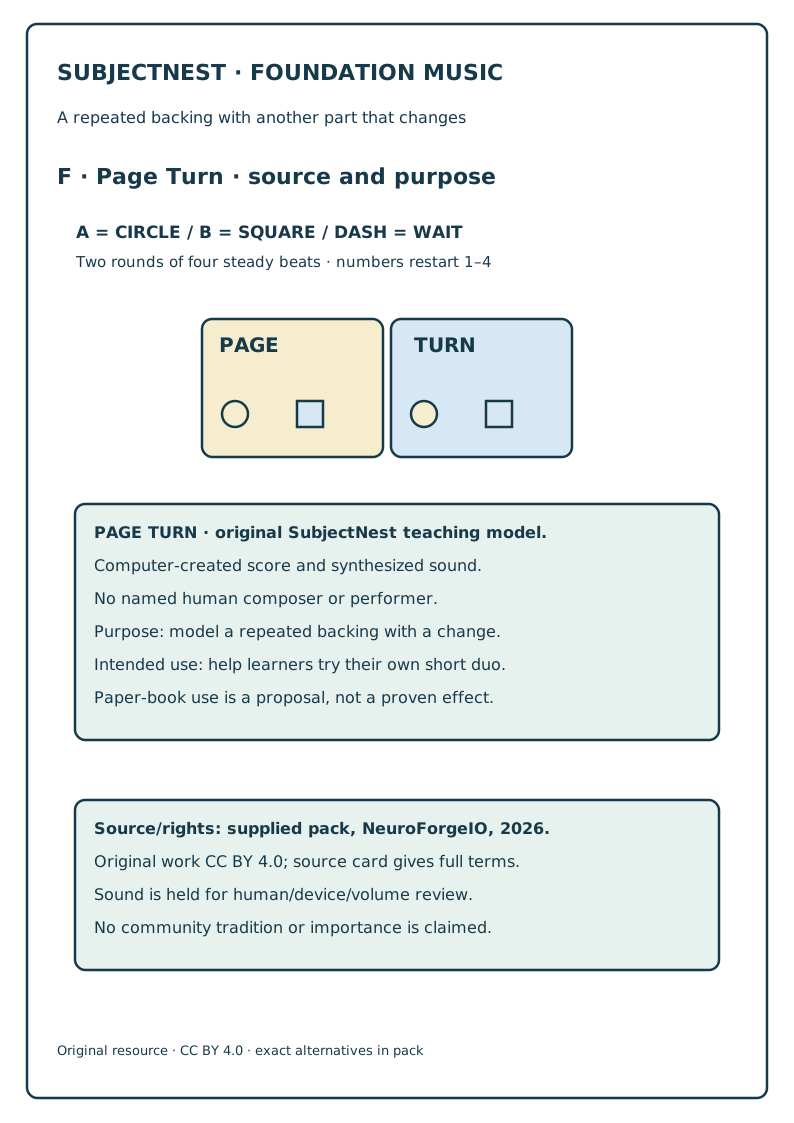
The supplied Page Turn is accurately identified as an original computer-created SubjectNest author model with a documented purpose/source. A child's actual encounter/response can provide a narrow FE01 opportunity; no real community claim is inferred. Teacher evidence notes follow first work. Let children choose, make, rehearse, enjoy, revise or keep private. Keep fresh pages/key closed until Days 155/160; integrated practice follows its separate checks.
Week 31 · Day 151 · Meet Page Turn and its purpose
Target/codes: respond to an actual supplied work/source and notice repeated backing with change; partial FD01/FC01, narrow FE01 conditional on actual encounter/response. Prepare: Page Turn score, source card, full creator/purpose, chosen exact access; invitation A.
- Welcome · 3 min. “This small piece is called Page Turn. One part comes round again.” Offer score, raised/exact description, cleared optional sound or pass; sound remains held until human clearance.
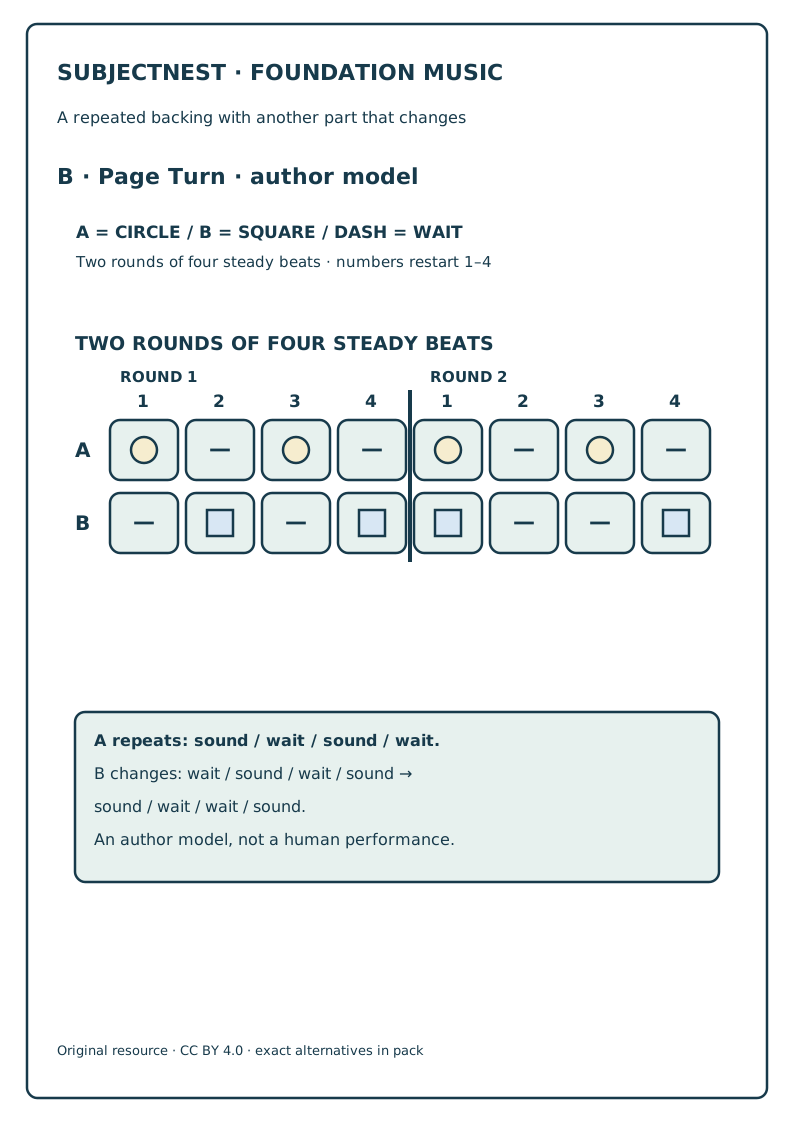
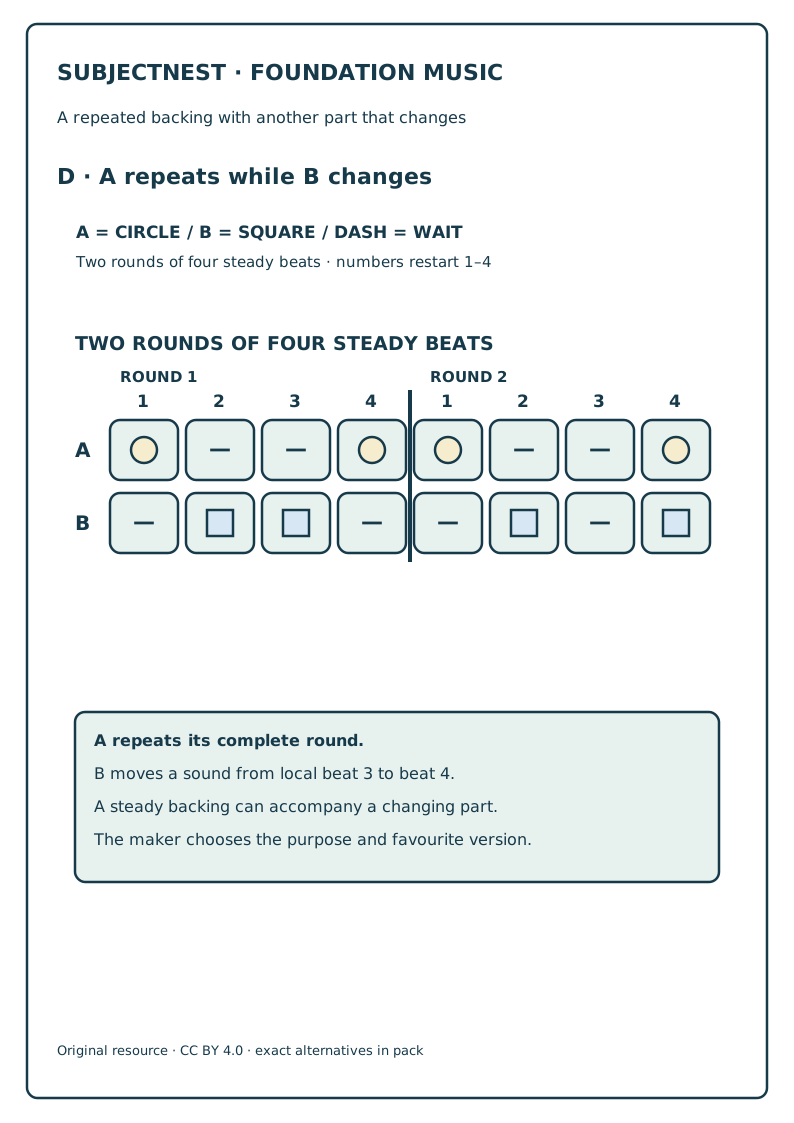
- Model · 4 min. Read the real source card accurately: a computer-created SubjectNest teaching model, made to help learners try repeated backing with another part changing. No human performer/community tradition is supplied. Point/read first four A choices then next four: sound/wait/sound/wait both.
- Try together · 5 min. Read B wait/sound/wait/sound then sound/wait/wait/sound. Ask “What comes back? What changes?” If sound is approved and chosen, listen once with score; otherwise use complete column descriptions.
- Child choice · 7 min. Child selects one part to inspect, directs a neutral read or points to a repeated/changed place. Ask “Why was this model made? What could someone try with it?” Accept own observation, question, rejection of proposed book use or not stated; no expected emotion.
- Notice · 4 min. Save actual resource/access and child's response only if encountered. A printed listing or teacher words alone do not prove a child's response. Keep aural/performance fields unset on silent routes.
- Close · 2 min. “Tomorrow make a backing of your own.” Child may keep source card private or pass. No learner/family cultural knowledge is requested.
Week 31 · Day 152 · Make a backing that repeats
Target/codes: choose a four-beat A pattern and copy every choice into round 2; partial AC9AMUFD01/FC01. Prepare: part key, blank paired strip, four sound/wait cards per round; invitation B.
- Welcome · 3 min. “Choose a little backing. Bring it round again.” Offer table/raised/exact described cards, child-directed adult, quiet reviewed sound or pass.
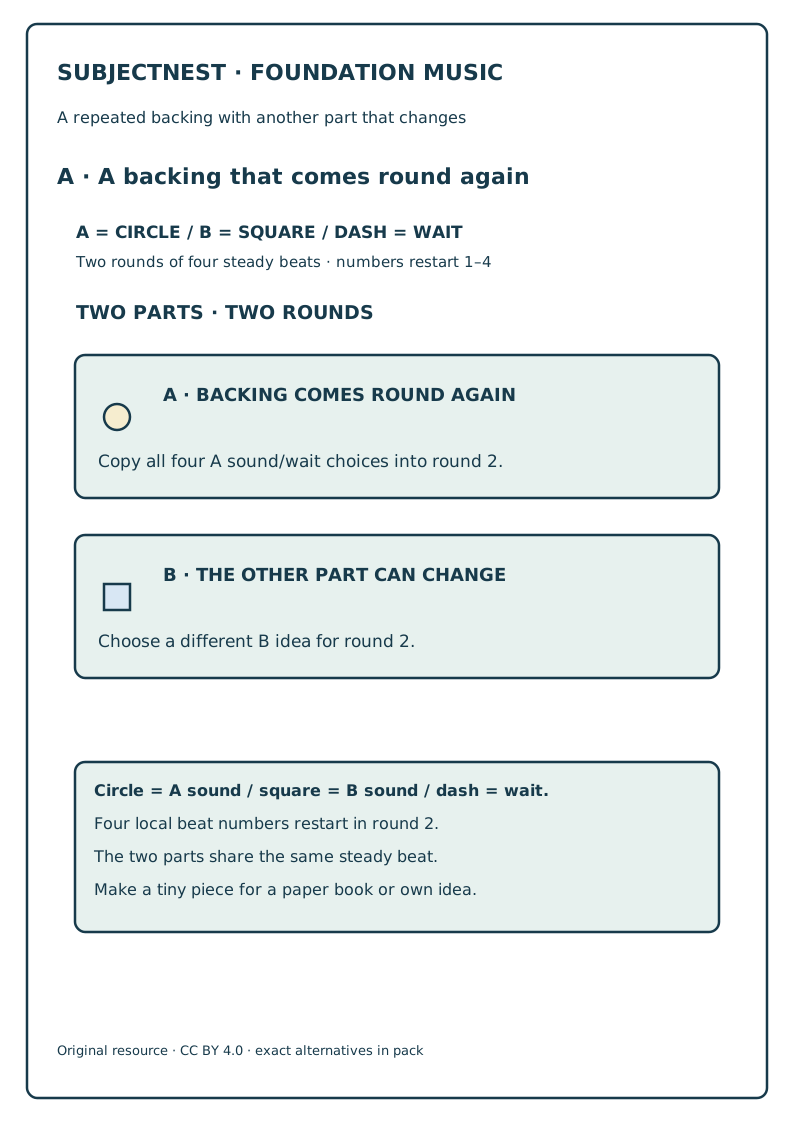
- Model · 4 min. Adult selects A sound/wait/wait/sound and copies it exactly to round 2. Compare first-to-first through fourth-to-fourth, including waits; this is more than keeping the sound count.
- Try together · 5 min. Adult moves second-round last sound to beat 3. Learner finds both changed choices and directs restoration. Remove this model before their composition.
- Child choice · 7 min. Child chooses an A round with one to three short sounds, copies all four decisions and may rehearse it twice at a comfortable steady pace using a reviewed source or silent pointer. Adult moves only on direction.
- Notice · 4 min. Save first complete repeat and one correspondence explanation. If counts match but positions differ, compare each corresponding place rather than asking only how many.
- Close · 2 min. Child names it, leaves untitled or keeps it private. The backing can later accompany a different part.
Week 31 · Day 153 · Another part can try a new idea
Target/codes: preserve repeated A while B differs in round 2; partial AC9AMUFD01/FC01. Prepare: keep-A invitation, changed-B model, broad square cards; invitation C.
- Welcome · 3 min. “Keep your backing. Let the other part try something new.” Child chooses an invented book/show or just music. No compulsory partner.
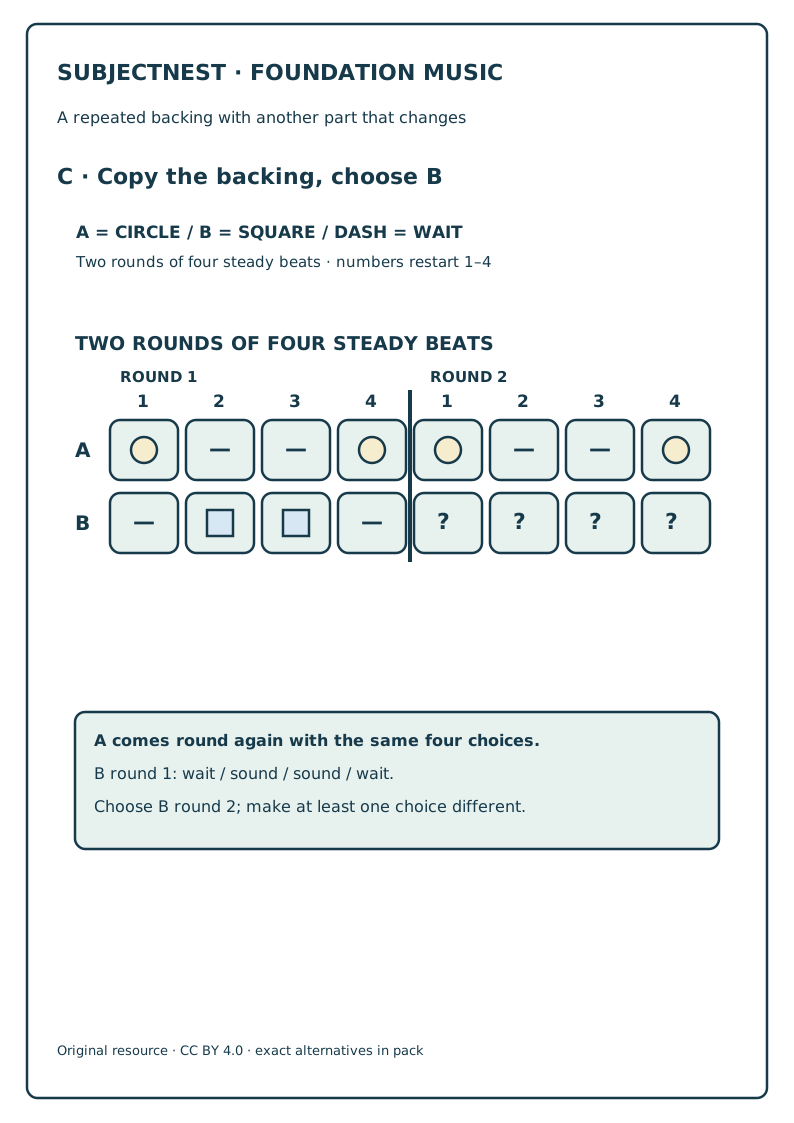
- Model · 4 min. A sounds at local 1,4 both rounds. B first at 2,3, second at 2,4. Read both parts in each beat before moving right. Name B's local 3 sound→wait and 4 wait→sound; A stays.
- Try together · 5 min. Use the template's given B first round and invite a different second B choice. Ask where it differs and whether A still repeats; an empty B round is a legitimate compositional possibility in open making.
- Child choice · 7 min. Child adds B first-round choices to an own A backing, then chooses a second B with at least one difference. Read/trial one round first, then second, through chosen quiet live or no-sound route. Adults follow the child.
- Notice · 4 min. Save first plan and exact A correspondence/B difference. If both lines change unintentionally, cover B and recover A before restoring combined score; do not call a paper recovery actual performance.
- Close · 2 min. Child picks a favourite B moment. Different source or pitch is not the task; the part's timing/waits change.
Week 31 · Day 154 · A little accompaniment for my idea
Target/codes: create an own two-round piece with repeated backing and changed other part for a chosen purpose; partial AC9AMUFD01/FC01. Prepare: my piece, blank two-page paper model or no-story choice; invitations D/E.
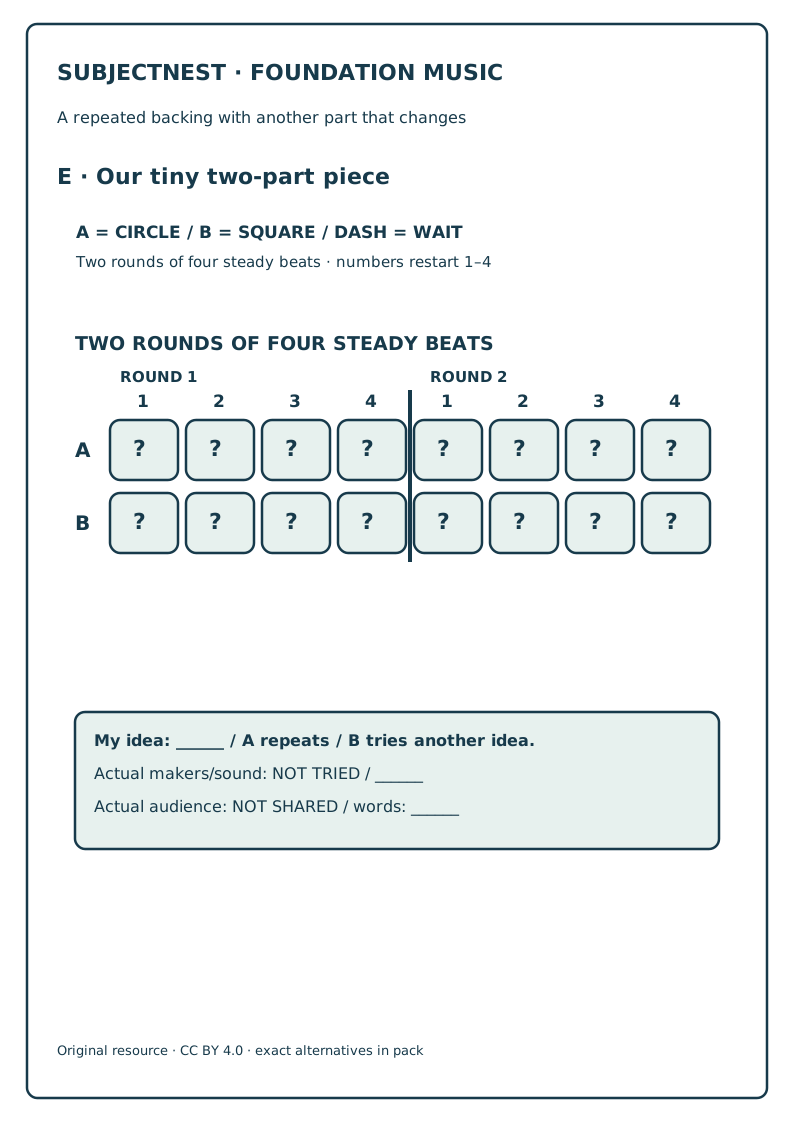
- Welcome · 3 min. “Would your piece go with a paper book, toy show, picture—or be music by itself?” Offer private making, adults on direction or pass; no real book rule or working-screen claim.
- Model · 4 min. Adult pairs an original two-page dot picture with a repeat/change piece and says its own intended use. Reading the paper page does not prove the sound was made or a reader understood it. Put the model away.
- Try together · 5 min. Ask which musical part a maker could keep and which they could vary between two rounds. Use a new practice single A correspondence/B difference, not fresh-check rows.
- Child choice · 7 min. Child builds a complete own score, selects a purpose/title or no story, and may rehearse a short reviewed duo with willing makers or direct a silent reader. A second try is optional; keep time to enjoy the piece.
- Notice · 4 min. Save musical choices and stated purpose separately from actual maker/recipient. If no purpose is offered, record not stated rather than supplying a picture-story meaning.
- Close · 2 min. Child chooses private keeping or a willing reader later. Hide fresh pages; do not require a performance tomorrow.
Week 31 · Day 155 · Fresh Check Round 1: which A repeats?
Target/codes: independently identify an exact repeat and explain nonrepeat local positions in a fresh pair; partial AC9AMUFD01. Prepare: public Round 1, A4 pair, exact raised equivalent; private key closed.
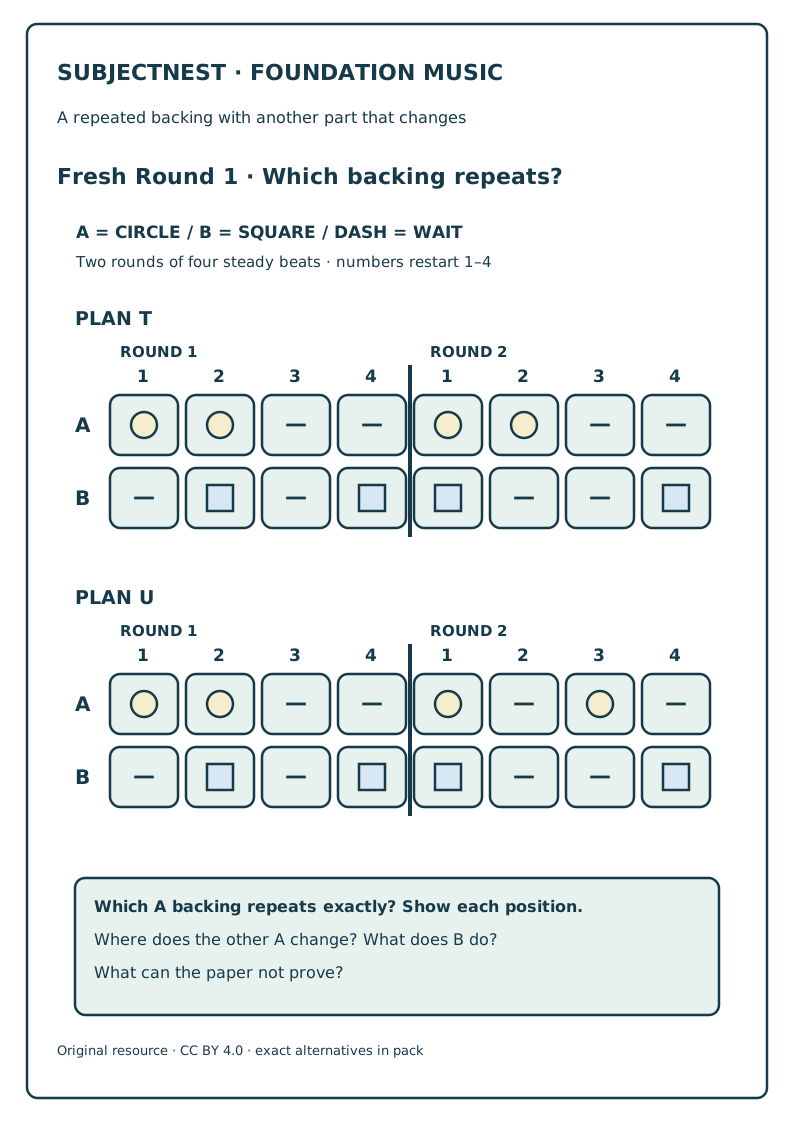
- Welcome · 3 min. “Two new pieces. Find the backing that comes round again.” Offer exact neutral access, AAC/sign/words, scribe, rest or pass; separate from integrated Day 155 practice.
- Access · 4 min. Read every A/B sound/wait and local number in both plans neutrally if requested. Explain the role key without classifying plans or pointing to matching places; no matching audio.
- Independent plan · 5 min. Child selects the plan whose A repeats and shows all four corresponding decisions. Save first answer before any hint or self-revision.
- Child response · 7 min. Ask where the other A changes across rounds, what B does, one feature held between plans and what paper cannot prove. Child can direct exact adult marks without touch/speech.
- Self-check · 4 min. Child compares corresponding local positions independently. Preserve first answer and self-revision separately. Access unavailable/pass is unobserved; arrange another opportunity.
- Close · 2 min. Consult the educator key afterward. Worked variants/home bridges for today follow the check and do not replace its first response.
Week 32 · Day 156 · Why might a maker use a backing?
Target/codes: respond to actual Page Turn purpose/source and choose an own use; partial FD01/FC01, narrow FE01 conditional on observed actual response. Prepare: supplied work/source, child piece, optional broad two-page model; invitation E.
- Welcome · 3 min. “A maker can say why they made music. You can choose your own reason.” Offer Page Turn exact source/score access or pass; no family/community disclosure.
- Model · 4 min. Revisit the actual source statement: author-model intended to help learners explore backing repetition under change. Separate that stated intention from “children learned” or “people use this in libraries,” neither supported here.
- Try together · 5 min. Child chooses which claim the source supports, or asks a question: made as a teaching model versus an invented human/community/performance claim. Ask an ordinary “What could someone try with it?”
- Child choice · 7 min. Child chooses an own use for their accompaniment—paper-book opening, picture change, toy stage or music alone—and tries or reads a short part. A different use from the author is allowed; actual benefit/meaning is not predetermined.
- Notice · 4 min. Record actual encountered resource, source-backed idea and own proposal separately. FE01 is narrow partial responding, not aural evidence or full people/community coverage. Missing access/response remains held/unobserved.
- Close · 2 min. Keep source card available for teachers; broader varied real works belong in the wider program with appropriate authority.
Week 32 · Day 157 · Rehearse one part, then both
Target/codes: plan or try a repeated backing independently of a changing part; partial AC9AMUFD01/FC01. Prepare: child-owned score, row cover, locally reviewed exact short sources and willing maker choices; invitation F.
- Welcome · 3 min. “Try A, try B, then both if you wish.” Child chooses reviewed sound, adult makers, silent cards, rest/pass. Preview each sound and agree stop.
- Model · 4 min. Adult reads/realises one practice A round twice, then B two rounds, then both with a comfortable shared pointer. With sound, the actual source/pace may vary; do not claim accurate independence unless observed.
- Try together · 5 min. Child directs one chosen part or a neutral reader through its two rounds; uncover the other row and identify a together or wait place. This is rehearsal, not another texture-check score.
- Child choice · 7 min. Learner rehearses their own tiny duo once and may choose another try, swap willing roles or direct two adults. A child can be composer/director and never make a sound. Keep part sources fixed within a take.
- Notice · 4 min. Ask which place they want to try again or keep. Save actual maker/support/observed timing separately from intended score. If A drifts, rehearse its one round slowly and comfortably before combining again by choice.
- Close · 2 min. Child keeps a version or stops. No recording, compulsory group or perfect-speed score.
Week 32 · Day 158 · Give B another second round
Target/codes: revise only B's second round while preserving all A and first B; partial AC9AMUFD01/FC01. Prepare: two copies of child own score, square sound/wait replacements; invitation G.
- Welcome · 3 min. “The backing stays. Try another ending for B.” Offer invented picture/show or no story, private/no-sound routes.
- Model · 4 min. Adult keeps A local 1,4 in both rounds and first B 2,3. B second 2,4 becomes 1,3. Compare both removed/added sounds; only B round 2 changes. More than one feature may shift acoustically in actual live trials—record it.
- Try together · 5 min. Adult accidentally changes A too; learner restores it by corresponding-position comparison. Remove adult score before own making.
- Child choice · 7 min. Child copies an own piece, revises one or more second-round B decisions, and reads or optionally tries first/revised pieces with reviewed quiet sources and willing makers. Child may prefer first, second or both.
- Notice · 4 min. Keep versions, all removed/added local B positions and held A/first B. If count changes, note it; open composition has no required unchanged count today. Adult directions/prompts are recorded accurately.
- Close · 2 min. Child selects a version to keep or share tomorrow by choice. A Music revision does not certify an inventory sum or physical holder test.
Week 32 · Day 159 · A willing audience and wider sources
Target/codes: optionally share an own piece and explore another approved real music work/context; partial FD01/FC01, FP01 and wider FE01 conditional. Prepare: additional source gate, own work, invitation/pass, live review if chosen.
- Welcome · 3 min. Offer private keeping, actual willing reader/listener, another approved source or pass. Page Turn remains a supplied model, never a stand-in for all people/community contexts.
- Model · 4 min. If a varied real work is approved, identify maker/source/context and only the purpose supported by that source. Otherwise revisit Page Turn's honest card and keep wider-source inquiry held. No invented First Nations/cultural meaning.
- Try together · 5 min. Rehearse “Would you like to hear/see our piece?” with an adult paper-role; accept no/pass and stop. An invented yes is rehearsal only.
- Child choice · 7 min. Child may share own score or reviewed short realization with an actual willing recipient, make one part/direct adults/use silent sharing, or keep private. Ask “What did you notice?” only if wanted. Another interpretation is allowed.
- Notice · 4 min. Record actual source response, recipient/medium/receipt and exact permitted words only after events. A child's directed adult is adult making; actual audience does not establish child playing.
- Close · 2 min. Return ownership and respect withdrawal under local policy. Keep final new source hidden until the check; no public upload.
Week 32 · Day 160 · Fresh Check Round 2: keep A, change B
Target/codes: independently revise a fresh B second round under held first round/A and sound-count/ending rules; partial AC9AMUFD01/FC01. Prepare: public Round 2, fresh A4 task, exact raised/full-word source; teacher key closed.
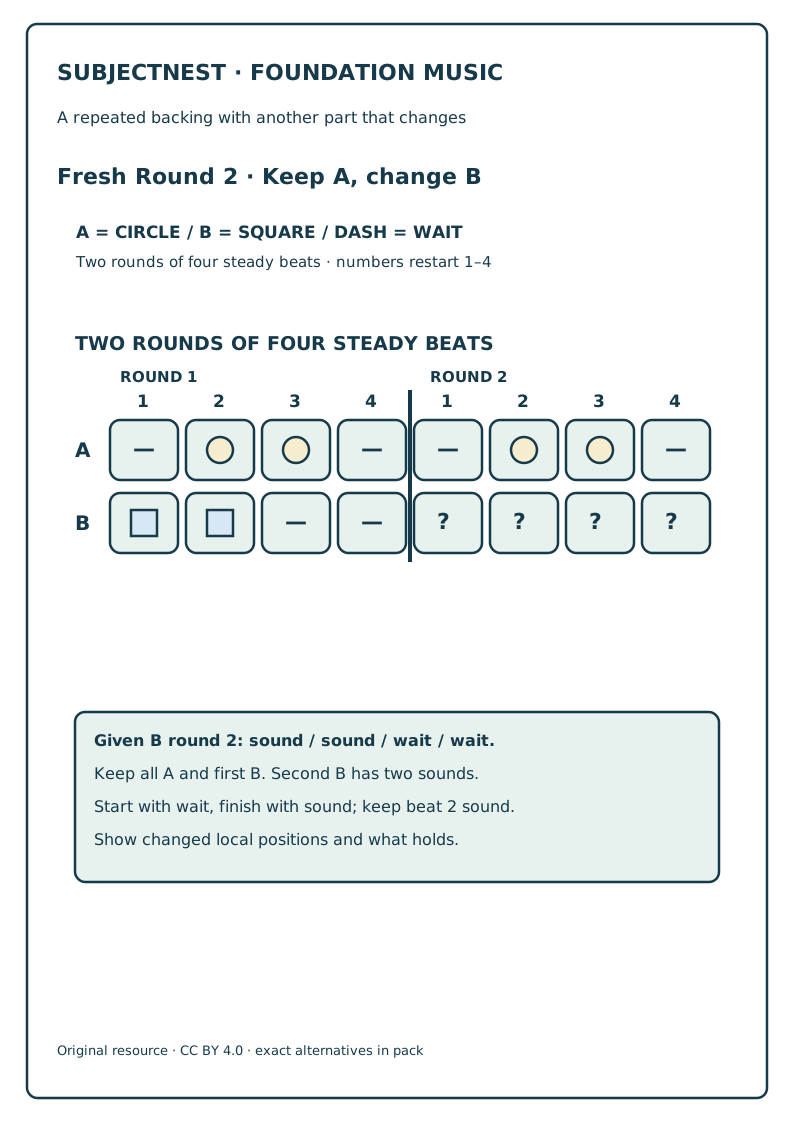
- Welcome · 3 min. “Keep the backing and first round. Give B a new second round.” Offer private neutral description/placement, AAC/sign/words, rest or pass; separate from integrated Day 160 checks/practice.
- Access · 4 min. Read the complete fresh given A/B decisions and public rules neutrally. Local beat numbers restart. Second B question marks are undecided, not waits. Do not place a solution, classify changes or play a matching candidate.
- Independent plan · 5 min. Child keeps all A and first B; chooses second B with exactly two sounds, first wait, final sound and beat 2 still sound. Save first complete plan before support.
- Child response · 7 min. Child identifies old/new local decisions, held features, own musical reason if desired and what paper cannot prove. Neutral adult records only child directions, without a required performance or story.
- Self-check · 4 min. Child independently compares both A rounds and B rules/first round, preserving first work and self-revision separately. If access or pass prevents observation, record unobserved and offer another time.
- Close · 2 min. Use separate key after saving first response. Today's variants/bridges are later practice, not the first independent result or full-standard judgment.