Version: v0.1 draft, 29 September 2026. Status: educator, accessibility and local-syllabus review pending. Audience: Foundation / Queensland Prep after Weeks 7–8. Use: ten 25-minute daily lessons, original low-ink print and text aids, an A4 vector data page with PNG preview, and a formative and portfolio guide.
| Day | Main work | Principal curriculum link |
|---|---|---|
| 41 | Collect and sort object data for a given question | AC9MFST01 |
| 42 | Sort picture data and compare categories | AC9MFST01 |
| 43 | Gather optional anonymous responses to a low-stakes question | AC9MFST01 |
| 44 | Represent the same data with objects and images | AC9MFST01 |
| 45 | Compare same, more, fewer and zero in a display | AC9MFST01 |
| 46 | Revisit zero, 0–20 representation and order | AC9MFN01; AC9MFN03 |
| 47 | Revisit subitising to five and part-whole to ten | AC9MFN02; AC9MFN04 |
| 48 | Revisit practical change and repeating patterns | AC9MFN05; AC9MFA01 |
| 49 | Choose a number, data or pattern tool in a fresh scene | AC9MFN01; AC9MFST01; AC9MFA01 |
| 50 | Show evidence and choose the next teaching move | Review of sampled Foundation codes |
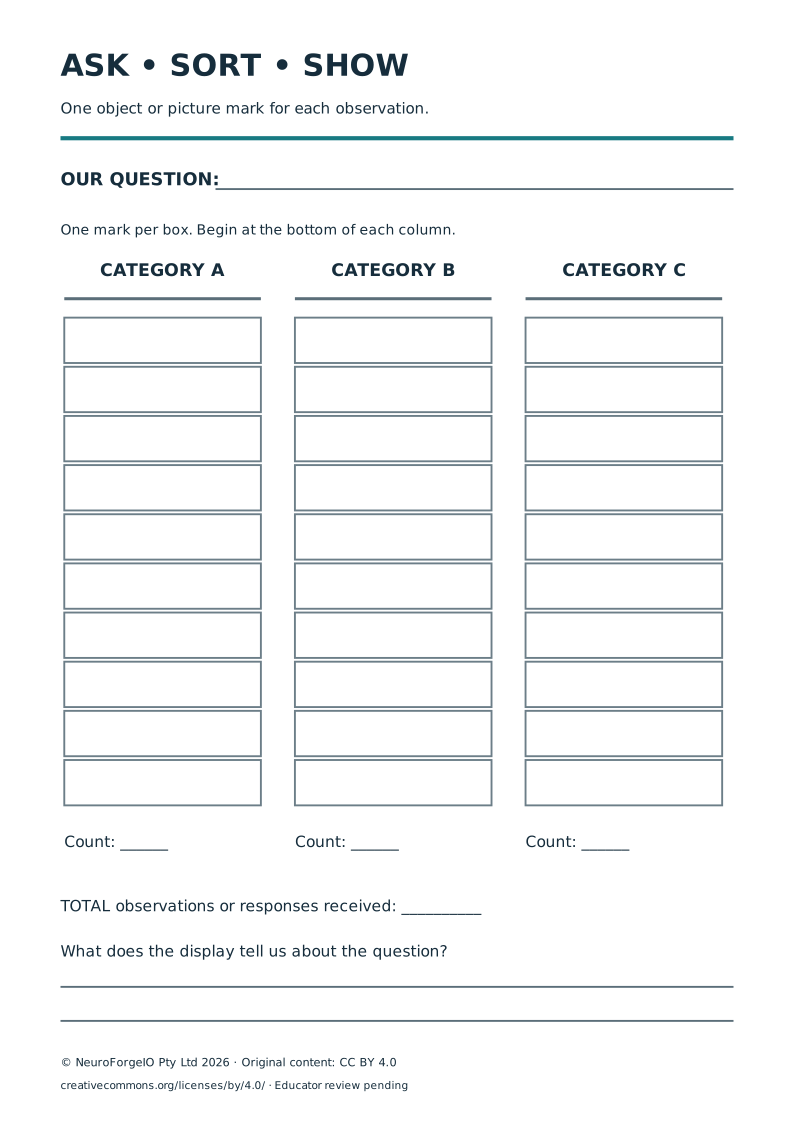
A data investigation starts with a question. The child then collects one object, image or response per observation, sorts by a stated rule, shows the data and answers the same question from the display. The fixed card sets provide answer keys; a real class response set varies, so there is no invented class total. Day 43 uses an optional, anonymous, low-stakes choice and reports responses received, not a claim about all children or families. Children may pass or respond privately. Do not collect names, health details, home circumstances or public pupil photos.
Week 10 is a portfolio review, not ten new content descriptions. It revisits the 0–20 number, small-group recognition, parts to ten, practical change, repeating patterns and data introduced earlier. A teacher gathers a few close observations each day, checks missing evidence with fresh materials, and plans one concrete next move. No one worksheet, single score or Day 50 performance establishes full achievement. The assessment guide separates observed independence, supported response and not yet observed evidence, and links each to tomorrow's teaching.
Prepare and include
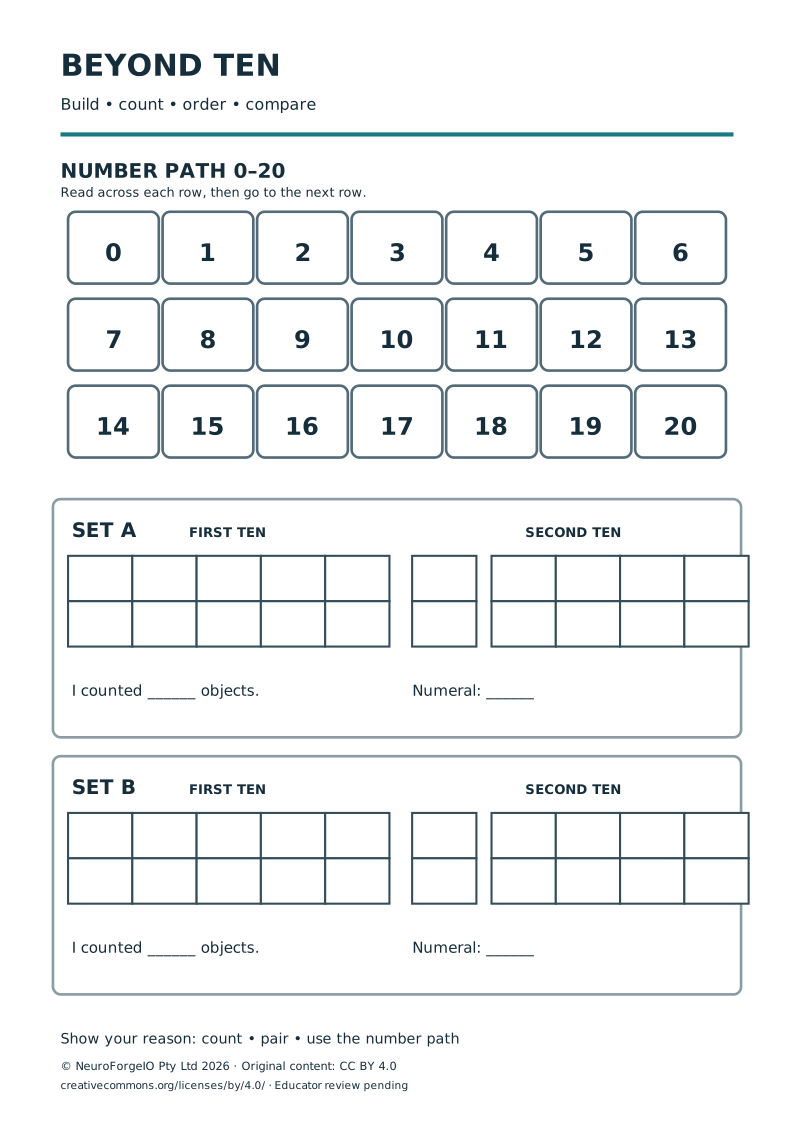
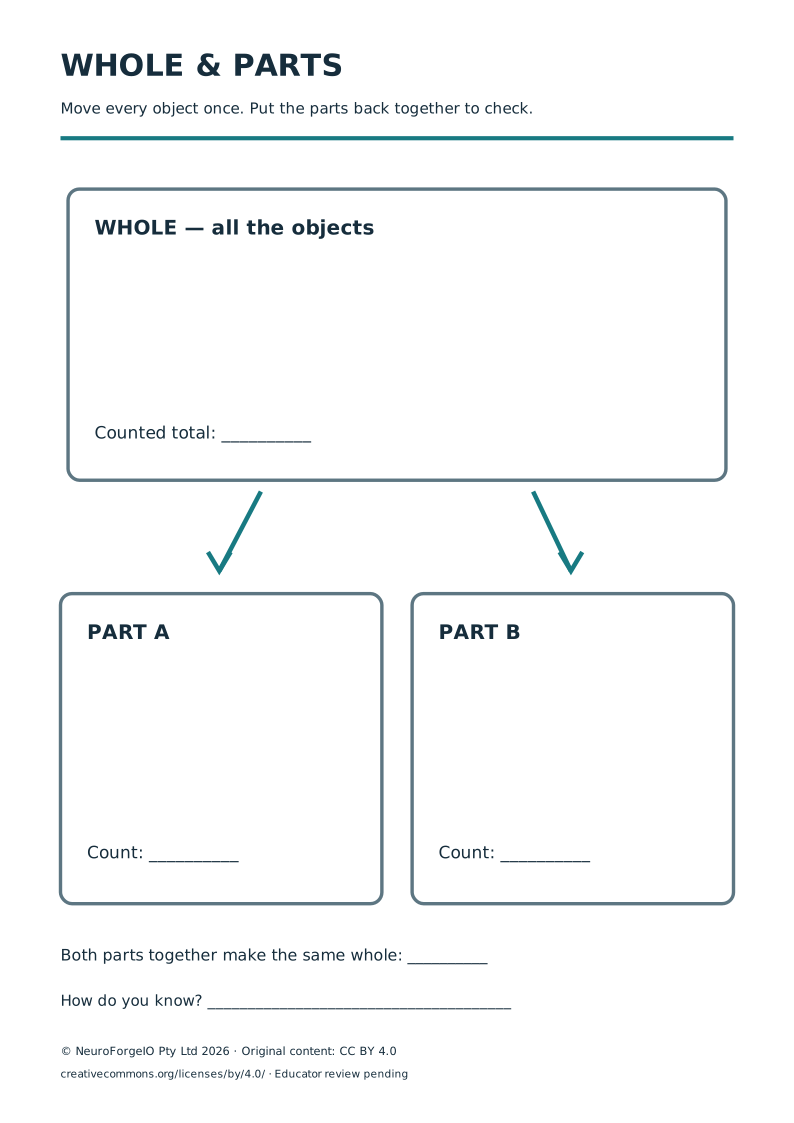
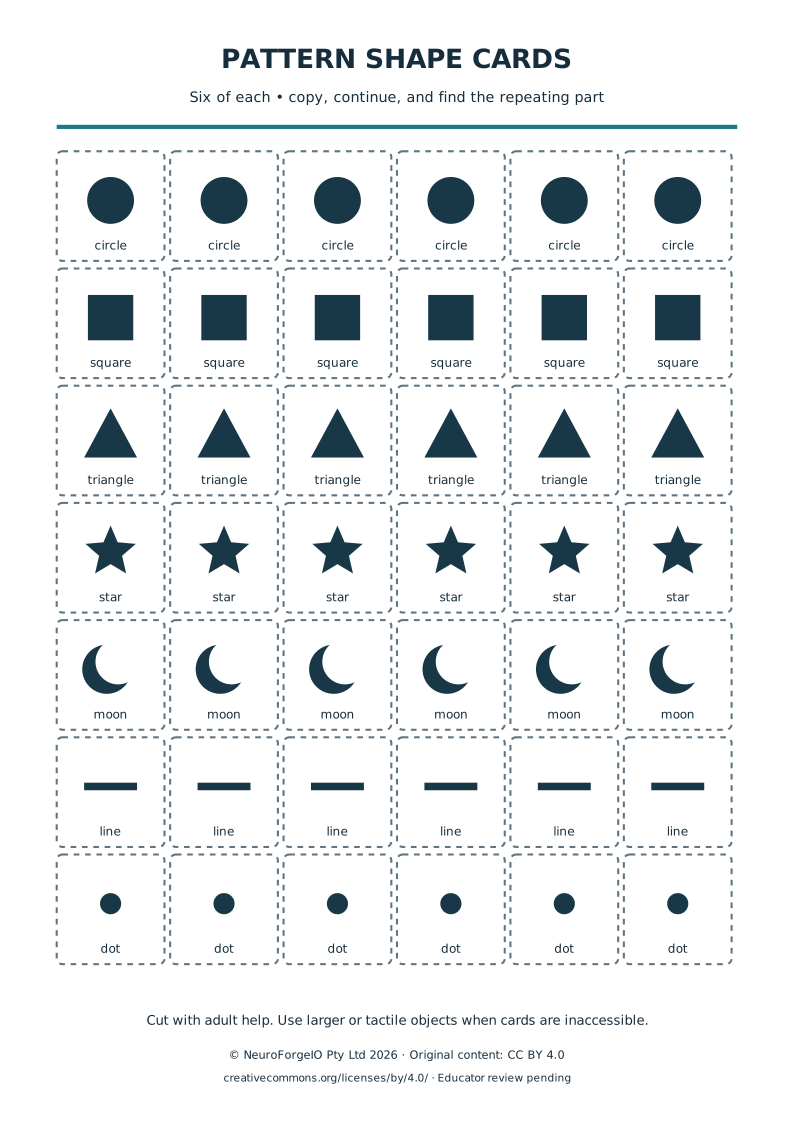
Per pair: two mats, up to 20 large reusable counters, two ten-frames, numeral cards 0–20, three category mats, a small object bag or picture-card pile, original data and review cards, and the low-ink data page. Reuse the 0–20 number page, part-whole mat and pattern shape cards where useful. Provide one card per observation; do not make the height of a drawn picture stand for multiple votes. A school-approved accessible virtual counter or chart can be an optional second representation after the physical task.
Use large print, high contrast, raised category boundaries, grippable items, plain text/read-aloud questions, sign, AAC and child-directed partner placement. A quiet or individual route is available. Distinct categories must be identified by a word, shape or tactile marker, never colour alone. Record access format and prompts. Work with the learner, family and school specialists on individual adjustments; do not assign a fixed learning style. Keep all learner records under school policy. Each lesson has five blocks totalling 25 minutes, a fresh check and a misconception response.
Curriculum, evidence and rights
National source: Australian Curriculum Version 9.0 downloads, Foundation Mathematics. Exact code wording was checked against ACARA's official workbook downloaded 29 September 2026 (SHA-256 db446882d2c00cf7c085a03e250e2442fda6c44011fc114680c46c1dc7a822c3) and local import data/frameworks/acara-v9.json.
- AC9MFST01: “collect, sort and compare data represented by objects and images in response to given investigative questions that relate to familiar situations.”
- AC9MFN01: “name, represent and order numbers including zero to at least 20, using physical and virtual materials and numerals.”
- AC9MFN02: “recognise and name the number of objects within a collection up to 5 using subitising.”
- AC9MFN03: “quantify and compare collections to at least 20 using counting and explain or demonstrate reasoning.”
- AC9MFN04: “partition and combine collections up to 10 using part-part-whole relationships and subitising to recognise and name the parts.”
- AC9MFN05: “represent practical situations involving addition, subtraction and quantification with physical and virtual materials and use counting or subitising strategies.”
- AC9MFA01: “recognise, copy and continue repeating patterns represented in different ways.”
This pack teaches parts of these descriptions. Physical tasks and optional virtual transfer do not establish the full achievement standard. The wording above is reproduced without modification. © Australian Curriculum, Assessment and Reporting Authority (ACARA) 2010 to present, unless otherwise indicated. See ACARA copyright and terms. ACARA has not endorsed SubjectNest. Check the locally adopted syllabus before classroom use.
Original material licence: © NeuroForgeIO Pty Ltd 2026. Original lessons, scripts, cards, displays and assessment in this folder are CC BY 4.0, including commercial reuse with attribution. Suggested credit: “NeuroForgeIO Pty Ltd, SubjectNest: Ask, sort, show, revisit — Foundation mathematics, Weeks 9–10, v0.1 (2026), source, CC BY 4.0”; indicate changes. This does not relicense ACARA text or third-party material. No third-party image, worksheet, song or story is embedded. Any translation needs an exact locale and qualified human review before use.
AERO early numeracy informs purposeful object work and talk; AERO monitoring progress informs the observe–teach–recheck cycle. These are design supports; this pack is not classroom validated.