Version: v0.1 draft, 29 September 2026. Status: educator, accessibility and local-syllabus review pending. Audience: Foundation / Queensland Prep after Weeks 13–14. Use: ten 25-minute daily lessons, original keyed cards and plain-text aids, a part-whole A4 page and PNG, a capacity test A4 page and PNG, plus a formative assessment.
| Day | Main work | Principal Foundation code |
|---|---|---|
| 71 | Partition the same eight in two ways | AC9MFN04 |
| 72 | Partition ten, including a zero part | AC9MFN04 |
| 73 | Find a missing part of a whole to ten | AC9MFN04 |
| 74 | Combine two disjoint parts to make a whole | AC9MFN04 |
| 75 | Transfer the part-whole relation across settings | AC9MFN04 |
| 76 | Name capacity and test two equal containers | AC9MFM01 |
| 77 | Compare a teacher-pretested unequal pair | AC9MFM01 |
| 78 | Reverse A/B and explain the result | AC9MFM01 |
| 79 | Separate starting water level from capacity | AC9MFM01 |
| 80 | Fresh direct test and formative decision | AC9MFM01; AC9MFN04 review |
Prepare once, then reuse
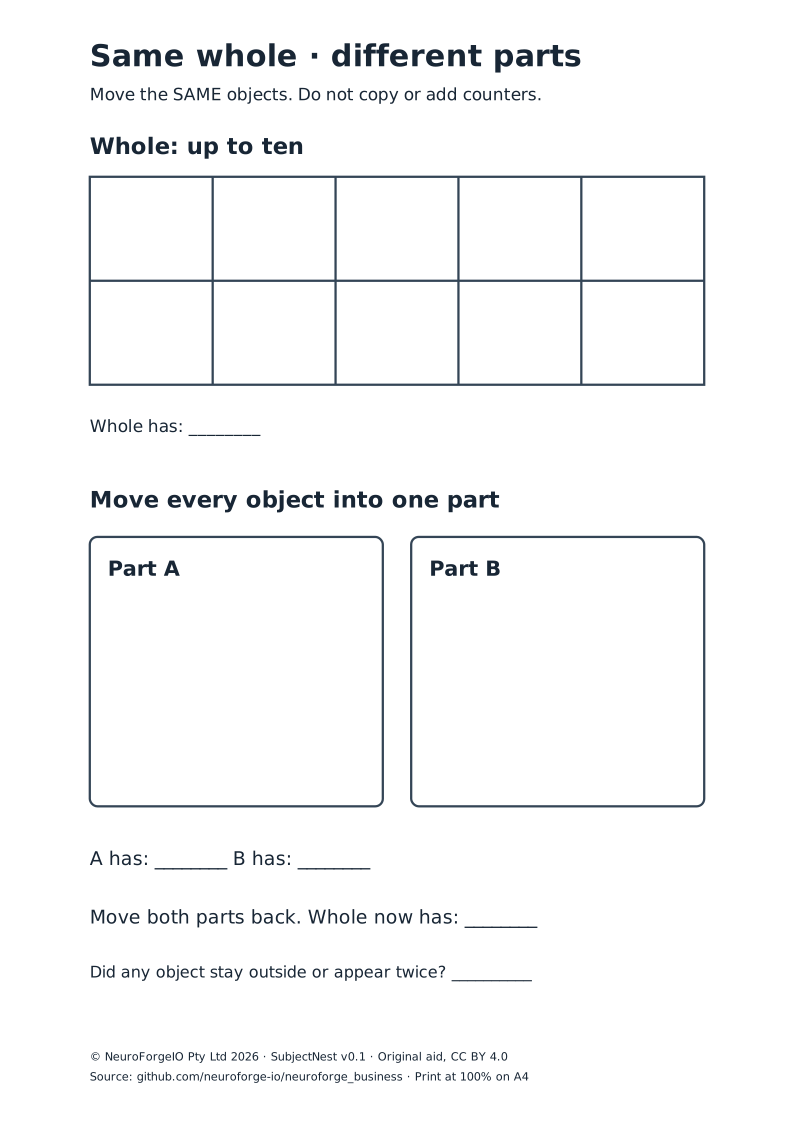
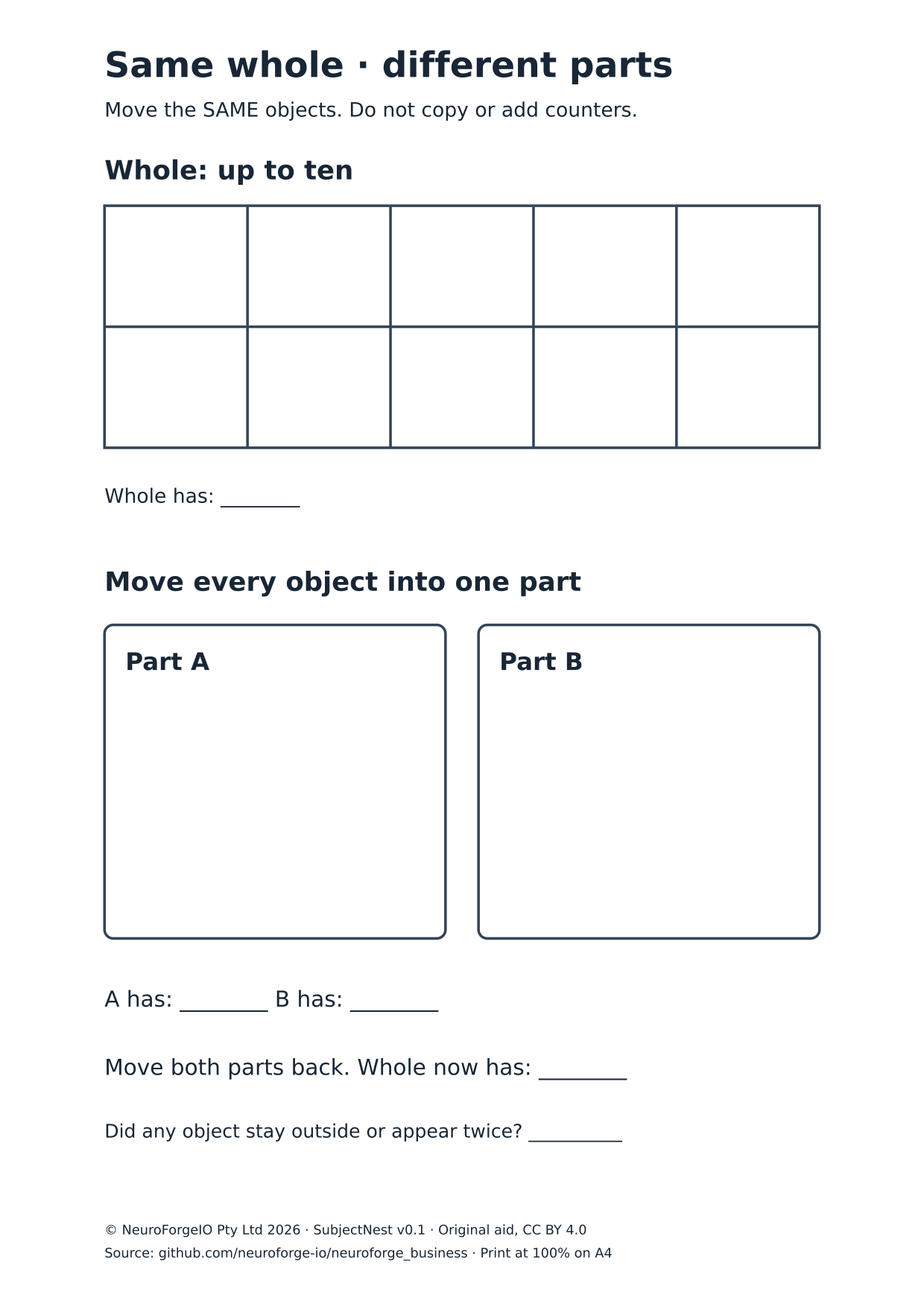
Week 15: Each pair needs ten large safe reusable counters, a whole boundary, two part mats, numeral cards 0–10, and the part-whole page or an equivalent raised mat. Move the same pieces from whole to the two parts and back. Every object belongs to exactly one part; part labels are not extra objects. Grouping up to five visually may support subitising where accessible; a tactile or directed-count route remains valid access and is recorded as such. This revisits earlier part work with new missing-part and composition tasks; it is not a claim that all learners have mastered AC9MFN04.
Week 16: Teacher pretests two identical unbreakable clear containers for the equal pair, at least one unequal pair and a reserve unfamiliar pair for Day 80 by actual transfer before class; write the result in the pair register. The same unequal pair can be relabelled to reverse which side holds more, while a second pair improves transfer evidence. Use clean water only under local safety procedures, a shallow spill tray, stable table, towels, a near-rim usable fill line on each container, and adult control of pouring. No drinking, tasting, edible fillers, loose small dry pieces, glass, child photographs or outdoor collection is required. A learner may direct the adult pour. If a water comparison is locally unsuitable, use a teacher-controlled safe demonstration at another time; a picture-only inference is not recorded as direct comparison evidence.
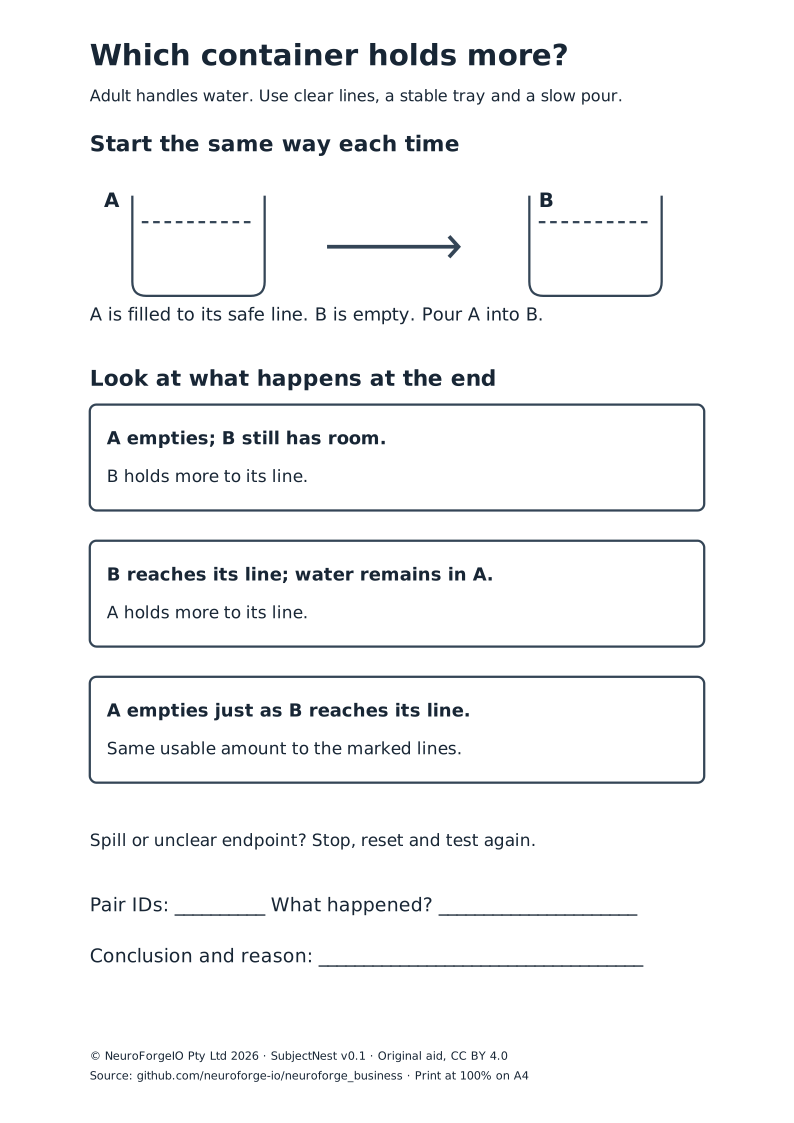
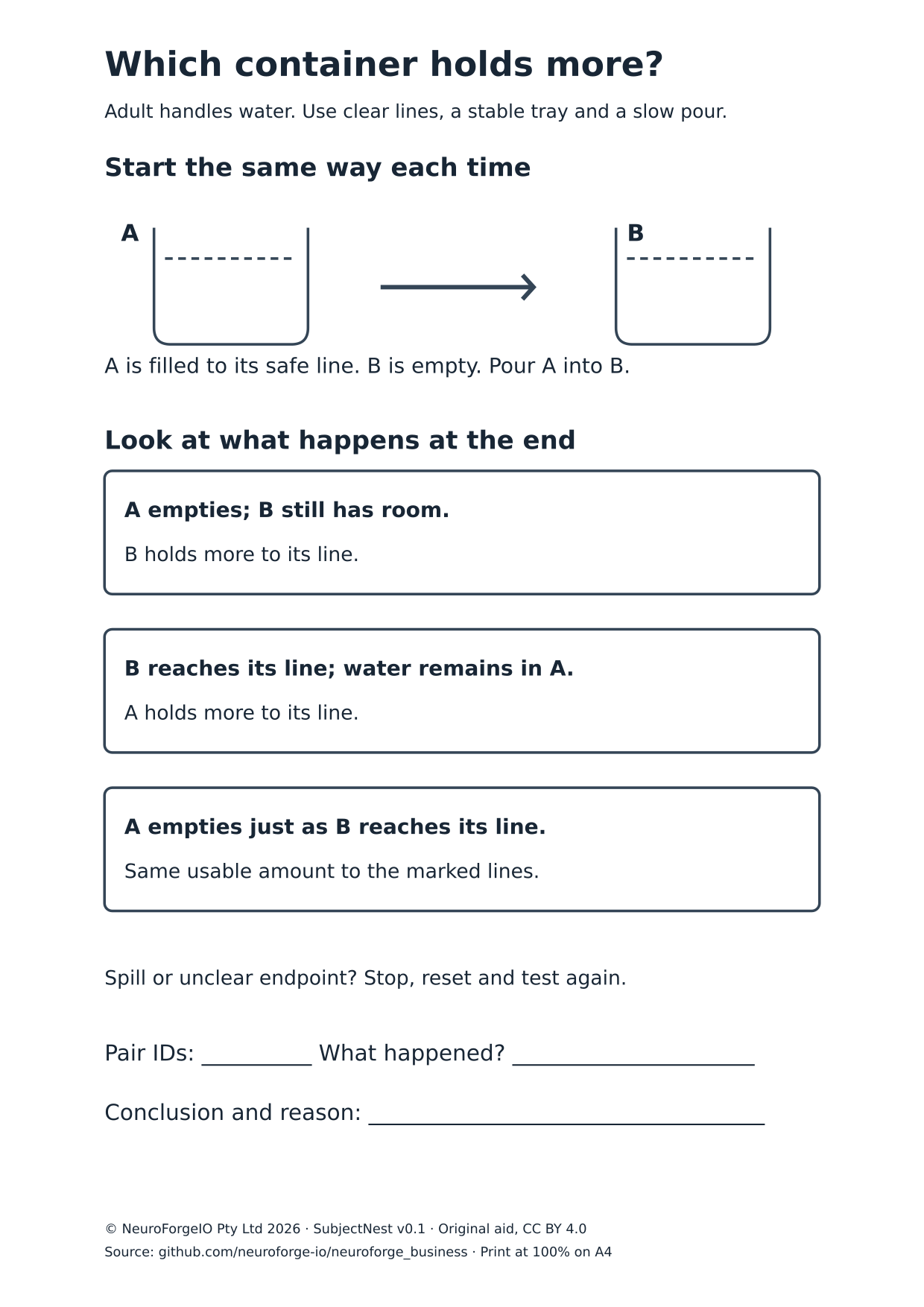
Direct comparison rule: With B empty, fill A to its agreed safe line near the rim and transfer A into B slowly over a tray. If A empties and B still has room below its line, B holds more to its line. If B reaches its line with water still in A, A holds more to its line. If A empties just as B reaches its line, the tested pair holds the same usable amount to the marked lines. A spill, ambiguous line or unclear residual means “inconclusive”; reset, retest or change pair. The marked lines define the tested usable capacity; they are not units. Do not count scoops, guess from height or claim an untested pair has a fixed result. The capacity page gives the decision path, not the answer to a physical pair.
Curriculum, evidence and rights
The Foundation wording below was verified in Australian Curriculum Version 9.0 downloads, official workbook retrieved 29 September 2026 (SHA-256 db446882d2c00cf7c085a03e250e2442fda6c44011fc114680c46c1dc7a822c3) and local normalized snapshot data/frameworks/acara-v9.json.
- AC9MFN04: “partition and combine collections up to 10 using part-part-whole relationships and subitising to recognise and name the parts.”
- AC9MFM01: “identify and compare attributes of objects and events, including length, capacity, mass and duration, using direct comparisons and communicating reasoning.”
Week 16 teaches capacity only, so it is partial practice toward AC9MFM01. A single task or score does not establish the full content description or Foundation achievement standard. Compare with the locally adopted syllabus and a body of work. AERO early numeracy informs purposeful object work and mathematical talk; AERO progress monitoring informs observation and a fresh recheck. These original lessons are not classroom validated.
Offer large/raised mats, grippable counters, a visual and plain-text route, spoken directions, sign, AAC, a quiet station and adult movement directed by the learner. Record access route and mathematical hints separately. Do not label children by a fixed learning style. Keep records under school privacy rules.
ACARA rights: The two descriptions above are reproduced without modification. © Australian Curriculum, Assessment and Reporting Authority (ACARA) 2010 to present, unless otherwise indicated. This material was downloaded from the Australian Curriculum website (accessed 29 September 2026) and was not modified. It is licensed under CC BY 4.0, subject to ACARA terms and exclusions. ACARA does not endorse, sponsor or approve SubjectNest. No ACARA logo or third-party worksheet, image or work sample is included.
Original material licence: © NeuroForgeIO Pty Ltd 2026. Original scripts, cards, aids, vector art and assessment in this folder are CC BY 4.0, including commercial reuse with attribution. Suggested credit: “NeuroForgeIO Pty Ltd, SubjectNest: Same whole, different parts; test what holds more — Foundation mathematics, Weeks 15–16, v0.1 (2026), source, CC BY 4.0”; indicate changes. This does not relicense ACARA or other parties' material. No translation is reviewed; specify the locale and obtain qualified human review before use.