Every session totals 3 + 4 + 5 + 7 + 4 + 2 = 25 minutes. Use three equivalent access routes, broad original paper pieces and exact text/tactile descriptions. Children may draw, choose large cards or direct a neutral adult; record their actual decision. These are fictional single-panel signs for a paper game, not real public signs or culturally inherited symbols. A symbol means what the maker’s local legend says here; its meaning is not universal. No child media, data, device, upload, touch or public performance is required. An actual willing audience and an authorised real media encounter are distinct conditional events.
Week 7 · Day 31 · A maker chooses a purpose
Target/codes: choose and state one intended purpose for a new single-panel paper message before selecting its visual marks; AC9AMAFD01, AC9AMAFC01. Prepare: A purpose cards, blank broad card, A notes.
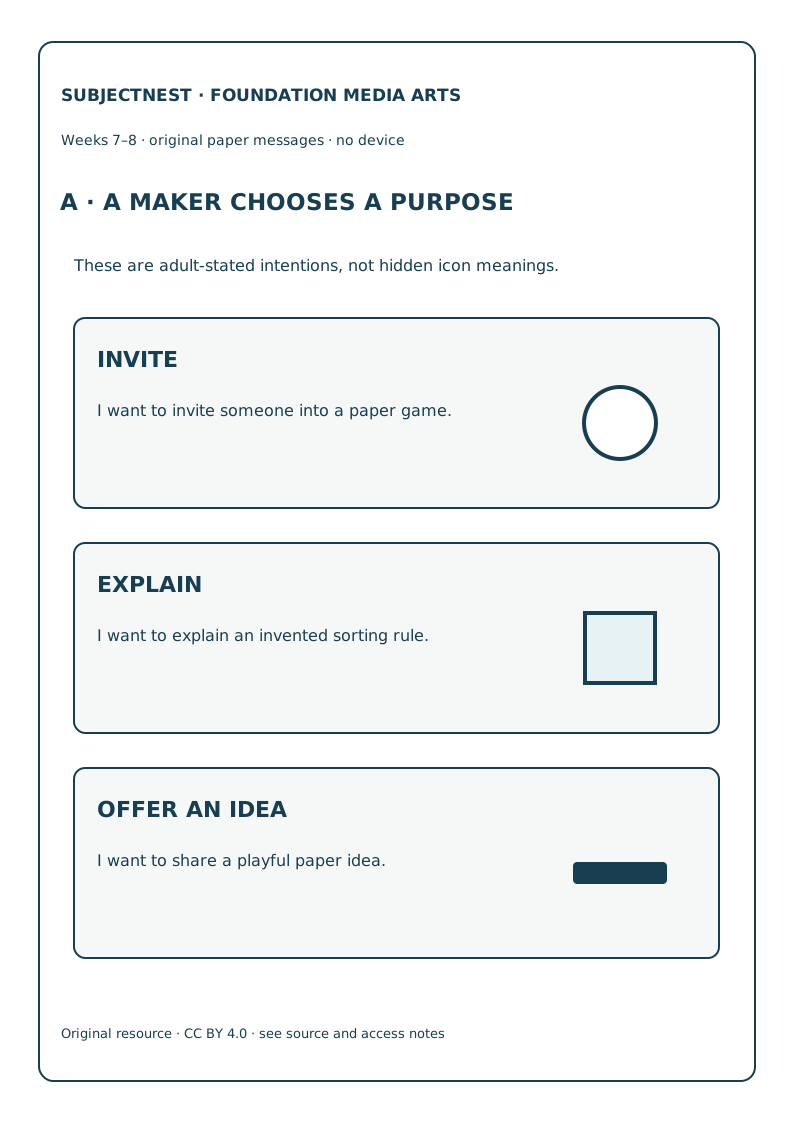
- Welcome · 3 min. Review that a maker can intend to invite, explain or prompt play. These are purposes the adult states, not meanings secretly hidden in shapes.
- Model · 4 min. Adult selects “explain an imaginary paper sorting game,” then draws a neutral empty guide card. Say the audience has not seen it yet.
- Try together · 5 min. Read the three maker statements from A; ask which purpose would fit a child’s chosen invented game. Accept other clear purposes and languages.
- Child choice · 7 min. Child chooses and states their own one-panel card’s purpose, by voice/sign/AAC or large card choice. They may draw one preliminary mark, but save the purpose first.
- Notice · 4 min. Record child’s intended purpose verbatim. Do not infer how a future reader will understand it.
- Close · 2 min. Keep the intention; tomorrow a symbol can be assigned an agreed meaning for that invented game.
Week 7 · Day 32 · An invented sign needs a local meaning
Target/codes: pair one chosen non-cultural geometric sign with one explicitly stated meaning in a fictional paper sorting game; AC9AMAFD01, AC9AMAFC01. Prepare: B invented legend, broad DOT/BAR and round/square tray cards, B notes.
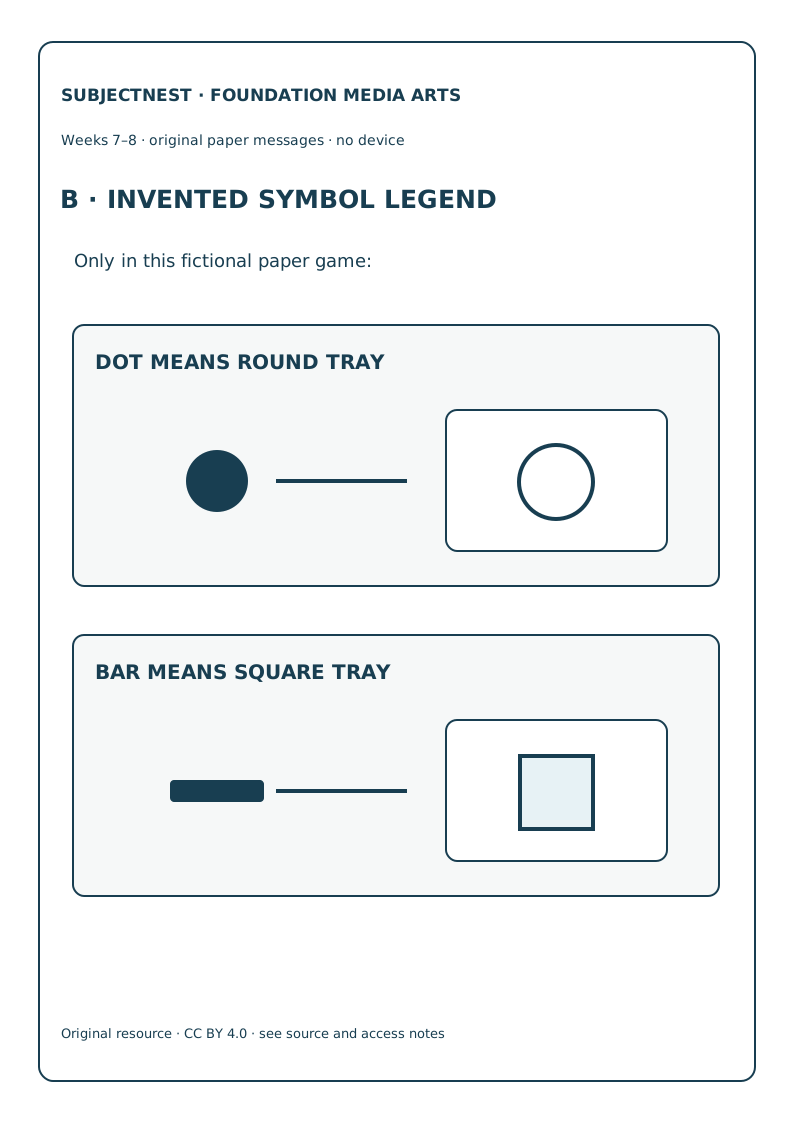
- Welcome · 3 min. A DOT does not always mean “round tray.” Today that is only an invented rule for this paper game.
- Model · 4 min. Put DOT beside ROUND TRAY on a simple legend. Say “In my game, DOT means choose the round paper tray.”
- Try together · 5 min. Compare BAR→SQUARE TRAY on B; ask child to trace each sign to its stated meaning. Read all words aloud.
- Child choice · 7 min. Child selects a large original mark and assigns it one paper-game meaning, then places/directs a legend pair.
- Notice · 4 min. Check child can identify both their sign and chosen meaning; do not correct it to an adult-preferred or universal mapping.
- Close · 2 min. Save the child-defined pair; a symbol can become confusing if one card gives it two jobs.
Week 7 · Day 33 · Notice an ambiguous sign
Target/codes: identify when the same invented sign is used for two different targets on one card and propose one distinguishable replacement; AC9AMAFD01, AC9AMAFC01. Prepare: C ambiguous card, DOT/BAR broad pieces, C notes.
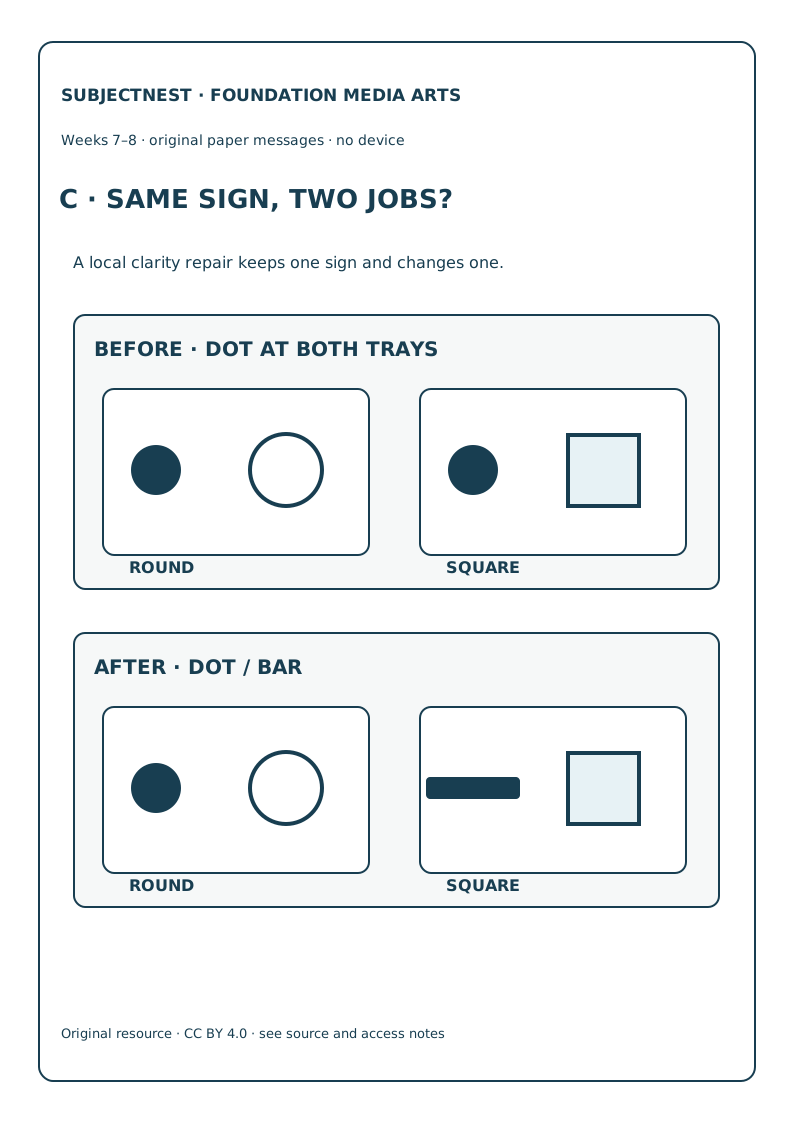
- Welcome · 3 min. Show DOT beside ROUND and SQUARE trays on one adult-made card. This is ambiguous under the game’s stated legend, not an error in all cultures.
- Model · 4 min. Hold DOT at ROUND; replace only the SQUARE tray’s DOT with BAR, naming the single changed sign.
- Try together · 5 min. Ask child to point to the two DOT uses before change, then to what is different after the repair.
- Child choice · 7 min. Child creates/directs a different repair for an invented two-target card, choosing one replacement mark distinguishable by outline or texture.
- Notice · 4 min. Record held meaning and changed sign; accept any sign that the child defines clearly, not only BAR.
- Close · 2 min. Tomorrow the legend and card need to agree.
Week 7 · Day 34 · Keep legend and card together
Target/codes: match each of two invented signs on a one-panel guide to the same meanings in its local legend; AC9AMAFD01, AC9AMAFC01. Prepare: D clear guide, two broad sign–tray pairs, D notes.
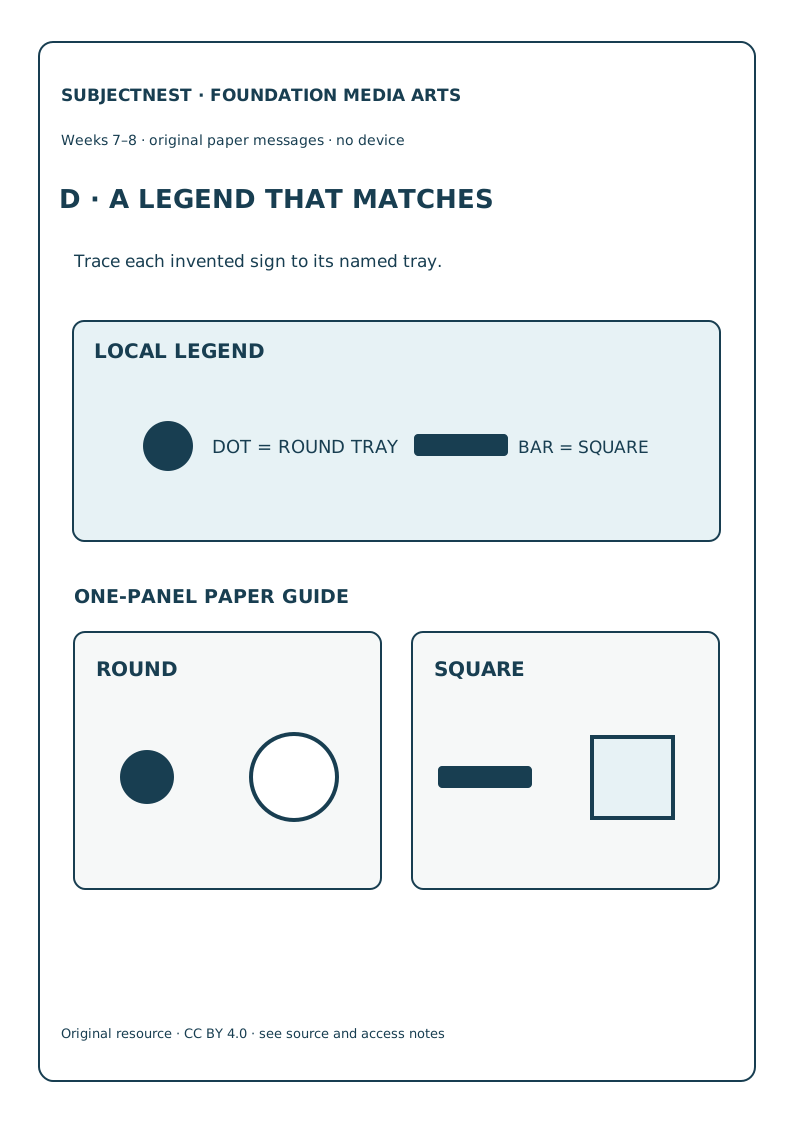
- Welcome · 3 min. A reader unfamiliar with this invented game needs the maker’s key. Large words may be heard or shown as pictures.
- Model · 4 min. Read legend DOT→ROUND and BAR→SQUARE; trace each sign on guide D to its matching tray. Keep the pair together.
- Try together · 5 min. Move one sign to the wrong tray in an adult demonstration, ask what no longer matches, then reset without asking child to guess a universal meaning.
- Child choice · 7 min. Child arranges/directs an original two-pair legend and guide for a paper-only game. Adult reads each relationship neutrally.
- Notice · 4 min. Check both guide placements against the child’s recorded legend; note any needed revision without changing their chosen meanings.
- Close · 2 min. Save the guide. Tomorrow a new three-dot source checks consistency.
Week 7 · Day 35 · Fresh Check K: use a new local legend
Target/codes: independently apply a new three-dot symbol legend to a single-panel guide by changing only its incorrect placement; AC9AMAFD01, AC9AMAFC01. Prepare: public Check K, K A4, broad THREE DOTS and tray cards. Keep key closed.
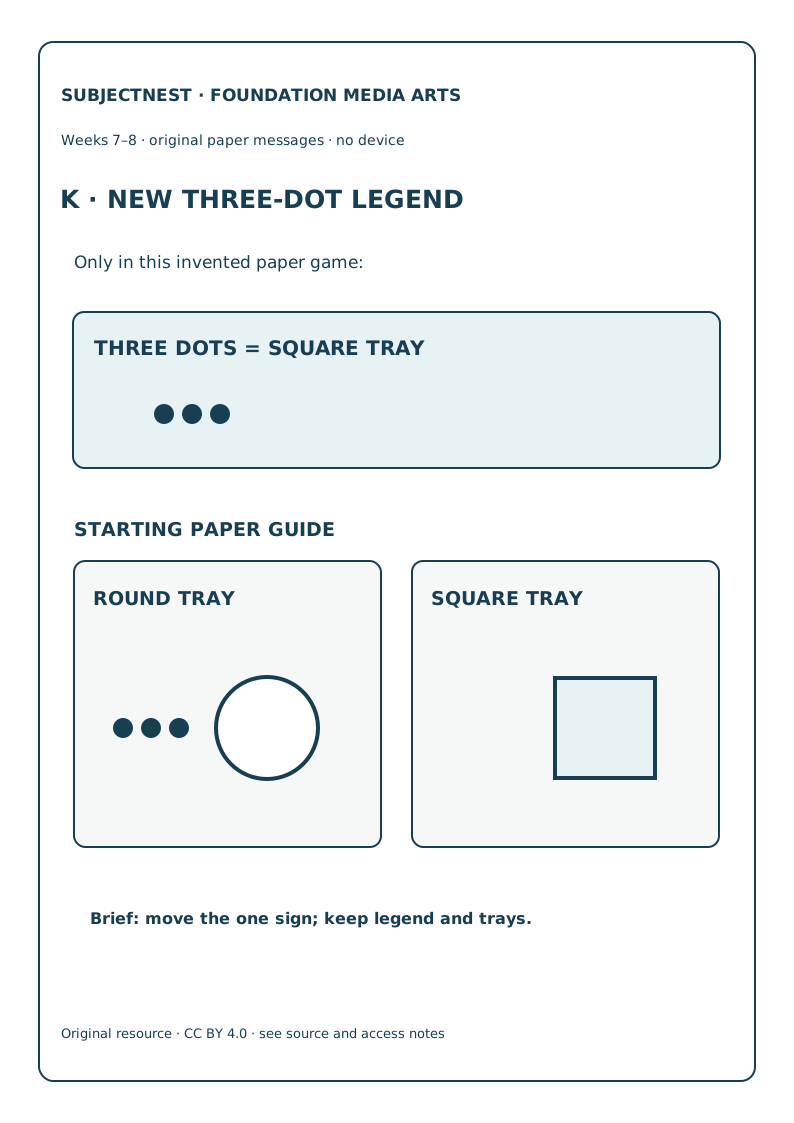
- Welcome · 3 min. This new source guides next teaching; it is not a print-reading or speed test.
- Access · 4 min. Read legend: “In this game, THREE DOTS means SQUARE TRAY.” Show THREE DOTS currently beside ROUND TRAY and unmarked SQUARE TRAY. Do not move it.
- Independent plan · 5 min. Child decides where the one symbol should be placed while the legend and trays stay.
- Child response · 7 min. Child draws, places, points or directs one revised placement; record explanation and first response verbatim.
- Self-check · 4 min. Ask child to trace symbol→legend meaning→guide position without supplying the answer.
- Close · 2 min. Save first response before key. Day 35 swaps are After Check only.
Week 8 · Day 36 · Make a child-owned one-panel guide
Target/codes: make or direct an original single-panel paper guide with intended purpose, two distinguishable invented signs, two stated meanings and consistent placements; AC9AMAFD01, AC9AMAFC01. Prepare: E maker card, large adult-prepared paper pieces, E notes.
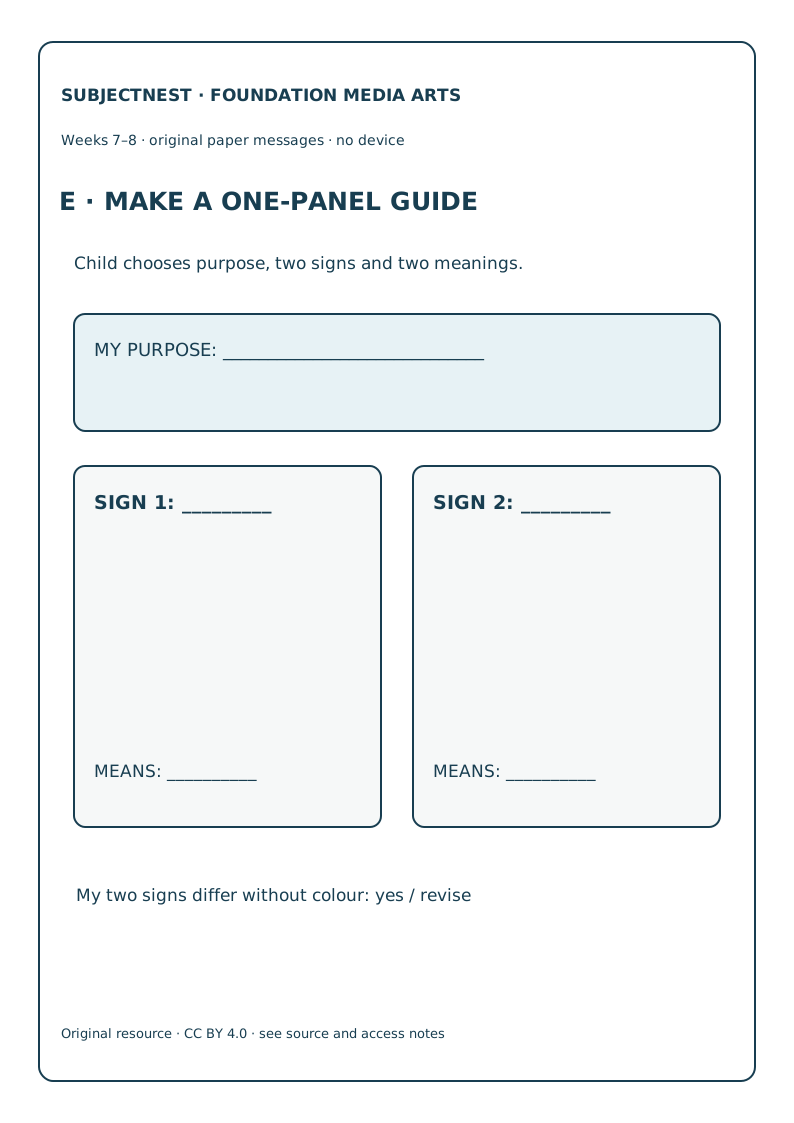
- Welcome · 3 min. Revisit child’s Day 31 purpose. A completed guide is a paper media work; a verbal idea or adult-filled template alone remains a plan.
- Model · 4 min. Adult makes a separate example for an imaginary star/stripe game, naming its own purpose and local pairings. Children need not copy.
- Try together · 5 min. Ask child to choose two paper targets and two distinct signs, describing what each means in their invented game.
- Child choice · 7 min. Child draws/arranges or directs adult placement on E; add a short legend by words, pictures or tactile shapes. Adult records child choices versus adult transcription.
- Notice · 4 min. Trace both sign→meaning→guide pairs. If incomplete, mark work in progress rather than claiming a finished communicative card.
- Close · 2 min. Save locally without photographing. Tomorrow make the two choices distinguishable without colour.
Week 8 · Day 37 · Give readers more than colour
Target/codes: revise two meaning signs on the child-owned guide so they differ by shape, texture or count while original meanings hold; AC9AMAFD01, AC9AMAFC01. Prepare: child’s work, D clear guide, broad shape/texture options.
- Welcome · 3 min. Colour can help some readers but cannot be the only way to tell two choices apart. Offer black-and-white, tactile and spoken routes.
- Model · 4 min. Adult changes two identical DOT signs into DOT and BAR, keeping ROUND and SQUARE meanings fixed. Read the held legend aloud.
- Try together · 5 min. Child checks whether their own two signs can be distinguished without naming colour; adult can describe/trace them.
- Child choice · 7 min. Child changes one sign or adds a different outline/count/texture; adult fabricates only as directed. Keep both intended meanings.
- Notice · 4 min. Check one visible/tactile distinction and preserved sign–meaning pairs. Do not assume all readers now understand the guide.
- Close · 2 min. Save revised card; tomorrow any reader response needs to be asked and recorded, not guessed.
Week 8 · Day 38 · Ask what a willing reader understood
Target/codes: offer a completed child-owned paper guide to a willing person if the child chooses, ask one neutral comprehension question, and separate reader’s actual answer from maker intention; AC9AMAFP01 only if sharing occurs, AC9AMAFD01 for revision planning. Prepare: F maker/reader log, child card, local consent/access plan.
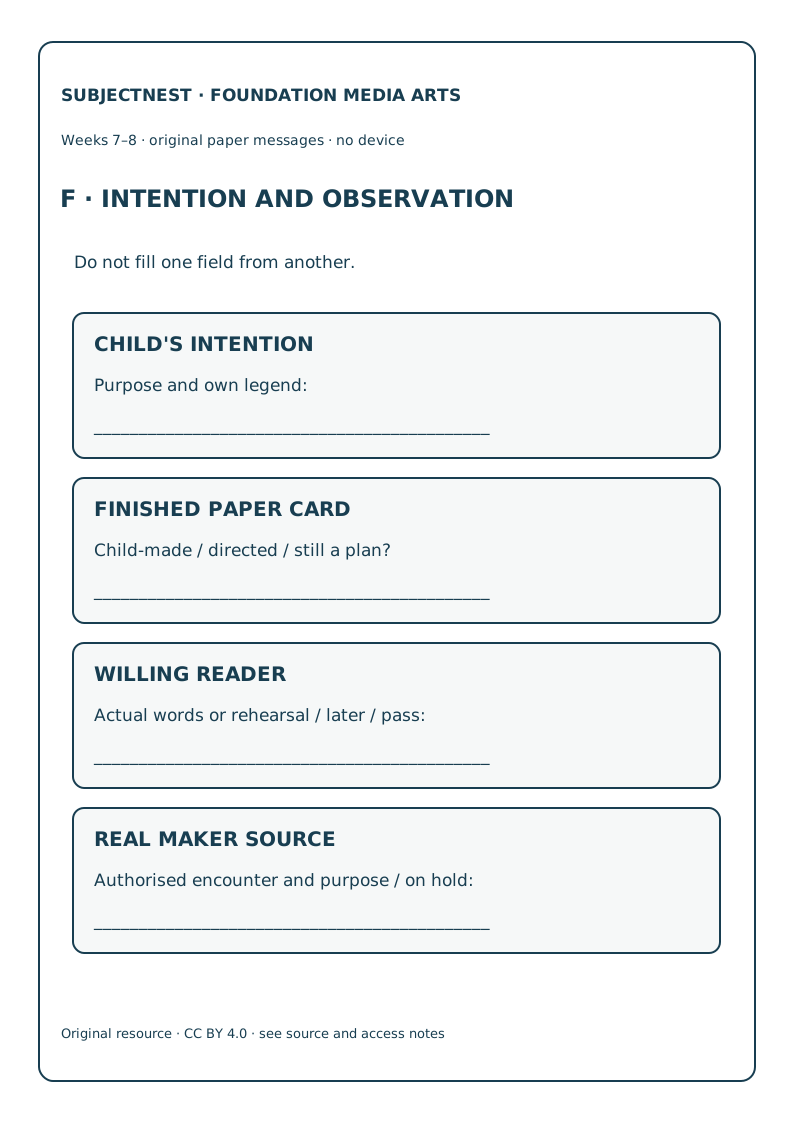
- Welcome · 3 min. The child may ask one willing educator, privately practise with a puppet, choose later or pass. No class performance, recording or upload.
- Model · 4 min. Adult asks another willing adult about their own guide: “What do you think this DOT means here?” Record their actual words separately from maker’s intended mapping.
- Try together · 5 min. Child chooses a neutral question or directs adult to ask it. Avoid “You saw it means ROUND, right?”
- Child choice · 7 min. If child chooses sharing and someone willingly views, show paper card and ask once. Otherwise record rehearsal/later/pass. Never invent a viewer response.
- Notice · 4 min. Compare actual answer (if any) with maker intention without declaring either child or viewer deficient; choose one possible revision only if useful.
- Close · 2 min. Save the card and distinct records under local policy. Tomorrow’s maker inquiry concerns a real authorised work only if one is available.
Week 8 · Day 39 · Ask a real maker’s purpose with permission
Target/codes: ask who made an authorised real media work and why its maker says it matters, if school permission and source statement are verified; otherwise keep the encounter on hold and practise with adult original work; AC9AMAFE01 only for an actual encounter. Prepare: authentic source slot, F log, accessible first-party maker statement if authorised.
- Welcome · 3 min. A visible work online is not automatically free to copy or explain on a maker’s behalf. Keep unknowns open.
- Model · 4 min. Read an authorised maker’s own purpose statement only if slot fields are complete. Otherwise state the purpose of the adult’s original card and mark real encounter not held.
- Try together · 5 min. Ask “Who made this?” and “What do they say it is for?” Separate what source says from what we personally notice. No invented local or First Nations interpretation.
- Child choice · 7 min. Child selects one respectful question/observation via preferred route. If no real source, examine adult original and practise attribution wording without crediting AC9AMAFE01 evidence.
- Notice · 4 min. Log work, permission, maker statement, child question and honest unknowns. No screenshots, copies or remixes are added to this pack.
- Close · 2 min. Revisit own work’s purpose without assuming everyone reads it alike. A final fresh access check follows.
Week 8 · Day 40 · Fresh Check L: two signs without colour
Target/codes: independently change one of two identical outlines so an invented GO/PAUSE paper guide remains distinguishable without its original red/blue colour labels, keeping both meanings; AC9AMAFD01, AC9AMAFC01. Prepare: public Check L, L A4, broad outline choices. Keep key closed.
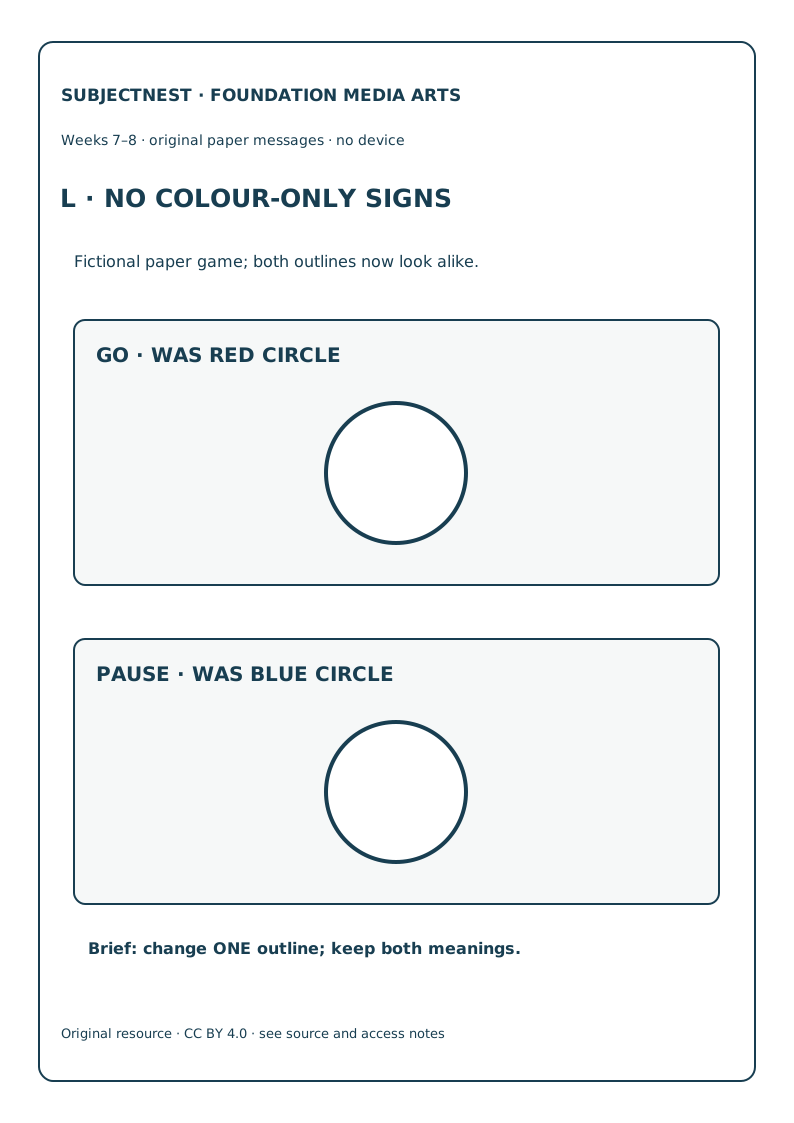
- Welcome · 3 min. The source is a new fictional paper game, not a real traffic or safety sign.
- Access · 4 min. Show GO (was red circle) and PAUSE (was blue circle). On this black-and-white page both signs are identical circle outlines. Brief: keep meanings, change one sign so they can be told apart without colour.
- Independent plan · 5 min. Child chooses an outline, count or texture change for one sign, not a new meaning.
- Child response · 7 min. Child draws, selects, points or directs the revision and names the two resulting sign–meaning pairs. Save first response.
- Self-check · 4 min. Ask child to compare signs without colour and check that GO/PAUSE meanings still hold; do not suggest a particular replacement.
- Close · 2 min. Use separate key after response. Plan further authentic media, varied production and willing audience opportunities elsewhere in the year.