Each start totals 3 + 4 + 5 + 7 + 4 + 2 = 25 minutes. Each event has three independent invented marks: pitch L/H, source A/B, planned level V/S. The card key uses a low/high line, circle/striped square and one/two dots with full word labels. These do not describe a child's voice or a real instrument. A first score and a second take are plans. Only one chosen mark in one event changes at a time; four equal event positions remain. An approved adult sound trial, actual listener perception, audience receipt and real-work inquiry are separate evidence. Fixed cards, AAC, pointing, neutral scribing, paper only and pass are available every day; the four candidate cues stay on human listening and local volume hold.
Week 19 · Day 91 · Three parts of one event
Target/codes: read one event as three distinct planned choices (pitch, source, level) without merging them; AC9AMUFD01. Prepare: A three-key legend, Practice A, broad card sets.
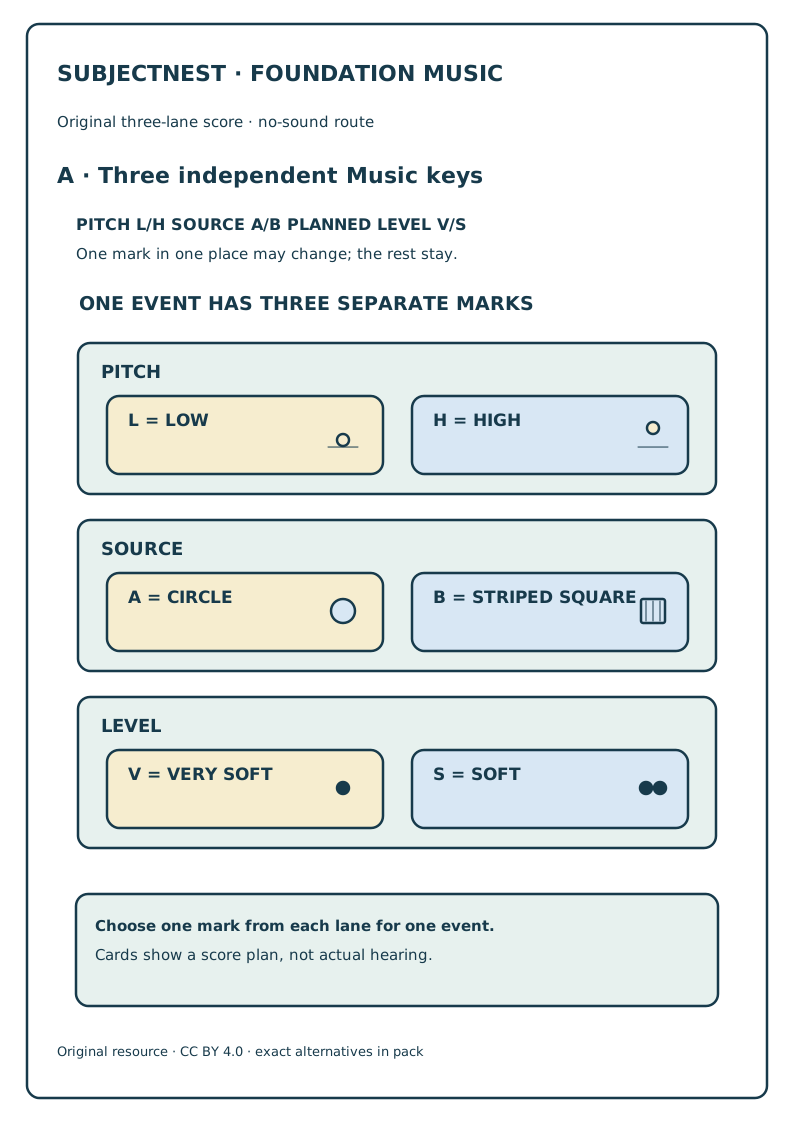
- Welcome · 3 min. Bring back low/high, A/B and very soft/soft as three familiar choices; no sound is required.
- Model · 4 min. Put
L · A · Vin one large event card. Swap H for L, then restore L; point to pitch only. Repeat by demonstrating where the source and level marks live, without making a real sound claim. - Try together · 5 min. Child matches each mark to its lane by word, icon, texture or AAC. Ask what a
Bcannot tell us about pitch, and what anScannot tell us about the source. - Child choice · 7 min. Child assembles one event for a paper puppet entrance, a map marker or a plain score and names one element they chose. Accept adult card placement on exact child direction.
- Notice · 4 min. Save three marks and the child's lane explanation. A correct card does not prove they heard or made the sound.
- Close · 2 min. Tomorrow the same key runs through four places in two versions.
Week 19 · Day 92 · One seed, two takes
Target/codes: compare a four-event first take and revised take, identifying one deliberate level edit at one place; AC9AMUFD01, AC9AMUFC01. Prepare: B two-take board, Practice B.
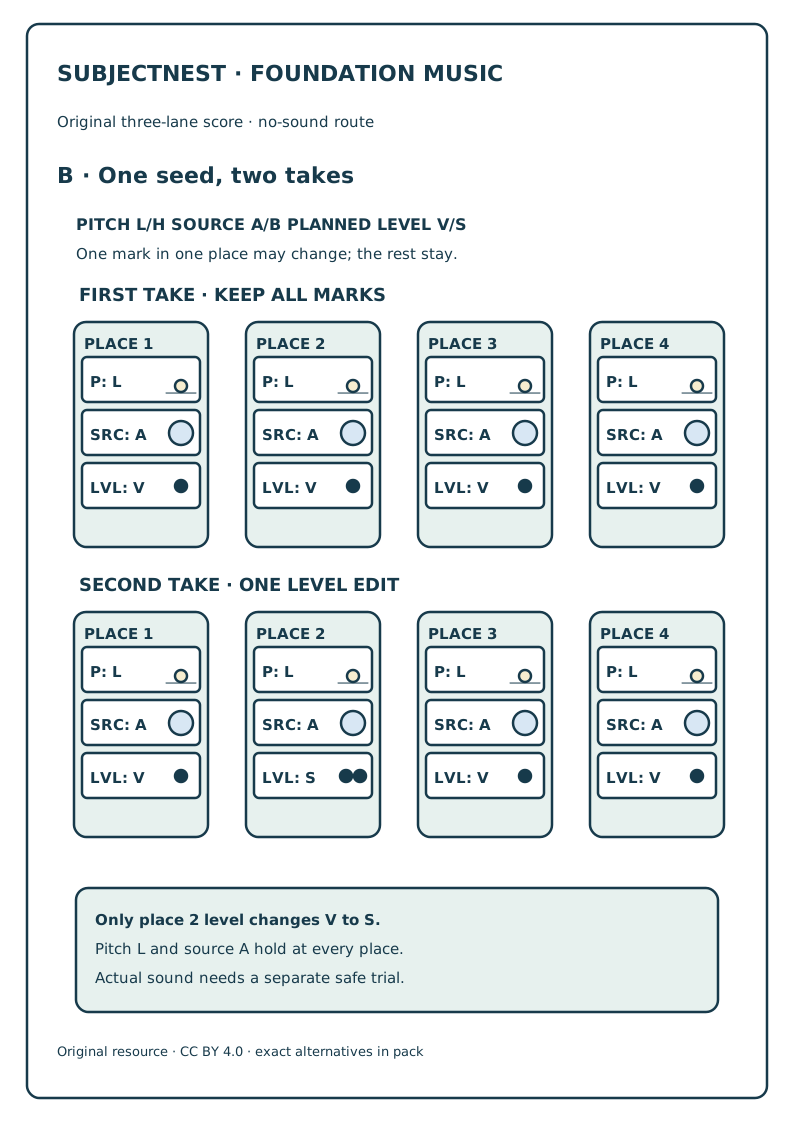
- Welcome · 3 min. Four equal places, one chosen sound source and a first/revised pair; this is music making, not the integrated paper-ring test.
- Model · 4 min. First take has
L A Vat all four places. On the second, change only place 2's level V→S. Leave all pitch/source cards and all other levels where they are. - Try together · 5 min. Child compares matched places, points to the one changed mark and names the two lanes held steady. Use raised overlays or neutral verbal reading.
- Child choice · 7 min. Child selects first or revised take for an invented toy-door moment or plain phrase, explaining a personal musical intention. An alternative one-mark change is welcome on a blank copy.
- Notice · 4 min. Save both rows and the stated one-mark edit. Do not describe a heard dynamic contrast unless an approved sound was actually tried.
- Close · 2 min. Next we make the “what stayed” evidence easier to see.
Week 19 · Day 93 · Hold the other two lanes
Target/codes: make one source edit while holding pitch and level (and every other source card) steady; AC9AMUFD01, AC9AMUFC01. Prepare: C hold/change mat, Practice C.
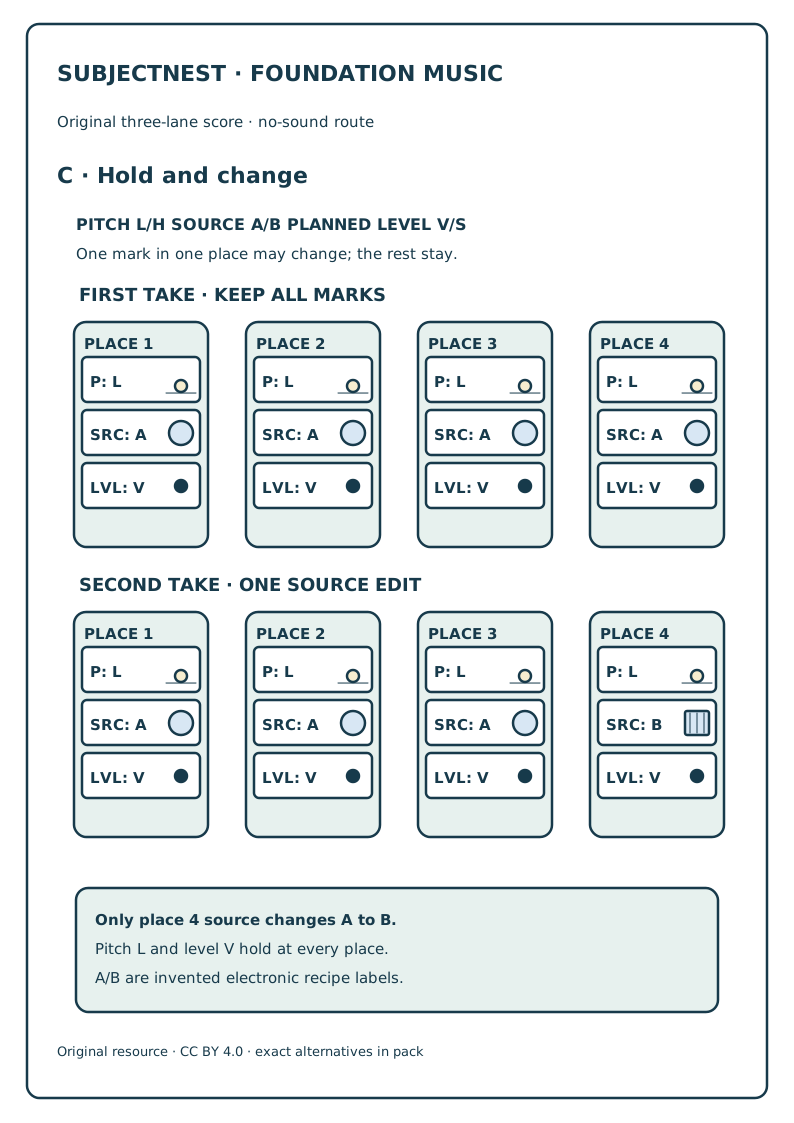
- Welcome · 3 min. A deliberate revision is readable because we can show both change and what stays.
- Model · 4 min. First take
L A V | L A V | L A V | L A V; revise place 4's source A→B. Point along the unchanged L and V lanes and the first three A marks. - Try together · 5 min. Child traces place 1 to 4, then places a broad “changed here” marker on the sole B in the revised source lane.
- Child choice · 7 min. Child designs a one-source-edit pair for a fictional train arriving or plain sound cue. They can keep or move the edited place, then check the two held lanes.
- Notice · 4 min. Save original/revision/changed lane and place. A printed A/B card is an invented tone-recipe key, not evidence of real object sound.
- Close · 2 min. Tomorrow we compare edits in different musical elements.
Week 19 · Day 94 · Which element changed?
Target/codes: sort three distinct one-mark revision pairs by pitch, source or planned level and explain why one pair fits an idea; AC9AMUFD01. Prepare: D three revisions, Practice D.
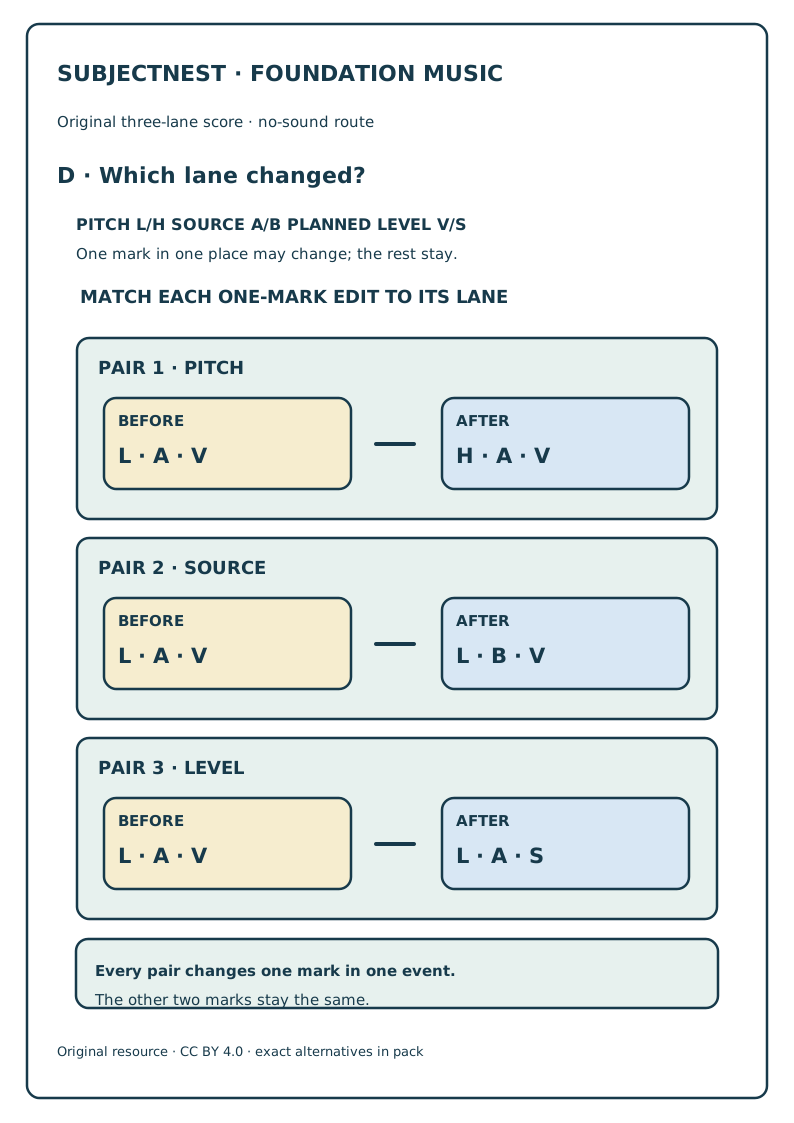
- Welcome · 3 min. Name the three lanes. All examples keep the same event number and duration.
- Model · 4 min. Compare three two-event micro-pairs: one changes L→H, one A→B, one V→S. State which mark changed, not a promised feeling or device response.
- Try together · 5 min. Child matches each pair to its lane by line position, circle/stripe, one/two dots and word label. Read neutrally if visual comparison is inaccessible.
- Child choice · 7 min. Child chooses one type of edit for an imagined weather-card transition, a community garden animation or a plain sound idea, with their own reason. If they prefer no theme, use blank cards.
- Notice · 4 min. Save the selected lane and one held lane the child correctly named. Keep any actual sound trial separate.
- Close · 2 min. A new independent pair follows; no worked answer is displayed.
Week 19 · Day 95 · Fresh Check Y: find the one edit
Target/codes: independently compare an unfamiliar four-event first/revised score and find the sole changed mark, lane and place; AC9AMUFD01. Prepare: public Y, Y A4, fixed tactile pairs; key closed.
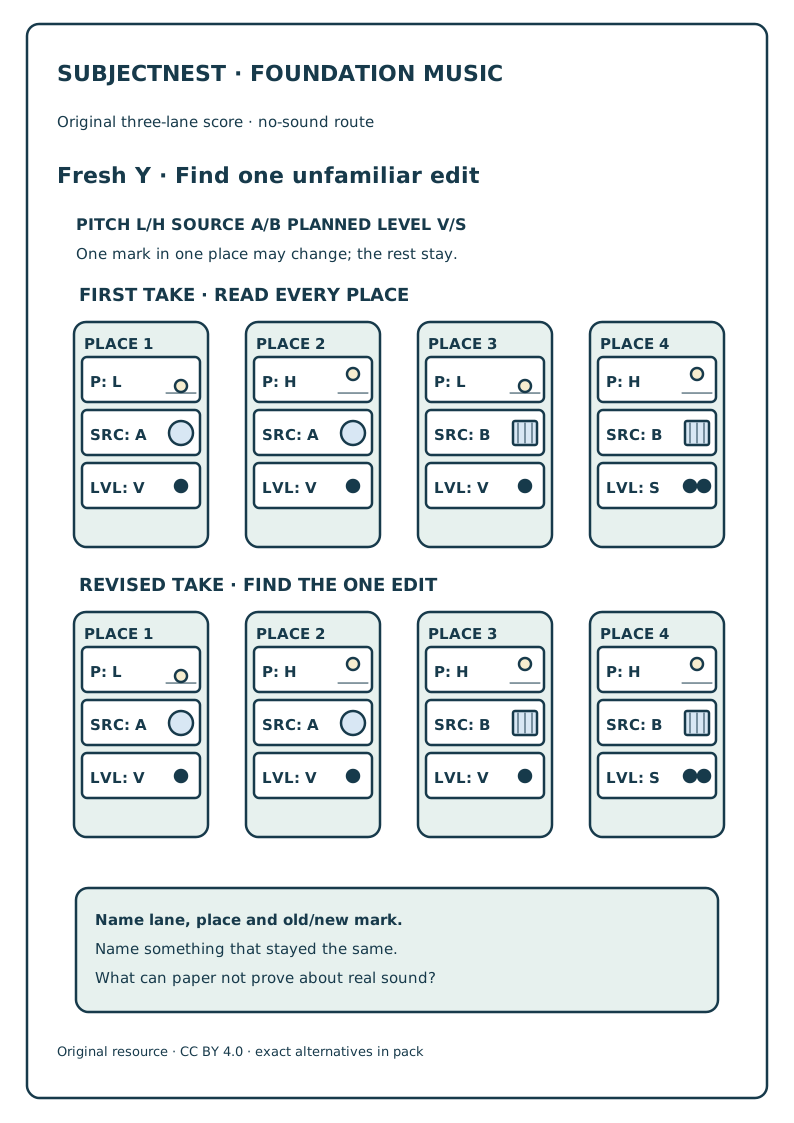
- Welcome · 3 min. Offer an unfamiliar paper Music comparison. No sound, speed or speaking requirement.
- Access · 4 min. Present the exact public first/revised scores by print, raised lane cards, AAC or neutral read-aloud. Do not point to the answer.
- Independent plan · 5 min. Child checks corresponding marks in all four places and three lanes.
- Child response · 7 min. Save the first complete claim: lane, place, old/new mark, what stayed, and one limit of a paper score.
- Self-check · 4 min. Child verifies their comparison without the adult changing a mark or hinting.
- Close · 2 min. Review with the separate key later; use new examples for reteaching.
Week 20 · Day 96 · Score evidence and actual sound
Target/codes: distinguish “the score changed one mark” from “the sound was heard, made or comfortable”; AC9AMUFD01. Prepare: E plan/actual log, Practice E, candidate index only if adult-cleared.
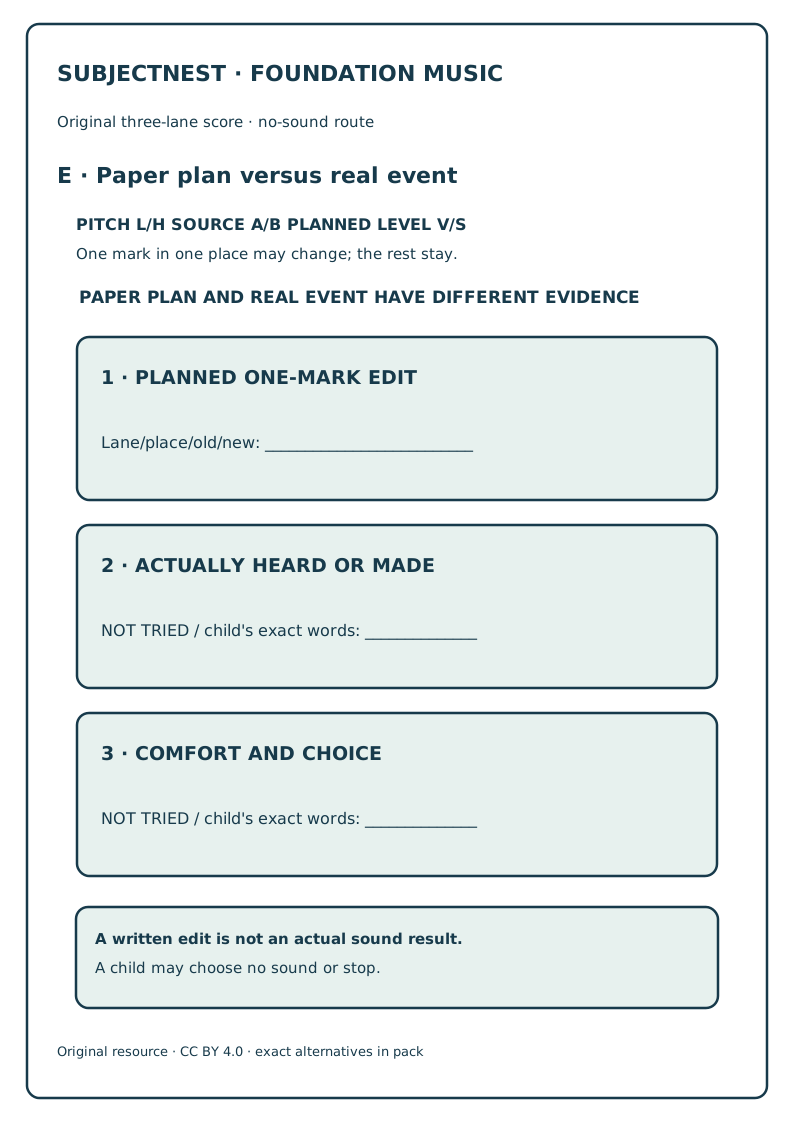
- Welcome · 3 min. Say the integrated paper-ring experiment has its own evidence. Our Music score shows choices, not a ramp result or proof of a listener's experience.
- Model · 4 min. Fill the “planned edit” field for a paper pair. Leave “actually heard/made” and “comfort” as NOT TRIED unless a real approved event occurs.
- Try together · 5 min. If all files and device have passed human review, adult may offer one short candidate cue at approved comfort; otherwise trace cards silently. Child can decline or stop.
- Child choice · 7 min. Child chooses paper-only, a cleared adult demonstration, or pass; they may state what happened for them or leave observation blank. No class comparison of hearing ability.
- Notice · 4 min. Record actual cue, setting and child's exact response only if it occurred. Do not infer controlled singing or an audience from listening.
- Close · 2 min. Tomorrow a revised plan should be readable to another person even without playback.
Week 20 · Day 97 · Make an edit easy to follow
Target/codes: clarify one mark in a two-take score so a neutral reader can locate the intended edit; AC9AMUFD01, AC9AMUFC01. Prepare: C hold/change mat, Practice F.
- Welcome · 3 min. Show a first and revised four-place score side by side. A reader needs an explicit key and a clear changed-place cue.
- Model · 4 min. Use a fresh
H A Vseed in four places; revise place 1's pitch H→L. Add a plain border around that mark, not a color-only highlight; leave all other marks readable. - Try together · 5 min. Child tests whether an adult reading only the key and two takes can find the edit. The adult says what they can actually follow, without claiming a feeling.
- Child choice · 7 min. Child chooses a different one-mark revision, then directs a neutral adult to make or clarify a key/border if needed. Preserve the child's first version for comparison.
- Notice · 4 min. Save original, clarified revision, child's explanation and actual reader action if one occurred. A teacher's imagined reading is not an audience.
- Close · 2 min. Tomorrow the child makes both takes from scratch.
Week 20 · Day 98 · Author two related takes
Target/codes: make a child-owned four-event first take and a second take with one chosen mark changed; AC9AMUFD01, AC9AMUFC01. Prepare: F composer/reader board, Practice G.
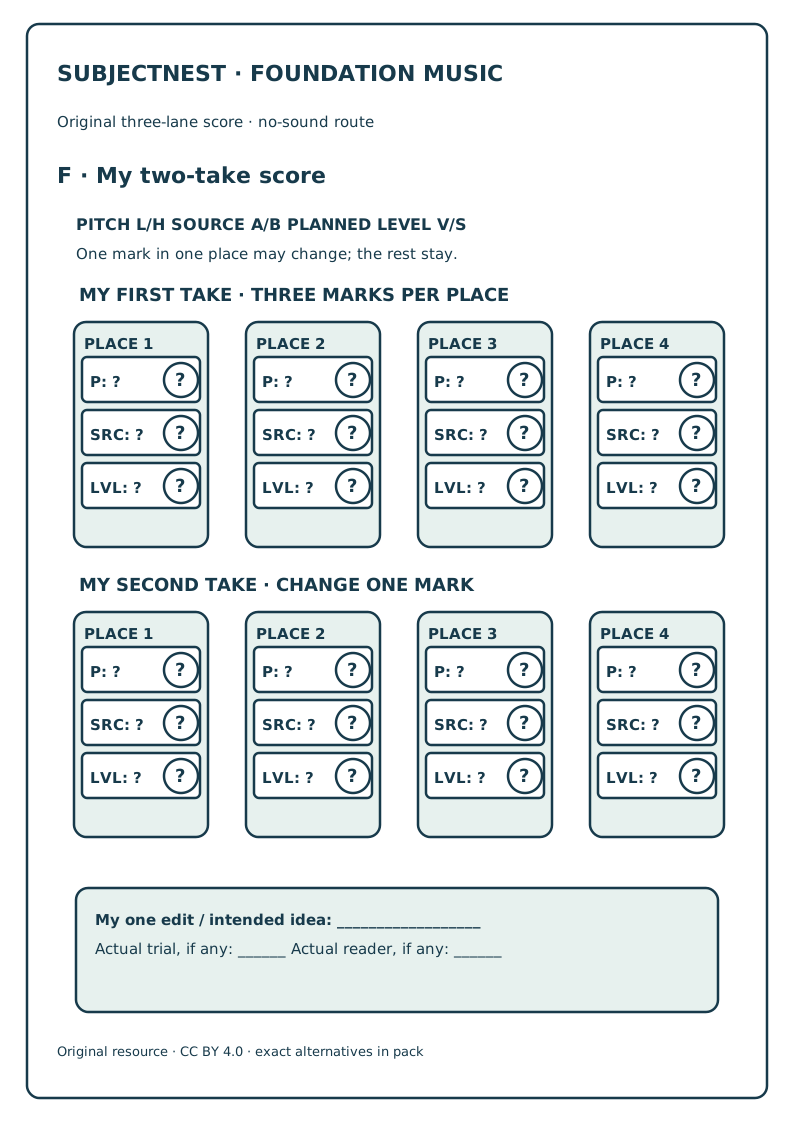
- Welcome · 3 min. A child may choose pitch, invented source or planned level as the one change; all are valid.
- Model · 4 min. Adult's separate example: first
L A V | H A V | H A V | L A V; second changes place 4 source A→B. State the intended difference without claiming another listener noticed. - Try together · 5 min. Child directs a one-mark change to an adult practice copy and checks eleven corresponding marks stayed as printed.
- Child choice · 7 min. Child makes two four-event takes for an interest of their choice or an abstract phrase. Broad cards/neutral scribe count. They name the changed mark and musical intention, and may keep the score private.
- Notice · 4 min. Save first take, first revised take, key and child's exact idea; do not tidy away a child-directed unusual choice.
- Close · 2 min. Ask whether the child wants a willing reader tomorrow.
Week 20 · Day 99 · Teach a willing reader
Target/codes: explain the child's score key to a willing recipient; encounter a cleared real music work only if separately available; AC9AMUFD01/FC01, with AC9AMUFP01 and FE01 conditional. Prepare: F reader board, child's score, real-work gate.
- Welcome · 3 min. Offer private keeping, neutral adult reading, a willing peer, approved sound or pass; child may withdraw at any time.
- Model · 4 min. Adult shows their own two-take score and asks a willing adult to locate the sole edit. If an actual school-cleared work exists, give maker/source context only as documented.
- Try together · 5 min. Let the reader follow the child's key with no hidden explanation; child may revise one unclear instruction. For a real work, ask only what the actual source says about its use and what the child notices.
- Child choice · 7 min. Child may show their original score, a clarified score or cleared sound to a person who actually receives it. No public solo, recording or forced performance.
- Notice · 4 min. Record actual reader/recipient action and medium if received. Record actual real-work identity and child's response if encountered. Leave conditional codes held otherwise.
- Close · 2 min. Return score ownership to the child; tomorrow is a fresh independent revision brief.
Week 20 · Day 100 · Fresh Check Z: choose one change
Target/codes: independently revise a new four-event base score by changing exactly one of its 12 marks in a copied second take; name lane, place, old/new mark and intended musical idea; AC9AMUFD01, AC9AMUFC01. Prepare: public Z, Z A4, broad three-lane cards; key closed.
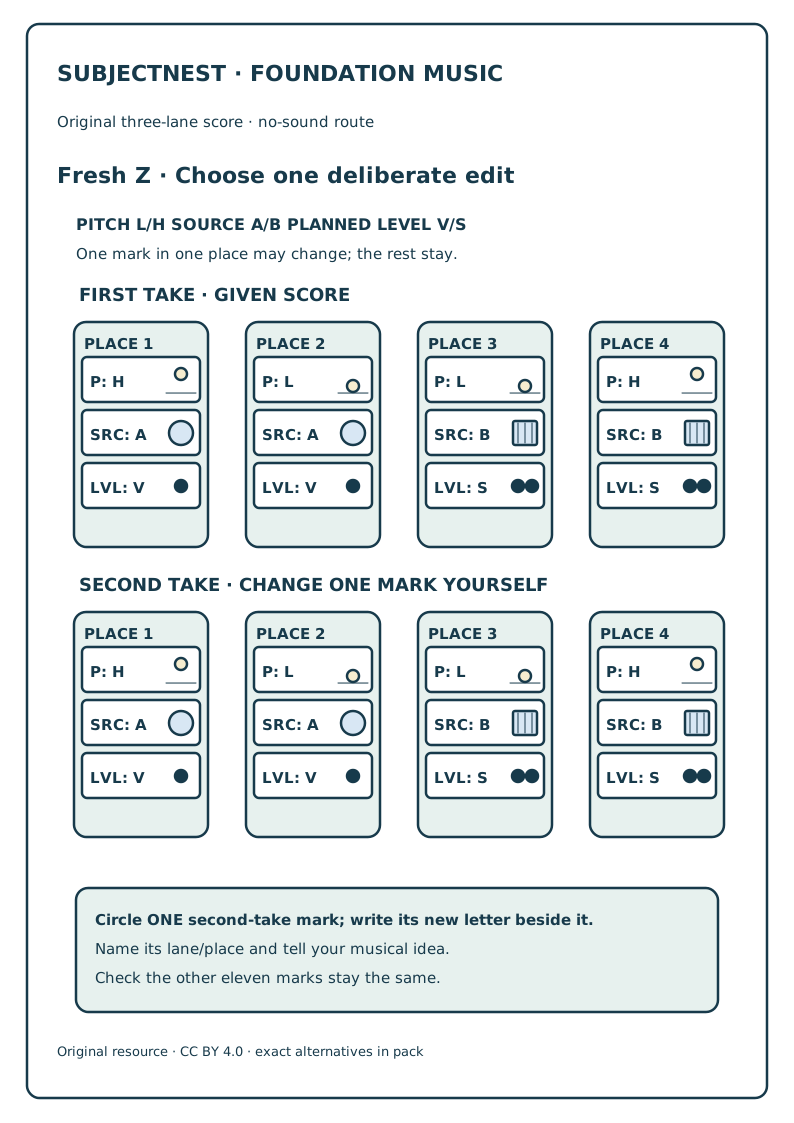
- Welcome · 3 min. New two-take paper task; no sound or audience is required.
- Access · 4 min. Present the printed first take and identical second take. Read L/H, A/B, V/S key neutrally. The child can change one mark in the second take only.
- Independent plan · 5 min. Child chooses the lane and event, changes one mark and checks every other mark still matches.
- Child response · 7 min. Save the first complete revision and the child's lane/place/old/new explanation and intended idea. Ask what the score alone cannot prove about a listener.
- Self-check · 4 min. Child checks two four-place takes for exactly one altered mark without adult hints.
- Close · 2 min. Use separate key/rubric after the response. A completed paper score is not evidence of actual sound or audience.