Before each session offer three same-target routes, broad paper/raised shapes and exact print alternatives. Child decisions about composition and purpose are the evidence target. Locally approved drawing/collage materials are optional; check handling, allergies and sensory comfort. No compulsory cutting, painting, texture contact, camera, public display or disclosure. A neutral adult may scribe or move a large card only as the child directs. No invented picture is a real community artwork. Each script totals 3 + 4 + 5 + 7 + 4 + 2 = 25 minutes.
Week 1 · Day 1 · One line, two routes
Target/codes: choose straight or curved line between fixed dots and explain an intended fictional purpose; AC9AVAFD01, AC9AVAFC01. Prepare: A line paths, thick line cards, A.
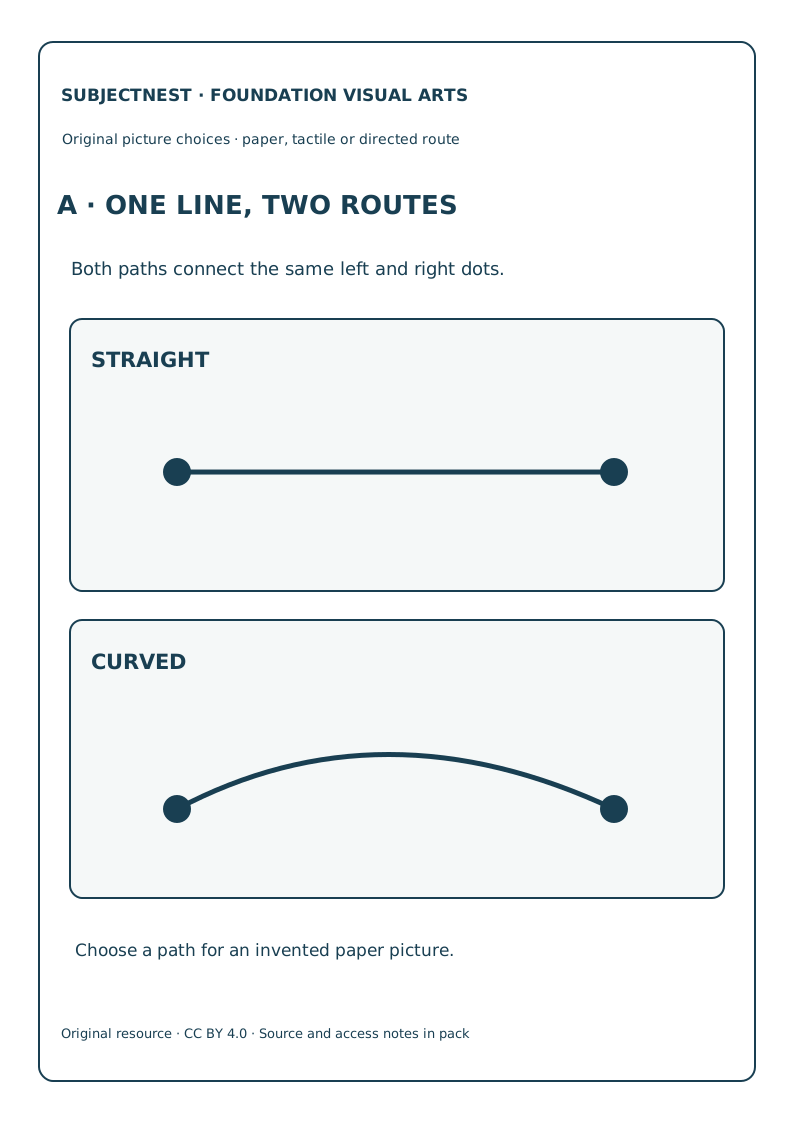
- Welcome · 3 min. Introduce an invented paper visitor and two dots; nobody needs to move across a room.
- Model · 4 min. Draw straight and curved lines between the same endpoints. Trace each on paper; both reach the right dot.
- Try together · 5 min. Ask a child to point to or direct one line. Name what stayed (dots) and what changed (path).
- Child choice · 7 min. Child selects a line for a fictional garden path image and gives a possible reason. A tactile cord fixed to card or adult-directed marker is equivalent for planning.
- Notice · 4 min. Ask which line the child chose and how the paper shows it. Do not claim every viewer would follow it.
- Close · 2 min. Keep the child's line and purpose; tomorrow one line can look broader.
Week 1 · Day 2 · Width can make a mark stand out
Target/codes: compare a thin and thick line with direction/endpoints held; AC9AVAFD01, AC9AVAFC01. Prepare: B width choices, broad strips, B.
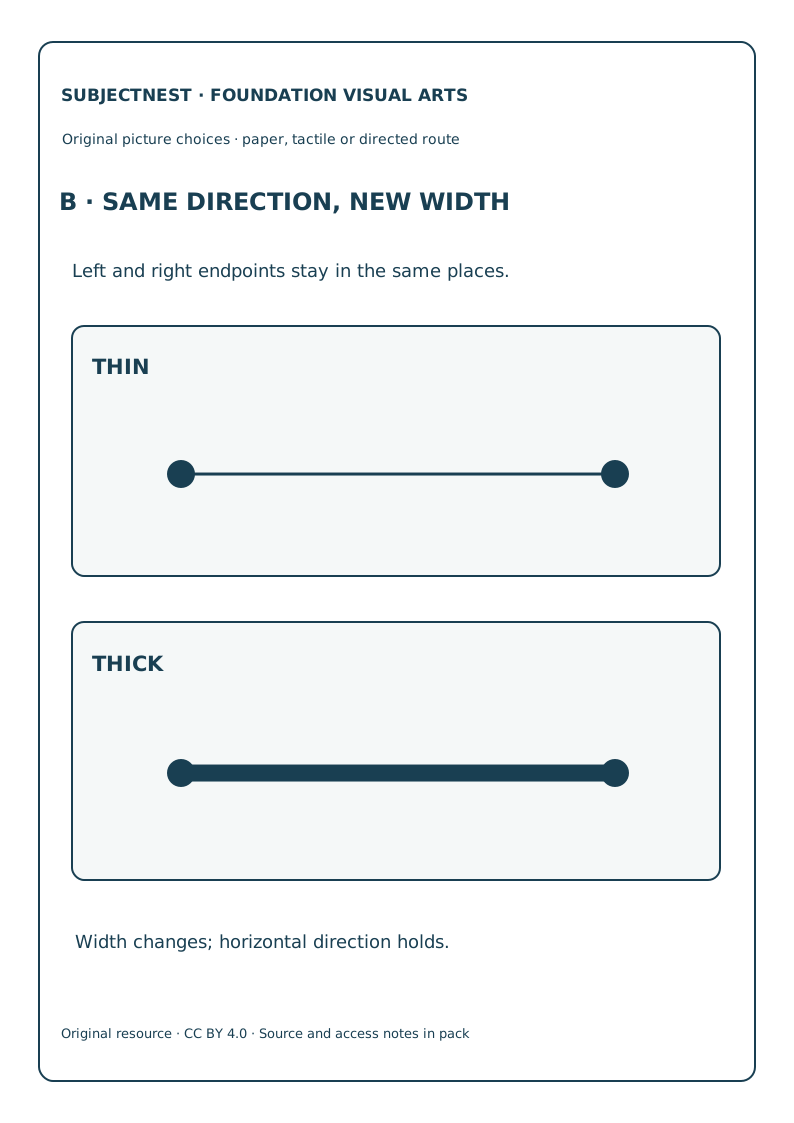
- Welcome · 3 min. Revisit straight lines. Show a thin and thick line pointing the same way.
- Model · 4 min. Overlay the two strips at left/right endpoints; explain that width is the single changed feature.
- Try together · 5 min. Let a child direct which strip sits on top of an invented paper notice. Ask what stayed.
- Child choice · 7 min. Child chooses width for a fictional sign arrow or book divider, by drawing, raised strip or adult direction, and states intended focus.
- Notice · 4 min. Compare endpoints and widths; accept a child preference without demanding a feeling word.
- Close · 2 min. Save both, labelled by the child's choice, for a new shape arrangement.
Week 1 · Day 3 · Where a shape sits matters
Target/codes: move a circle left or right of a fixed square and name a possible focus; AC9AVAFD01, AC9AVAFC01. Prepare: C shape/place strip, two broad shape cards, C.
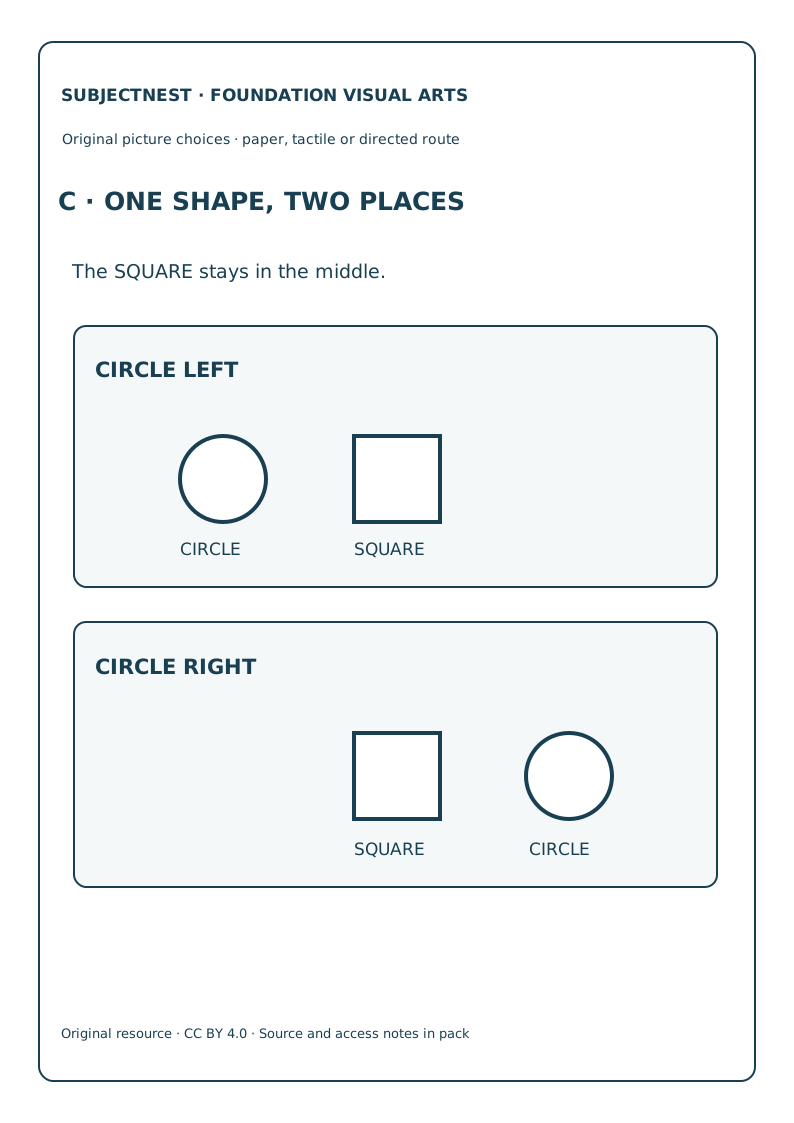
- Welcome · 3 min. Orient left/right on the paper from this child's view; no room direction task.
- Model · 4 min. Keep the square in the middle, then put the circle left and right in separate rows.
- Try together · 5 min. Ask what moved, what stayed and whether the circle changed shape. Allow pointing/AAC.
- Child choice · 7 min. Child chooses a position for a fictional two-window display and makes a small drawing or directs broad cards.
- Notice · 4 min. Record position and child's intended focus. Do not assume a viewer actually looked there.
- Close · 2 min. Keep both arrangements; tomorrow two shapes can overlap.
Week 1 · Day 4 · Which outline is in front?
Target/codes: compare circle-in-front with square-in-front by visible uninterrupted edges; AC9AVAFD01, AC9AVAFC01. Prepare: D overlap, broad opaque cutouts, D.
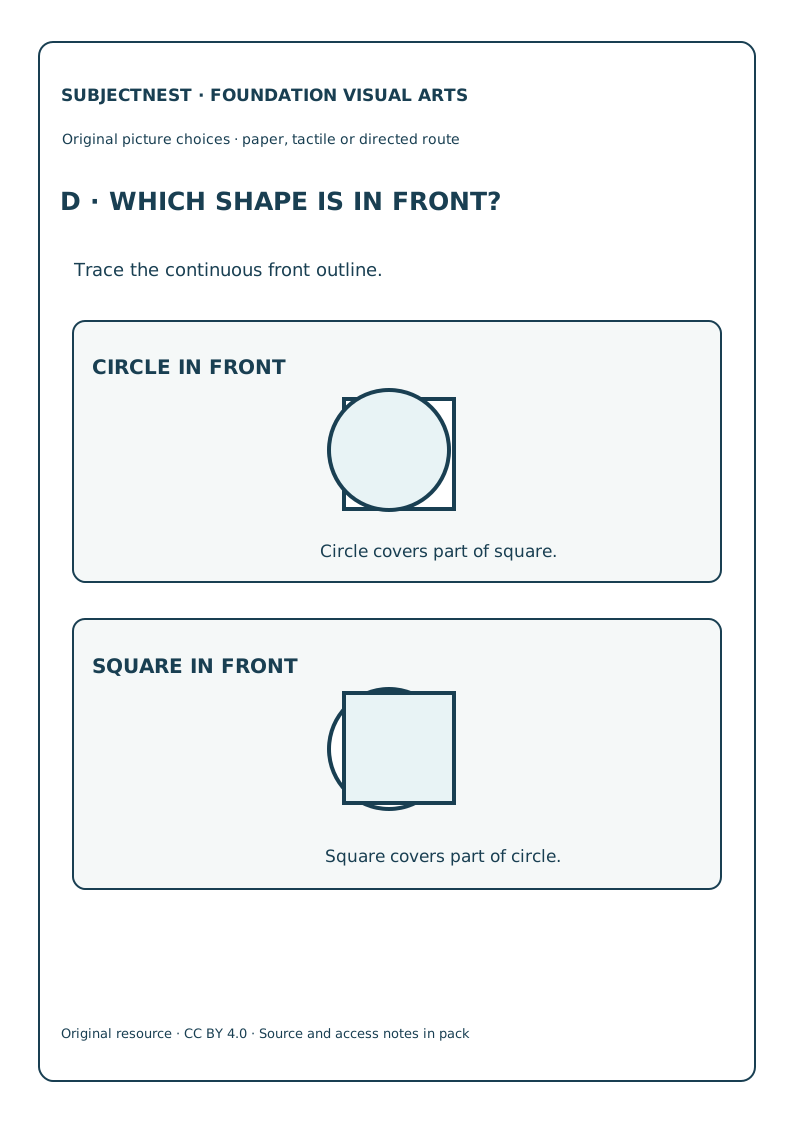
- Welcome · 3 min. Show two unconnected shapes, then move one paper card over the other; no glue is needed.
- Model · 4 min. Put circle over square, then reverse. Trace the front shape's continuous edge; name an edge that disappears behind it.
- Try together · 5 min. Ask a child to direct an adult's cards into both versions and identify the front shape by name or touch.
- Child choice · 7 min. Child chooses a front shape for a fictional window collage and states an intended visual focus; paper or optional art materials both work.
- Notice · 4 min. Check that the actual layer order and named front shape agree. Do not judge tidy cutting.
- Close · 2 min. Save a child-selected overlap or its traced plan before fresh Check A.
Week 1 · Day 5 · Fresh Check A: the paper tunnel
Target/codes: independently change one line in a new two-line image for a specified fictional purpose; AC9AVAFD01, AC9AVAFC01. Prepare: new G public check, G A4, broad line cards. Keep teacher key closed until first response.
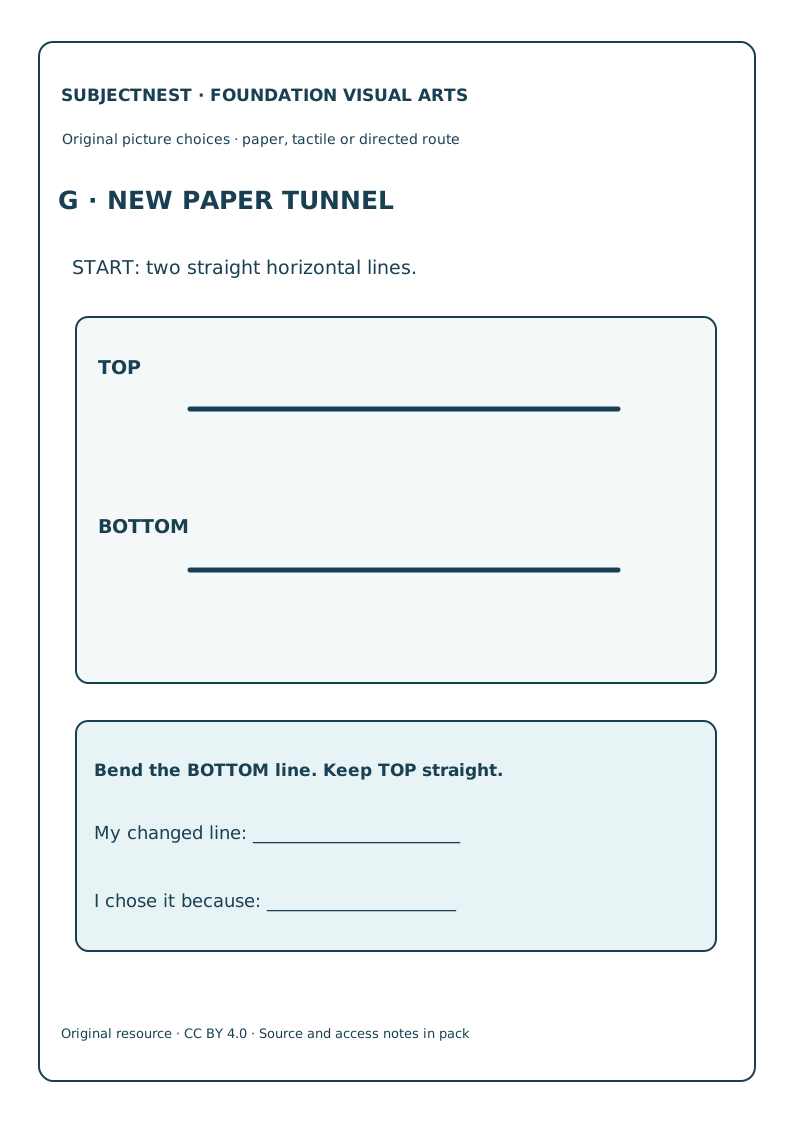
- Welcome · 3 min. Explain this new paper puzzle helps plan the next art session, not a test of drawing neatness.
- Access · 4 min. Present two straight horizontal lines labelled TOP and BOTTOM neutrally. A tactile raised-line route is available; do not indicate the change.
- Independent plan · 5 min. Child chooses the one line to curve so the bottom path bends but the top stays straight.
- Child response · 7 min. Child shows both lines, marks the change and gives a reason by a chosen route; a neutral adult records the first response.
- Self-check · 4 min. Invite the child to name TOP/BOTTOM and what stayed. Do not coach or score material control from a paper plan.
- Close · 2 min. Save first response before opening the key. Day 5 supplementary swaps use other line images after the check.
Week 2 · Day 6 · Again or change the tile?
Target/codes: build circle-square / circle-square repeat, then compare one changed third tile; AC9AVAFD01, AC9AVAFC01. Prepare: E four-tile strip, E, large shapes.
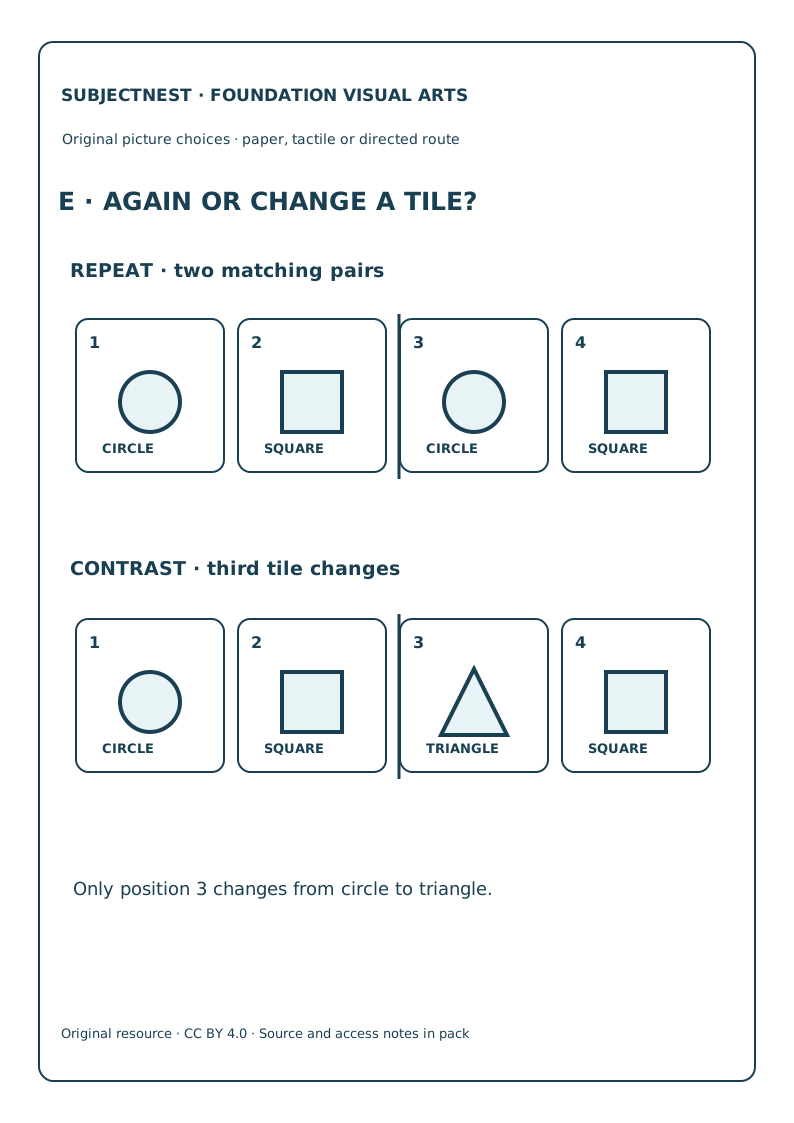
- Welcome · 3 min. Show four numbered paper spaces, divided into two pairs.
- Model · 4 min. Make circle-square / circle-square. Then replace only tile 3 with triangle, keeping tiles 1, 2 and 4.
- Try together · 5 min. Ask whether the second pair repeats or contrasts. Count four tiles and name the one changed tile.
- Child choice · 7 min. Child chooses repeat or contrast for a fictional four-window train drawing and gives a reason.
- Notice · 4 min. Compare one feature at a time; accept a child's coherent alternate pattern if they can show it.
- Close · 2 min. Save both rows for Day 7's surface choice.
Week 2 · Day 7 · A surface mark can change a tile
Target/codes: keep one square outline/position while choosing plain or striped interior and explaining intended emphasis; AC9AVAFD01, AC9AVAFC01. Prepare: E pattern strip, plain and raised-striped large square cards, child-safe drawing alternative.
- Welcome · 3 min. Show the same large square twice, one plain and one with parallel drawn/raised stripes. Touch is optional.
- Model · 4 min. Place the cards at the same position. Name outline and position as held; interior mark changes. Avoid claiming stripes have a fixed emotional meaning.
- Try together · 5 min. Invite child to compare the two square interiors by looking, description or accessible raised line if wanted.
- Child choice · 7 min. Child chooses an interior for a fictional paper box and states what they intend a viewer to notice. A neutral adult may draw the chosen stripes.
- Notice · 4 min. Record chosen mark and reason; this does not demonstrate texture perception if the child used labels.
- Close · 2 min. Save both versions and a child-directed change for the next making process.
Week 2 · Day 8 · One idea, different making routes
Target/codes: choose a shape relation and represent it as a drawing or locally suitable broad-card collage plan; AC9AVAFD01, AC9AVAFC01. Prepare: C, D, F choice log, fixed broad paper shapes.
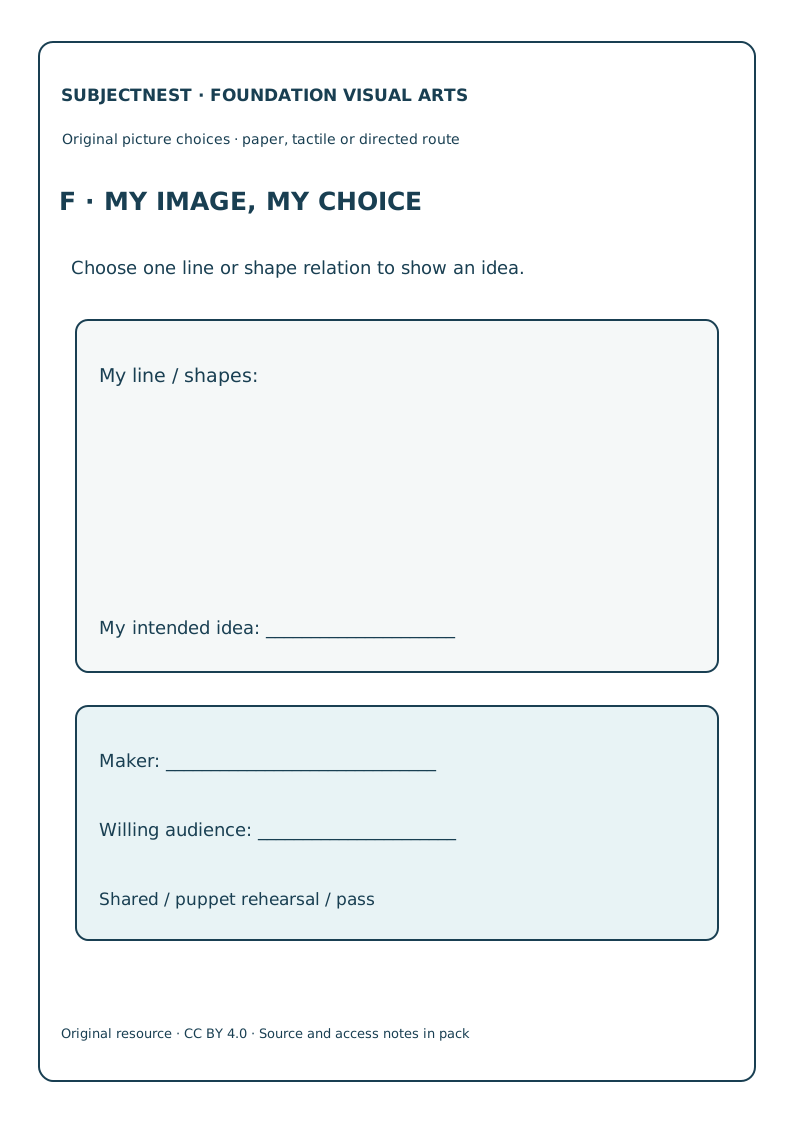
- Welcome · 3 min. Review left/right and in-front/behind as distinct choices.
- Model · 4 min. Make circle in front of square with marker outlines, then with two broad cards. Both represent the same intended relation.
- Try together · 5 min. Ask a child to direct the front shape and one position. Compare the drawing and card plan without calling either more artistic.
- Child choice · 7 min. Child chooses a relation for a fictional paper display and makes or directs an original small picture in one route. Optional glue/paint/folding is only under local safety planning.
- Notice · 4 min. Record visible relation and child's intention, plus chosen process if actually observed; a card plan does not prove tool control.
- Close · 2 min. Keep child work only with consent; tomorrow maker and audience are explicit.
Week 2 · Day 9 · Maker, context, willing audience
Target/codes: ask maker/context/permission questions about an authorised real work, and choose if/how to share the child's own image; AC9AVAFE01 as an opening inquiry, AC9AVAFP01 only for actual sharing. Prepare: F share log, authentic source slot, child's original image.
- Welcome · 3 min. A child may show an image to one willing educator, arrange later sharing, rehearse with a paper puppet, or pass. No public exhibition.
- Model · 4 min. Adult shows their own original shape image to a willing adult. For real art, use only a school-approved maker/source page or authorised encounter; name the maker and what remains unknown.
- Try together · 5 min. Ask “Who made this?” and “What does its maker say?” Record open questions rather than inventing a community meaning or copying a style.
- Child choice · 7 min. Child chooses audience and medium for their own image; if actually shared with a willing person, record what was shown and to whom, with consent. A pass or puppet rehearsal remains a valid route but not actual-audience evidence.
- Notice · 4 min. Ask for one visible choice in the child's work. Keep intention separate from someone else's reaction.
- Close · 2 min. Record the source-permission question and arrange a later first-authority encounter if held today.
Week 2 · Day 10 · Fresh Check B: two paper gardens
Target/codes: independently identify a new repeated four-tile pattern, change one second-pair tile for a stated idea, and choose whether to share; AC9AVAFD01, AC9AVAFC01, AC9AVAFP01 only for actual sharing. Prepare: new H public check, H A4, large shapes. Keep key closed until first response.
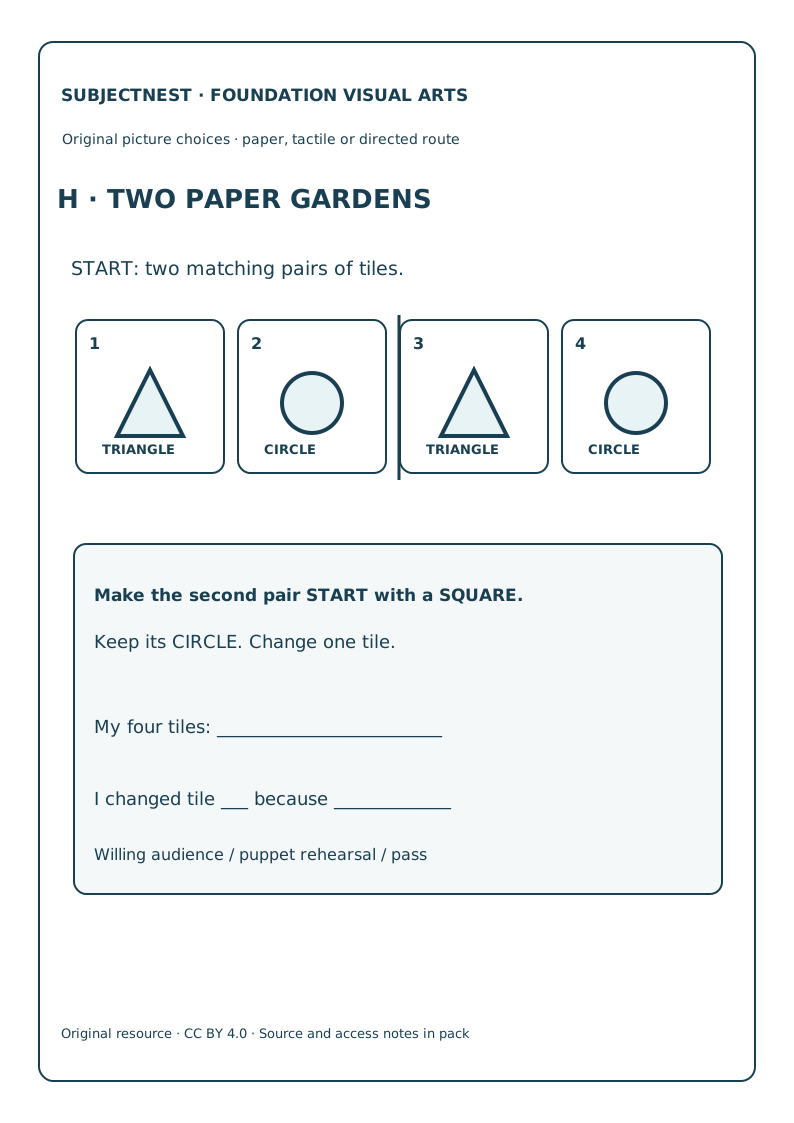
- Welcome · 3 min. Introduce the new four-window paper garden. This is a teaching probe, not a drawing speed or neatness contest.
- Access · 4 min. Present TRIANGLE, CIRCLE / TRIANGLE, CIRCLE neutrally. The second garden must start with a SQUARE while its CIRCLE stays. Do not point to the tile to change.
- Independent plan · 5 min. Child says/shows whether the pairs repeat and selects one second-pair tile to change.
- Child response · 7 min. Child shows all four tiles, marks the change and gives a possible intention via chosen route. They may share with a willing person, rehearse with a puppet or pass; record actual sharing separately.
- Self-check · 4 min. Invite child to compare pairs and name the unchanged tile, without giving the answer.
- Close · 2 min. Save first response, then consult key and plan later authorised art encounters and hands-on processes.