Each script uses 2 + 4 + 5 + 7 + 4 + 3 = 25 minutes. Prepare practice cards, learner desk, three equal-target routes, two evidence swaps, six printable aids and the spoken prompt transcript. On Days 5 and 10, release the fresh public check only at source-access time; keep the public worked key for after submission. A lesson may be expanded locally; this pack does not complete Topic 1 or Unit 1. Ask students to investigate evidence, never to perform a community's cultural practice.
Day 1 · Whose place, whose account?
Target: frame a bounded inquiry about the Budj Bim Cultural Landscape and name a public Gunditjmara source. Prepare: Card A, site-source trail, learner desk.
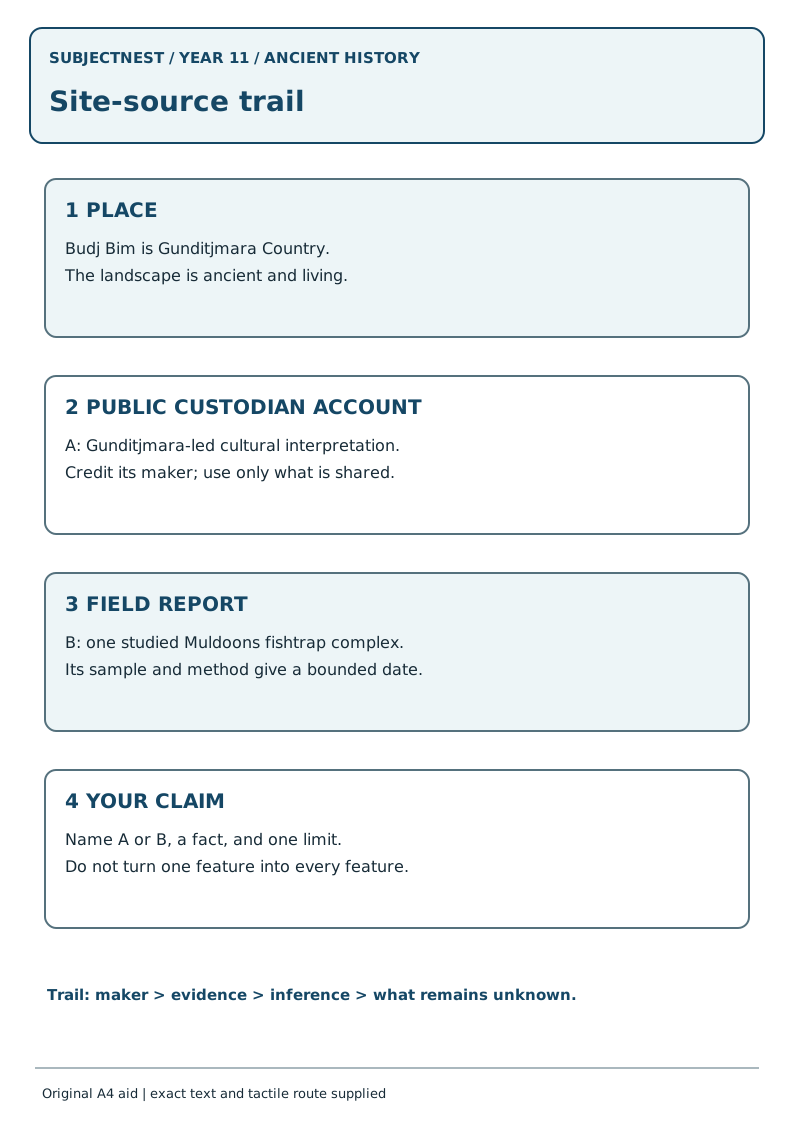
- Launch · 2 min. Ask: “If a history page calls Budj Bim an ancient site, what could that leave out?” Accept “it remains living Country” and locate Gunditjmara Country in south-west Victoria without distributing site coordinates.
- Model · 4 min. Read Card A's maker, present-day setting and two concrete facts. Write: “How does the public Gunditjmara page explain the purpose of kooyang waterworks?” Mark it answerable; cross out “What did every ancestor think?”
- Guided reading · 5 min. Trace “community page → described channels/holding ponds → one bounded statement.” Say this is a modern custodian interpretation about ancient material evidence, not an ancient text.
- Practice route · 7 min. Choose a Day 1 route. Learner makes one question A can address and one requiring another source; cite A in the answer to the first.
- Audit · 4 min. Partner checks that a page about one Country has not become a claim about all Aboriginal and Torres Strait Islander peoples. Revise the subject of the sentence.
- Exit · 3 min. “Who should be credited for the public account?” Key: the Gunditjmara-led Budj Bim source; living custodianship belongs in the evidence trail.
Day 2 · Ancient material, modern explanation
Target: distinguish a material landscape, a present-day account and an excavation report as different evidence. Prepare: Cards A/B, evidence-kind sorter.
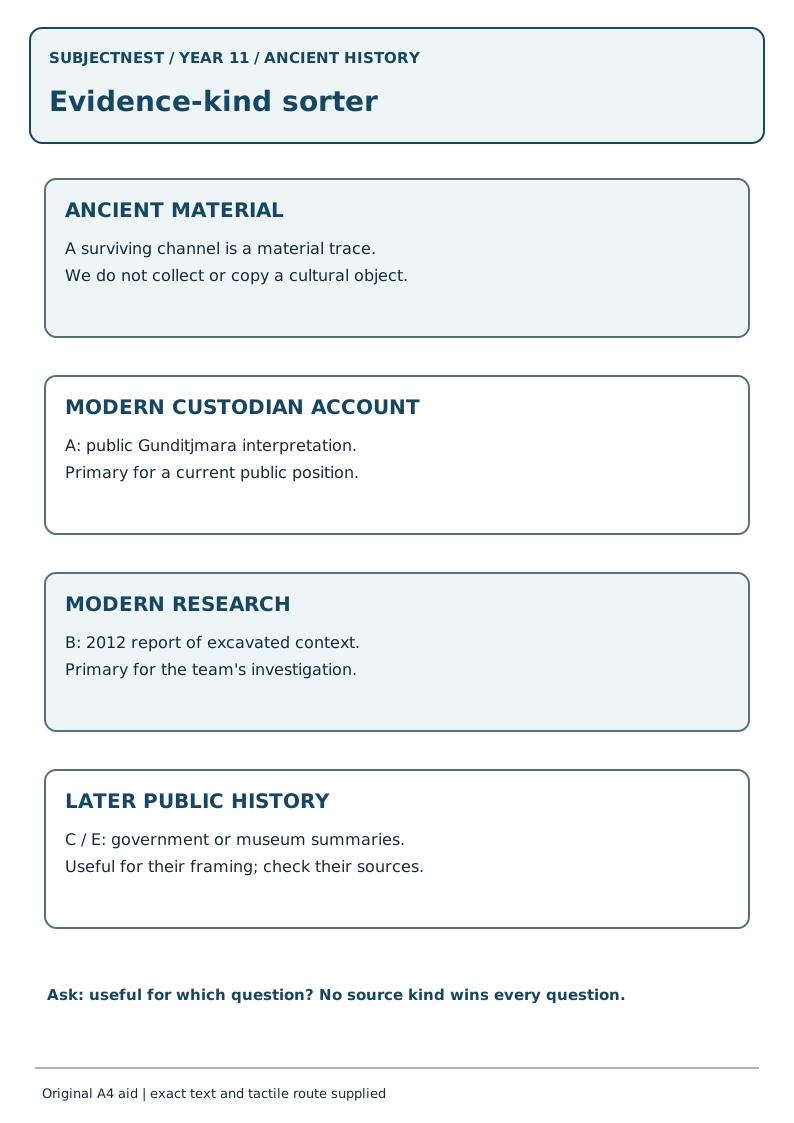
- Launch · 2 min. Put labels MATERIAL FEATURE, MODERN COMMUNITY PAGE and RESEARCH REPORT on the desk; none is a substitute for the others.
- Model · 4 min. Place a channel/remnant as ancient material evidence; A as present-day custodian interpretation; B as a 2012 report of research. Explain that we are looking at descriptions, not collecting or reproducing an artefact.
- Guided reading · 5 min. Ask what B's abstract can answer about one excavation and what A can answer about continuing connection. Record maker and purpose for each.
- Practice route · 7 min. Choose a Day 2 route. Sort the three kinds; make one defensible claim from A and one from B with a limit for each.
- Audit · 4 min. Challenge “The website is an ancient eyewitness” and “The research team owns the place.” Repair both using source type and custodianship.
- Exit · 3 min. “Can a 2012 report be primary?” Key: primary for the team's recorded investigation, not an ancient written witness.
Day 3 · A date is attached to evidence
Target: explain what the approximately 6,600 cal BP date does and does not date. Prepare: Card B, phase clock.
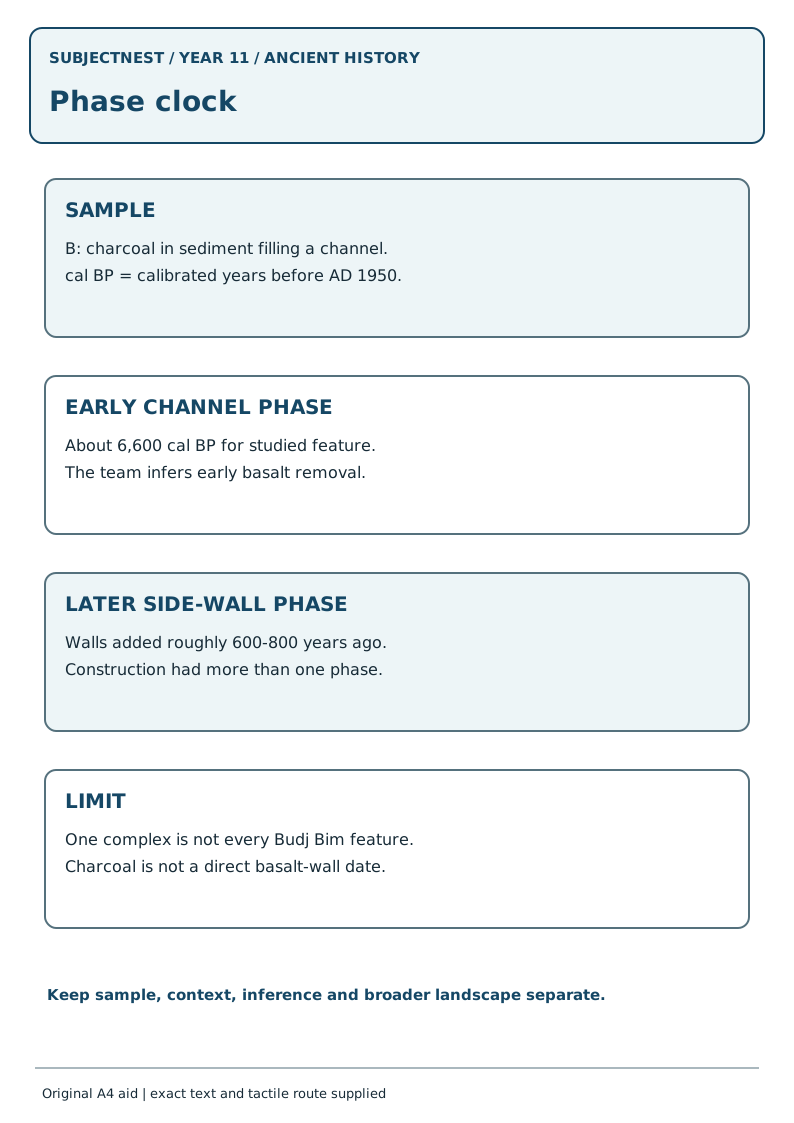
- Launch · 2 min. Show “all walls are 6,600 years old” as a claim to test, not a fact.
- Model · 4 min. Card B: the team dated charcoal in sediment that filled a cut channel. They infer an early channel phase; side walls were added much later, roughly 600–800 years ago. Label sample, context and inference.
- Guided reading · 5 min. Learners place EARLY CHANNEL and LATER WALLS on separate phase cards. Discuss why a sampled feature does not fix the age of every structure across three landscape components.
- Practice route · 7 min. Choose a Day 3 route. Write or arrange a three-part “sample → finding → bounded inference” and one unproven claim.
- Audit · 4 min. Trade claims; challenge any phrase “radiocarbon dated basalt” or “every wall.” Keep the approximate date and cal BP label.
- Exit · 3 min. “What was dated?” Key: charcoal from channel infill; the walls belong to a separate later phase in the reported complex.
Day 4 · One landscape, three components
Target: use a modern site account without treating an overview as a precise map or total survey. Prepare: Cards A/C/D, claim-boundary ladder.
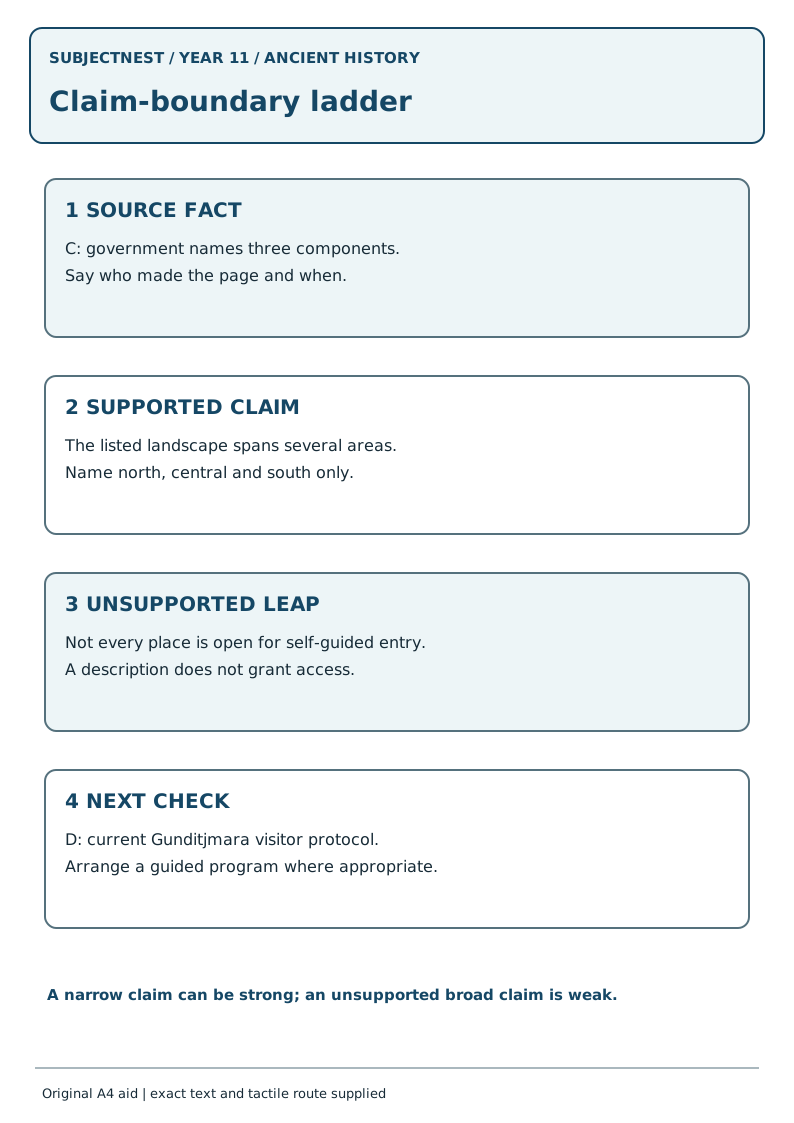
- Launch · 2 min. State that a named World Heritage property can contain more than one component; naming them is not permission to visit them.
- Model · 4 min. From C, label Budj Bim (north), Kurtonitj (centre), Tyrendarra (south). From A, keep Gunditjmara connection and aquaculture in the explanation. Do not draw routes to sensitive features.
- Guided reading · 5 min. Contrast C's government overview with D's community access protocol. Which is useful for geography? Which for a present-day visit decision?
- Practice route · 7 min. Choose a Day 4 route. Make a three-component name list, not a locator map, and add one evidence sentence and one access limit.
- Audit · 4 min. Ask whether a UNESCO or government description could confer unrestricted entry. Return to D and remove the implication.
- Exit · 3 min. “What would you check before a visit?” Key: the Gunditjmara-led program and current cultural protocols.
Day 5 · Fresh public source check A
Target: independently evaluate what a formal World Heritage decision establishes. Prepare: Check A, blank claim ladder. F has not appeared in practice.
- Launch · 2 min. Say: “A decision record can prove a decision; it does not date every stone.”
- Source access · 4 min. Release F's exact new short paraphrase and link. Offer reading or large text; log access support without adding content hints.
- Independent plan · 5 min. Learner marks maker, year, action, two criteria and the limit of a listing record.
- Independent response · 7 min. Choose a Day 5 route; preserve the first response before coaching.
- Self-audit · 4 min. Check for “UNESCO built/owns the system” or “UNESCO dated every feature.” Narrow any such claim.
- Submit · 3 min. Collect and log support; use public feedback later. This check is not a school instrument.
Day 6 · Useful for which question?
Target: compare usefulness and reliability without ranking custodial knowledge beneath one dating method. Prepare: Cards A/B/C, site-source trail.
- Launch · 2 min. Ask which source best answers “What did the excavation sample reveal?” and which answers “How is the landscape publicly understood by custodians?”
- Model · 4 min. B reports dating context; A gives public Gunditjmara interpretation. C summarises for government readers. Each has a different maker, method and scope.
- Guided reading · 5 min. Match source to question; write one limitation for each. “Reliable” means sound for this claim and checked against others, not an all-purpose badge.
- Practice route · 7 min. Choose a Day 6 route. Defend two question–source matches and say what would need verification.
- Audit · 4 min. Partner says “the science disproves living connection” or “custodian knowledge alone supplies the sample date”; repair both false leaps.
- Exit · 3 min. “Can two sources both matter?” Key: yes, for different questions and in dialogue, with their own authority and limits.
Day 7 · Custodianship changes the task
Target: make an ethical source-use decision using a public visitor protocol. Prepare: Cards D/E and custodianship decision grid.
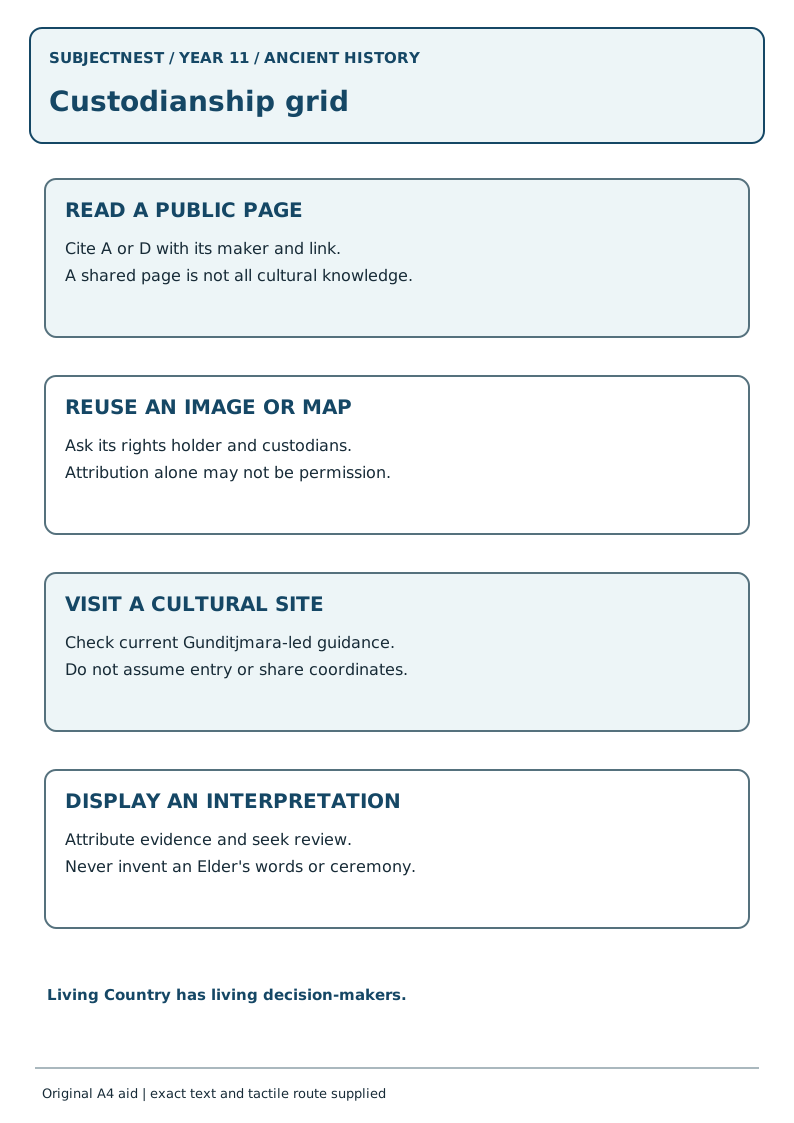
- Launch · 2 min. Offer a hypothetical class idea: copy a site's map into a game and send pupils to find features. Ask who decides access; do not invite students to locate the place.
- Model · 4 min. D asks visitors to respect protocols. E is a museum interpretation, not permission to copy or visit. Replace the game with a source-metadata comparison using text only.
- Guided reading · 5 min. Sort: “public page to read,” “protected place to visit,” “image to reuse.” Each has different permissions; link and credit do not automatically grant reuse.
- Practice route · 7 min. Choose a Day 7 route. Draft a two-sentence classroom decision: what you can do with the public text, and what requires Gunditjmara arrangement/review.
- Audit · 4 min. Remove assumed consent and site coordinates from the draft. Ask whether the alternative still teaches source evaluation; it should.
- Exit · 3 min. “Who leads a school visit?” Key: a Gunditjmara-guided, authorised program under current rules.
Day 8 · A museum label has a point of view
Target: compare institutional representation with Gunditjmara-led interpretation and identify a missing question. Prepare: Cards A/C/E, evidence-kind sorter.
- Launch · 2 min. Ask: “Whose words would you want beside a museum label about Budj Bim?” Do not pretend to write them for that person.
- Model · 4 min. E is a national museum's later interpretation of a 2019 listing. A is Gunditjmara-led public interpretation. C is a government account. Name each maker before comparing emphasis.
- Guided reading · 5 min. Identify where each mentions engineering, continuing connection and management; absence from an excerpt is a research question, not proof of a source's hostility.
- Practice route · 7 min. Choose a Day 8 route. Draft a proposed two-source label plan with attributed facts, a source gap and a note to seek custodian review before display.
- Audit · 4 min. Test for invented Elder quotation or a museum speaking for every Gunditjmara person; remove it.
- Exit · 3 min. “What is the label's unanswered question?” Key example: how living custodians wish this evidence represented and what access limits apply.
Day 9 · Build a careful argument
Target: synthesise A–E into a site-specific historical judgement with one method limit and one cultural-authority limit. Prepare: argument weave, Cards A–E.
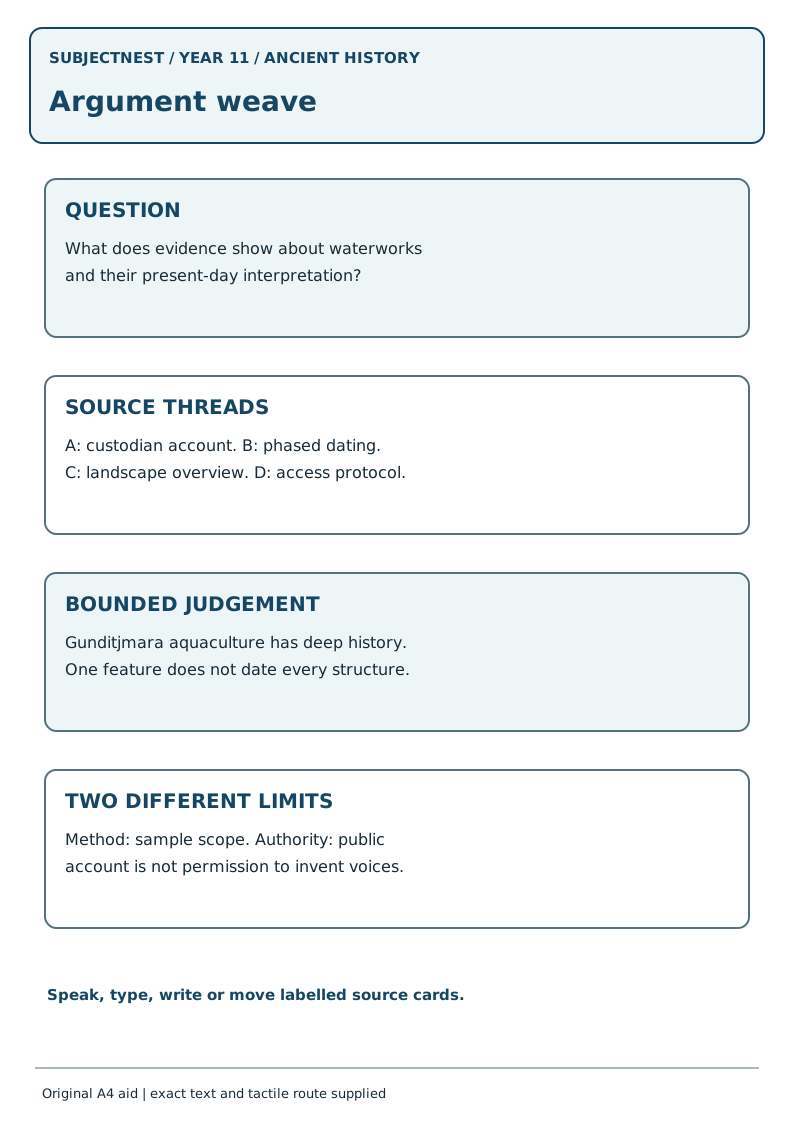
- Launch · 2 min. Set the question: “What can the available sources show about ancient water management and how it is understood today?”
- Model · 4 min. Combine A's public custodian interpretation, B's phased excavation and C's three-component overview. D qualifies access; E shows later museum representation.
- Guided reading · 5 min. Place source IDs, kinds and dates beside each sentence. Note that one excavated feature is not the entire cultural landscape and that a museum page is not an Elder's voice.
- Practice route · 7 min. Choose a Day 9 route. Produce a 90–130-word or equivalent spoken/diagram argument using at least three sources, a bounded conclusion and two different limits.
- Audit · 4 min. Partner spots one unsupported universal claim or appropriation of voice; revise before submission.
- Exit · 3 min. “What should a full study add?” Key: further verified archaeological evidence, public Gunditjmara-led accounts, custodial permission and the school's Topic 2 plan.
Day 10 · Fresh public source check B
Target: test a new digital-survey claim against field verification and current access authority. Prepare: Check B, blank argument weave. G/H have not appeared in practice.
- Launch · 2 min. State: “A detected shape is a lead, not a verified site or an invitation to publish a coordinate.”
- Source access · 4 min. Release G and H together; offer exact teacher reading or large text and log support.
- Independent plan · 5 min. Learner marks the 2026 research team's finding, its uncertainty, the Gunditjmara-guided program and special-request access.
- Independent response · 7 min. Choose a Day 10 route; preserve initial evidence-based response.
- Self-audit · 4 min. Check for “computer found every site,” “all candidates confirmed,” or “publicity gives entry permission.”
- Submit · 3 min. Collect/support-log; use public feedback for the next lesson. No QCAA unit result follows.
Original SubjectNest teaching scripts © NeuroForgeIO Pty Ltd 2026, CC BY 4.0.